10 Simple Steps to Soften Sour Gummy Candy
Ever since you first tried sour gummy candies, you probably loved their tangy punch and chewy texture. But if your gummies came out too hard or stale, you’re not alone — many people struggle with softening their sour gummy candy just right.
Luckily, there are simple tricks to bring back that perfect chewiness.
To soften sour gummy candy, start by placing them in an airtight container with a small piece of bread or a damp paper towel to add moisture.
You can gently warm them in short bursts in the microwave or use steam for a softer texture.
Avoid freezing or refrigerating, as these make gummies firmer.
Adding fruit juice or honey can also improve softness and flavor.
For more tips and detailed steps, keep exploring how you can perfect your gummy experience.
Key Takeaways
- Place gummies in an airtight container with a small piece of bread or a damp paper towel to add moisture.
- Use gentle heat, like a low-power microwave in short bursts, to soften gummies without melting.
- Soak gummies in a small amount of flavored water or fruit juice overnight to rehydrate them.
- Store gummies at room temperature in a sealed container, away from heat and humidity, to keep them soft.
- Add a drop of fruit extract or a sprinkle of citric acid during softening to boost the flavor.
How to Soften Sour Gummies at Home
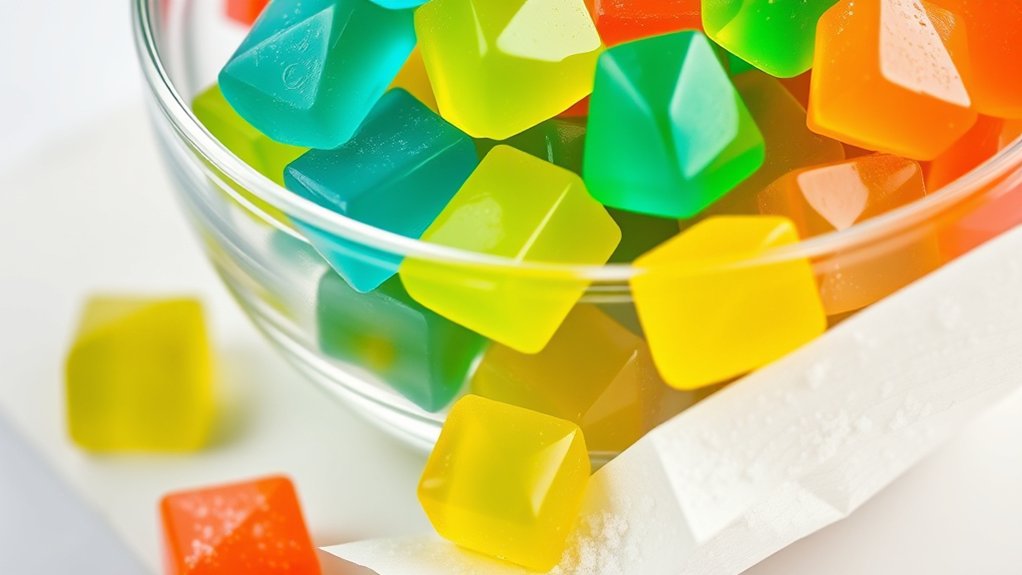
If your sour gummy candies have gotten too hard, there’s an easy way to soften them at home. Focus on keeping their color and flavor intact while doing this.
Start by placing the candies in a sealed container with a small piece of bread or a damp paper towel. The moisture will gently soften the gummies without making them sticky.
Seal gummies with a damp paper towel to soften them gently without stickiness.
Keep the container at room temperature and check the gummies periodically. Make sure they don’t become overly moist or sticky.
This method helps preserve their vibrant color and bright flavor, preventing dullness or flavor loss. For a flavor boost, try adding a drop of fruit extract or a sprinkle of citric acid during softening.
These simple steps will give you softer, tastier sour gummies while keeping their colorful, enticing look.
Best Methods to Improve Gummy Texture and Chewiness
Want your gummies to stay soft and chewy? Make sure to store them in an airtight container. That way, they won’t dry out and lose their nice texture. If they do start to get a bit hard, you can try rehydrating them with a tiny bit of moisture or gently heating them up. Just be careful with the heating so you don’t melt them! Using these simple tricks will help you get that perfect chewiness every time.
Proper Storage Techniques
Storing gummy candies properly is key to keeping them soft and chewy. Keep them in an airtight container away from heat and humidity to preserve their ideal texture.
Moisture loss can make gummies hard, so sealing in their natural ingredients helps maintain their chewiness. For extra freshness, you can add a small piece of bread or a damp paper towel inside the container; these help control moisture.
Make sure to keep gummies out of direct sunlight, which can damage both their texture and flavor. Remember these tips: use airtight containers, store in a cool, dry place away from sunlight, and add a moisture buffer like bread or a damp paper towel.
Proper storage keeps your gummies soft, flavorful, and chewy, helping them last longer.
Correct Rehydration Methods
Rehydrating gummy candies effectively restores their softness and chewiness, especially after they’ve become hard or stale. To do this, place the candies in a sealed container with a small amount of water or fruit juice—think flavor combinations like lemon or cherry—that improve taste.
Let them sit for a few hours or overnight, allowing the moisture to penetrate the candies. This process boosts texture enhancement, making gums more pliable and enjoyable to chew. Avoid adding too much liquid, which can cause melting or stickiness.
For best results, use flavored liquids that complement the candy’s original taste. This helps your gummies regain their ideal texture and flavor. Proper rehydration is key to bringing back that fresh, satisfying chewiness.
Optimal Heating Procedures
Heating gummy candies carefully can really improve their texture and chewiness without melting or sticking. To get the best results, use gentle heat methods like a microwave at low power or a double boiler.
This helps prevent overheating, which can ruin the texture. When warming, think about flavor pairing—adding a touch of citrus or vanilla can boost taste and hide any sourness.
You can also try ingredient substitutions, like a small amount of corn syrup or honey, to make the gummies chewier during heating. Keep these tips in mind:
- Use low, even heat to avoid melting
- Stir frequently for consistent warmth
- Experiment with flavor pairing and ingredient substitution to improve texture and taste
Following these steps will make your gummies softer and more enjoyable without messing up their structure.
How to Use Microwaves to Soften Sour Gummies
When you’re using a microwave to soften sour gummies, it’s best to start with a low power setting. That way, you won’t risk overheating or melting them right away.
Next, heat the candies in short bursts—just a few seconds at a time. After each burst, check to see how soft they are. This way, you can keep an eye on their texture and stop once they reach that perfect, chewy consistency without going overboard.
Microwave Power Settings
Microwaves can be an effective way to soften sour gummy candies quickly, but it’s important to use the right power settings to avoid melting or over-softening them. Using high power can cause uneven heating, which might damage the candy coating or cause unwanted sugar crystallization.
To prevent this, set your microwave to a lower or medium power level. This provides gentle heat and gives you better control over the process.
Keep in mind:
- Lower power reduces the risk of melting coatings or changing the texture.
- Medium power helps soften gummies evenly without overdoing it.
- Always keep a close eye on them to prevent overheating and keep the candy quality intact.
Adjusting the power carefully ensures the gummies soften uniformly, keeping their flavor and texture just right while avoiding the pitfalls of high heat.
Short Heating Intervals
Using short, controlled bursts in the microwave helps you soften sour gummy candies effectively without overdoing it. This method prevents the candies from becoming too melty or losing their texture.
Start with 5-10 second intervals, checking the softness after each burst. This gradual approach also allows for flavor improvement since gentle heating preserves the gummy’s bright taste.
If you’re looking to modify the ingredients, like substituting flavorings or thickening agents, short intervals give you better control over the process. Keep in mind that prolonged heating can make gummies sticky or rubbery.
Check Gum Softness
To effectively check the softness of your sour gummies during microwaving, start by carefully inspecting their texture after each heating interval. Gently squeeze or press the gummy to see if it’s reached your desired consistency.
Keep in mind that over-heating can melt the candy or change its gummy flavor and sour coating. Watch for signs like being slightly pliable and no longer stiff.
The gummies should retain their shape but feel soft to the touch. Also, the sour coating might become less sticky or shiny.
How to Soften Gummies With Warm Water or Steam
Ever wondered how to soften hard gummy candies quickly without ruining their texture? Using warm water or steam works really well. Just dip the gummies in warm water for a few seconds, then let them sit for a minute.
You can also hold them over steam briefly to make them more pliable. This helps break down the gummy coating a bit, making them softer and easier to chew. As they soften, you might notice their flavor gets a little more intense because heat releases more of their natural taste.
Just be careful not to overdo it. Too much moisture can make gummies sticky or cause them to lose their shape. To see how it’s done:
| Step | Method | Effect |
|---|---|---|
| Dipping in warm water | Brief dip in warm water | Softens exterior |
| Holding over steam | Gentle steam exposure | Loosens gummy coating |
| Resting period | Sit for a minute | Maintains texture |
| Gummy coating | Slightly dissolves | Improves mouthfeel |
| Flavor boost | Enhanced flavor | More enjoyable chew |
Do Freezing or Refrigerating Gummies Change Their Texture?
Freezing gummies can make them firmer and more brittle, so they might break or snap more easily. If you’re hoping to keep them soft, freezing probably isn’t the way to go.
On the other hand, refrigerating them can change their texture a bit. Usually, they become a little chewier, but they don’t necessarily get softer. Knowing how these methods affect the gummies can help you pick the best way to get the texture you prefer.
Freezing Effects on Texture
Freezing or refrigerating gummies can significantly change their texture, making them chewier or firmer than they’re supposed to be. This can affect how the flavor comes through because the altered texture might make them less enjoyable.
Freezing also helps with packaging preservation and prevents spoilage over time. But it can make the gummies too hard or crumbly once they’re thawed, which might not be what you want.
To avoid these issues, store gummies in airtight containers to prevent moisture loss. Limit how long you freeze them to keep the texture from becoming too firm.
Let the gummies thaw slowly for better texture retention. While freezing can extend shelf life, it’s important to understand how it impacts mouthfeel and flavor.
Handling your gummies properly will help you enjoy them without losing their original appeal.
Refrigeration Impact on Gummy Consistency
Refrigeration can change the texture of gummy candies, making them firmer and less chewy than when stored at room temperature. This can affect your experience since the gummies become less pliable and might even lose some of their flavor freshness.
If you want to soften your gummies, refrigeration isn’t the best option. However, it can be useful for ingredient substitution or flavor improvement by chilling them before adding new ingredients or coatings.
To keep gummies soft, it’s better to store them in an airtight container at room temperature. But if you do refrigerate, remember that the colder environment will make their texture more rigid, which could make softening more difficult.
Adjust your storage methods accordingly to maintain the desired gummy consistency.
Natural Ingredients That Safely Soften Sour Gummies
When it comes to softening sour gummy candies naturally, there are a few safe and effective ingredients that can do the trick without messing up their flavor or texture.
These natural options help keep the candy’s taste intact and allow for easy ingredient swaps.
You can try adding small amounts of pineapple or kiwi juice, which are packed with enzymes that break down gelatin and other thickening agents, making the gummies softer.
Honey or agave syrup also work well as humectants, locking in moisture and gradually softening the candies over time.
Fruit purees like apple or pear are great too—they add moisture and naturally tenderize the gummies without overpowering their flavor.
All of these ingredients are gentle, food-safe, and help preserve the original taste.
Tips for Combining Flavors and Textures in Gummies
Blending flavors and textures in gummies can make them more appealing and fun to eat. Focus on smart flavor pairings—mix tangy, fruity, and sweet elements that go well together.
For example, pairing citrus with berry flavors adds brightness, while tropical fruits create a lively taste. Texture is just as important; think about adding chewy, soft, or slightly crunchy bits to keep things interesting.
You can include small candies, nuts, or even a dusting of sugar for contrast. When mixing flavors, aim for balance so one taste doesn’t overpower the others.
Try layering different textures to make each bite more exciting and satisfying. Subtle flavor pairings and varied textures can really elevate your homemade gummies, making them more tempting and memorable.
Troubleshooting Common Softening Issues
If your gummies turn out too soft or gooey, it’s often because they softened too much during storage or didn’t set properly. Factors like ingredients and environment during manufacturing can also affect their texture. To troubleshoot, start by reviewing your recipe and process to find possible causes of over-softening.
Focus on key areas like temperature control. Too much heat during storage can make gummies soft. Also, check your ingredient ratios—too much liquid or gelatin can lead to a gooey texture. Lastly, ensure your setting time is adequate and even, so the gummies set properly.
Adjusting these factors can help improve your results. Try lowering storage temperature or refining ingredient proportions if gummies are too soft. Proper ingredient analysis during manufacturing is key to achieving consistent firmness. With a good understanding of these elements, you can prevent softening issues and make gummies with the perfect texture.
How to Store Softened Gummies for Long-Lasting Freshness
Proper storage is key to maintaining the freshness and texture of your gummies, especially if they’ve become softer than desired. To keep their gummy flavor vibrant and prevent them from drying out, store your candies in an airtight container.
Use new or resealed candy packaging to lock in moisture and protect against air exposure, which can cause gummies to lose their chewy texture. Keep the container in a cool, dark place, away from direct sunlight and heat, as temperature fluctuations can alter the gummy consistency.
If you want to preserve their softness longer, consider adding a small piece of bread or a silica gel packet to the container. These help regulate moisture levels. Always reseal the candy packaging tightly after each use.
Properly storing your softened gummies guarantees they stay fresh, flavorful, and chewy for as long as possible. This way, you can enjoy their delicious gummy flavor whenever you want.
Are There Safe Alternatives to Heat for Softening Gummies?
While heat is a common way to soften gummies, there are safer alternatives that won’t risk melting or damaging the candies. These methods focus on gentle moisture and time, putting safety first.
For example, you can put gummies in a sealed container with a damp paper towel for a few hours. This creates a humid environment that naturally softens the candies. Another simple option is to briefly soak them in warm water—just a few seconds—and then pat them dry.
You can also use a microwave on a very low setting for short bursts, but be sure to watch closely to prevent melting. The key is avoiding high temperatures and too much moisture exposure.
Try these gentle methods to soften gummies effectively without ruining their texture or flavor:
- Using a humid environment with a damp towel
- Giving them a quick warm water soak
- Using the microwave on low power in short bursts
Frequently Asked Questions
Can Softening Sour Gummies Affect Their Flavor?
Softening sour gummies can slightly impact their flavor, but if you do it right, the flavor stays pretty much intact. When you soften gummies gently, their texture gets better without losing that tangy taste.
But be careful—using too much heat or moisture might change the flavor profile. So, for the best results, stick to controlled softening methods that improve texture while keeping that sour punch.
Are There Any Health Risks in Softening Gummies at Home?
Yes, there are some health risks when softening gummies at home. If you use improper methods or ingredients, you might compromise the safety of the ingredients, which can lead to contamination.
Also, if you don’t store the gummies properly or leave them exposed, mold can grow and pose health risks. Always make sure you’re using safe techniques, like microwaving briefly or adding a small amount of moisture.
Keep the gummies in a clean, airtight container to prevent any issues. Using the right methods helps keep your gummies safe to eat.
How Long Do Softened Gummies Stay Fresh?
Softened gummies usually stay fresh for about 1 to 2 weeks if you store them right.
To make them last longer, keep them in airtight containers and place them in a cool, dry spot.
Always check for any signs of spoilage like a strange smell or changes in texture before you eat them.
Good storage habits help keep your gummies soft and flavorful, so you can enjoy them longer without worries.
Can Softening Methods Alter the Gummies’ Appearance?
Think of softening your gummies as gently coaxing them into a more tender dance. Your methods might sway their appearance. Yes, they can experience subtle color changes, like a sunset shifting hues.
While aiming for perfect texture preservation, be cautious. Excessive heat or moisture can alter their vibrant look. You’ll find that gentle approaches help maintain their visual appeal, ensuring your gummies remain as delightful to behold as to taste.
Is It Safe to Reuse Softened Gummies in Recipes?
Yes, it’s safe to reuse softened gummies in recipes if the softening methods you used didn’t introduce any contaminants. Softening techniques like microwaving or soaking in warm liquids mainly change the texture, making the gummies more pliable.
Just make sure the gummies are clean and free of mold or spoilage before adding them to your recipes. Softened gummies can add a chewy, flavorful element to desserts or snacks.
Conclusion
Now that you know these game-changing tricks, your sour gummies will be irresistibly soft and chewy in no time!
Say goodbye to those stubborn, rock-hard candies and hello to melt-in-your-mouth goodness that’ll make your taste buds do cartwheels. With just a few simple steps, you can turn even the gloomiest gummies into a chewy paradise.
So go ahead, get softening, and prepare for the most epic gummy experience ever with these easy tips for softening sour gummy candy.