
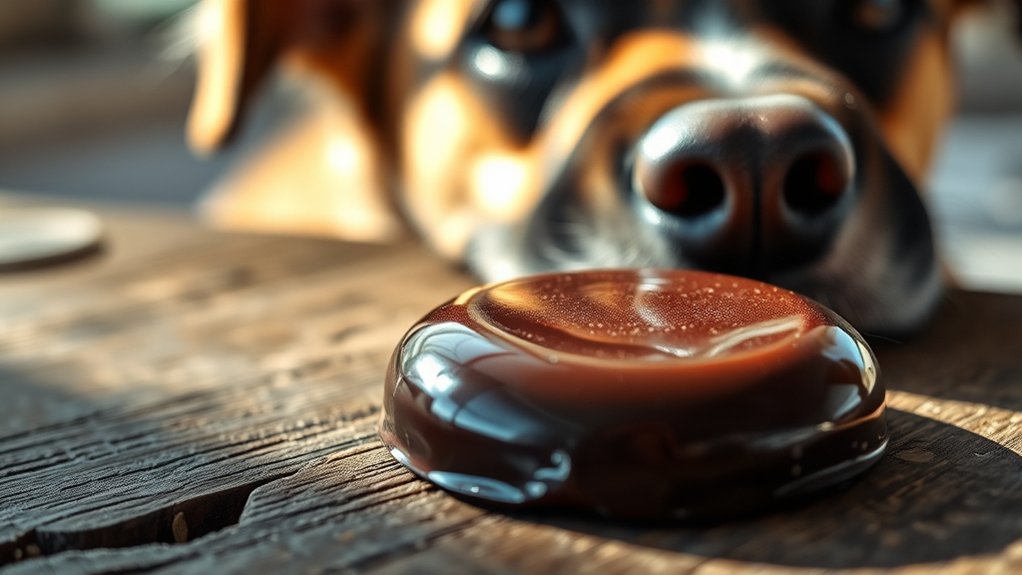
Can Dogs Eat Chocolate Candy?
Many dog owners worry about keeping their furry friends safe from common household dangers. You’re not alone—navigating what’s safe and what’s not can be confusing and stressful.
No, dogs shouldn’t eat chocolate candy because it contains theobromine and caffeine, which are toxic to them. Even small amounts can cause vomiting, diarrhea, rapid breathing, seizures, or more severe health issues.
Dark or baking chocolates are especially dangerous due to higher toxin levels. To keep your dog safe, it’s best to prevent access to chocolate and sweets.
If you want to know how to protect your pup and recognize signs of poisoning, keep exploring.
Key Takeaways
- No, dogs should not eat chocolate candy because it contains toxic substances like theobromine and caffeine.
- Even small amounts can lead to health problems such as vomiting, diarrhea, or seizures.
- The level of danger depends on the type and amount of chocolate, with darker chocolates being more poisonous.
- Human candy often has ingredients that are unsafe for dogs, which makes eating it risky for their health and digestion.
- If your dog eats chocolate candy, contact a veterinarian right away for advice and treatment.
Can Dogs Eat Chocolate? What You Need to Know

Chocolate is toxic to dogs because it contains substances called theobromine and caffeine, which their bodies can’t process effectively. These compounds can build up quickly, leading to serious health issues like vomiting, diarrhea, rapid breathing, and even seizures.
Chocolate contains theobromine and caffeine, which can cause vomiting, seizures, and other serious health problems in dogs.
Regarding dog nutrition, it’s essential to avoid giving your pet any chocolate, no matter the type or amount. Instead, focus on healthy chocolate alternatives that are safe for dogs, like specially made dog treats or fruit.
These options satisfy their cravings without risking their health. Remember, even small amounts of chocolate can be dangerous, so it’s best to keep all forms of chocolate away from your dog.
Being aware of what’s safe and what’s not is key to responsible pet ownership. Always consult your veterinarian if you’re unsure about what snacks are appropriate for your dog’s diet.
Choose safe, healthy alternatives to keep them happy and healthy.
Which Types of Chocolate Are Most Dangerous for Dogs?
While all chocolate poses a risk to dogs, some types are far more dangerous than others because of their higher theobromine and caffeine content. Dark chocolate and baking chocolate contain the most, making them especially hazardous.
During chocolate manufacturing, the concentration of these toxic compounds can vary, which affects how dangerous they are. So, it’s important to know which types are the worst.
You should pay special attention to:
- Dark chocolate: Common in baking and cooking, it’s very concentrated.
- Unsweetened baking chocolate: Has the highest theobromine levels and is a severe threat.
- Cocoa powder: Used in recipes, it contains significant amounts of theobromine.
- Semi-sweet chocolate: Still dangerous because of its high cocoa content.
Knowing these differences helps you stick to your dog’s dietary restrictions. The higher the theobromine and caffeine levels, the more dangerous it is for your dog.
Always keep these chocolates out of reach to protect their health.
How Much Chocolate Is Toxic to My Dog?

The amount of chocolate that can harm your dog depends on its size, the type of chocolate, and the concentration of theobromine and caffeine it contains. Even small amounts can cause chocolate toxicity in smaller dogs, so knowing the toxic dose is really important.
Generally, the toxic dose of theobromine is around 100-200 mg per kilogram of your dog’s weight, but symptoms can happen at lower levels. So it’s better to be cautious, especially with tiny dogs.
Here’s a quick chart of the theobromine content in different types of chocolate:
| Chocolate Type | Theobromine Content (mg per ounce) |
|---|---|
| White Chocolate | 0.1 – 0.5 |
| Milk Chocolate | 44 – 60 |
| Semi-sweet | 130 – 150 |
| Dark Chocolate | 135 – 160 |
| Baking Chocolate | 450 – 500 |
If your dog eats amounts close to the toxic dose, get veterinary help right away. Remember, even small amounts of dark or baking chocolate can be dangerous, especially for small dogs.
Signs Your Dog Has Chocolate Poisoning
If your dog has ingested chocolate, it’s really important to spot the early signs of poisoning so you can get veterinary help quickly. Look out for symptoms that show your dog might be affected, especially since chocolate contains theobromine and caffeine, which can impact their body.
Keep in mind that pet allergies and poor nutrition can make symptoms worse. Be on the lookout for vomiting and diarrhea, rapid breathing or an increased heart rate, restlessness or hyperactivity, and tremors or seizures.
These signs can come on fast, so don’t wait. How your dog reacts to chocolate poisoning depends on their size, age, and overall health, including any allergies or nutritional issues.
Noticing these signs early can really make a difference in how well your dog responds to treatment. It helps your vet provide the right care to prevent serious complications.
What Should I Do If My Dog Eats Chocolate?
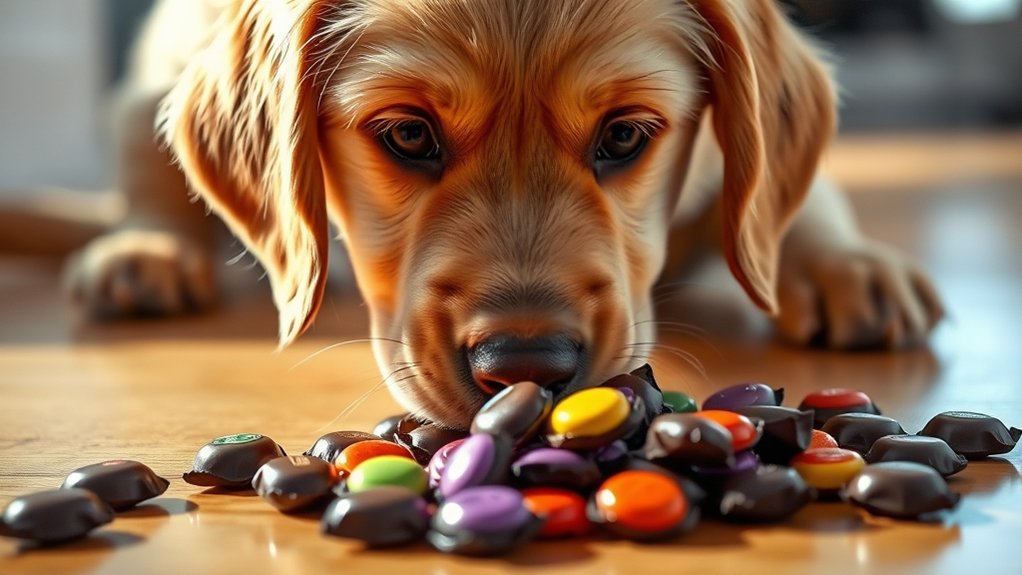
If you see your dog eating chocolate, don’t panic, but definitely act fast. Keep an eye out for any signs like vomiting, trembling, or even restlessness. These could be clues that the chocolate is affecting your pup.
The best thing to do is get in touch with your veterinarian right away. They can give you guidance on what steps to take next and whether your dog needs to come in for treatment. In the meantime, try to keep your dog calm and prevent them from eating any more chocolate. Remember, quick action can make a big difference!
Recognize Symptoms Quickly
When you realize your dog has eaten chocolate, acting quickly can make a big difference in their outcome. Recognizing symptoms early is crucial to get them help fast. Watch for signs like vomiting, diarrhea, rapid breathing, or tremors—they all suggest chocolate poisoning.
Keep an eye out for unusual restlessness or seizures, which can be serious. If your dog shows any of these symptoms, prioritize their safety. Remember, dog nutrition matters, and even small amounts of chocolate can be dangerous.
If your dog has ingested chocolate, consider offering safe alternatives like carrot sticks or apple slices to help soothe them while you seek veterinary advice. Being alert and quick can prevent severe complications and ensure your dog gets the care they need.
Contact Your Veterinarian
Noticing signs of chocolate poisoning is alarming, but your next step is clear: contact your veterinarian immediately. Quick action is crucial to ensure your dog gets the right advice and treatment.
Call your regular veterinarian or an emergency vet clinic right away—don’t wait to see if symptoms worsen. Keep emergency contacts handy, including poison control centers that specialize in pet emergencies.
Provide them with details such as your dog’s weight, the amount and type of chocolate ingested, and any symptoms you’ve observed. Follow their instructions carefully.
Provide Emergency Care
Act quickly if your dog has ingested chocolate, as prompt action can prevent serious health issues. Time is critical, so don’t delay in seeking emergency care.
While you wait, consider these steps:
Call your veterinarian immediately for guidance.
Note the amount and type of chocolate eaten for accurate assessment.
Avoid giving your dog food or water unless instructed.
Keep your dog calm and comfortable during transportation.
When Is It Time to Call the Vet?
If your dog has ingested chocolate, it’s important to recognize the signs that mean you should see a vet right away. Keep an eye out for changes in behavior, like restlessness, vomiting, diarrhea, or quick breathing.
Severe symptoms such as seizures, being unresponsive, or having a weak pulse need urgent care. Don’t wait if you notice these signs—call your vet immediately.
It’s also crucial to consider your dog’s size and how much chocolate they ate, because smaller dogs are more at risk. Training can help prevent future accidents, but it won’t fix an emergency like chocolate poisoning.
If you’re unsure whether your dog needs to see a vet, it’s better to be safe than sorry. Acting quickly can save your dog’s life.
Preventing Your Dog From Eating Chocolate and Sweets
To keep your dog safe from chocolate and sweets, proactive steps can really help. Knowing your dog’s behavior is important to prevent accidental eating. Consistent training can reinforce boundaries and stop begging or snatching food.
You can make things safer by keeping chocolate and sweets out of reach, like in closed cabinets or high shelves. Using commands like “leave it” or “drop it” can help control impulsive actions.
Providing fun toys and treats can distract your dog from forbidden foods. Also, supervise your dog during gatherings or when food is around to prevent accidents.
Healthy Holiday Treats for Dogs
During the holiday season, offering your dog healthy treats can be a delightful way to include them in the festivities without compromising their health. Focus on treats that support good dog nutrition, such as small pieces of cooked vegetables like carrots or green beans, or fruits like blueberries or apple slices without seeds.
You can also make homemade treats using dog-safe ingredients, ensuring they’re free from added sugars and preservatives. Always prioritize holiday safety by avoiding ingredients toxic to dogs, like grapes or xylitol.
Keeping treats simple and natural helps prevent digestive upset and maintains your dog’s energy levels. Remember, moderation is key—small portions can make your dog feel included without overfeeding.
Common Mistakes Dog Owners Make Around Sweets
Many dog owners unknowingly make common mistakes around sweets that can put their pets at risk. One of the biggest errors is giving dogs access to human treats without thinking about dog nutrition or moderation. This can cause health issues like obesity, digestive problems, or even toxicity.
Some frequent mistakes include offering leftover candy or baked goods without checking the ingredients. Many owners assume all sweets are safe for dogs, which isn’t true. Giving large amounts of treats instead of balanced dog food is another common error. Ignoring the importance of moderation in treats and snacks can also be harmful.
These mistakes often come from a lack of awareness about the dangers of sweets and the need for a healthy diet. Remember, dog nutrition is key to your pet’s well-being, and sweets should only be given sparingly, if at all. Keeping treats in moderation helps prevent health problems and keeps your dog happy and healthy.
Tips to Keep Your Dog Safe During Holidays and Celebrations
Holidays and celebrations bring excitement, but they can also pose risks for your dog if you’re not careful. To keep your pet safe, set clear festive boundaries to protect them.
Keep tempting treats like chocolates and candies out of reach, and avoid giving your dog human food that could be harmful. Use gates or barriers to block access to crowded areas or table settings with food and decorations.
Maintain a consistent routine and provide your dog with a quiet space to retreat if things get overwhelming. When guests arrive, explain your safety precautions to prevent accidental ingestion of dangerous items.
Never leave alcohol, candles, or holiday plants within your dog’s reach. By keeping these safety tips in mind, you help minimize hazards and ensure your loyal companion enjoys the festivities safely alongside you.
Frequently Asked Questions
Can Puppies or Small Dogs Handle Small Amounts of Chocolate Safely?
Puppies and small dogs shouldn’t handle even small amounts of chocolate safely because it contains theobromine, which is toxic to dogs. Their small size makes them more vulnerable to chocolate’s harmful effects.
It’s best to stick to a proper dog diet and avoid giving them chocolate altogether. Instead, you can offer healthy chocolate alternatives like carob treats, which satisfy their sweet cravings without risking their health.
Are There Any Natural or Organic Chocolates That Are Less Toxic to Dogs?
No, there aren’t natural or organic chocolates that are safe for dogs. Even those labeled as organic or natural contain theobromine and caffeine, which are toxic to dogs.
To protect your pup, focus on good dog nutrition and offer safe chocolate alternatives like carrot sticks, blueberries, or specially formulated dog treats.
Always avoid any chocolate products, regardless of their ingredients, to keep your dog healthy and safe.
How Long Does It Take for Chocolate Poisoning Symptoms to Appear in Dogs?
Chocolate toxicity symptoms usually show up within 6 to 12 hours after your dog eats chocolate. The exact timing can vary based on how much they ate, their size, and their individual sensitivity.
Signs like vomiting, diarrhea, rapid breathing, or seizures might come on quickly. If you think your dog has ingested chocolate, get veterinary help right away.
Early treatment can really make a difference and help prevent serious health problems from chocolate poisoning.
Can Dogs Develop a Preference or Craving for Chocolate Over Time?
Yes, dogs can develop a preference or craving for chocolate over time, especially if they experience a sugar addiction or become drawn to its rich flavor.
You might notice your pup seeking out chocolates or showing excitement around them. This habit can form gradually, making it harder to resist their adorable persistence.
Stay vigilant, as what starts as curiosity could turn into a dangerous craving if left unchecked.
Are There Any Long-Term Health Effects From Occasional Chocolate Ingestion in Dogs?
Occasional chocolate ingestion can pose risks, but long-term health effects are usually minimal if exposure is rare.
However, repeated ingestion can lead to cumulative effects of chocolate toxicity, like heart issues, kidney damage, or weight gain.
You should watch your dog for symptoms and talk to your vet promptly. Preventing access to chocolate is the best way to protect your dog’s long-term health and avoid potential complications.
Conclusion
So, next time you’re tempted to share your chocolate candy with your loyal companion, remember: your dog’s health isn’t a game. Keep those sneaky paws away from sweets—unless you enjoy the chaos of a doggie emergency.
Instead, treat them to healthy snacks and save the chocolate for humans. After all, you wouldn’t want your pup to turn into a four-legged chocolate lover, craving treats that could land them in the vet’s office!
Always keep in mind that dogs should never eat chocolate candy because it contains ingredients that are toxic to them.