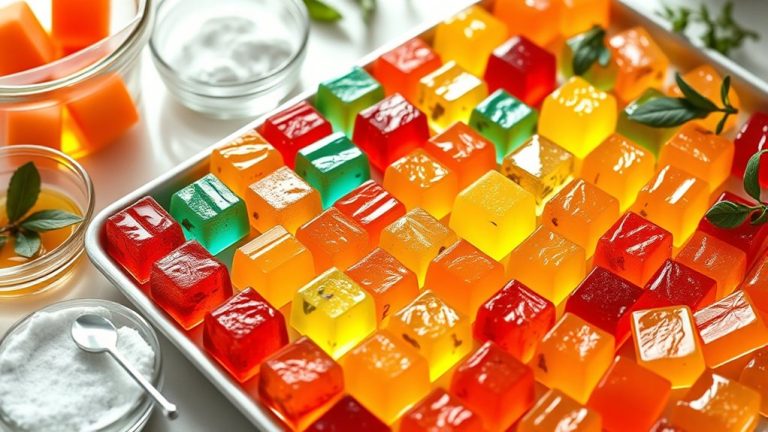
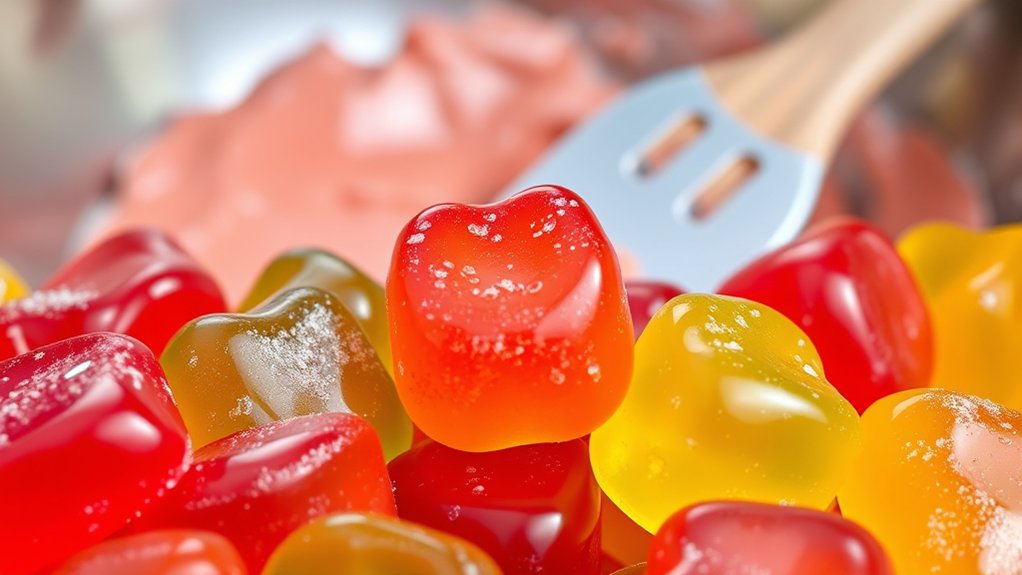
How Is Gummy Candy Made?
Ever wonder how those colorful gummy candies get their chewy, irresistible texture? You’re not alone—many people struggle with understanding how their favorite treats are made. If you’re curious about what goes into making gummies so perfect, you’re in the right place.
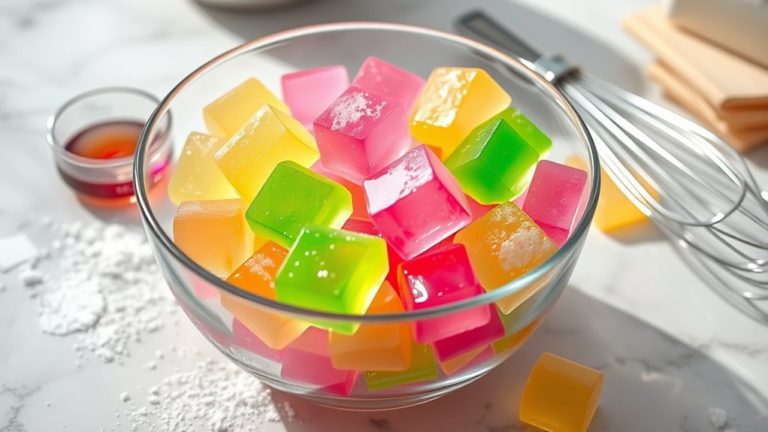
Gummy candy is made by mixing gelatin or pectin with sugar, corn syrup, and flavorings, then heating the mixture to create a smooth, viscous base. This blend is poured into molds, cooled, and set to develop its chewy texture.
Manufacturers add colors and shapes, often coating or packaging the gummies for shine and freshness. If you want to uncover how different ingredients and techniques come together, keep exploring the process in detail.
Key Takeaways
- Gummy candy is made by mixing gelatin, sugar, citric acid, flavorings, and colorings, then heating everything up until it becomes a smooth, viscous mixture.
- Gelling agents like gelatin, pectin, or agar-agar are added to give the gummies their characteristic texture and firmness.
- The mixture is poured into molds, then cooled and set to shape the gummies and give them their chewy elasticity.
- Once cooled, the gummies are cut, coated, and packaged to keep them fresh and ready for sale.
- Throughout the process, quality controls and safety measures are in place to ensure everything is consistent, safe, and compliant.
What Are the Main Ingredients in Gummy Candy?
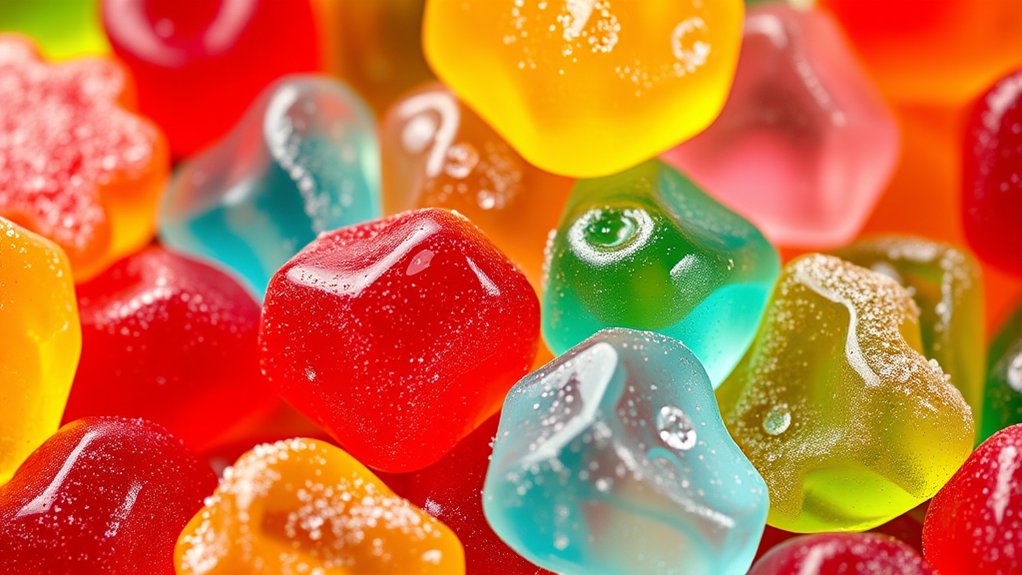
Gummy candy is made with a few essential ingredients that give it its chewy texture and sweet flavor. The history of gummy candies dates back to the early 20th century, evolving from traditional jelly candies into the treats we love today.
These ingredients also hold cultural significance, often symbolizing celebrations or childhood memories. The main components include gelatin, which makes them chewy, and sweeteners like sugar or corn syrup for flavor and sweetness.
Citric acid is added to give a tangy kick, while flavorings and colorings make each gummy unique in look and taste. Sometimes, pectin or other gelling agents are used, especially in vegetarian versions.
Knowing these key ingredients helps you understand how gummy candies are made and why they’re so popular across different cultures. All these elements come together to create a fun, flavorful treat enjoyed by many generations.
How Do Manufacturers Prepare the Gummy Base?
After selecting the right ingredients, manufacturers start preparing the gummy base by mixing and heating them to create a smooth, uniform mixture. This step is crucial because it affects the texture and consistency of the final product.
They rely on precise temperature control during heating to ensure the gelatin or gelling agents dissolve properly, avoiding lumps or inconsistencies. During this stage, flavorings and sweeteners are added, allowing producers to customize the taste profile.
To stand out in a competitive market, manufacturers often tweak the gummy base to meet current trends like vegan or healthier options. They also adjust sweetness levels and textures based on market research to better appeal to target demographics.
What Gelling Agents Are Used in Gummies?
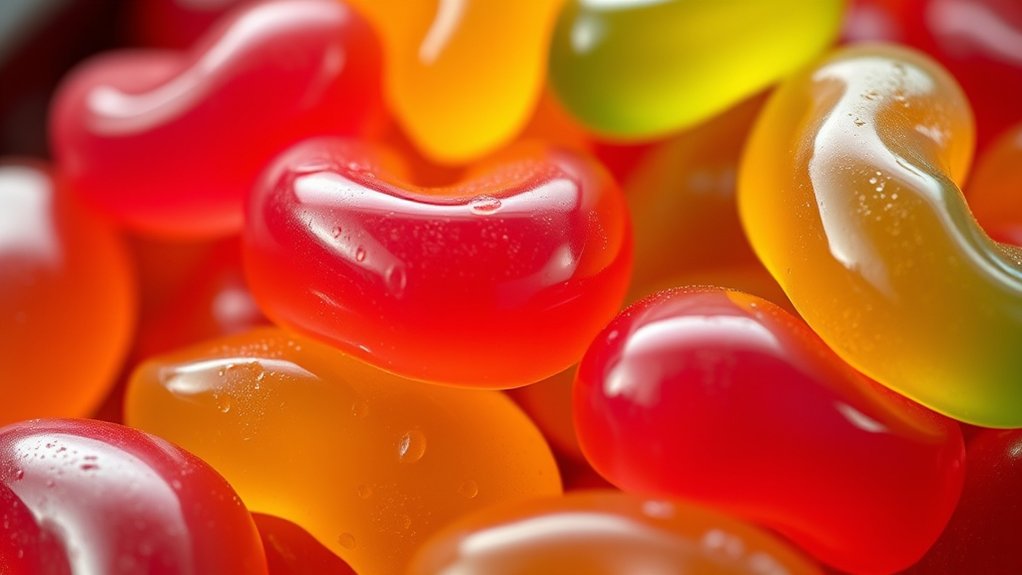
You’ll notice that gelling agents are pretty much what give gummies their signature chewy texture. They’re like the secret ingredient that holds everything together. When it comes to options, you’ve got some natural choices like gelatin and pectin. Gelatin is derived from animal collagen, so it’s a popular choice for traditional gummies, while pectin comes from fruit and is great for making vegetarian or vegan versions.
On the other hand, there are also synthetic options like agar-agar, which is made from seaweed. Each gelling agent has its own unique properties and sets differently, so understanding these differences can really help you pick the perfect one for the kind of candy you want to make. Whether you’re aiming for a classic chewy feel or something a bit different, knowing your gelling agents makes all the difference!
Common Gelling Agents
Have you ever wondered what makes gummies chewy and hold their shape? It’s the gelling agents that do the magic. These ingredients have a long Gummy candy history, dating back to early confections. Today, popular gummy brands rely on specific gelling agents to achieve that perfect texture.
Gelatin, derived from animal collagen, provides chewiness and elasticity. Pectin, a plant-based option, creates a softer, fruit-like texture. Agar-agar, a seaweed extract, offers a firm, jelly-like consistency. Carrageenan, also from seaweed, boosts firmness and stability.
Each of these gelling agents plays a role in the gummy’s texture, flavor, and appearance. They are essential in candy production.
Natural vs. Synthetic
Gelling agents in gummies can be either natural or synthetic. The choice often depends on the desired texture, dietary preferences, and manufacturing considerations.
Natural options like gelatin, agar-agar, or pectin appeal to consumers seeking plant-based or clean-label products. Synthetic gelling agents, such as konjac or modified starches, offer consistency and cost-effectiveness.
This decision influences your gummy candy packaging, as natural ingredients may require eco-friendly materials to highlight health benefits. Marketing strategies often emphasize natural gelling agents to attract health-conscious buyers.
Furthermore, the type of gelling agent impacts texture and shelf life, which are critical factors in product quality and consumer satisfaction. Understanding these differences helps you craft gummies that meet market demands and stand out on store shelves.
How Are Flavors and Colors Added to Gummy Candy?
Ever wonder how the vibrant flavors and colors make gummy candies so appealing? It all starts with carefully adding flavorings and colorants during production. You’ll find that natural or synthetic flavoring agents are mixed into the gummy base to create distinctive tastes.
Bright colors are achieved through food-grade dyes, which are thoroughly blended to guarantee consistency. These colors and flavors not only improve the candy’s appeal but also help with branding and marketing strategies, making products stand out on shelves.
To add depth, manufacturers consider:
- Choosing vibrant, appealing colors that match branding
- Using natural extracts or synthetic dyes based on target market preferences
- Ensuring even distribution for a uniform appearance and flavor
- Incorporating flavor infusions that complement the color for a sensory boost
These elements are vital for effective gummy candy packaging, catching consumers’ eyes, and boosting sales through visual and flavor appeal.
What Heating and Mixing Processes Are Involved?
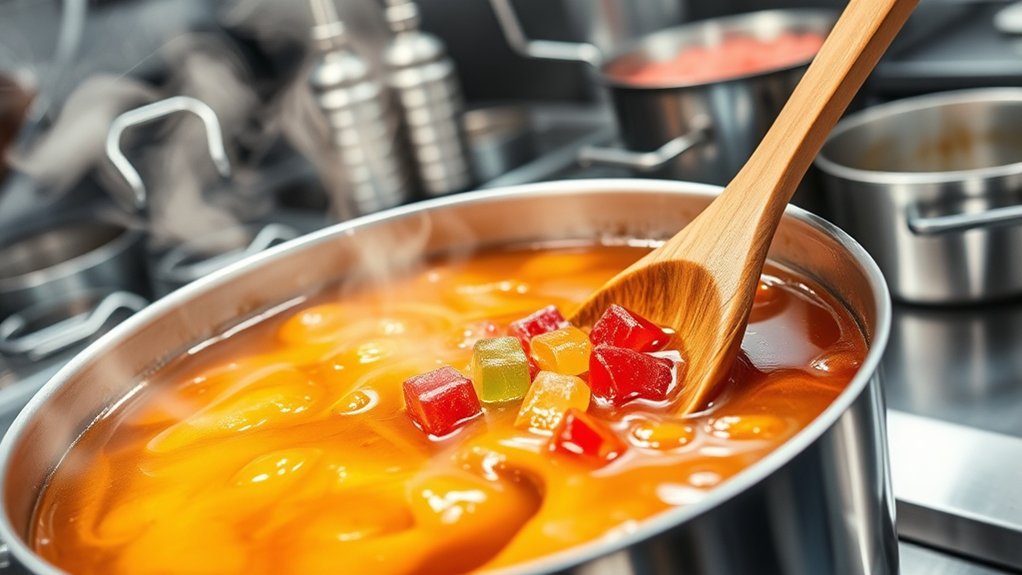
To create the perfect gummy texture, manufacturers carefully heat and mix the ingredients to get a smooth, uniform candy base. This involves dissolving gelatin, sugar, and flavorings in heated water or syrup, making sure everything blends well.
The heating needs to be controlled precisely so that gelatin activates its gelling properties without overcooking, which could change the texture. Mixing is continuous to prevent lumps and ensure even distribution of colors and flavors.
Looking back at gummy candy history, these treats became popular for their chewy, versatile nature. They symbolize joy in many cultures and are often associated with celebrations and childhood nostalgia.
Their cultural significance has grown as they became symbols of fun and memories worldwide. The heating and mixing process keeps this tradition alive by making sure each batch is consistent and high quality.
This careful process helps preserve the gummy candy’s chewy texture and vibrant appearance, making them a beloved treat that endures over time.
How Are Gummies Shaped Using Molds?
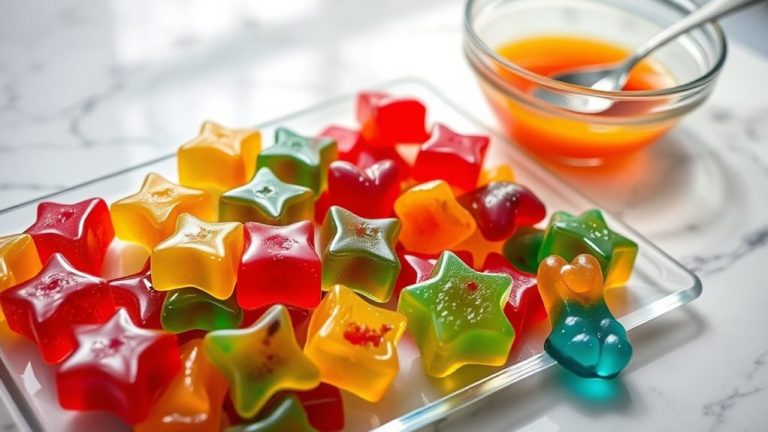
First things first, you want to make sure your molds are nice and clean. This helps the gummies come out smoothly and keeps everything hygienic. Once they’re ready, you pour the warm gummy mixture into the molds, taking your time to fill each cavity completely. It’s a bit satisfying to see the mixture settle into those shapes! After letting them set and cool down, you gently pop the gummies out of the molds, and voilà—you’ve got perfectly shaped gummies ready to enjoy!
Mold Preparation and Cleaning
Before pouring your gummy mixture into molds, it’s essential to prepare and clean them thoroughly. Proper mold hygiene ensures your gummies turn out perfect and free of contaminants.
Use effective cleaning techniques to remove residue and prevent mold sticking. Start by rinsing molds with warm water, then scrub with a soft brush to reach all crevices.
For stubborn residues, soak molds in a mild detergent solution or vinegar. Rinse thoroughly to remove any soap or vinegar traces.
Dry molds completely to avoid sticking or mold damage. Regularly inspect molds for cracks or buildup, and replace damaged ones.
Good mold preparation preserves their shape and extends their lifespan. Prioritizing cleaning techniques and mold hygiene guarantees your gummies maintain consistent quality and are safe to enjoy.
Pouring Gummy Mixture
Once your molds are clean and ready, it’s time to pour the gummy mixture. You might notice how the gummy candy history reflects the evolution of shapes and flavors, often tied to cultural significance.
Pouring the warm, viscous mixture carefully into each mold guarantees the candies take their intended form. This step connects tradition with modern techniques, as molds can be shaped into symbols, characters, or classic shapes that honor cultural heritage.
Use a spatula or pour slowly to prevent air bubbles, which can affect the final appearance. The precision during pouring helps create consistent gummies that reflect both the history and cultural importance of this beloved treat.
Now, your molds are filled and ready for the next step in the gummy-making process.
Setting and Demolding
After pouring the gummy mixture into the molds, let them set undisturbed until the candies are fully firm. During this time, the flavorings meld, giving the gummies their signature taste and texture.
Once they’re set, carefully remove the gummies from the molds, making sure they hold their shape. Proper demolding helps prevent damage and keeps them looking great.
Before packaging, check each gummy for consistency and quality. Using different mold shapes and sizes adds variety to your product line.
A smooth, shiny surface is a good sign the gummies have set properly. When they’re ready, place them into packaging to protect from moisture and keep them fresh.
This process makes sure your gummies are both attractive and delicious, ready to delight your customers.
How Do Gummies Cool and Set to Achieve the Perfect Texture?
Cooling and setting are key steps in making perfect gummies because they determine the final texture and firmness. After pouring the hot, gelatinous mixture into molds, you need to let it cool at controlled temperatures.
This process allows the gummies to thicken gradually, which helps achieve the right chewiness. During cooling, the gelatin and other ingredients bond, giving gummies their elastic, springy feel. Proper cooling also helps preserve their shape and appearance, which is important for marketing.
As the gummies set, their nutritional content becomes stable. It’s important to make sure each piece has the right balance of ingredients. Rapid or uneven cooling can cause inconsistencies, affecting both texture and quality.
How Are Gummies Cut, Coated, and Packaged?
Gummies are carefully cut, coated, and packaged to guarantee quality and appeal. Once cooled and set, they move to the cutting stage, where sharp blades slice them into uniform pieces. Ensuring the size and shape are consistent is key to a professional look.
After cutting, gummies often get a light coating of wax or sugar. This improves their shine and helps prevent sticking, making them look more appealing on store shelves. Proper coating also extends their shelf life.
The packaging process is crucial for keeping gummies fresh and protected. Automated machines efficiently fill containers and seal them tightly, ensuring the product stays intact during transport. Attractive packaging designs help draw consumers’ attention.
Branding plays a big role here, with eye-catching designs making gummies stand out. Manufacturers closely monitor the coating process to maintain the right balance of flavor and appearance. This attention to detail ensures the gummies look and taste great.
What Variations and Innovations Are Emerging in Gummy Production?
You’ll see all kinds of new gummy flavors and ingredients popping up, from exotic fruits to functional add-ins like vitamins or probiotics. It’s pretty exciting to watch how brands are getting creative with what goes into gummies.
Plus, companies are really stepping up their game with sustainable production methods to cut down on their environmental footprint. And it’s not just about what’s inside — the textures and shapes are getting a makeover too. Gummies are turning into more fun and unique treats that are as eye-catching as they are tasty.
Novel Flavors and Ingredients
As innovation in the gummy industry speeds up, manufacturers are trying out new flavors and ingredients to excite consumers’ palates. They’re pushing boundaries with unique combos to stand out on shelves and through clever marketing.
Expect to see gummies infused with exotic fruits, herbal extracts, or even spicy elements. These new ingredients often call for innovative packaging that highlights their uniqueness and appeals to adventurous buyers.
Some brands are also exploring functional ingredients like vitamins or CBD to add health benefits. This not only broadens flavor profiles but also creates buzz around the product.
Sustainable Production Methods
With increasing consumer awareness of environmental issues, gummy manufacturers are adopting innovative sustainable production methods to reduce their ecological footprint. Many now use renewable energy sources, like solar or wind power, to run their factories, cutting down on greenhouse gas emissions.
They’re also switching to eco-friendly packaging, which minimizes plastic waste and promotes recycling. These efforts help lower the environmental impact of gummy production while maintaining quality.
Some companies are exploring plant-based ingredients and natural preservatives to create more sustainable products. By integrating renewable energy and eco-friendly packaging into their processes, manufacturers not only meet consumer demand for greener options but also contribute to a healthier planet.
These innovations are shaping the future of gummy candy, making it more environmentally responsible.
Innovative Textures and Shapes
Innovations in gummy textures and shapes are changing how manufacturers attract consumers’ attention and satisfy their preferences. You’ll see more unique forms like animals, fruits, and custom designs that really stand out on shelves.
Texture innovations include adding chewy or ice-like surfaces, making each bite more exciting. These changes influence marketing strategies, with packaging that highlights the new shapes and textures through vibrant visuals.
Creative gummy packaging now focuses on the novelty factor, using playful or sophisticated designs to draw customers in. Some brands are experimenting with layering or filling gummies to add flavor and texture complexity.
These innovations help brands stand out in a crowded market, encouraging impulse buys and building brand loyalty through eye-catching visuals and sensory excitement.
How Do Quality Control and Safety Measures Ensure Gummy Quality?
Quality control and safety measures are essential in making sure every gummy candy meets high standards for both taste and safety. You’ll find strict testing processes to check ingredients, making sure they’re free from contaminants and meet regulatory rules.
During production, sensors and quality checks monitor consistency, texture, and flavor, preventing defective gummies from reaching consumers. Gummy packaging also plays a key role, with tamper-evident seals and clear labels helping keep the product fresh and safe.
Manufacturers implement hazard analysis and critical control points (HACCP) to identify and control potential risks. Marketing strategies also highlight safety, helping build consumer trust.
Frequently Asked Questions
What Are the Common Allergens Found in Gummy Candies?
You should check gummy candy labels carefully because common allergens like gelatin, soy, wheat, and artificial colorings can be present. Allergen labeling helps you identify potential risks, especially if you’re sensitive or allergic.
To avoid cross-contamination, manufacturers often implement strict prevention measures during production. Always read labels and ask about ingredients if you’re unsure, so you can enjoy gummy candies safely without risking allergic reactions.
How Long Does the Gummy Manufacturing Process Typically Take?
The gummy manufacturing process usually takes around 24 to 48 hours, depending on the texture you want.
You begin by mixing the ingredients, then heat and cool the mixture before pouring it into molds.
The timeline also includes setting and curing, which help give the gummies their chewy consistency.
Are There Any Vegan or Gluten-Free Gummy Options?
You’ll be amazed to find vegan and gluten-free gummy options that taste just as delicious as traditional ones! These gummies use vegan gelatin alternatives like agar-agar or pectin, so they’re plant-based.
Plus, they often include gluten-free binders like tapioca starch or rice flour, making them suitable for those with gluten sensitivities.
Many brands now cater to dietary needs, so you don’t have to compromise on flavor or texture. Whether you’re vegan or gluten-sensitive, these treats are a sweet win for everyone!
How Do Manufacturers Ensure Consistent Flavor in Gummies?
Manufacturers ensure consistent flavor in gummies by implementing strict manufacturing precision and quality control. They measure ingredients carefully and follow standardized recipes to keep things uniform.
They also use precise equipment to reduce variability, making sure each batch is as close to perfect as possible. Regular testing of batches helps catch any flavor differences early.
If needed, adjustments are made to maintain the desired taste. By controlling each step closely, they guarantee every gummy has the same delicious flavor, satisfying consumers and building trust in the brand.
What Environmental Impacts Are Associated With Gummy Production?
Like a delicate balance on a tightrope, gummy production impacts the environment through resource use and waste.
You can reduce this footprint by supporting brands that prioritize sustainable sourcing and waste reduction. These efforts symbolize harmony with nature, making sure your sweet treat doesn’t come at the planet’s expense.
Conclusion
Now that you know how gummy candy is made, it’s fascinating to see the intricate process behind those chewy treats you enjoy. From selecting ingredients to precise heating, mixing, and cooling, every step impacts the final product’s flavor and texture.
Isn’t it amazing how much science and craftsmanship go into creating something so delicious? Next time you indulge, will you appreciate the craftsmanship behind each gummy?