
What Age Is Safe for Kids to Have Gummy Candy?
Many parents worry about when their kids can safely enjoy gummy candy. It’s common to wonder about the right age to introduce these sweet treats without risking choking or dental issues. You’re not alone in feeling unsure—many families navigate this tricky balance.
Kids can typically enjoy gummy candies safely starting around age three, with close supervision and moderation. At this age, their chewing and swallowing skills improve enough to handle soft, small gummies.
Younger children, especially under age two, should avoid gummies or only have very soft pieces with strict supervision due to choking risks. It’s important to be cautious and watchful.
To learn more about choosing safe treats and maintaining good dental health, keep exploring these important tips.
Key Takeaways
Children around age 3 can typically handle small, soft gummies safely with supervision.
Younger children, like those 1-2 years old, should only have very soft gummies and always under close supervision.
It’s a good idea to cut gummies into smaller pieces for kids under age 5 to reduce choking risks.
Children aged 6-8 can usually manage standard gummies, but they should still be supervised and eat them in moderation.
Avoid giving gummies to kids under 3 due to their smaller airways and higher choking risk.
Is Gummy Candy Safe for Kids?
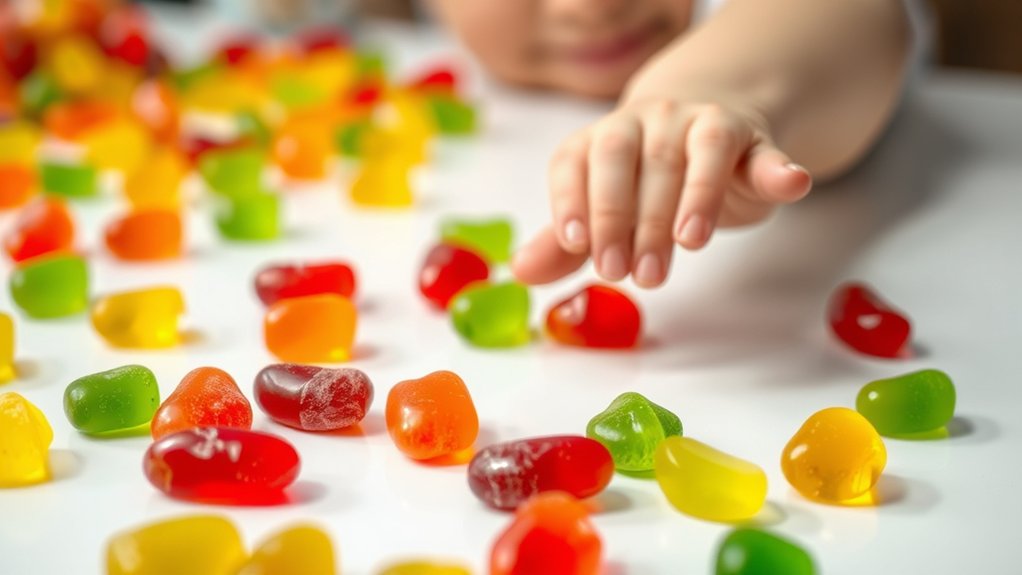
Is gummy candy safe for kids? When you think about how gummies are made, it’s good to know that reputable brands follow strict safety rules. They use safe ingredients and keep quality controls in check during production.
Since gummies are soft and chewy, they can be a choking hazard, especially if kids bite off large pieces. Proper packaging helps keep gummies fresh and prevents contamination. It also makes it easier to monitor portion sizes.
Gummies can pose choking risks; proper packaging and supervision are key to safe enjoyment.
Always check the packaging labels for allergen info and age recommendations. Gummies are generally safe for older kids, but younger children might have trouble chewing them properly, which can be risky.
Moderation is important because eating too many can cause dental problems or stomach upset. Before giving gummies to your child, make sure they’re from trusted brands with clear labels. Supervise their eating to help avoid any potential issues.
When Can Kids Start Eating Gummy Candy?
Deciding when kids can start eating gummy candy depends on their age, chewing ability, and understanding of moderation. Usually, children around age 3 can safely handle small, soft gummy candies.
Parents should also consider how gummy candies are made, as texture varies. Softer options are better for younger kids. Candy marketing often targets older children, making gummies more tempting and appealing.
| Age Range | Gummy Candy Type | Considerations |
|---|---|---|
| 1-2 years | Very soft gummies | Watch out for choking, supervise closely |
| 3-5 years | Soft gummies | Make sure bites are small, use in moderation |
| 6-8 years | Standard gummies | Monitor how much they eat and teach moderation |
| 9+ years | All types | Help them understand healthy limits |
Developmental Milestones: Chewing and Swallowing Skills

As children grow and their ability to chew and swallow develops, they become better equipped to handle different types of gummy candies safely. During this time, their sensory processing improves, helping them better tolerate textures and identify safe eating behaviors.
As children develop, they better tolerate textures and recognize safe eating behaviors with improved sensory processing.
As their language development progresses, kids can more effectively communicate discomfort or difficulty, which is vital during eating. Developing chewing skills typically begins with softer foods, gradually moving to firmer textures, including gummies.
Swallowing becomes more coordinated as their oral muscles strengthen, reducing the risk of choking. You’ll notice that older children can manage small, chewy candies more confidently, thanks to improved sensory processing and motor skills.
These milestones are key indicators that your child is ready for gummies, but always consider individual development and supervise their eating habits to guarantee safety.
What Are the Choking Risks of Gummy Candy for Toddlers?
Gummy candies are pretty small and can be really tempting for toddlers. Because of their size and chewy texture, they can easily get lodged in a child’s throat if not chewed carefully. That’s why there’s a real risk of choking when little ones try to swallow them whole.
It’s super important to keep an eye on your child when they’re enjoying treats like gummies. If they try to gulp down a gummy without chewing properly, it could block their airways and cause a choking hazard. Being aware of these dangers and watching kids closely can really help keep them safe during snack time.
Small Size, High Risk
Because of their small size, gummy candies can be a choking hazard for toddlers. Their soft, tiny shape makes them easy to swallow whole, which increases the risk of airway blockage.
To make gummies safer, parents should focus on proper portioning and supervision. Cutting gummies into smaller pieces can help reduce choking risks when preparing them.
Always supervise young children while they’re eating gummies to prevent them from swallowing large pieces accidentally. It’s best to avoid giving gummies to children under three, since their smaller airways are more vulnerable.
Knowing the dangers of small candies helps you make safer choices. Being aware of gummy safety and carefully portioning candies are key steps in protecting your child from choking hazards.
Choking Hazard Awareness
Young children are especially vulnerable to the choking risks posed by gummy candy due to their small airways and developing swallowing skills. Gummy candy’s chewy texture can easily become lodged in their throat if not chewed properly, increasing the risk of choking.
Always supervise your child when they have gummy candies, and consider cutting them into smaller pieces to reduce danger. Be aware of allergy risks, as some gummy candies contain ingredients like gelatin, nuts, or artificial additives that could trigger allergic reactions.
If your child has food allergies, check labels carefully before giving them gummy candy. Remember, even small pieces can pose a choking hazard, so understanding these risks helps you make safer choices and prevent accidents.
How to Know If Your Child Is Ready for Gummy Candy

Determining if your child is ready for gummy candy means watching how they chew and swallow safely. You want to see if they’re physically able and comfortable with the texture. Look for signs like steady chewing and not swallowing large pieces whole. When these skills are in place, they might be ready to try gummies.
Think about their interest in new foods, especially gummies with fun packaging that kids like. Also, see if they can handle different flavors without fuss or difficulty. It’s important they understand moderation and why treats should be enjoyed responsibly.
If your child shows these signs, giving them gummy candies can be a fun experience. Pick options with appealing packaging to spark curiosity, and start with small amounts. This way, you can see if they’re truly ready while keeping the experience enjoyable.
Tips for Serving Gummy Candy Safely
When you’re serving gummy candy, it’s a good idea to keep the portions small. That way, your child won’t overdo it and can enjoy the treat without going overboard.
Also, remind your kid to brush their teeth or rinse their mouth after eating. This helps protect their smile and keeps their teeth healthy.
Just a few simple steps like these can make gummy candy a safe and fun treat for your little one!
Monitor Portion Sizes
Keeping portion sizes in check is key to serving gummy candy safely. By controlling how much your child eats, you reduce the risk of overconsumption and dental issues.
Pay attention to the color varieties, as vibrant colors can make candy more tempting. But make sure they come from safe, approved ingredients.
Small portions help your kid enjoy the treat without overdoing it. Limit servings to a few pieces at a time, especially for younger children.
Choose gummies with ingredient safety in mind, avoiding those with artificial additives. Using clear portion containers can help kids see and understand their treat limits.
Monitoring portion sizes helps your child enjoy gummy candy responsibly while staying safe and healthy.
Encourage Oral Hygiene
To help your child keep good oral health, encourage them to brush their teeth well after eating gummy candy. Regular brushing gets rid of sugar leftover that can cause cavities.
Make brushing part of your routine and use fluoride toothpaste to build good habits. Balancing treats with healthy foods also helps keep their teeth strong.
Use this simple chart to guide your approach:
| Tip | Why It Matters | Example |
|---|---|---|
| Brush after snacking | Removes sugar and plaque | Turn it into a post-candy habit |
| Limit sticky candies | Less risk of cavities | Choose less sticky treats |
| Promote balanced diet | Supports both teeth and overall health | Include fruits and veggies |
Focusing on good oral care helps your child enjoy treats safely and have healthy teeth.
Choosing Safer Candy Options for Young Children
Choosing safer candy options for young children means paying close attention to ingredients and labels. Since candy manufacturing varies, some products might have unnecessary or harmful additives. Look for options with simple, recognizable ingredients to reduce risks.
Opt for candies with simple, recognizable ingredients to ensure safety for young children.
Avoid candies with artificial flavor additives, which can be overwhelming for kids and may cause allergic reactions. Instead, go for candies made with natural flavorings and minimal processing.
When selecting safer candy, check labels for artificial flavor additives and unnecessary preservatives. Choose products with clear ingredient lists and avoid vague terms like “artificial flavor.”
Prefer candies made with natural ingredients from reputable manufacturers who prioritize safety. This makes it easier to find treats that are both yummy and safer for little ones.
Dental Health Considerations When Giving Gummy Candy
Gummy candies are pretty tasty, but their sticky texture can stick to teeth and make it easier for cavities to form if you don’t clean teeth well afterward. Plus, they’re often loaded with sugar, which feeds the bacteria that cause tooth decay. So, it’s best to enjoy gummies in moderation.
And don’t forget—after your child munches on gummies, they should brush thoroughly to help keep their smile healthy and cavity-free.
Sticky Texture Risks
Because gummy candies are sticky, they tend to cling to teeth and can be hard to remove, which increases the risk of dental problems. The sticky texture makes it easier for candies to stay lodged in crevices, leading to plaque buildup and cavities.
Plus, their chewy nature can pose choking risks, especially for younger kids who might not chew thoroughly. To stay safe, keep an eye out for these hazards:
- Sticky textures that stay in contact with teeth longer
- Choking risks from their chewy consistency
- Difficulty in removing candy, which can cause dental decay
These risks show how important it is to supervise young children during candy treats and encourage good oral hygiene afterward. Being aware of these hazards can help prevent dental issues and choking accidents.
Sugar’s Impact on Teeth
Have you ever wondered how the sugar in gummy candies affects your child’s teeth? When kids eat gummies, the high sugar content feeds bacteria in their mouths, creating acids that wear down tooth enamel.
This process increases the risk of cavities and decay over time. While gummies might not offer much nutritional value, the quality of ingredients matters. Artificial sweeteners or added preservatives can make dental health issues worse.
Choosing candies with less added sugar and better ingredients helps reduce damage. Offering gummies only occasionally, rather than regularly, also lowers exposure to harmful sugars.
Keep in mind, how long and how often your child keeps gummies in their mouth impacts their teeth. Being mindful of sugar’s effects can help protect your child’s dental health, even while letting them enjoy treats now and then.
Proper Dental Hygiene
Ever wondered how to help your child enjoy treats like gummy candies without risking their dental health? Proper dental hygiene is key. Gummy manufacturing often results in sticky candies that cling to teeth, so brushing is essential.
Pay attention to candy packaging—some gummies contain added sugars or acids that can harm enamel if not cleaned promptly. To protect your child’s teeth:
- Encourage brushing twice daily, especially after candy consumption
- Use fluoride toothpaste to strengthen enamel
- Floss regularly to remove trapped particles from gummy residues
Healthy Alternatives to Gummy Candy for Kids
If you’re looking for healthier options to satisfy your child’s sweet tooth, there are plenty of tasty alternatives to traditional gummy candies. These options can support gummy candy safety and align better with your child’s developmental readiness.
Fresh fruit like berries, apple slices, or banana coins offer natural sweetness and essential nutrients. Dried fruits such as apricots or raisins are convenient, but watch the portions to prevent overconsumption of natural sugars.
Nut and seed butters, like almond or sunflower, served with whole-grain crackers provide a satisfying, nutrient-dense snack. Yogurt-covered options made from whole ingredients or homemade fruit leathers can also appeal to kids’ taste buds.
These choices help you prevent unnecessary additives and excessive sugar, promoting healthier eating habits. Remember, understanding your child’s developmental readiness for certain foods ensures they can safely enjoy these alternatives while developing good eating behaviors.
Understanding Sugar Content and Managing Candy Intake
While choosing healthier snack options is a great step, understanding the sugar content in candy helps you make better decisions for your child’s health. High sugar levels can lead to sugar addiction, making kids crave sweets even more. Checking candy packaging is essential, as it shows the exact amount of sugar per serving, helping you manage intake effectively.
To keep sugar consumption in check, consider these tips:
- Read nutrition labels carefully to identify added sugars and choose candies with lower sugar content.
- Limit portion sizes to prevent overconsumption and reduce the risk of developing a sugar addiction.
- Offer healthier alternatives or homemade treats to control ingredients and sugar levels.
Frequently Asked Questions
Are There Age Restrictions on Consuming Gummy Candies in Different Countries?
You should know that age restrictions on gummy candies vary by country because of different packaging rules and cultural preferences.
Some countries set minimum ages for buying or eating gummy candies, especially those with choking risks or lots of sugar.
Always check local guidelines and packaging warnings to stay safe.
Being aware of these rules helps you make smart choices and keeps kids protected from health risks.
How Do Allergies Impact Gummy Candy Safety for Children?
Allergies can greatly impact gummy candy safety for kids. You should make sure allergy testing has confirmed your child’s safety with specific ingredients.
Always read ingredient labels carefully, as gummy candies often contain common allergens like nuts, soy, or gluten. If your child has known allergies, avoid gummies with those ingredients or opt for allergy-friendly alternatives.
Staying vigilant helps prevent allergic reactions and keeps your child safe while enjoying treats.
What Signs Indicate a Child Has Choked on Gummy Candy?
If a child chokes on gummy candy, you’ll notice signs like difficulty breathing, persistent coughing, gagging, or inability to speak or cry.
Gummy candy packaging often doesn’t have warning labels about choking hazards, which can be risky. The chewy texture comes from the manufacturing process, making it especially dangerous for young kids.
Always supervise your children during treats and consider cutting large gummies into smaller pieces to prevent choking.
Can Gummy Candies Affect a Child’s Dental Development Long-Term?
Gummy candies can be a sneaky villain in your child’s dental story, causing long-term damage. Their high sugar content fuels dental decay like a wildfire spreading through tooth enamel.
Over time, frequent indulgence can lead to cavities and weakened teeth, disrupting healthy dental development. To keep their smile shining bright, limit gummy candy intake and encourage good brushing habits.
Choosing healthier treats that won’t compromise their dental future is also a smart move. This way, you help protect their teeth now and set them up for a lifetime of healthy smiles.
Are There Specific Ingredients in Gummy Candy to Avoid for Young Kids?
You should avoid giving young kids gummy candies with artificial sweeteners and food dyes. Artificial sweeteners can upset their developing digestive systems, and food dyes may cause allergic reactions or hyperactivity.
Instead, opt for healthier snacks like fresh fruit or natural treats. Always read ingredient labels carefully and choose options with minimal artificial additives to protect your child’s health and support their overall development.
Conclusion
As you navigate your child’s sweet tooth journey, keep in mind that patience and vigilance are key—like a wise knight guarding their treasure. Start introducing gummy candies once your little one can chew and swallow safely, usually around age three. Always keep a keen eye on portion sizes.
By choosing safer options and encouraging healthier treats, you’ll help them enjoy candy responsibly without turning your castle into a sugar-fueled chaos. So, when is a safe age for kids to have gummy candy? Generally, around age three is a good benchmark.
Remember, moderation is the true magic. Keeping these guidelines in mind will help your child enjoy gummy candies safely and happily.