What Is the White Part of Gummy Shark Candy?
Ever wondered what gives gummy shark candy its realistic look and chewy feel? You’re not alone—many people struggle with understanding what makes these treats so appealing. If you’re curious about the white part of gummy shark candy, you’re in the right place.
The white part of gummy shark candy is primarily made from gelatin, which gives it a chewy, firm texture, along with sugar, flavorings, and whitening agents like Titanium Dioxide to guarantee a bright, realistic look. It’s designed to be safe and edible, mimicking the appearance of a real shark’s underbelly.
If you want to understand more about how it’s crafted, what affects its quality, or how to spot the best ones, keep exploring further.
Key Takeaways
- The white part is mainly made from gelatin, which gives it that chewy and firm texture.
- It also has food coloring agents like Titanium Dioxide to keep it bright and white.
- This section is made by heating and molding gelatin ingredients into shark-shaped forms.
- It symbolizes purity and makes the candy look more appealing, especially when contrasted with darker parts.
- The white part is edible, safe, and shaped to resemble a shark while keeping its quality and flavor intact.
What Is Gummy Shark Candy?
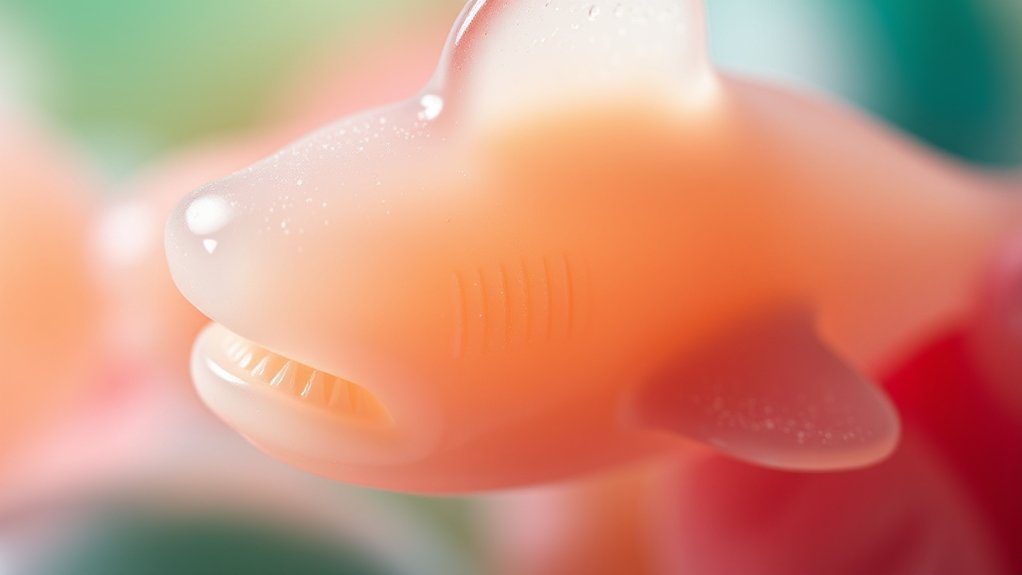
Gummy shark candy is a fun treat that looks like a real shark, often with detailed fins and a sleek body. The design captures the feel of marine life, making it both cute and eye-catching.
You’ll notice the candy usually has a darker top and a white underside, which makes it look more realistic. When you check out the packaging, it often shows vibrant images of sharks swimming in ocean scenes.
The packaging also lists the flavor and ingredients, so you can decide if you want to try them. The gummy shark is made from chewy, flavorful gelatin, giving it a satisfying texture.
Whether you’re grabbing one piece or a whole bag, the design and packaging make this candy popular with both kids and adults.
What Is the White Part of Gummy Sharks Made Of?
The white part of gummy sharks is mainly made from gelatin, which gives it that chewy, gummy feel we all love. It also includes some sweeteners and flavorings to make it taste just right.
To make the shark look more realistic and colorful, food coloring and various additives are often added. So, next time you enjoy a gummy shark, you’ll know exactly what’s giving it that familiar shape and texture!
Ingredients in White Part
The white part of gummy shark candy mainly contains gelatin, which makes it chewy and gives it a firm structure.
Besides gelatin, it includes sweeteners like glucose syrup, other sweetening agents, and sometimes natural or artificial flavorings.
The ingredients can vary based on packaging and color, but the core remains gelatin-based.
Here’s a quick look:
| Ingredient | Function | Notes |
|---|---|---|
| Gelatin | Provides chewiness | Derived from animal collagen |
| Glucose Syrup | Adds sweetness and texture | Common sweetener |
| Flavorings | Boosts taste | Natural or artificial |
This blend creates the white, chewy shark shape, tailored to different packaging designs.
Texture and Composition
Since gelatin is the main ingredient, it gives the white part of gummy shark candy its chewy texture and firm structure. The composition is mainly gelatin, sugar, and water, which creates a dense, chewy bite.
Color variations in the white section are usually minimal, but packaging differences can affect how it looks—some brands make it more opaque or glossy. The texture stays consistently firm yet pliable, meant to mimic shark skin or cartilage.
Its composition ensures it holds its shape well but still has enough elasticity for easy chewing. These factors give the white part its signature feel, creating a clear contrast with the colorful, softer sections of the candy.
Food Coloring and Additives
Food coloring and additives play a key role in giving the white part of gummy shark candy its appearance and consistency. These ingredients are carefully selected to make the candy look appealing and have the right texture.
Additives like flavor enhancements improve taste, making the white section more enjoyable. Food dyes create subtle color variations, which can make each gummy shark look more realistic or visually interesting.
Some manufacturers use natural or artificial colorings to achieve specific shades, while others focus on maintaining uniformity. Preservatives may also be added to extend shelf life.
Why Do Gummy Sharks Have a White Section?
You might notice that the white section on gummy sharks often appears at the top or along the belly, and this design choice serves a specific purpose. In candy manufacturing, the Gummy shark design aims to mimic the appearance of real sharks, making them more appealing and realistic.
The white part helps create a visual contrast that highlights the shark’s belly, giving it a more authentic look. This detail also makes the gummy shark more recognizable and fun to eat.
By adding this white section, manufacturers boost the overall visual appeal, making the candy stand out on shelves. It’s a simple but effective way to increase the product’s attractiveness and marketability.
The white area doesn’t just serve aesthetics; it also helps differentiate the shark from other gummy candies. This contributes to its unique look and helps consumers identify it easily.
How Does the White Part Affect Gummy Shark Texture?
The white part of a gummy shark can influence its texture in subtle but noticeable ways. It often feels slightly firmer or chewier than the colored sections, affecting how you experience each bite. This variation comes from manufacturing choices, which also tie into packaging and marketing strategies.
Brands might highlight the white part to showcase quality or uniqueness, shaping your perception of freshness. This subtle detail can make the gummy shark feel more premium or special.
| Texture Aspect | White Part Effect | Consumer Impact |
|---|---|---|
| Chewiness | Slightly firmer | Perceived quality |
| Softness | Less soft | Tactile satisfaction |
| Consistency | More uniform | Trust in product |
Understanding these differences helps you appreciate the craftsmanship behind gummy sharks. The white section’s texture variation is a clever marketing move that makes the candy more engaging and memorable.
Does the White Area Change the Flavor of Gummy Sharks?
While the white part of a gummy shark influences its texture, many wonder if it also impacts flavor. Generally, the white section is made from similar ingredients as the colored parts, so it doesn’t significantly change the overall taste.
However, cultural variations can affect perceptions—some cultures associate certain textures or colors with specific flavors, subtly influencing how you experience the candy. Marketing strategies sometimes highlight the white part to emphasize quality or uniqueness, which might lead you to perceive a difference in flavor.
In reality, most gummy sharks have a consistent flavor throughout, regardless of the white area. But visual cues and cultural associations can make you think otherwise. So, while the white part doesn’t directly alter flavor, it influences your overall sensory experience based on context and marketing.
What Types of White Material Are Used in Gummy Sharks?
Gummy sharks typically contain white materials made from various edible ingredients designed to give the candy its distinctive appearance and texture. These materials often include gelatin or pectin, which provide chewiness and shelf stability.
To improve their look, manufacturers add color enhancement agents that guarantee the white part stays bright and appealing over time. The white component may also contain stabilizers to maintain its shape and prevent melting or deforming.
| Ingredient Type | Purpose | Key Benefits |
|---|---|---|
| Gelatin or Pectin | Provide chewiness | Shelf stability |
| Titanium Dioxide | Color enhancement | Bright, consistent white |
| Stabilizers | Maintain shape and texture | Longer shelf life |
| Preservatives | Prevent spoilage | Extend shelf stability |
These ingredients work together to produce a white part that’s visually attractive and stable during storage, ensuring your gummy sharks stay fresh and appealing.
How Is the White Part of Gummy Sharks Made?
Ever wondered how they make the white part of gummy sharks? Well, it all starts with some key ingredients like gelatin, sugar, and flavorings. The process involves mixing these ingredients carefully and then heating them up to get the perfect consistency.
As they work on it, the mixture is poured into molds and allowed to set. During this process, they also control the texture and flavor so everything comes out just right. When you bite into a gummy shark, you can really taste how precisely it’s made — from the smooth white part to the flavorful exterior.
Ingredients Used in Manufacturing
The white part of gummy shark candy is usually made from a mix of gelatin, sweeteners, and flavoring agents. This blend gives the candy its chewy texture and clean look.
Understanding the ingredients used in manufacturing connects to the Gummy shark history, which shows how candy makers have improved recipes for consistency and flavor. The packaging design often highlights the white color to make it more attractive.
The ingredients are carefully chosen to ensure safety and quality, while also mimicking the appearance and feel of real shark parts. By combining these elements, manufacturers create a product that appeals to consumers’ nostalgia and visual expectations, all while keeping the traditional gummy shark design intact.
Manufacturing Process Overview
To achieve the distinctive white appearance and chewy texture of gummy shark candy, manufacturers follow a precise process during production.
Historical trends show that the use of gelatin, sweeteners, and stabilizers has evolved to improve consistency and appeal.
Market analysis indicates a steady demand for visually authentic and fun candy shapes, prompting manufacturers to refine their techniques.
The white part is created by blending gelatin, sugar, and cornstarch, then heating the mixture until it reaches the right consistency.
This blend is poured into molds shaped like sharks, and additives like whitening agents are incorporated to guarantee a bright, white finish.
Once cooled and set, the gummy is cut and packaged.
This controlled process assures the white part’s uniform appearance and chewy texture, meeting consumer expectations.
Texture and Flavor Development
Achieving the right texture and flavor for the white part of gummy sharks involves carefully balancing ingredients and processing techniques. You’ll focus on selecting gelling agents like gelatin or pectin to create a firm yet chewy consistency.
Flavor development often relies on subtle vanilla or fruity notes that appeal to color psychology, influencing taste perception. During production, temperature control guarantees the texture remains consistent, while the flavor is evenly distributed.
Nutritional analysis helps in adjusting ingredients for healthier options without compromising taste. To improve enjoyment, consider these factors:
- Precise mixing of gelling agents and flavorings
- Temperature regulation during setting
- Use of color psychology to influence flavor perception
- Balancing nutritional content for health-conscious consumers
Is the White Section Safe to Eat?
Many people wonder whether the white part of gummy shark candy is safe to eat, especially since it looks like real shark flesh.
Historically, candy has evolved from simple sweets to more detailed, textured treats like gummy sharks, reflecting cultural differences around the world.
Usually, the white section is made from edible ingredients like gelatin, sugar, and flavorings, which are safe to eat.
Food safety standards make sure these ingredients are tested and regulated.
But it’s a good idea to check the packaging for allergen info or additives if you have sensitivities.
Some might worry about how it looks or its color, but the white part is meant to be edible and safe.
That’s in line with the trend of making realistic candy shapes.
As long as you buy from trusted brands, there’s generally no concern about eating the white section of gummy shark candy.
Fun Facts About the White Part of Gummy Sharks
Did you know that the white part of gummy sharks isn’t just for looks? This section holds interesting fun facts that deepen your appreciation for these candies.
In some cultures, the white part symbolizes purity or innocence, adding a layer of cultural significance to the treat. Artists and designers often use the white section for creative representations, turning gummy sharks into playful, edible art.
You might notice how the white part contrasts beautifully with the darker body, making each gummy shark visually appealing. In some cases, the white section has inspired artistic representations in pop culture, from sculptures to themed desserts.
Plus, its distinctive appearance helps distinguish gummy sharks from other candies, making them more fun to collect or display. These small details give the gummy shark charm beyond just taste, connecting it to cultural and artistic expressions worldwide.
How to Spot High-Quality Gummy Sharks Based on the White Section
To identify high-quality gummy sharks, focus on the white section’s appearance and texture. A good gummy shark will have a smooth, glossy white part that feels firm but not hard.
A high-quality gummy shark has a smooth, glossy, and firm white section with seamless blending.
It should be uniform in color, without discoloration or cracks, which shows quality ingredients and proper manufacturing. When checking the packaging, look for clear labeling that highlights quality standards and authentic branding.
High-quality gummies often emphasize their freshness and craftsmanship, and this can be seen in how the white section looks. Avoid gummies with a dull or overly translucent white, as these may be lower quality or contain artificial additives.
The texture should be slightly chewy but not rubbery, and the white part should blend seamlessly with the rest of the candy. By paying attention to these details, you can easily spot premium gummy sharks and avoid lesser-quality options.
Frequently Asked Questions
Is the White Part of Gummy Sharks Natural or Artificial?
The white part of gummy sharks is artificial, created through color enhancement and texture modification to make it look realistic. Manufacturers add these features to make the candy more appealing and resemble real shark flesh.
You might notice the white section feels different from the colored parts, which is intentional. Specific ingredients are used to achieve that texture. So, the white part isn’t natural but carefully crafted for visual and tactile appeal.
Can the White Section Cause Allergies?
Yes, the white section of gummy shark candy can cause allergies, especially if you’re sensitive to ingredients like gelatin, fish derivatives, or food colorings.
Since there are different flavors and textures in these candies, it’s a good idea to always check the ingredient list. If you have allergies, it’s best to avoid these candies or talk to a healthcare professional before eating them to stay safe.
Does the White Part Contain Gelatin?
The white part of gummy shark candy usually contains gelatin, which gives it that chewy texture you enjoy.
Because of color differences and flavors, some brands might use other ingredients, but gelatin is still common. If you’re sensitive to animal products, be sure to check the labels carefully.
The white section’s smooth, milky look adds to the candy’s charm, making each bite fun. Always read the ingredient list to see if it fits your dietary needs.
How Does the White Part Affect Shelf Life?
The white part of gummy shark candy helps extend its shelf life by providing a barrier that maintains moisture and prevents spoilage. It also improves flavor by preserving the candy’s freshness and adds texture variation, making the chew more interesting.
Can the White Section Be Removed Easily?
You can usually remove the white section of gummy shark candy easily because it often feels different in texture and color from the rest of the treat.
Gummy sharks are molded in parts, and the white segment tends to be a bit softer or firmer.
That makes it simple to peel or nibble away. This way, you can enjoy the colorful, chewy part without the white section if you prefer.
Conclusion
Now that you know what the white part of gummy shark candy is made of and why it’s there, you can enjoy your treat with confidence. Think of it as the icing on the cake—adding a bit of extra flair and flavor.
So next time you pop a gummy shark in your mouth, you’ll see beyond its shiny exterior and appreciate the little details that make it unique. After all, the devil is in the details!
When you understand that the white part is usually made of a softer, chewy material like sugar, gelatin, or a similar ingredient, it makes the candy even more interesting. It’s what gives the gummy shark its shape and texture.
Knowing this also helps you enjoy the candy more, whether for its flavor or its fun design. Gummy shark candy isn’t just a sweet treat; it’s a little piece of edible art with thoughtful details.
In the end, understanding what the white part is makes your gummy shark experience even better. So next time you indulge, remember—you’re enjoying a carefully crafted, textured delight.