What to Know About Gummy Candy Calories?
If you love gummy candy but worry about calories, you’re not alone. Many people struggle to enjoy their favorite treats without going overboard on sugar and calories. Finding the right balance can be tricky, especially when those little gummies are so tempting.
Gummy candy calories typically range from 15 to 20 per piece, mostly from sugars and sometimes affected by size, shape, and ingredients.
Lower-calorie options include gummies made with lighter gelatin, pectin, or sugar substitutes like erythritol or stevia.
Keep in mind, serving size and frequency affect your total intake. Moderation helps you enjoy treats without overdoing it.
Want to learn how to choose or enjoy gummies wisely? Continue exploring these tips and facts.
Key Takeaways
- Gummy candy usually has about 15-20 calories per piece, mostly from sugars.
- The calorie content is influenced by ingredients like sugar, glucose syrup, and gelatin.
- Smaller, less chewy, or sugar-free gummies tend to have fewer calories.
- Keeping an eye on serving size and portion control is key to managing your calorie intake.
- Comparing labels and choosing lower-calorie options can help you enjoy gummies responsibly.
How Many Calories Are in a Typical Gummy Candy Piece?
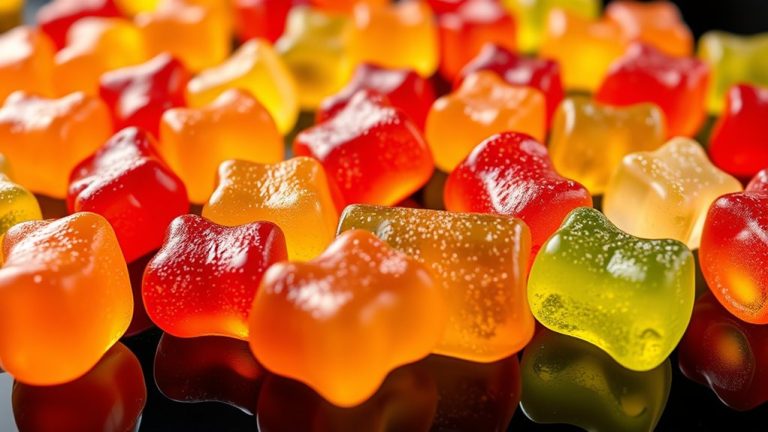
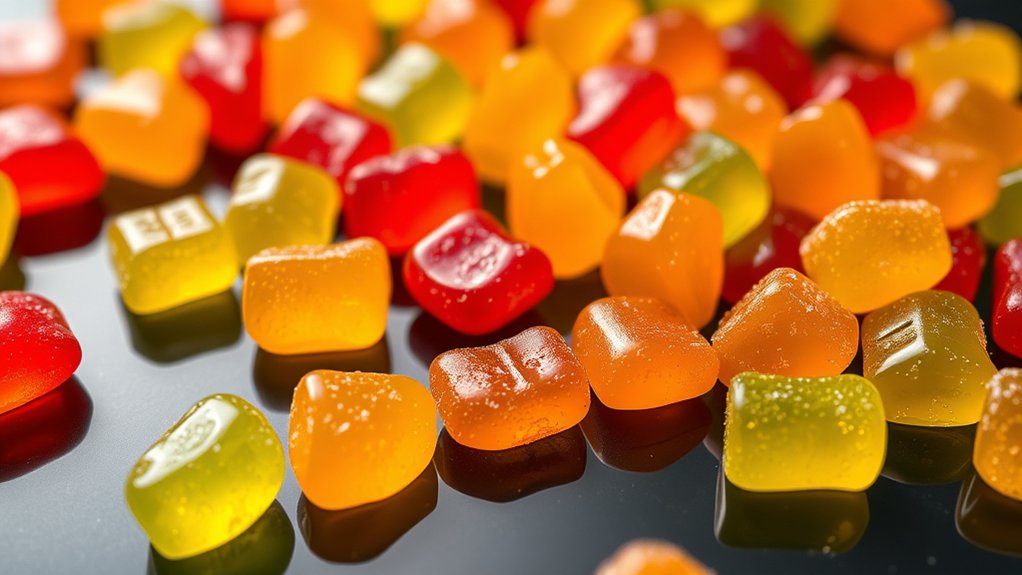
A typical gummy candy piece usually contains around 15 to 20 calories. The gummy’s chewy and soft texture makes it satisfying to bite into without requiring much effort.
During gummy candy manufacturing, ingredients like sugar, glucose syrup, and gelatin are combined to create this distinctive texture. This process affects the calorie content since higher sugar levels add more calories per piece.
Smaller gummies tend to be lower in calories, while larger or more densely coated options increase the calorie count. When you pick up a gummy, you’re mainly consuming calories from sugars, with minimal fat or protein.
Because of their chewy nature, you might eat a few without realizing how many calories you’ve consumed. Understanding how manufacturing influences texture helps explain why some gummies are more calorie-dense than others.
But on average, a single piece remains a relatively low-calorie treat.
What Factors Affect Gummy Candy Calories?
Several factors influence the calorie content of gummy candies, making some varieties more calorie-dense than others. During gummy candy manufacturing, ingredients and production methods play a key role. For instance, the amount of sugar and added fats directly impacts calorie counts. Furthermore, flavor variations can alter calorie content; fruit-flavored gummies often contain more sugar than sour or neutral flavors.
Gummy candy calories vary based on ingredients, size, shape, and flavor choices.
Here are three main factors that affect calories:
- Ingredient quality – Higher sugar or fat levels increase calories.
- Size and shape – Larger or thicker gummies naturally contain more calories.
- Flavor variations – Some flavors require more sweeteners, raising calorie content.
Understanding these factors helps you make smarter choices. Whether it’s a small, sour gummy or a larger, fruit-flavored piece, the manufacturing process and flavor profile determine how calorie-dense each candy is.
Which Types of Gummy Candies Are Lower in Calories?
When choosing gummy candies with fewer calories, focusing on specific types can help you enjoy a sweeter treat without the extra calorie load. Generally, softer, less chewy gummies tend to have fewer calories because their texture requires less dense ingredients.
For example, gummies made with lighter gelatin or pectin blends often contain fewer calories. Gummy candy manufacturing also plays a role, as some brands use sugar substitutes or lower-calorie sweeteners, reducing overall calorie content.
Candies with a thinner or more delicate texture tend to be lower in calories compared to thick, chewy varieties. Fruit-flavored gummies that are less dense and have a more airy texture usually pack fewer calories per piece.
How Does Serving Size Change Your Gummy Candy Calories?
The size of your gummy candy serving directly influences your total calorie intake, even if each piece has just a few calories. Larger servings mean more gummies, which quickly adds up.
When you check the packaging, you’ll see the serving sizes listed clearly. Adjusting this number changes your calorie count, so it’s good to pay attention.
The manufacturing process decides how many gummies are in a typical serving, which affects your calorie intake.
Keep these points in mind:
- A bigger serving size multiplies the calories you consume, so watch your portions.
- Packaging labels help you estimate your calorie intake based on serving size, making it easier to make healthier choices.
- Understanding how gummies are portioned during manufacturing can give you insight into the calories per serving.
Are Sugar-Free Gummy Candies Lower in Calories?
Many people turn to sugar-free gummy candies as a healthier alternative, but do they really contain fewer calories? The answer depends on the sugar substitutes used.
Sugar-free candies usually replace sugar with artificial or natural sweeteners, which can vary in sweetness. Some substitutes like maltitol or sorbitol provide fewer calories than sugar but still have calories, so the overall reduction can be minimal.
Others, such as erythritol, have almost zero calories and can make the candies lower in calories overall. However, manufacturers often add more of these substitutes to achieve the right taste, which can affect the calorie content.
How to Read Gummy Candy Nutrition Labels to Track Calories
Want to keep tabs on how many calories you’re consuming from gummy candies? First, take a quick look at the serving size on the label. It might be smaller than you think, so it’s good to know exactly how much you’re eating. Then, check out the calorie count per serving—this gives you a clear idea of how many calories are in each portion.
And don’t forget to peek at the ingredients list, too. Sometimes, added ingredients like sugars or fats can bump up the calorie content more than you’d expect. By paying attention to these details, you can better manage your snack intake and enjoy gummy candies in moderation!
Understanding Serving Sizes
Ever wonder how to accurately track your gummy candy calories? Understanding serving sizes is key. Gummy candy manufacturing and ingredient sourcing influence how much fits into a serving, so reading labels carefully is vital.
Look for these three points:
- Serving size details—check if it’s per piece, handful, or weight to ensure accuracy.
- Number of servings per package—a small bag may contain multiple servings, impacting total calorie count.
- Calorie count per serving—use this to calculate your total intake based on how much you eat.
Interpreting Calorie Counts
Reading gummy candy nutrition labels carefully is key to tracking your calorie intake accurately. Gummy candies are made differently, which can change how many calories they have depending on the ingredients and how they’re made.
To understand calorie counts better, focus on the serving size and calories per serving. Use this quick reference table:
| Serving Size | Calories per Serving |
|---|---|
| 10 pieces | 80 calories |
| 5 pieces | 40 calories |
| 1 piece | 8 calories |
This helps you see how many calories each piece gives you. Knowing how manufacturing affects calorie content can help you make smarter choices. Always read labels carefully and keep track of your serving sizes to stay within your calorie goals.
Recognizing Added Ingredients
Understanding the ingredients listed on gummy candy labels helps you identify added sugars, artificial flavors, and preservatives that can impact calorie content. Food additives like artificial sweeteners may seem low-calorie, but some can still contribute to your overall intake. Recognizing these ingredients helps you make smarter choices.
For example, look for artificial sweeteners like aspartame or sucralose, which can hide high sugar levels. Check for food additives such as artificial flavors or colors, as they might add empty calories or cause sensitivities.
Be aware of preservatives that extend shelf life, but sometimes they contain hidden calories or additives. Knowing what to look for helps you enjoy treats without overdoing it.
Enjoy Gummy Candies Guilt-Free: Tips for Responsible Snacking
While it’s easy to indulge in gummy candies without thinking, responsible snacking helps you enjoy them without guilt. Start by exploring different gummy candy varieties to find options with lower sugar or healthier ingredients.
Enjoy gummy candies mindfully by choosing lower-sugar options and savoring them responsibly.
Moderation is key. Limit your servings and avoid eating straight from the bag, which can lead to overeating. Consider portion-controlled packs or pre-measured servings to keep track of your intake easily.
Pair your gummy candies with healthier snacks like nuts or fresh fruit. This way, you can satisfy your sweet cravings without overdoing it.
Stay mindful of how often you snack on gummies. Reserve them for occasional treats rather than making them a daily habit.
Practicing responsible indulgence means you can enjoy your favorite gummies without compromising your health or diet goals. Remember, enjoying sweets responsibly makes the experience better and helps you stay balanced.
How Do Gummy Candy Calories Fit Into Your Daily Diet?
Gummy candy calories can quickly add up and impact your daily diet if you’re not paying attention. Since calorie content varies depending on how the gummies are made and their flavors, it’s easy to underestimate their effect.
To fit gummy candies into your diet responsibly, keep a few things in mind. First, practice portion control by sticking to a small handful to avoid overeating.
Second, enjoy gummies occasionally instead of every day. This way, you can indulge without disrupting your overall healthy eating habits.
Lastly, pay attention to labels. Different brands and flavors can have quite different calorie counts, so reading them carefully helps you make smarter choices.
Understanding how gummies are made and what ingredients they contain can guide you to better decisions. Some candies have added sugars or dense ingredients that boost their calorie content.
Others focus on flavor profiles that might tempt you to eat more than you should. Being mindful of these factors lets you enjoy your favorite gummies without overdoing it.
What Are the Best Low-Calorie Gummy Candy Options?
If you’re trying to enjoy gummy candies without going overboard on calories, sugar-free options are definitely worth checking out. They give you that sweet, chewy experience without the extra sugar and calories.
You might also want to look for fruit-flavored low-calorie gummies—they pack a ton of flavor without adding too many calories, so you can satisfy your sweet tooth without guilt.
And of course, it’s a good idea to compare calorie counts across different brands. That way, you can find the best low-calorie gummies that fit nicely into your diet and keep you feeling good.
Sugar-Free Gummy Choices
Choosing sugar-free gummy candies can be a smart way to enjoy a sweet treat without consuming too many calories. These options often use alternative sweeteners like erythritol or stevia, making them lower in calories than traditional varieties.
When selecting sugar-free gummies, consider these points: Look for brands that offer different flavors and shapes without added sugars. Check the ingredients for natural or low-calorie sweeteners that won’t spike your blood sugar.
Finally, opt for products labeled as sugar-free or low-calorie to ensure you’re choosing the best option to satisfy your sweet tooth without excess calories.
Fruit-Flavored Low-Cal Options
Looking for fruit-flavored gummies that won’t break your calorie budget? Many gummy candy makers now focus on creating low-calorie options using innovative flavor techniques.
These methods help boost fruit taste without adding extra sugar or calories. Some brands use natural or artificial flavor extracts to make the gummies taste rich and satisfying while staying light.
Plus, some low-calorie gummies use alternative sweeteners that provide sweetness without the calorie load of traditional sugars.
When choosing these options, check labels for reduced sugar content or lower calorie counts.
These gummies are perfect if you want to enjoy fruity flavors without feeling guilty, thanks to advances in candy manufacturing that deliver great taste with fewer calories.
Calorie Count Comparisons
Wondering which low-calorie gummy candies offer the best flavor without sacrificing your diet? When comparing calorie counts, some options stand out thanks to innovations in gummy manufacturing and awareness of candy trends from the past.
To find the best low-calorie choices, consider these factors:
Sugar substitutes: Modern manufacturing often uses alternatives like stevia or erythritol to cut calories without losing taste.
Portion size: Smaller gummies help manage calorie intake while still satisfying your sweet tooth.
Flavor intensity: Some brands boost flavor with natural extracts, making lower-calorie options more enjoyable.
Debunking Myths About Gummy Candy and Calories
Many people assume that all gummy candies are high in calories and avoid them altogether, but this isn’t always accurate. Gummy candy manufacturing varies, so calorie counts can differ quite a bit between brands and types.
Some gummies are made with fewer sugars or alternative ingredients, which helps reduce their calorie content. Plus, different flavor profiles can also influence calories—fruit-flavored gummies may have less sugar than sour or sour-filled ones.
It’s a myth that all gummies are calorie-dense. Some options are lower in calories and can be enjoyed in moderation. Knowing how gummies are made and understanding the flavor differences helps you make smarter choices.
Don’t fall for the idea that all gummy candies are unhealthy or packed with calories. Just check labels and watch your portion sizes, so you can indulge without guilt while managing your calorie intake.
Frequently Asked Questions
Are Homemade Gummy Candies Generally Lower in Calories Than Store-Bought Ones?
Homemade gummy candies are usually lower in calories than store-bought ones because you get to control the ingredients and how much sugar is used.
Commercial gummies often contain added sugars and preservatives, which boost the calorie count. When you make gummies at home, you can use less sugar or healthier alternatives, cutting down on calories.
This means you can enjoy a treat that fits your dietary needs. Homemade gummies can be a smarter, lower-calorie option that still tastes great.
How Do Artificial Flavors Affect the Calorie Content of Gummy Candies?
Artificial flavors in gummy candies usually don’t add significant calories, but they can help mask the taste, making the candy more appealing without adding extra sugar.
If artificial sweeteners are used alongside these flavors, the calorie content might be lower compared to traditional candies.
Some artificial flavors and sweeteners may have minimal calories or be calorie-free, so it’s always a good idea to check the packaging for specific details.
Do Gummy Candies With Added Fillings Have More Calories?
Gummy candies with added fillings usually have more calories than plain ones because the filling adds extra sugar and weight.
When comparing different gummy varieties, take a close look at the calorie counts to see how the fillings affect the total.
If you’re trying to watch your intake, opt for ones with less filling or smaller portions.
Always check the nutrition label so you understand how added ingredients influence the calorie content in each type of gummy candy.
Can Consuming Large Amounts of Gummy Candy Impact Blood Sugar Levels?
Eating large amounts of gummy candy can significantly impact your blood sugar levels. The high sugar content causes a quick spike, which makes your body release insulin to handle it.
This insulin response can lead to fluctuations in blood sugar, leaving you feeling tired or hungry again pretty fast. If you’re sensitive or diabetic, eating too much gummy candy might cause serious blood sugar issues.
Are Gummy Candies Made With Natural Ingredients Lower in Calories?
You might think gummy candies made with natural ingredients are lower in calories, but that’s often not the case. Natural sweeteners and sugar substitutes can still pack a calorie punch, making these treats just as indulgent.
While they may seem healthier, don’t be fooled—these gummies can still impact your calorie intake. Enjoy them in moderation. The “natural” label doesn’t automatically mean a lower-calorie snack.
Conclusion
Just like a rollercoaster ride, enjoying gummy candies can be thrilling yet mindful. By understanding their calorie content and choosing smarter options, you can indulge without guilt.
Remember, moderation is your best friend. Think of it as steering a boat steadily across calm waters.
So, savor your gummy treats responsibly, and they’ll continue to bring joy to your day without tipping the calorie scale.
When it comes to gummy candy calories, being aware helps you enjoy your favorites without overdoing it. Happy snacking!