
Why Do I Crave Gummy Candy?
Feeling a sudden craving for gummy candy? You’re not alone—many people struggle with these sweet urges and wonder why they just can’t resist. That irresistible chewy texture and bright colors can really hit the spot, but they also tap into your brain’s reward system.
You crave gummy candy because its sweet, chewy texture and bright colors activate your brain’s reward system, making you feel good temporarily. Stress, boredom, or emotional triggers can also push you toward these treats as quick comfort.
Habit and routine reinforce your desire, while blood sugar drops or sleep deprivation increase cravings for fast energy.
If you want to understand more about what drives these urges and how to manage them, keep exploring these insights.
Key Takeaways
- Cravings are triggered by the chewy texture, sweet taste, and nostalgic appeal of gummies, which stimulate the brain’s reward system.
- Emotional factors like stress, boredom, or strong feelings can lead to quick comfort cravings for gummies.
- Routine habits, such as eating gummies after meals or while watching TV, reinforce automatic craving triggers.
- Blood sugar drops and sleep deprivation can increase the desire for quick energy sources like gummy candies.
- Artificial colors, flavors, and appealing textures make gummies more irresistible and boost their sensory appeal.
What Causes Gummy Candy Cravings?

Cravings for gummy candy often come from a mix of biological and psychological factors. The history of gummy candy goes back to the early 20th century, when candy makers started experimenting with gelatin-based treats.
Cravings for gummies stem from their chewy texture, sweet flavor, and nostalgic appeal.
Making these candies involves mixing gelatin, sugar, and flavorings, which gives them that chewy texture you love. The sweetness and chewy feel can trigger your brain’s reward system, making you want more.
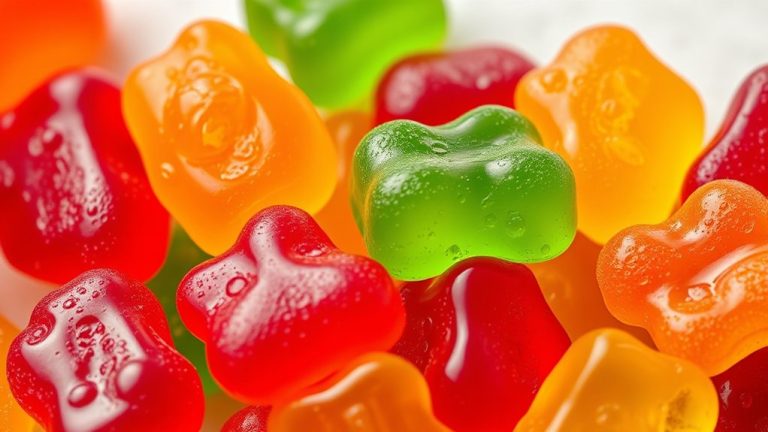
Plus, the bright colors and fun shapes of gummies make them visually appealing. This can make you crave them even more because they look so enticing.
Your brain also connects these candies with comfort or celebration, which can increase your desire to have them. The familiarity of gummy candy’s history and how they’re made adds to their popularity, creating a cycle of craving.
How Blood Sugar Fluctuations Trigger Candy Cravings
When your blood sugar levels suddenly drop, your body sends signals that can make you crave candy. You might find yourself reaching for something sweet, especially gummy candy, because it quickly raises blood sugar.
The texture of the candy matters here; chewy and soft options tend to be more satisfying. They can cause a dopamine spike, which boosts your desire to keep eating. Packaging design also plays a role—bright, colorful wrappers catch your eye and trigger subconscious urges.
When blood sugar dips, your brain looks for quick energy sources, making gummy candy seem irresistible. This craving is actually a survival response, aiming to restore your energy levels fast.
Do Artificial Colors and Flavors Make You Crave Candy More?
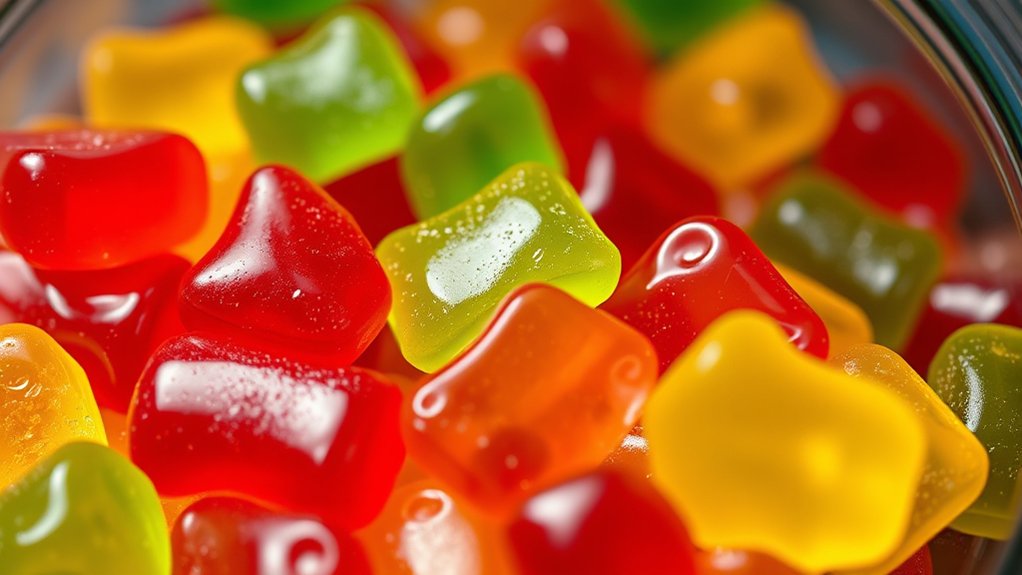
Artificial colors and flavors in candy are designed to catch your eye and make the treats look irresistible. But they can also influence how much you want to eat.
Color psychology plays a big role here. Bright, vibrant hues can make you feel happy and excited, which makes candy even more tempting. These colors aren’t just for looks—they trigger emotional responses that boost your craving.
Flavor enhancers are added to make the taste more intense, so each bite feels more satisfying. Artificial flavors often mimic real fruit or sweet notes, but their exaggerated taste can make you want more.
When you combine these elements, they create a sensory experience that’s hard to resist. It’s not just your sweet tooth—these artificial colors and flavors are intentionally crafted to make candy more appealing.
They boost your cravings and make it tough to stop at just one piece.
Why Are Bright, Chewy Sweets So Irresistible?
Bright, chewy sweets often seem to call out to us, thanks to their vivid colors and satisfying texture. Their allure dates back to the gummy candy history, which began in Germany in the early 20th century. Over time, candy manufacturing processes have evolved to produce these treats efficiently, using gelatin, sugar, and flavorings to create their iconic chewiness and shine.
The vibrant colors are often added through artificial or natural dyes, making them visually irresistible. The chewy texture provides a unique sensory experience, releasing flavors slowly and making each bite more enjoyable. Furthermore, their bright appearance signals fun and indulgence, appealing to both children and adults.
The combination of appealing visuals, nostalgic history, and innovative manufacturing techniques makes these sweets almost impossible to resist. Their playful look and satisfying feel tap into your desire for a treat that’s both delightful to see and to taste.
How Stress and Emotions Fuel Your Gummy Candy Cravings

Stress and strong emotions can trigger intense cravings for gummy candies because these sweets often serve as a quick comfort or escape. When you’re overwhelmed or upset, you might turn to gummy candies as a way to soothe your feelings.
This happens because emotional regulation becomes challenging during demanding times, making you seek out familiar, sweet treats that temporarily boost your mood. Gummy candies stimulate your brain’s reward system, giving you a quick hit of pleasure to counteract negative feelings.
Developing effective stress management techniques can help reduce these cravings, so you don’t rely solely on sweets for emotional relief. Practicing mindfulness, deep breathing, or engaging in physical activity allows you to better handle emotions and avoid impulsive candy consumption.
Recognizing the link between your feelings and cravings is an important step toward healthier emotional regulation. It can help you break the cycle of emotional eating and develop more balanced coping strategies.
Hunger’s Role in Gummy Candy Cravings
When you’re feeling hungry, your body tends to send out signals that make you crave something sweet, like gummies, to give you a quick energy boost. It’s pretty normal—your blood sugar levels go up and down throughout the day, which can make you more likely to reach for sugary snacks without even thinking about it.
And sometimes, it’s not just about actual hunger. Emotional hunger can play a big role too. If you’re feeling stressed or bored, your mind might start craving candy as a way to find comfort or distraction. So, those gummy cravings might be more about how you’re feeling inside than just needing something to eat.
Hunger Triggers Sweet Desires
Hunger often acts as the primary trigger for sweet cravings, including that irresistible urge for gummy candies. When your stomach signals emptiness, your brain looks for quick energy sources, making sugary treats especially appealing.
Gummy candy manufacturing often plays on this by creating products with bright colors and fun shapes that catch your eye when you’re hungry. Candy marketing strategies target these cravings, emphasizing fun and satisfaction to encourage immediate consumption.
As hunger gets worse, you’re more likely to notice these cues and reach for gummies. Understanding this link can help you see that your cravings are partly a natural response, boosted by clever marketing designed to make gummy candies seem like the perfect quick fix for hunger.
Blood Sugar Fluctuations
As blood sugar levels fluctuate throughout the day, they significantly influence your cravings for gummy candies. When blood sugar drops, your body signals hunger, making you want quick energy sources like gummies.
The colorful packaging and appealing design of gummy products make them an easy, tempting choice. During manufacturing, producers often add extra sugar to satisfy immediate cravings, which can cause blood sugar spikes followed by crashes.
These rapid fluctuations can leave you feeling hungry sooner, prompting more cravings for gummies. Understanding this cycle helps explain why you might keep reaching for gummy candies—your blood sugar rollercoaster keeps signaling your body’s need for quick carbs, making gummies an irresistible, convenient fix.
Emotional Hunger Influence
Emotional hunger often drives cravings for gummy candies more than genuine physical need does. When you’re stressed, bored, or anxious, emotional triggers can make you want sweets. Gummy candies become a quick fix, offering temporary relief from negative feelings.
Over time, this can turn into a habit, where reaching for gummies becomes your go-to response to emotional discomfort. Your brain starts to associate these candies with comfort, which reinforces the craving even when you’re not truly hungry.
Recognizing this cycle helps you understand that your desire for gummies may be rooted in emotional hunger rather than real hunger. Breaking this habit means addressing emotional triggers directly, finding healthier ways to cope, and paying attention to your eating patterns.
How Routine and Habits Reinforce Your Sweet Tooth
Many of us find ourselves reaching for gummy candies out of habit, often without even realizing it. Habit formation plays a big role in how your cravings develop, as your brain links certain routines with sweet rewards.
For example, grabbing a gummy candy after lunch or while watching TV reinforces the behavior. These small actions create routine reinforcement, making it easier for your brain to expect and seek out sweets in similar situations.
Over time, this pattern becomes automatic, and your craving for gummies grows stronger whenever you see those familiar cues. Because habits are deeply ingrained, breaking the cycle takes awareness and effort.
Recognizing when you’re acting out of routine rather than real hunger helps you pause and choose healthier options.
Does Sleep Deprivation Make You Crave Sugar More?
Lack of sleep can really boost your cravings for sugar, making it tough to resist those sweet treats. When your sleep is disrupted, your brain’s hunger signals become stronger, especially for quick energy sources like candy.
Sleep deprivation also lowers your energy levels, so your body looks for fast carbs to make up for it. The table below shows how different sleep patterns impact your cravings:
| Sleep Pattern | Effect on Energy Levels | Craving Intensity |
|---|---|---|
| Adequate sleep | Stable | Moderate |
| Little sleep (<5 hrs) | Low | High |
| Interrupted sleep | Fluctuating | Increased |
| Excessive sleep (>9 hrs) | Variable | Variable |
Tips to Manage and Reduce Your Gummy Candy Cravings
If you’re looking to manage your gummy candy cravings, a good first step is to figure out what actually triggers them. Is it stress, boredom, or maybe just habit? Once you know that, you can start finding better ways to handle those urges.
When cravings strike, try reaching for healthier snacks instead of candy. Fresh fruit, nuts, or even a small piece of dark chocolate can do the trick. And don’t forget to practice mindful eating—pay attention to what you’re eating and savor each bite. That way, you’ll be more aware of how much sugar you’re consuming and can enjoy treats in moderation.
These simple tricks can help cut down your overall sugar intake and still satisfy that sweet tooth in a smarter, healthier way.
Identify Sugar Triggers
Understanding what triggers your craving for gummy candies is an essential step in managing those urges. Often, cravings come from emotional states, routines, or environmental cues linked to candy manufacturing or the Gummy candy history.
Recognizing these triggers helps you develop healthier responses. For example, stress might make you reach for gummy candies as comfort, while seeing candy at the store can spark temptation.
Use this table to identify your triggers:
| Trigger Type | Common Situations | How to Manage |
|---|---|---|
| Emotional cravings | Feeling stressed or bored | Find alternative activities |
| Environmental cues | Passing by candy aisles | Keep healthy snacks handy |
| Routine habits | After meals or work | Replace with fruit or nuts |
Knowing your triggers empowers you to control your cravings more effectively.
Choose Healthier Snacks
Choosing healthier snacks can be a powerful way to curb your gummy candy cravings and support better overall eating habits. Many nutrition myths suggest that all snacks are unhealthy, but smart choices really do matter.
Instead of falling for candy marketing that promotes gummies as fun or energizing, opt for nutrient-dense options like nuts, fruit, or yogurt. These alternatives satisfy your sweet tooth without the excess sugar or artificial ingredients.
By replacing gummies with healthier snacks, you reduce your risk of blood sugar spikes and long-term cravings. Remember, it’s not about deprivation but making mindful swaps.
Over time, these choices can reshape your eating habits, diminish your dependence on candy marketing, and help you enjoy sweet flavors in a more balanced, nourishing way.
Practice Mindful Eating
Practicing mindful eating can really help you manage and reduce your gummy candy cravings by encouraging you to pay close attention to your body’s signals.
When you eat mindfully, you become aware of why you crave certain foods, recognizing cultural influences and marketing tricks that may trigger your urges.
For example, ads and packaging often use emotional appeals, making candies seem irresistible.
By slowing down and savoring each bite, you can better tell the difference between true hunger and cravings driven by external cues.
This approach helps you regain control and reduces impulsive eating.
Over time, mindful eating builds a healthier relationship with treats, letting you enjoy gummy candies in moderation without feeling deprived.
It’s a simple but powerful way to break the cycle of constant craving.
What Healthy Alternatives Can Satisfy Your Sweet Tooth?
When you’re craving something sweet but want to avoid processed candies, there are plenty of healthy alternatives that can satisfy your taste buds. Fresh fruit, like berries, apple slices, or mango chunks, offers natural sweetness and vibrant flavor.
Dried fruits, such as apricots or dates, deliver concentrated flavor intensity without added sugars. For a chewy texture similar to gummy candy, try homemade fruit leather or yogurt-covered dried fruit.
These options often come in eco-friendly candy packaging that’s easy to carry and store. Flavored frozen grapes or banana slices can also mimic the cool, chewy sensation of gummies.
Not only do these alternatives satisfy your sweet tooth, but they also provide essential nutrients and fiber. Choosing whole, minimally processed options helps you indulge healthily.
With a little creativity, you can enjoy sweet treats without compromising your wellness goals.
Frequently Asked Questions
Can Certain Medications Increase My Craving for Gummy Candy?
Certain medications can increase your craving for gummy candy by affecting your brain’s craving triggers and potentially making sugar harder to resist. Some drugs, like antidepressants or corticosteroids, may change your appetite or mood, leading to stronger desires for sweets.
If you notice your cravings are getting worse, it’s a good idea to talk to your doctor. These medications can impact your cravings and overall health. Managing what triggers your cravings can also help you cut back on sugar.
Do Genetics Influence My Preference for Sweet, Chewy Treats?
Yes, genetics can influence your preference for sweet, chewy treats like gummy candy. Your taste preferences are partly shaped by genetic factors that affect how you perceive sweetness and texture.
If your family members also enjoy similar snacks, it’s probably due to inherited traits. These genetic influences can make you more sensitive to certain flavors, leading to a stronger craving for sugary, chewy foods.
How Does Hormonal Imbalance Affect My Gummy Candy Cravings?
Did you know that hormonal imbalances can increase sugar cravings by up to 60%? When your hormones are out of sync, your body may seek quick energy sources, leading to sugar addiction and intense gummy candy cravings.
Emotional triggers like stress or mood swings can make these urges even stronger, making it harder to resist. Balancing hormones through proper diet, exercise, and stress management can help curb those sweet tooth temptations.
Is There a Link Between Nutrient Deficiencies and Candy Cravings?
Yes, nutrient deficiencies can trigger candy cravings, especially when your body is looking for quick energy from sugar.
You might reach for gummy candies because of sugar addiction or emotional triggers like stress or boredom.
When your diet is lacking essential nutrients, your body sends signals for comfort foods, making sugary treats more tempting.
Addressing these deficiencies and managing emotional triggers can help cut down your cravings and encourage healthier choices.
Can Exercising More Reduce My Desire for Gummy Candy?
Exercising more can definitely help reduce your desire for gummy candy. Studies show that physical activity releases endorphins, which boost your mood and curb sugar cravings.
When you work out regularly, your body naturally seeks healthier ways to satisfy its energy needs, decreasing those intense gummy candy urges.
Conclusion
Your craving for gummy candies is like a siren’s call, tugging at your senses with bright colors and chewy textures. But just as a lighthouse guides ships safely to shore, you can steer your cravings toward healthier choices.
By understanding what sparks your sweet tooth and choosing nourishing alternatives, you’ll tame that irresistible sparkle. This way, you can find a balanced, satisfying path forward.
Turning your candy cravings from stormy seas into calm waters is possible when you know how to manage them. Gummy candy cravings are common, but with a little awareness, you can enjoy treats without overdoing it.