10 Easy Steps to Make Gummy Candy With Gelatin
Making gummy candy with gelatin at home can seem tricky, especially if you’re new to DIY treats. Many people struggle with getting the perfect texture or flavor, but you’re definitely not alone in that.
Luckily, with a few simple steps, you can create delicious gummies that rival store-bought ones.
To make gummy candy with gelatin, start by gathering ingredients like gelatin, fruit juice, sweetener, and tools such as a saucepan and molds. Set up your workspace with everything within reach and handle hot liquids carefully.
Dissolve the gelatin by soaking and heating it gently. Add flavors and colors to customize your gummies.
Pour the mixture into molds and chill until set. Once firm, demold, store, and troubleshoot any issues.
If you’re curious about perfecting your gummies, there’s more to explore.
Key Takeaways
- Gather high-quality gelatin, fruit juice or flavoring, sweetener, and tools like a saucepan and molds.
- Bloom the gelatin in cold water or juice, then gently heat until dissolved, but don’t let it boil.
- Mix in flavorings, colorings, and sweeteners to customize your gummies’ taste and look.
- Pour the mixture into molds or a tray, then chill in the fridge for 1-2 hours to set.
- Carefully demold your gummies and store them in an airtight container at room temperature or in the fridge.
Gather Ingredients and Tools for Homemade Gummies

Before you start making your gummies, it’s important to gather all the ingredients and tools you’ll need. You’ll want gelatin, fruit juice or flavoring, a sweetener, and a bit of water.
For substitutions, you can swap fruit juice with flavored extracts or use honey instead of sugar. Make sure you have silicone molds or a small baking dish to shape your gummies.
A saucepan, whisk, and spatula are essential for melting and mixing your ingredients smoothly. Having a dropper or spoon makes pouring the mixture into molds easier and more precise.
When it comes to storage, prepare an airtight container to keep your gummies fresh. Store them in a cool, dry place away from direct sunlight to help them last longer.
Gathering everything ahead of time makes the process smoother, so you won’t have to pause once you start cooking. With your ingredients and tools ready, you’re all set to make delicious homemade gummies.
Set Up Your Workspace for Candy Making
Creating a clean, organized workspace is crucial for smooth candy-making. Start by clearing your surfaces and gathering all tools and ingredients within easy reach. Proper workspace organization helps prevent accidents and keeps your process efficient.
Use separate containers for ingredients to avoid cross-contamination, and keep utensils and equipment clean. Make sure your workspace is well-ventilated and free of clutter to prevent spills or mishaps.
Safety precautions are essential; keep hot liquids away from children and pets, and handle knives and sharp tools carefully. Have a fire extinguisher nearby just in case.
Cover your work area with a non-stick mat or parchment paper to make cleanup easier. Confirm your workspace has good lighting so you can see what you’re doing clearly.
Choose the Best Gelatin for Your Gummies

Choosing the right gelatin is key to getting the perfect texture in your gummies. There are different types out there, like sheet gelatin, powdered gelatin, and gelatine granules. Each has its own qualities, so think about what works best for your recipe.
Powdered gelatin is popular because it’s convenient and easy to use. But quality matters—look for brands with few additives and high bloom strength for better gelling power.
Sheet gelatin gives a smooth, clear result and is great if you want a more refined texture. Just remember, it needs to be bloomed first before use.
When picking gelatin, pay attention to its quality. This affects how firm, chewy, and overall enjoyable your gummies will be.
High-quality gelatin helps you get consistent results and that satisfying bite everyone loves. By choosing the right type and focusing on quality, you’re setting yourself up for delicious, professional-looking gummies.
Dissolve Gelatin for Smooth, Chewy Textures
Once you’ve chosen a good-quality gelatin, the next step is to dissolve it properly to get that smooth, chewy texture. Sprinkle the gelatin evenly over a small amount of cold water or juice, and let it bloom for a few minutes.
Bloom gelatin in cold liquid for a smooth, chewy texture—essential for perfect gummies.
This step is super important because it stops clumping and helps create a silky consistency. If you’re using a substitute like agar-agar or pectin, follow their specific instructions since they might need different temperatures or prep.
As you heat the mixture, stir constantly until the gelatin is fully dissolved. Just make sure not to boil it because that can weaken its setting power. When it’s smooth, you can start thinking about flavor pairings, but for now, focus on dissolving it well.
Getting this step right guarantees your gummies will be tender, uniform, and totally enjoyable to eat. Proper dissolution is the key to that perfect, chewy texture!
Add Flavors and Colors to Customize Your Gummies
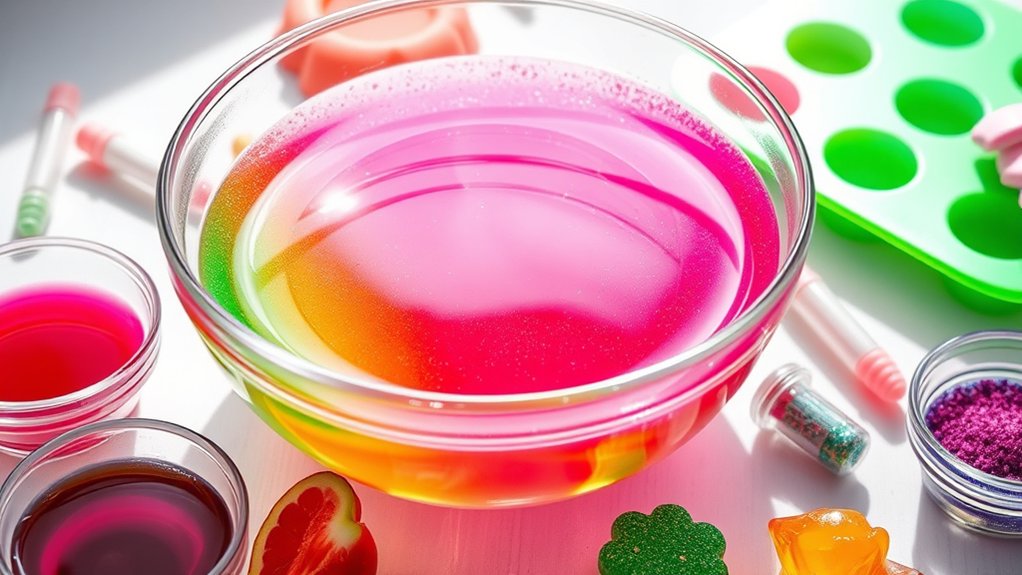
After your gelatin has fully dissolved, it’s time to personalize your gummies with flavors and colors. You can mix fruit juices, extracts, or even a splash of soda to create exciting flavor combos. Experimenting with different ingredients makes your gummies uniquely yours.
Here are three ways to customize:
- Mix vibrant colors using food gels or drops to get eye-catching shades and make your gummies more appealing.
- Create flavor blends like lemon-raspberry or cherry-mango to add depth and complexity.
- Use natural color mixing by combining beet juice with turmeric for earthy hues, or blueberry and spinach for green shades—healthy and colorful!
Pour Mixture Into Molds and Shape Your Gummies
To start shaping your gummies, carefully pour the flavored and colored mixture into your silicone molds or onto a parchment-lined tray. Use Gummy mold designs that match your desired shape, whether stars, bears, or custom shapes, to add fun and variety. When filling molds, do so slowly to prevent spills and air bubbles, which can affect the gummy’s appearance and texture.
For even shapes, gently tap the molds on the counter to settle the mixture. If you’re using a tray, pour the mixture smoothly and spread it evenly with a spatula. Candy shaping techniques like using squeeze bottles or piping bags can give you more control and precision.
Once filled, avoid overfilling to guarantee clean edges. This step sets the foundation for attractive, professional-looking gummies, so take your time to fill each mold carefully and evenly for the best results.
Chill and Let Your Gummies Set Properly
Place the filled molds or tray in the refrigerator or a cool, dry area to let the gummies set. Proper chilling is essential for getting that perfect chewy texture. Avoid freezing, as it can change the gummy’s consistency.
While they chill, you’ll see how they firm up and become ready for the next step. Use the right techniques—cool environment and enough time—to get the best results.
Here are three tips to guarantee your gummies set perfectly:
- Choose a consistent, cool environment to help them set evenly and prevent melting or warping.
- Allow 1 to 2 hours for chilling so they fully firm up and hold their shape.
- Store the gummies in an airtight container in a cool place to keep them fresh and prevent stickiness.
Demold and Store Your Homemade Gummies
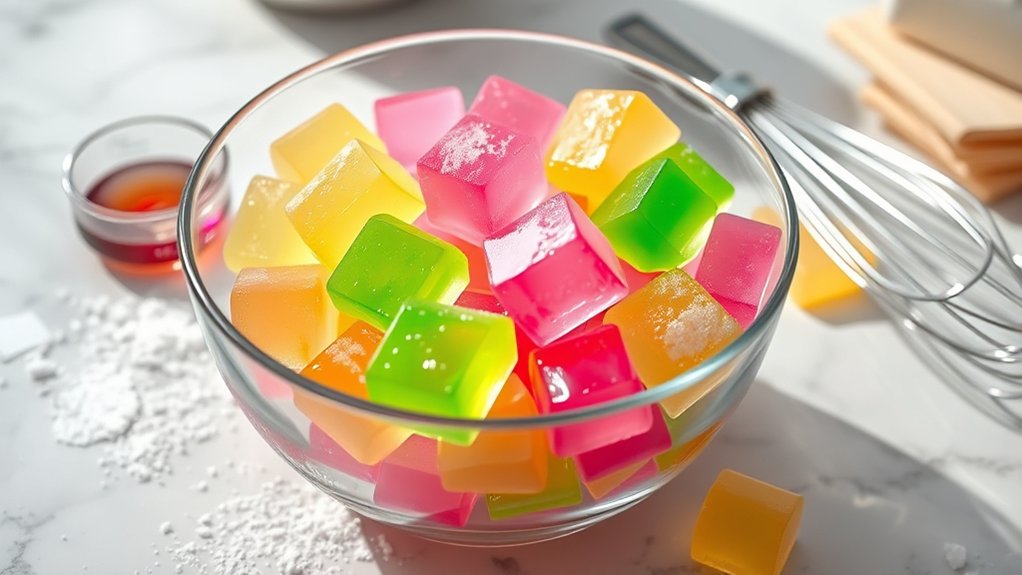
Once your gummies are fully set, carefully remove them from the molds or tray. Handle each piece gently to keep their shape intact. You can experiment with different flavor combos to keep things fun.
After demolding, place your gummies on a parchment-lined tray to prevent sticking. Store them in an airtight container at room temperature for up to a week, or refrigerate for longer freshness.
Proper storage helps preserve their chewy texture and vibrant colors. Using gelatin also offers health benefits like gut support and joint health, making your gummies both fun and nourishing.
| Flavor Combinations | Texture & Appearance |
|---|---|
| Strawberry + Lemon | Translucent, shiny finish |
| Mango + Pineapple | Firm but chewy, bright hue |
| Raspberry + Mint | Slightly softer, deep red |
| Orange + Vanilla | Glossy, orange tint |
| Blueberry + Lavender | Smooth, purple tint |
Troubleshoot Common Gummy Making Issues
Having trouble with your gummies? Don’t worry, it’s pretty common, and most issues are easy to fix. Maybe your gummies aren’t quite the right texture, they’re sticking together, or they just aren’t setting properly. No big deal! Let’s go through some simple tips to troubleshoot these problems and help you make perfect gummies every time.
Achieving Perfect Texture
Achieving the perfect gummy texture can be tricky, but understanding common issues can help you troubleshoot effectively. The key is balancing flavor combinations and texture.
If your gummies are too firm, try reducing the gelatin amount or adding a bit more liquid. If they’re too soft or sticky, increase gelatin or decrease water.
To guarantee the right texture balance, avoid overmixing or undercooking your mixture. Experimenting with flavor combinations can also make your gummies more appealing.
Here are some tips to perfect your gummies:
- Adjust gelatin levels carefully to get the ideal firmness.
- Use the right amount of liquid for a smooth, elastic texture.
- Combine flavors thoughtfully to boost your gummy candy’s appeal.
Preventing Sticky Gums
Gummies that turn out sticky can ruin the whole batch, but you can prevent this by paying close attention to your ingredients and process. To avoid sticky residues, use the right amount of gelatin and avoid overmixing, which can add excess moisture.
Keep your work surface and tools clean to prevent unwanted moisture from affecting the consistency. Also, choose high-quality ingredients; fresh gelatin and proper proportions help ensure a firm, non-sticky gummy.
Remember, sticky candies can cling to teeth and affect dental health. Aim for a smooth, well-set gummy. If your gummies are sticky, it might be because they didn’t set long enough or there was too much liquid.
Controlling these factors properly will help you make candies that are both enjoyable and safe for your teeth.
Fixing Setting Problems
When your gummies don’t set properly, it can be frustrating, but the good news is that most issues have simple solutions. Here are some ways to fix setting problems:
- Adjust the gelatin amount: If you used too little gelatin, your gummies won’t firm up. Try adding a bit more next time or refrigerate them longer to help with setting.
- Optimize storage tips: Keep gummies in a cool, dry place. Heat or humidity can stop them from setting properly, so store them airtight and out of direct sunlight.
- Experiment with flavor combinations: Some flavors or acidity levels can interfere with setting. Adjusting ingredients or pH levels might give you better firmness.
With these tips, you’ll master gummy consistency and have fun exploring new flavor ideas!
Explore Creative Variations and Tips for Perfect Gummies
Getting creative with your gummy recipes opens up endless possibilities for flavors, colors, and shapes. You can experiment with fun flavor combos like mixing fruit juices, adding a splash of coconut or vanilla, or even herbs and spices for a more sophisticated twist.
To make your gummies stand out, try unique presentation ideas. Layer different colors, use molds that create fun shapes, or sprinkle on edible glitter for a touch of sparkle.
Combining fruit purees with gelatin can really boost flavor and texture. Remember to balance sweet and tart elements so your gummies stay delicious.
When it comes to colors, use natural ingredients like beet juice for red or turmeric for yellow. These tips will help you craft visually appealing and tasty gummies that impress friends and family alike.
Don’t be afraid to get creative—your perfect gummy is just a few flavor experiments away.
Frequently Asked Questions
How Long Do Homemade Gummies Typically Last?
Homemade gummies usually last about a week when stored properly. To get the most out of them, keep them in an airtight container at room temperature or in the fridge.
Proper storage helps prevent them from drying out or growing mold. Usually, they stay good for around 5 to 7 days, but this can change based on the ingredients and how you store them.
Always check for any signs of spoilage before you enjoy them.
Can I Use Alternative Sweeteners Instead of Sugar?
Using alternative sweeteners is like exploring a new flavor landscape—you can definitely swap out sugar.
Sugar substitutes like honey, agave, or stevia work well, but they may change the texture or flavor of your gummies.
Try experimenting with different options to create fun flavor variations.
Keep in mind that some sweeteners are sweeter than sugar, so you might need to adjust the amounts.
Always taste-test to find your perfect gummy recipe.
What Are the Best Molds for Shaping Gummies?
The best molds for shaping gummies are usually made from silicone or plastic, each with their own pros and cons. Silicone molds are flexible, non-stick, and make it super easy to remove gummies, especially when you want intricate shapes.
Plastic molds tend to be more rigid and durable, but you might need to grease them to prevent sticking. If you want easier release and detailed designs, go for silicone. If sturdiness and repeated use are more important, plastic could be the way to go.
How Do I Prevent Gummies From Sticking to the Molds?
To prevent gummies from sticking to molds, start by lightly greasing them with a neutral oil or non-stick spray. This creates a barrier that helps the gummies come out easily.
Also, make sure the gummy texture is just right — not too sticky or too firm. This makes removal smoother and easier.
Chill the molds slightly before pouring the mixture. It firms up the gummies and reduces sticking, so you get perfect shapes every time.
Are There Gluten-Free Gelatin Options Available?
Yes, you can find gluten-free gelatin options and alternatives. Look for brands that use gluten-free ingredients and ensure there’s no cross-contamination.
If you’re seeking non-gelatin options, try agar-agar, pectin, or carrageenan. They work well as gelatin replacements for making gummy candies.
Always read labels carefully to confirm they’re gluten-free. That way, you can enjoy your homemade treats safely and confidently.
Conclusion
Making gummies at home is like painting with flavors—you’re the artist shaping sweet, colorful creations. With these simple steps, you’ll turn basic ingredients into delightful treats that burst with personality.
Just remember, patience and practice are your best brushes. Before long, your kitchen will become a candy studio, producing gummies as unique as your imagination.
So, grab your tools and start creating your own edible masterpiece today with these easy gummy candy tips. Making gummies with gelatin has never been so fun and rewarding!