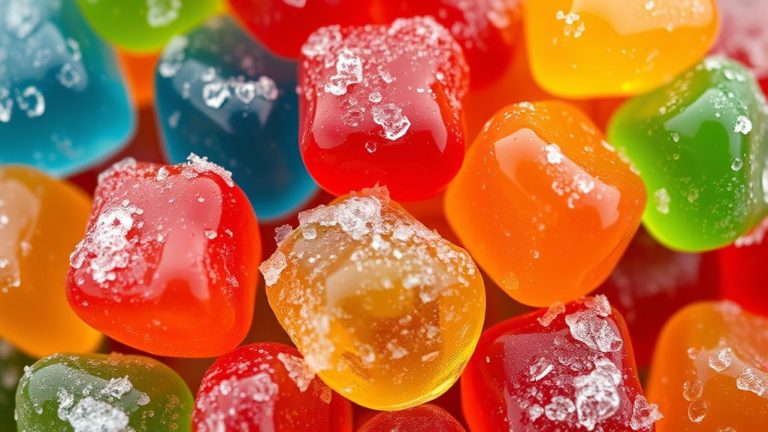

What Is Gummy Candy Made Out Of?
Many people love gummy candy but often wonder what it’s really made of. If you’ve ever been curious about what gives these treats their chewy texture and vibrant look, you’re not alone.
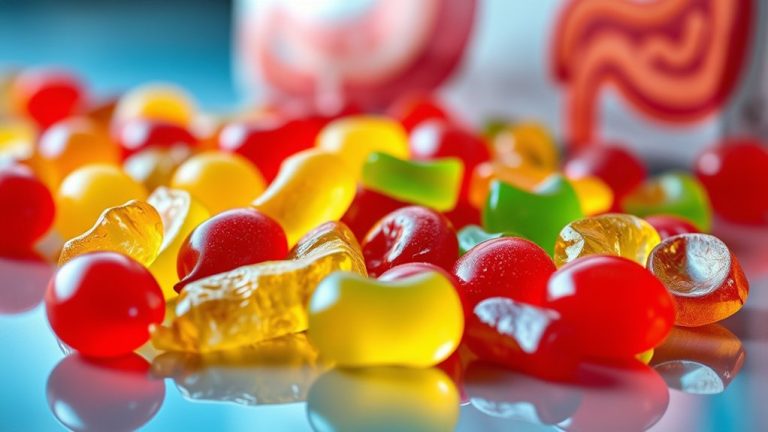
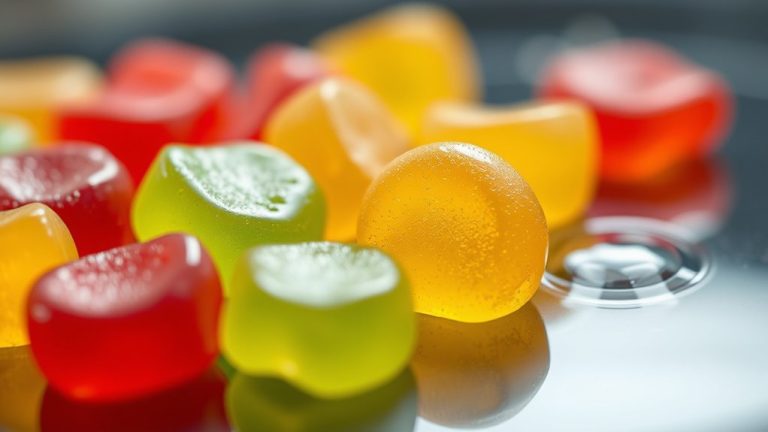
Gummy candy is made from a mix of sweeteners like sugar or corn syrup, combined with gelatin or plant-based alternatives such as pectin or agar-agar for that chewy texture. They also include flavorings, colorings, and stabilizers to keep them vibrant and fresh.
These ingredients are heated, poured into molds, and cooled to set.
Want to uncover more about how each ingredient influences their taste, look, and shelf life? Keep exploring to find out!
Key Takeaways
- Gummy candies are mainly made from sweeteners like sugar, corn syrup, and glucose, combined with gelatin for that chewy texture.
- Flavorings such as fruit extracts and citrus oils are added for taste, along with colorings to make them visually appealing.
- Gelatin, which comes from collagen, gives gummies their characteristic elasticity and chewiness.
- For vegans, plant-based gelling agents like agar-agar, pectin, or carrageenan are used instead of gelatin.
- Proper packaging and stabilizers help keep the flavor, color, and texture fresh over time.
What Are the Main Ingredients in Gummy Candy?

Gummy candy is made from a handful of simple ingredients that come together to create its chewy texture and sweet flavor. The main ingredients usually include sugar, corn syrup, and gelatin.
Sugar and corn syrup give the candy its sweetness and help give it that shiny, glossy look. Gelatin is what gives gummy candy its signature chewy texture.
Some recipes also add citric acid or fruit flavorings to make the taste more appealing. Artificial or natural colorings are used to make the candies look vibrant and fun.
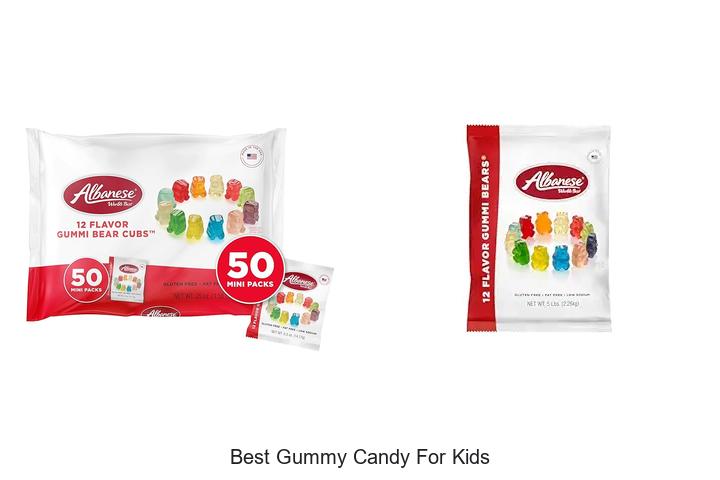
When it comes to packaging, gummy candy companies focus on attractive designs that highlight the candy’s playful and colorful nature. Clever marketing often emphasizes the chewy texture and bright flavors to catch your eye.
Packaging design plays a key role in standing out on store shelves and showing off the fun, irresistible qualities of the candy. This simple ingredient list and smart marketing make gummy candies a popular treat worldwide.
How Does Gelatin Create Gummy Candy’s Chewy Texture?
Gelatin’s protein structure is really what gives gummy candy that fun, chewy texture we all love. When you dissolve it in warm liquid and then let it cool down, those proteins start to form a network of cross-linked molecules.
Basically, they hook together and trap water inside, which helps create that firm, elastic feel. That web of molecules is what makes each bite satisfyingly chewy and just the right amount of sticky.
Gelatin’s Protein Structure
Understanding how gelatin’s protein structure works is key to explaining the chewy texture of gummy candy. Gelatin is made from collagen, and its amino acids link together through protein folding to form long, tangled chains.
These chains create a network that traps water, giving the candy its distinctive chewiness. When heated, the protein chains loosen, making the mixture flexible. As it cools, the chains refold and connect again, creating a firm, elastic structure.
The specific arrangement of amino acids in gelatin influences how these chains fold and interact. This directly impacts the gummy’s texture. This intricate protein structure is what makes gelatin capable of transforming into the chewy, resilient treat we enjoy.
Cross-Linked Molecules
The chewy texture of gummy candy comes from gelatin molecules forming cross-links that create a strong, interconnected network. These cross-links, a process called molecular crosslinking, connect gelatin chains into a durable polymer structure.
As the gelatin cools and sets, these cross-linked molecules allow the candy to bend without breaking, giving it that signature chewiness. The polymer networks made by crosslinking are key for keeping the structure and flexibility.
Without these cross-links, the gummy would just be a loose, unstructured gel. The strength and elasticity of the candy depend on how much the gelatin molecules are cross-linked, making molecular crosslinking the main process that turns liquid gelatin into your chewy treat.
What Sweeteners Are Used to Make Gummies Sweet?

Sweeteners play a crucial role in giving gummies their irresistible flavor and chewy texture. Without them, gummies wouldn’t taste as sweet or have their signature mouthfeel.
Common sweeteners include sugar, corn syrup, and glucose, which provide the foundational sweetness and help maintain moisture. Some manufacturers also use alternatives to cater to dietary needs or reduce sugar content.
These sweeteners influence not only flavor but also how gummies hold their shape and how they’re packaged for sale. When designing gummy candy packaging, understanding the type of sweetener used helps ensure the product’s texture stays consistent.
Edible decoration techniques often involve adding color or flavorings that complement the sweetness, making the overall experience more enjoyable. Here are some key sweetener options used in gummies:
- Sugar and corn syrup
- Honey or agave syrup
- Artificial sweeteners like aspartame or stevia
Which Flavorings Make Gummy Candies Tasty?
Flavorings are what give gummy candies their delicious and appealing taste, transforming simple ingredients into a delightful treat. They come in a variety of natural and artificial options, like fruit extracts, citrus oils, and synthetic flavors.
These flavorings are carefully chosen to evoke specific tastes and improve the overall experience. When designing gummy candy packaging, manufacturers often highlight popular flavors like cherry, lemon, or watermelon to attract your attention.
Effective marketing strategies emphasize these flavors to create a strong brand identity and boost sales. The right flavoring can make a gummy candy memorable and encourage repeat purchases.
Whether it’s a tangy citrus burst or a sweet berry note, flavorings play an essential role in making gummies irresistible. By combining appealing flavors with clever packaging and marketing, brands succeed in making gummy candies a favorite treat for all ages.
How Are Food Colorings Used to Brighten Gummies?

Brightening gummies with vibrant colors makes them more eye-catching and appetizing. Food colorings play a vital role in creating that appealing look. Manufacturers use color improvement techniques to help gummies stand out on shelves.
They often choose between natural dyes and synthetic colors, depending on the product’s branding and health considerations. Natural dyes, derived from fruits, vegetables, or spices, give a more wholesome appearance and appeal to health-conscious consumers. These dyes can be carefully added to achieve consistent, bright shades without overpowering the flavor.
Natural dyes help achieve vibrant, appealing hues while maintaining a health-conscious image. Color improvement techniques ensure the colors are uniform and bright. Synthetic colors are used for brighter, more vivid shades but may raise health concerns.
Together, these methods make gummies visually irresistible, drawing you in with their lively, appealing colors.
Are There Vegan or Vegetarian Alternatives to Gelatin?
Are there vegan or vegetarian alternatives to gelatin? Yes, many options are available for those avoiding animal products.
Vegan substitutes like agar-agar, derived from red algae, create a jelly-like texture similar to gelatin. It’s popular in vegan gummy candies because it sets firmly and is flavor-neutral.
Vegan agar-agar from red algae provides a firm, flavor-neutral, jelly-like texture for plant-based gummies.
Other plant-based options include pectin, found in fruits like apples and citrus, which gives a softer, more elastic consistency. Carrageenan, another seaweed extract, is sometimes used as a thickener in vegan gummies.
Vegetarian options often include these plant-derived ingredients, offering a variety of textures and firmness. These alternatives are perfect if you’re looking for gummies without animal products.
They’re widely available and can be used in many recipes to mimic the traditional gelatin texture. So whether you’re vegan or vegetarian, you have plenty of choices for tasty, animal-free gummy candies.
What Do Stabilizers and Additives Do in Gummy Candy?
Stabilizers and additives play a big role in keeping your gummy candy fresh and delicious for longer. They help maintain the right texture so that your gummies stay chewy and satisfying over time. Plus, they make sure the flavors stay true and don’t fade or change, so every bite tastes just as good as the first.
On top of that, these ingredients help improve the overall consistency of the gummies. That means each piece is just the right firmness and shape, giving you a consistently enjoyable treat every time.
Preserving Freshness and Texture
To keep gummy candies fresh and maintain their appealing texture, manufacturers add stabilizers and additives that work behind the scenes. These ingredients help prevent spoilage, control moisture, and ensure the candies stay consistently firm.
Packaging innovation also plays a big role in extending shelf life by protecting gummies from air and humidity, which can cause spoilage or stickiness. Additives like preservatives help inhibit mold growth, keeping the candies safe to eat longer.
Stabilizers improve chewiness and prevent the candies from becoming too hard or sticky over time. They also help retain moisture, keeping the gummies soft and enjoyable.
Advanced packaging solutions are designed to shield gummies from environmental factors, ensuring they stay fresh and delightful for longer.
Enhancing Flavor Stability
Since flavor can fade or change over time, stabilizers and additives are key to keeping gummy candies tasting fresh and consistent. They help prevent flavor loss by protecting ingredients from oxidation and moisture.
Color enhancement additives ensure gummies stay vibrant, making them more appealing and visually consistent from batch to batch. Packaging techniques also help by creating a barrier against air, light, and humidity, which can degrade taste.
All these methods work together to preserve the original flavor profile so you enjoy the same great taste with every bite. Without stabilizers, additives, and proper packaging, gummy candies could quickly lose their flavor intensity and visual appeal.
Improving Candy Consistency
Because gummy candies need to have a consistent texture and firmness, stabilizers and additives are essential for achieving that uniformity. These ingredients help control moisture, prevent spoilage, and keep the candies chewy over time.
Stabilizers like gelatin or pectin give the gummy its structure, while additives improve shelf life and maintain the desired qualities. They also support color enhancement, keeping gummies vibrant and appealing.
Furthermore, stabilizers influence packaging by reducing stickiness, making candies easier to handle and store. This consistency boosts consumer satisfaction and reduces waste.
- Regulate moisture levels for texture stability
- Amplify visual appeal through color uniformity
- Improve shelf life and ease of packaging
How Is Gummy Candy Made Step by Step?
Making gummy candy involves a precise process that transforms simple ingredients into chewy, colorful treats. First, you combine gelatin, sweeteners, and flavorings in a large kettle, heating the mixture until it becomes smooth and viscous.
Next, you pour this hot mixture into molds or onto a cooling surface, shaping it into various forms. Once cooled and set, the gummies are removed and cut into desired sizes.
During this process, you pay attention to consistency, guaranteeing each piece has the right chewiness. After shaping, the gummies often go through a coating or dusting step to improve texture and appearance.
Proper packaging is essential, so gummy candy packaging is carefully designed to protect the treats and maintain freshness. Effective marketing strategies then promote the product, highlighting its features and appealing visuals.
This step-by-step process ensures the final gummy candy is attractive, tasty, and ready for consumers.
What Variations Can You Find in Gummy Recipes?
There are so many fun variations you can try with gummy recipes! You can mix and match different flavors to create unique taste combinations, and even add extra ingredients like fruit pieces or vitamins for a personalized touch.
When it comes to texture and shape, the options are pretty exciting too. Some gummies are chewy and soft, while others are a bit firmer—it’s all about what you prefer. And don’t forget the fun shapes! From classic bears and worms to custom molds, you can really get creative and make gummies that are just perfect for you or for any special occasion.
Flavor Combinations and Additives
Gummy candies come in a bunch of flavor combinations and additives that make each one special. You’ll find options like fruit flavors, sour tastes, and even unique infusions like spicy or herbal notes.
Additives such as natural or artificial flavorings enhance the taste, while vibrant colors make the gummies visually appealing. Packaging innovations like transparent or resealable designs help keep them fresh and showcase their bright colors.
Some brands get creative by layering flavors or embedding fillings to surprise your palate. These variations allow for endless creativity in gummy recipes, catering to different tastes and trends.
Whether you prefer classic fruit flavors or more adventurous blends, the variety of flavor combinations and additives keeps gummy candies exciting.
Texture and Shape Variations
Gummy candies come in a variety of textures and shapes that keep them fun and interesting. Some are soft and chewy, while others have a firmer bite.
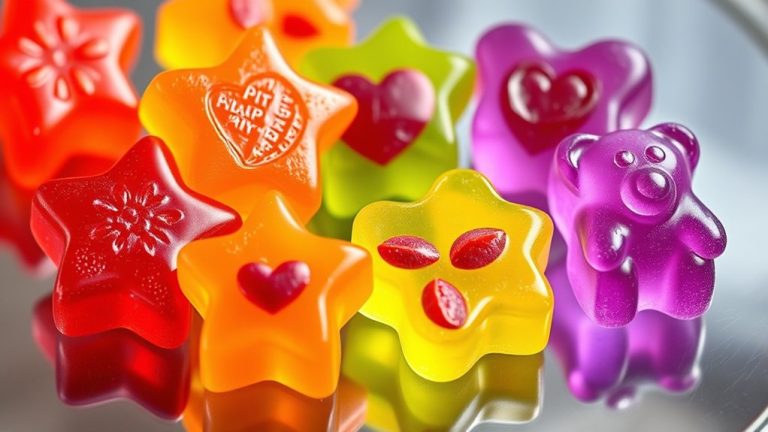
Shape variations include bears, worms, fruits, and even custom shapes for special occasions. These differences often influence packaging, helping products stand out on shelves.
Manufacturers use marketing strategies that highlight unique textures and eye-catching shapes to attract buyers. Texture affects how you experience the candy—whether it’s smooth, bouncy, or gelatinous.
Shape variations help convey flavor or brand identity, making gummies memorable. By experimenting with textures and shapes, candy makers create diverse products that appeal to many preferences.
This keeps the gummy experience fresh and exciting for everyone.
How Do Ingredients Affect Gummy Shelf Life and Texture?
The ingredients used in gummy candies play an essential role in determining both their shelf life and texture. During manufacturing, careful ingredient sourcing ensures the right balance of stability and softness.
For example, the type and amount of gelatin or alternative gelling agents influence how long the gummies stay fresh and their chewy consistency. Additives like preservatives help extend shelf life by preventing microbial growth, while sweeteners impact moisture retention.
The quality of ingredients also affects texture. High-quality gelatin results in a firmer bite, while lower-quality sources may make the gummies softer or stickier. Proper ingredient selection and handling are key to maintaining product consistency and longevity.
To optimize shelf life and texture, manufacturers often adjust ingredient ratios or include stabilizers. These choices directly impact how well gummies hold up over time, making ingredient sourcing a crucial part of successful gummy production.
Frequently Asked Questions
Are There Any Allergens Commonly Found in Gummy Candies?
Yes, gummy candies can contain allergens like soy, gluten, dairy, or nuts. Always check the allergen labels on the packaging since manufacturers are required to list common allergens.
Be aware that cross-contamination can happen during production, which might introduce allergens even if they aren’t listed as ingredients. If you have food allergies, it’s best to choose brands that focus on clear labeling and strict prevention of cross-contact to stay safe.
How Do Manufacturing Processes Impact Gummy Candy Quality?
You might think manufacturing processes don’t matter, but they really do. Proper manufacturing techniques directly impact the gummy texture, making candies chewy or firm.
Precise temperature control, ingredient mixing, and cooling methods guarantee consistent quality. If these steps are rushed or poorly managed, gummies can become sticky, hard, or bland.
Can Homemade Gummies Be Healthier Than Store-Bought Versions?
Yes, homemade gummies can be healthier than store-bought ones. You get to control the ingredients, so you can choose natural sweeteners and organic ingredients to cut down on added sugars and artificial additives.
What Are the Environmental Impacts of Gummy Candy Production?
You might not realize it, but gummy candy production impacts the environment through its carbon footprint. This mainly comes from energy use and ingredient sourcing.
Choosing brands that use sustainable packaging helps reduce waste. Supporting companies committed to lowering their carbon footprint can also make a difference.
How Do Different Countries’ Regulations Affect Gummy Candy Ingredients?
You’ll find that different countries’ regulations shape gummy candy ingredients, making it a mixed bag. International flavorings add unique tastes, but strict laws guarantee safety and quality.
For example, some places ban certain artificial colors, while others require natural alternatives. Regulatory compliance is key, so manufacturers adapt recipes to meet local standards.
This balancing act keeps gummy candies both tasty and safe, proving that you can’t please everyone without following the rules.
Conclusion
Now that you know what goes into making gummy candy—gelatin, sweeteners, flavorings, colorings, stabilizers—you can appreciate each ingredient’s role.
From creating chewy textures to vibrant appearances, every component works together. Understanding these basics helps you see how ingredients influence taste, texture, and shelf life.
So next time you enjoy a gummy, savor the science behind the sweetness, the art of the flavor, and the magic of the ingredients that make it all possible.