7 Tips to Pick Gummy Candy That Won’t Melt Easily
Are you a gummy candy lover who’s tired of dealing with melty, sticky treats during hot days or car rides? You’re not alone—many people struggle with keeping their gummies fresh and firm, especially when the weather’s warm.
Luckily, there are simple tips to help you pick gummies that won’t melt easily and stay enjoyable longer.
To pick gummy candies that won’t melt easily, look for options with higher gelatin and stabilizers like agar or pectin, which create a firmer structure. Choose those labeled as heat-resistant or long-lasting.
Store gummies in airtight, cool, dark containers, and use moisture-absorbing packs.
Consider firmer textures and less sticky candies, especially for travel or hot weather.
Keep these tips in mind, and you’ll find more ways to keep your gummies fresh and firm longer.
Key Takeaways
- Choose gummies with higher gelatin content for more firmness and better heat resistance.
- Look for products labeled as “heat-resistant” or “long-lasting” to help prevent melting.
- Store gummies in airtight, cool, and shaded containers away from direct sunlight and heat sources.
- Opt for gummies with stabilizers like agar or pectin to make them more durable in warm weather.
- When traveling, use insulated or cool-pack storage to keep gummies firm and prevent them from melting.
Why Do Gummy Candies Melt and How Does It Affect Your Snacks?
Have you ever wondered why gummy candies melt so easily? It all comes down to their gummy candy texture and melting point analysis.
Gummy candies are mainly made of gelatin, sugar, and other ingredients that give them their chewy, flexible consistency. When exposed to heat, their melting point varies depending on the ratios and quality of these ingredients.
Typically, gummies melt at relatively low temperatures, which means heat softens their structure quickly. This melting process changes the candy’s shape, texture, and appearance, making them sticky or gooey.
It can ruin your snack experience, especially if you’re carrying gummies in hot weather or warm environments. Understanding the melting point helps you predict how your gummies will behave under different conditions.
What Ingredients Make Gummies Less Likely to Melt?
If you want your gummies to hold up better in the heat, manufacturers usually increase the amount of gelatin they use. Gelatin helps keep the gummies firm and less likely to melt when it gets warm outside.
They also add stabilizers to the mix. These stabilizers help prevent the gummies from melting and can even improve their texture so they stay chewy. Plus, reducing the water content in the recipe is key because less moisture means less softening and melting.
All these ingredients work together to make sure your gummies stay nice and firm, even when the temperature rises.
Higher Gelatin Content
Gummies with higher gelatin content tend to resist melting better because gelatin forms a strong, sturdy network that keeps their shape even in warmer conditions. This not only improves the texture, making them chewier and more satisfying, but also helps lock in flavors by preventing ingredients from leaking out.
When choosing gummies, look for those with extra gelatin, as they’re less likely to become sticky or gooey in heat. They stay firmer longer and are more resistant to heat and humidity.
Higher gelatin gummies hold their shape during handling and have a longer shelf life in warm environments. Plus, they better retain flavors without melting or losing their taste.
Use of Stabilizers
Stabilizers are key ingredients that help prevent gummies from melting or becoming sticky in warm conditions. They improve the gummy candy texture by maintaining its firmness and preventing it from softening too easily.
Stabilizers like agar, pectin, and certain gums create a more stable structure, making gummies less prone to melting when exposed to heat. They also play an essential role in flavor preservation, keeping the taste consistent without losing potency or becoming overly sticky.
Reduced Water Content
Reducing the water content in gummy recipes significantly lowers the chances of melting. Less moisture means there’s less opportunity for the candies to soften or become sticky when it’s hot.
When you minimize water levels, the gummy texture becomes firmer and more resistant to melting, helping the candy keep its shape longer. It also helps preserve the flavor, preventing it from becoming diluted or overly sticky.
To do this, try using ingredients like pectin or gelatin with higher gelling power, or swap some water for concentrated fruit juices. Using high-quality gelatin or pectin can give you a firmer gummy texture.
You can also incorporate fruit concentrates instead of water or add stabilizers that reduce moisture absorption. Choose ingredients with lower water content during manufacturing for better results.
Finally, store your gummies in a cool, dry place to keep them from melting or becoming sticky.
How Packaging Can Help Keep Gummies Fresh and Firm
Effective packaging plays a big role in keeping gummies fresh and firm by acting as a barrier against moisture and air. Proper packaging helps preserve flavor combinations, so each bite stays tasty and vibrant.
When choosing gummies, look for sealed, airtight containers or wrappers that prevent exposure to humidity. This helps avoid melting or changes in texture that can happen when they get too damp.
High-quality packaging also protects the ingredients from contamination and spoilage. Clear, durable packaging can act as a visual cue of freshness, reassuring you that the gummies are well-preserved.
Packaging with moisture-absorbing packs can further extend freshness, especially in humid environments. By sealing out air and moisture, you help maintain the gummies’ firmness and flavor longer.
Prioritizing good packaging is a simple but essential step in keeping gummies fresh and enjoyable over time.
Environmental Factors That Cause Gummy Candies to Melt
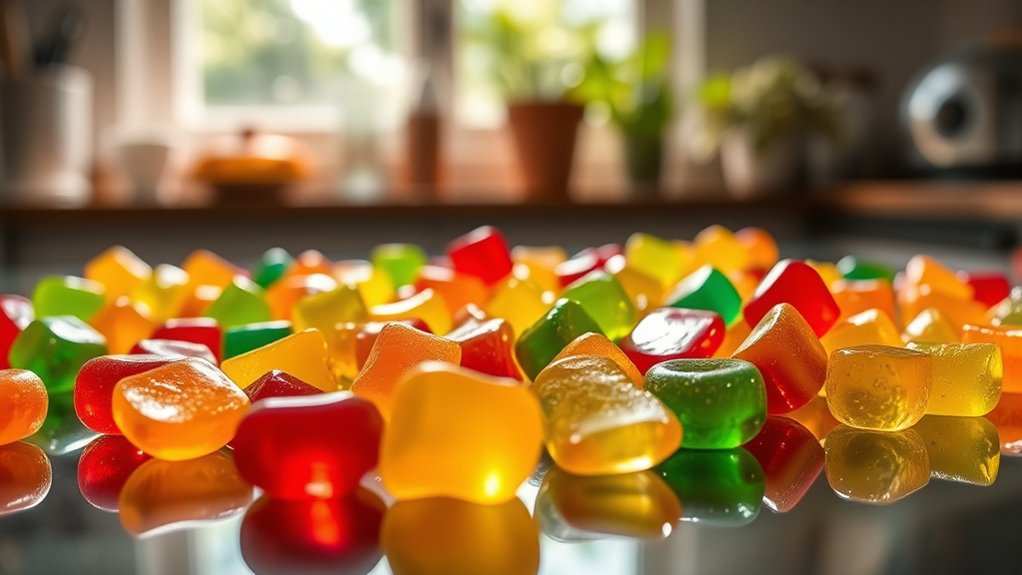
Temperature changes can really mess with your gummies. If they’re exposed to heat, they can melt or get sticky pretty quickly. On the flip side, cold temperatures can sometimes make them hard or cause them to become less enjoyable to eat. High humidity is another factor — it can make candies softer and more likely to melt or stick together. So, knowing about these environmental factors is helpful when you’re picking out gummies, especially if you want them to stay in good shape no matter the conditions.
Temperature Fluctuations Impact
Since outdoor conditions can change quickly, temperature fluctuations are a major environmental factor that causes gummy candies to melt. Sudden shifts from hot to cool can soften candies fast, making them sticky or misshapen.
To prevent this, try gummies with stable flavor combinations that don’t rely heavily on temperature-sensitive ingredients. Packaging innovations like insulated or resealable packs can help keep the temperature steady.
Look for candies stored in temperature-resistant containers, which prevent melting during transport or outdoor exposure. You can also pick gummies with strong formulations designed to handle temperature swings.
Additionally, choosing candies with minimal glazing or coatings reduces the risk of melting. These strategies help keep your gummy candies fresh and intact, even when the weather is unpredictable.
Humidity Levels Influence
High humidity levels can really speed up the melting of gummy candies by making them absorb more moisture. This softens their structure and makes them sticky. When the humidity is high, candies with delicate flavors are more likely to melt, especially if their packaging isn’t moisture-proof.
To keep candies in good shape, choose ones stored in airtight packaging that blocks moisture from getting in. Knowing how the environment affects gummies helps you pick options that stay firm and flavorful longer.
| Humidity Level | Impact on Gummy Candy | Packaging Tip |
|---|---|---|
| Low | Minimal melting | Use sealed, airtight bags |
| Moderate | Slight softening | Keep in cool, dry places |
| High | Rapid melting | Choose moisture-resistant packaging |
How to Store Gummies So They Stay Fresh and Firm
To keep gummies fresh and firm, proper storage is key. You want to preserve their texture and flavor, so pay attention to how and where you store them.
Keep gummies in airtight containers or resealable bags to prevent exposure to air, which can make them dry out or become sticky. Using vacuum-sealed packs is also a good idea for longer freshness.
Store your gummies in a cool, dark place away from direct sunlight and heat sources. Sun and heat can cause them to melt or soften, ruining their texture.
Avoid storing gummies near strong-smelling foods because they can absorb odors, affecting their flavor. You can also add a desiccant packet to absorb moisture and keep them firm.
Proper storage not only keeps your gummies tasty but also helps extend their shelf life, so they stay just as enjoyable as when you first bought them.
Spotting Gummy Candies Designed to Resist Melting
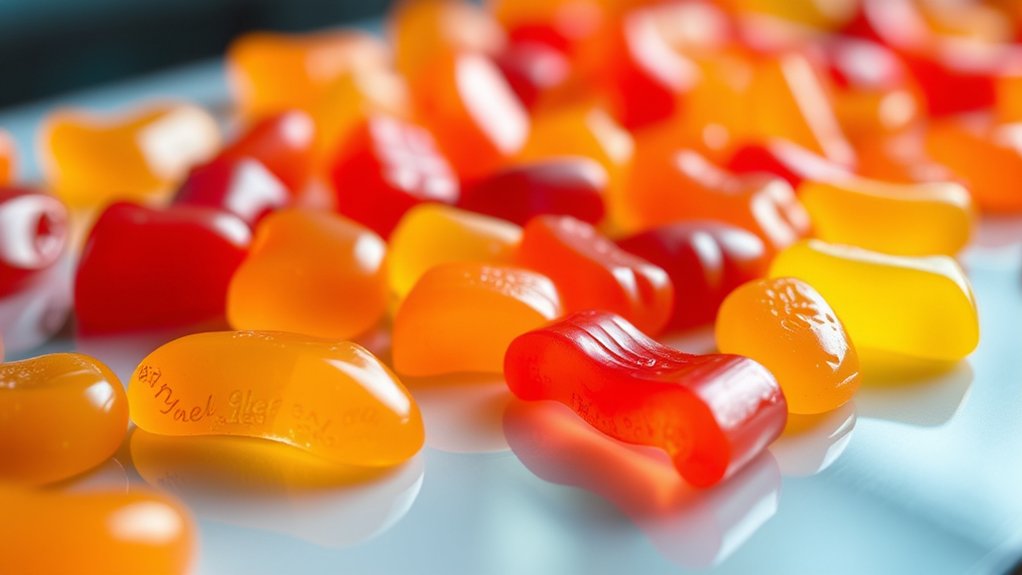
Looking for gummy candies that can handle warmer temperatures or extended heat exposure? You want to find those made to resist melting, which usually have specific textures.
These candies tend to be firmer and less sticky, helping them keep their shape and not get too gooey in the heat. Check the packaging or product descriptions for clues—labels like “heat-resistant” or “long-lasting” often mean they’re more durable.
Also, look at the ingredients. Certain gelling agents or stabilizers can help preserve flavor and give the gummies a sturdier texture. That way, they’re less likely to become sticky or runny when it’s hot outside.
Choosing candies with these qualities makes sure your gummies stay fun and enjoyable. They’ll maintain their shape and flavor, even in outdoor settings or hot climates.
Easy Tips to Keep Your Gummies Firm When Traveling
Keeping gummies firm while traveling can be tricky, especially with temperature shifts and handling. To prevent melting or sticking, here are some tips.
First, store your gummies in an airtight container to keep out humidity and sudden temperature changes. Second, find a cool, shaded spot—avoid direct sunlight, which can affect their color and texture.
Third, consider using insulated bags or cool packs for extra temperature control when you’re on the move. Fourth, pick gummies with a firmer texture or higher gelatin content, as they resist melting better.
Finally, pay attention to different flavors—some melt or get sticky faster than others. By following these simple tips, you’ll keep your gummies fresh, firm, and looking great until you’re ready to enjoy them.
Frequently Asked Questions
Are There Specific Brands Known for Melt-Resistant Gummy Candies?
Yes, several brands are known for melt-resistant gummy candies, especially if you focus on their gummy texture and candy packaging. Brands like Haribo and Trolli use sturdy packaging that helps protect their gummy candies from melting.
Look for gummies with a firmer, less sticky texture, which are less likely to melt quickly. Packaging that’s airtight and insulated also plays a vital role in keeping gummies fresh and intact in hot conditions.
Can Homemade Gummies Be Made More Resistant to Melting?
A stitch in time saves nine, and when making homemade gummies, you can improve their resistance to melting. To extend their gummy shelf life, consider adding a bit of cornstarch or gelatin to strengthen their structure.
Using airtight packaging protects them from humidity and heat, reducing melting risk. Keep your gummies in a cool, dry place, and you’ll enjoy their chewy goodness longer without worries about melting.
Do Different Gummy Shapes Impact Their Melting Points?
Yes, different gummy shapes can impact their melting points. Thicker or denser shapes tend to have a higher melting temperature because they contain more material, which slows heat transfer.
Conversely, thinner shapes melt faster due to their increased surface area. When choosing gummies, consider the texture and shape, as these factors influence how quickly heat spreads and affects melting.
This helps ensure your candies stay intact longer and don’t melt too quickly.
How Does Humidity Affect Gummy Candy Melting?
Imagine you’re storing gummy candies on a humid summer day, and they start to become sticky or melt faster. Humidity really impacts how well candy stays fresh because excess moisture weakens the gummy’s structure.
This causes them to soften or melt more easily. High humidity environments speed up this process, so it’s best to keep gummies in airtight containers and in cool, dry places.
Doing so helps prevent unwanted melting and keeps your candies fresh and enjoyable for longer.
Are There Natural Ingredients That Help Prevent Gummies From Melting?
Yes, natural ingredients like vitamin C and certain antioxidants can act as natural preservatives. They help improve ingredient stability and prevent gummies from melting.
These ingredients work by inhibiting moisture absorption and slowing down degradation caused by heat and humidity. When choosing gummies, look for products with these natural preservatives.
They can boost shelf life without artificial chemicals, making your candy both tasty and more resistant to melting.
Conclusion
To keep your gummies fresh, firm, and enjoyable, choose wisely, store properly, and consider packaging. Recognize the ingredients that resist melting, identify candies designed for durability, and stay mindful of environmental factors that threaten their texture.
By doing this, you’ll protect your treats from melting, preserve their flavor, and ensure every bite remains satisfying. Gummy candy that’s resistant to melting makes snacking more convenient and enjoyable.
With these tips, you can confidently carry your gummies anywhere, knowing they’ll stay just as delicious as when you first bought them. Proper handling is key to enjoying your gummies at their best.