What Signs Indicate Chocolate Candy Does Go Bad?
Ever wondered how to tell if your chocolate candy has gone bad? Many people struggle with this, especially when it looks fine but might not taste right. Don’t worry—you’re not alone in this dilemma.
If your chocolate develops mold, a sour or rancid smell, or shows white or gray streaks (bloom), it’s time to toss it. Discoloration, surface cracks, or a chalky, gritty texture also indicate spoilage.
Damaged packaging, greasy spots, or off flavors like metallic or stale tastes are signs it’s gone bad.
For a thorough check and tips on how to confirm its freshness, keep going—they’ll help you identify real spoilage.
Key Takeaways
- Visible mold, fuzzy spots, or discoloration signal spoilage and the need to discard the chocolate.
- Unpleasant odors like sour, rancid, or metallic also indicate deterioration.
- Changes in texture, such as graininess, dryness, or excessive stickiness, suggest spoilage.
- Surface bloom or cracks often mean the chocolate has undergone quality degradation.
- Damaged or swollen packaging increases the risk of contamination and spoilage.
How Long Does Chocolate Candy Stay Good?
Chocolate candy usually stays good for about 6 to 12 months if you store it properly in a cool, dry place. During this time, the flavor stays fresh and satisfying, as long as the ingredients are well-preserved.
Keeping your chocolate away from heat, sunlight, and moisture is key to maintaining its quality. Proper storage helps prevent it from developing a bitter or off-taste, which can happen if the ingredients aren’t preserved correctly.
Make sure to keep the packaging sealed tight to prevent exposure to air. Air can cause the chocolate to bloom or look dull over time. When stored correctly, the chocolate remains safe to eat and keeps its smooth texture.
How Do Storage Conditions Affect Chocolate’s Shelf Life?
Proper storage conditions play a big role in extending the shelf life of your chocolate. When stored correctly, your chocolate keeps its original flavor and ingredient quality longer.
Keep your chocolate in a cool, dry place away from direct sunlight and heat sources. This helps prevent melting and blooming, which can affect how it looks and feels. The ideal temperature is between 60-70°F (15-21°C).
Humidity can cause sugar or fat bloom, making the chocolate less appealing visually and possibly changing the taste. Using airtight containers helps preserve freshness by blocking out air and moisture.
Avoid storing chocolate near strong odors because it can absorb unwanted smells that affect its flavor and ingredients. Consistent, beneficial conditions slow oxidation and staling, keeping your chocolate tasting fresh longer.
What Are the Signs of Spoiled Chocolate in Appearance?
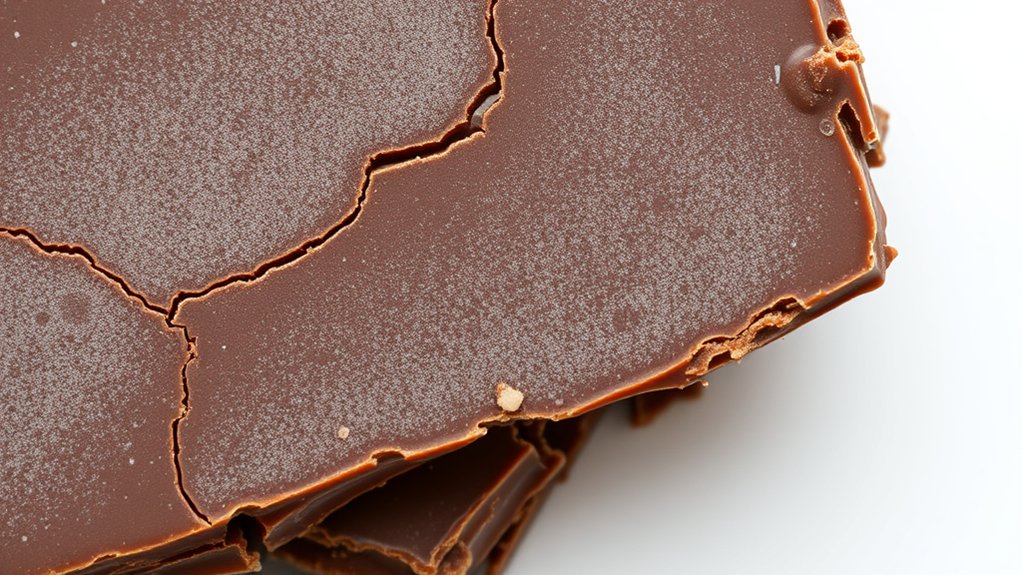
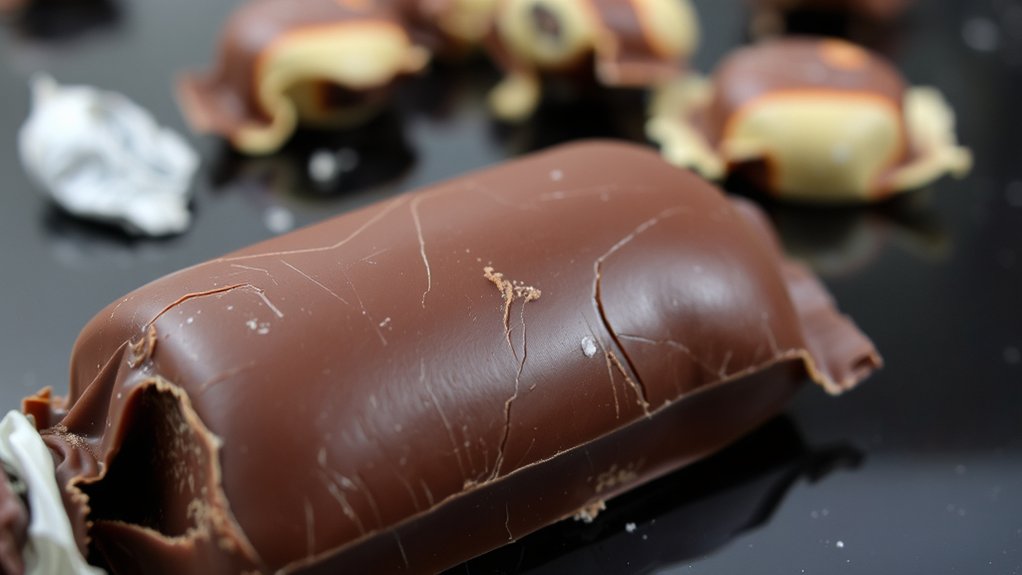
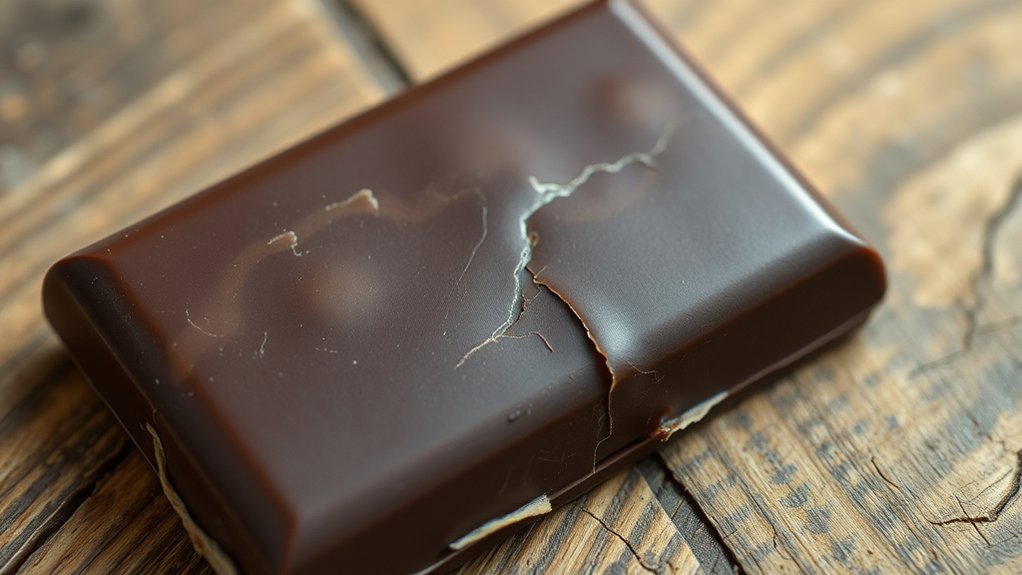
When chocolate starts to spoil, its appearance often shows some clear signs. You might see changes that affect its flavor and overall quality. Look for white or grayish streaks on the surface—these are signs of fat bloom, which doesn’t mean it’s unsafe but means it’s past its best.
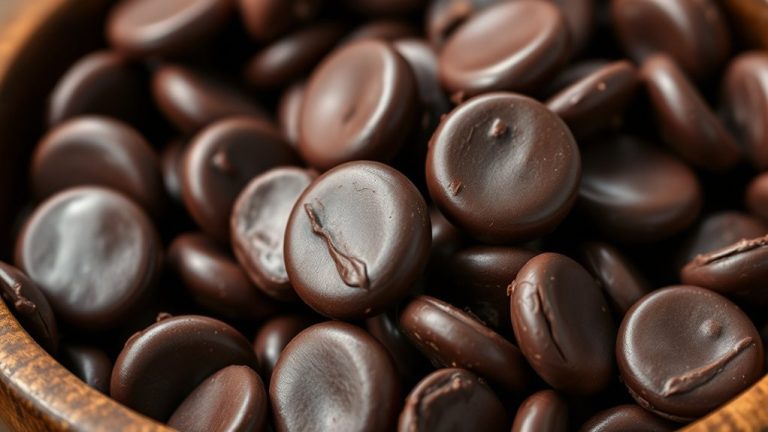
Signs to watch for include a dull, faded shine instead of a shiny finish. You might also notice white or grayish streaks or spots on the surface. Cracks or a crumbly texture when you break it are other clues. Changes in shape or surface irregularities can also be a sign.
Check for damage to the storage containers, like dents or tears. These visual cues suggest the chocolate was stored improperly, which can impact how it looks and tastes. If you see these signs, it’s a good idea to taste the chocolate before eating to see if it’s still good. Appearance is often a reliable first indicator of spoilage.
Does Mold or Discoloration Mean Your Chocolate Has Gone Bad?
Mold or discoloration on chocolate are clear signs that it has gone bad and should be discarded. Proper storage is key to keeping your chocolate fresh longer, but once you see mold or discoloration, it’s a sign it’s no longer safe to eat.
Mold can develop when chocolate is exposed to moisture or stored in a humid place. Always keep it in a cool, dry spot to prevent this. Discoloration might look like a white or gray film called bloom, caused by fat or sugar crystals rising to the surface. This doesn’t always mean it’s spoiled.
If you notice fuzzy mold or big color changes, it’s best to throw it out. These visual clues show the chocolate’s quality has been compromised. Even if it smells okay, mold or discoloration are reliable signs that your chocolate has passed its best.
How Can You Recognize Rancid or Off-Smelling Chocolate?
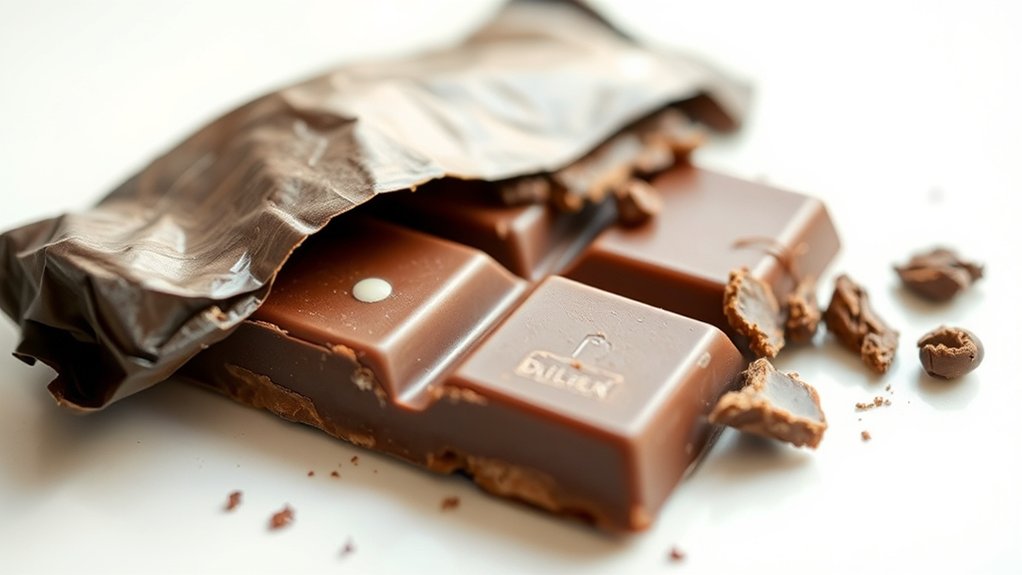
If your chocolate smells sour, stale, or has a strange chemical odor, it’s probably gone bad. Sometimes, you might see mold or discoloration on the surface, which is a clear sign it’s no longer good to eat.
Basically, trust your nose and eyes—if anything seems off or unusual, it’s best to toss it out to be safe.
Unusual Odor Presence
An unusual odor is often the earliest sign that your chocolate has gone bad. If it smells off, sour, or rancid, trust your nose—this is a clear warning. Rancid chocolate may emit a bitter, stale aroma that sharply contrasts with the usual sweet smell you expect.
You might also notice a faint chemical or metallic smell, or a musty, moldy scent lingering in the background. Imagine these smells: a sour, spoiled scent overpowering the sweet aroma, or a pungent, chemical odor that’s unfamiliar.
There could be an earthy, moldy smell indicating spoilage or a stale, bitter aftertaste lingering on your senses. An off-putting, rancid smell signals it’s time to toss it. Recognizing these odors helps prevent you from consuming spoiled chocolate.
Visible Mold or Discoloration
If your chocolate shows visible signs of spoilage, it’s usually more than just an off smell—the way it looks can tell you a lot. Keep an eye out for mold or unusual discoloration, like white or green patches, which are clear signs it’s gone bad.
These visual clues mean the chocolate isn’t safe to eat anymore. Moldy or discolored chocolate also loses its original texture and flavor, which means you won’t get the same enjoyment from it.
Plus, spoiled chocolate can mess up your pairing plans, ruining the taste and aroma you’re after. While fresh chocolate is healthy and delicious, once mold appears, it’s best to throw it out.
Learning to spot these signs helps you enjoy safe, high-quality chocolate and keeps your health in check.
What Changes in Texture Indicate Spoiled Chocolate?
How can you tell if your chocolate has gone bad just by feeling its texture? When you pick it up, pay attention to any unusual changes. Spoiled chocolate often feels grainy or chalky, losing its smooth, velvety surface. It might also become sticky or greasy, which can mean fat separation. Hardened or lumpy spots can be a sign of improper storage, while crumbly or brittle texture indicates deterioration.
Here are some signs to watch for:
- Grainy or powdery surface
- Excessive stickiness or waxy feel
- Crumbly or brittle consistency
- Melts unevenly or feels greasy
- Hardened or lumpy spots
These texture changes can ruin your chocolate experience and reduce its nutritional benefits. If it feels off, it’s best to discard it. Fresh, properly stored chocolate keeps a smooth, firm texture, perfect for enjoying its flavor and health perks.
How Does a Chalky or Stale Taste Signal Expired Chocolate?
When chocolate starts tasting chalky or stale, it’s usually a pretty good sign that it’s gone past its prime. You might notice that it doesn’t have that smooth, creamy feel anymore—instead, it feels dry and a bit crumbly.
That change in flavor and texture is your cue that the chocolate isn’t at its freshest. Basically, it’s telling you that it’s expired or at least not at its best quality anymore.
Off-Putting Flavor Changes
A chalky or stale taste is a clear sign that your chocolate has gone past its prime. Flavor deterioration often leads to an off-putting flavor that signals it’s time to say goodbye.
When tasting expired chocolate, you might notice a bitter, chemical-like aftertaste, or an overly waxy or greasy mouthfeel. You could also detect a sour or sourish undertone, or a metallic or tinny flavor.
Another sign is an overall dullness that lacks the rich cocoa aroma. These taste changes show that the quality has declined and the chocolate isn’t enjoyable anymore.
Off-putting flavor changes aren’t just unpleasant—they also mean the chocolate has spoiled and should be discarded. Trust your palate; if the flavor feels off, it’s time to let go of that piece.
Loss of Creaminess
As flavor changes signal that chocolate has expired, another key sign is the loss of its characteristic creaminess. When chocolate goes bad, it no longer maintains its smooth consistency, and the creamy texture diminishes.
Instead of feeling silky on your tongue, it may become chalky or gritty. This change indicates that the fats and cocoa solids have broken down over time, affecting mouthfeel.
If your chocolate feels crumbly or dull, it’s likely past its prime. The absence of that familiar smoothness is a clear sign the quality has degraded.
You might also notice a dry or powdery surface, further confirming that the chocolate is no longer fresh. Recognizing this loss of creaminess helps you avoid biting into stale or expired chocolate.
What Does White Bloom or Chocolate Bloom Mean?
White bloom or chocolate bloom appears on the surface of your candy when cocoa butter or sugar crystals move to the outside. This often happens because of temperature fluctuations or humidity changes.
White or chocolate bloom occurs when cocoa butter or sugar crystals migrate to the surface due to temperature or humidity changes.
This process gives your candy a dull, faded look, and the surface may seem powdery or streaked. It doesn’t mean your chocolate is spoiled; it’s just a cosmetic issue caused by crystallization.
Imagine seeing a dull, grayish film on your shiny candy or tiny white streaks spreading across the surface. The bloom might feel chalky or grainy, and the texture could be a little different.
You might notice a powdery white coating that wipes off easily, or white streaks or patches on the surface. The finish may look dull and matte instead of shiny.
The crystals can feel gritty or rough to the touch, and you may see changes after exposure to heat or humidity.
These signs indicate white or chocolate bloom, but they don’t mean the chocolate has gone bad.
How Packaging and Wrappers Reveal Spoiled Chocolate?
When inspecting your chocolate, the packaging and wrappers can give you important clues about its freshness. Packaging that’s torn, has holes, or sticky spots suggests exposure to moisture or air, which can speed up spoilage.
If the wrapper’s integrity is broken, bacteria or mold might have sneaked in, making the chocolate unsafe to eat. Look for broken seals, loose foil, or crumpled wrappers—these often mean mishandling or long storage.
Discoloration or strange textures inside the packaging, along with damaged wrappers, also suggest the chocolate may be past its prime. If the packaging looks swollen or bloated, it could mean fermentation or bacterial activity indicating spoilage.
Always check for physical damage to the wrapper before opening. Good packaging keeps chocolate fresh, so any damage often means it’s no longer safe or good to eat.
What Are the Best Ways to Check If Your Chocolate Is Safe to Eat?
Wondering if your chocolate is still good to eat? First, take a good look at it. If you see any mold or weird discoloration, it’s a pretty clear sign you should toss it.
Next, give it a sniff. If it smells off or sour, it’s probably not safe anymore. And don’t forget to feel it — if it’s unusually hard or feels greasy, that’s another sign it might have gone bad. Always trust your senses; they’re your best tool to tell if your chocolate is still safe to enjoy!
Check for Visible Mold
Checking for visible mold is one of the simplest ways to see if your chocolate is safe to eat. Mold looks like fuzzy spots or discoloration, usually green, white, or gray, on the surface.
Look closely at every piece, especially around edges or crevices where mold can hide. If you see any signs, discard the chocolate right away.
Visual checks are important because mold can ruin the flavor and mess up your chocolate experience.
Imagine spots that look like tiny, fuzzy patches or crusty, powdery growths. Feel for any weird texture or sliminess.
Remember, mold can grow even on sealed packages, so always examine your candy carefully before eating.
When in doubt, play it safe to avoid health risks.
Smell for Off Odors
Smelling your chocolate is a quick and effective way to see if it’s still good to eat. If it has an off odor, it’s probably past its prime and might not taste right anymore. Fresh chocolate usually smells rich and cocoa-y, while spoiled chocolate might smell sour, rancid, or musty.
Pay attention to the packaging, too. If it’s damaged or opened, odors can get in and affect what the chocolate smells like and whether it’s safe. Trust your nose—if the smell is strange or off, it’s best to throw the candy away.
Sealed packaging helps keep the original scent intact, so any weird smells are good signs that the chocolate has gone bad. Always use your nose to check for freshness before eating.
Examine Texture Changes
Examining the texture of your chocolate can reveal signs of spoilage that might not be obvious through smell alone. If your chocolate feels unusually gritty, greasy, or crumbly, it could mean flavor has deteriorated or it wasn’t stored properly.
Changes in texture often indicate that fats have gone rancid or moisture has compromised the product, which affects both taste and safety. Also, check the packaging—any cracks or leaks can let air and humidity in, speeding up spoilage.
Look for these specific signs: a slimy or sticky surface, excessive crumbliness or dryness, unusual softness or melting, hard or brittle texture, and discolored patches or spots. Verifying these clues helps ensure your chocolate is still safe to enjoy.
Frequently Asked Questions
Can Chocolate Still Be Safe to Eat After Expiration Date?
Yes, chocolate can still be safe to eat after the expiration date, but you should watch for any changes.
If the chocolate becomes stale or develops a white, powdery coating called bloom, it might taste different and lose some flavor. However, it’s unlikely to be harmful.
Always check for bad smells, mold, or unusual looks. If it looks and smells okay, it’s probably safe to eat, but the quality might not be as good.
Does Heat Exposure Affect Chocolate’s Freshness and Safety?
You might notice that heat exposure directly impacts chocolate’s freshness and safety. Temperature effects become clear when it’s stored improperly, leading to melting or bloom.
If chocolate is exposed to high temperatures, it can develop a dull appearance, an altered texture, or off-flavors. This can make it less enjoyable and possibly unsafe to eat.
Proper storage conditions, like keeping it in a cool, dry place, are essential to maintain its quality and prevent spoilage.
How Long Can Chocolate Be Stored Before It Spoils?
You can typically store chocolate for up to a year if you follow proper storage guidelines. Keep it in a cool, dry place away from direct sunlight and strong odors. Proper storage helps prevent melting, blooming, or developing off-flavors.
Are There Specific Types of Chocolate More Prone to Spoilage?
Certain types of chocolate, like milk and white chocolate, are more prone to spoilage because they contain higher dairy and fat content. You might notice changes in texture, such as becoming chalky or greasy.
Flavor degradation is also common, with off or sour tastes emerging. These signs suggest your chocolate could be going bad faster than darker varieties.
Darker chocolates tend to last longer when stored properly since they have lower dairy content. So, if you’re concerned about spoilage, opt for these varieties for longer shelf life.
Can Packaging Damage Cause Chocolate to Go Bad?
Packaging damage can definitely cause your chocolate candy to go bad. When the packaging is compromised, it allows air, moisture, and contaminants to get in, which increases the risk of mold and spoilage.
Keep an eye out for torn or broken wrappers, as these signs indicate that the chocolate may have been exposed to elements that speed up spoilage. Proper storage and intact packaging help keep your chocolate fresh and mold-free.
Conclusion
If your chocolate shows signs like mold, a sour smell, or a chalky texture, it’s time to toss it.
For example, finding white bloom on stored chocolate is common, but it often signals moisture exposure that could lead to spoilage.
Always trust your senses—look at the appearance, smell it, and even taste a tiny piece if you’re unsure—to determine if it’s still good.
When in doubt, it’s better to discard chocolate than risk eating spoiled candy. This is especially true if it’s been stored improperly or beyond its prime.