Best Practices to Store Chocolate Candy for Sweetness
Many people love indulging in sweet, delicious chocolate candy, but keeping it fresh and flavorful can be tricky. You’re not alone in wondering how to store it properly so it stays just as tasty as when you bought it. Proper storage can make all the difference in maintaining its sweetness and texture.
To keep your chocolate candy sweet and fresh, store it in a cool, dark place at a steady temperature between 65-70°F (18-21°C). Use airtight containers or resealable bags to prevent moisture and odors from getting in.
Avoid exposing the chocolate to direct light, heat, or humidity, which can cause bloom or spoilage. Carefully handling and monitoring storage conditions help preserve flavor and texture—if you want to learn more, you’ll find helpful tips ahead.
Key Takeaways
- Store chocolate in a cool, dark place at 65-70°F to keep its sweetness and texture just right.
- Use airtight, moisture-proof containers to stop flavor loss and prevent bloom from humidity.
- Keep chocolates away from direct sunlight and strong odors to protect their flavor and look.
- Avoid temperature changes and refrigeration unless you really need to. If you do, make sure everything’s sealed tight.
- Wrap individual pieces in foil or parchment for extra protection and to help keep them fresh.
How Does Temperature Affect Your Chocolate?
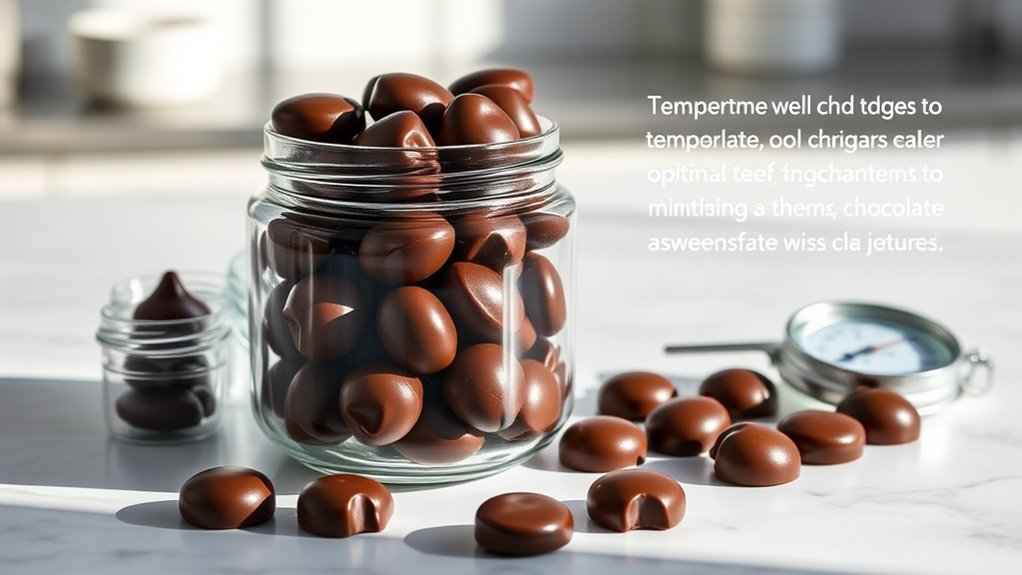
Have you ever noticed how chocolate can develop a dull, grayish coating or a grainy texture if stored improperly? Temperature plays a big role in keeping your chocolate at its best.
Proper storage preserves chocolate’s shine, texture, and flavor—avoid temperature extremes for lasting freshness.
When stored at too high a temperature, the heat causes the cocoa butter to melt and then recrystallize, leading to bloom. That’s those unsightly streaks or spots on the surface. It can also dull the chocolate’s flavor, making it less rich and smooth.
On the other hand, storing chocolate in a cold environment can make it brittle and cause it to lose its shine. The sweet spot is between 65 and 70°F (18-21°C), which helps preserve its texture and flavor.
Keeping your chocolate at the right temperature also helps it last longer. When stored properly, it can stay fresh for several months without losing quality. Just remember, rapid temperature changes can cause condensation and spoil the texture.
Choosing the Best Containers to Store Chocolate
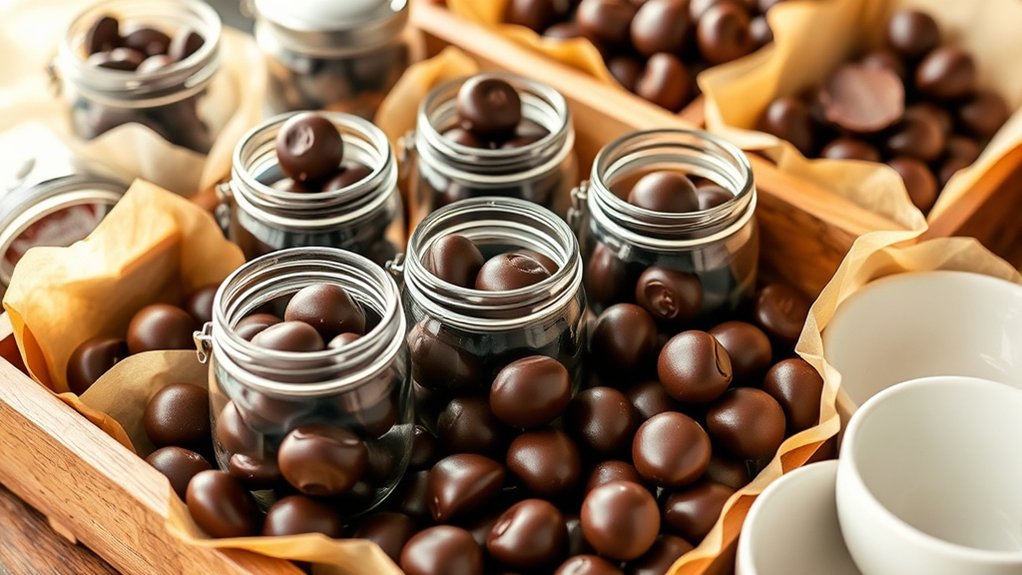
When you’re picking out containers for your chocolate, it’s pretty important to choose the right one. You want something that won’t mess with the flavor or texture of your sweet treats. Materials like glass or certain plastics are usually good options because they don’t affect the taste.
Make sure the container has an airtight seal. That way, moisture and leftover odors won’t sneak in and spoil your chocolates. It’s all about keeping them fresh and delicious for as long as possible.
And don’t forget to pick a size that fits your stash comfortably. You don’t want your chocolates to be crowded, which can cause damage or make them harder to find later. So, find a container that keeps everything organized and protected — your chocolates will thank you!
Material Matters for Storage
Selecting the right container is key to keeping your chocolate fresh and tasty. It helps stop moisture, odors, and air from messing with its quality.
The material of your storage container doesn’t just affect the flavor—it also adds to how it looks. Choosing the right one makes it both functional and nice to look at.
Glass, tin, and ceramic are great options because they’re non-reactive and keep temperature steady. Avoid plastic, which can sometimes pick up odors or alter the flavor over time.
Here’s a quick rundown:
| Material | Pros | Cons |
|---|---|---|
| Glass | Non-reactive, looks good | Fragile |
| Tin | Durable, stylish | Can dent or rust |
| Ceramic | Keeps temperature steady | Heavy, breakable |
| Plastic | Lightweight, cheap | Odor absorption, may affect flavor |
Airtight Sealing Benefits
Ever wondered why airtight containers are so important for storing chocolate? The airtight benefits help keep your treats fresh by sealing out air, moisture, and odors. When you pick a container with a reliable seal, you’re protecting your chocolate from spoilage and flavor loss.
Imagine a container that:
- Keeps moisture and humidity away, stopping melting or blooming.
- Prevents strong odors from sneaking in and ruining the taste.
- Preserves the chocolate’s texture and fragrance by sealing in freshness.
Size and Space Optimization
Using the right-sized container is key to maximizing storage efficiency and keeping your chocolate in top shape. When choosing containers, think about how much chocolate you usually store—if it’s too big, air can circulate and affect the flavor and texture. If it’s too small, you might overcrowd the container.
Picking the right size helps preserve the chocolate’s flavor by limiting exposure to temperature changes and humidity. Plus, selecting containers that match your storage style makes your pantry or display look better. Clear containers let you see the varieties easily, while uniform sizes keep everything looking neat.
Optimizing size and space also prevents unnecessary movement and breakage, helping your chocolates stay fresh and look appealing longer. This simple step makes sure your chocolates stay delicious and visually attractive for longer periods.
What Are the Ideal Humidity Levels for Chocolate Storage?
Maintaining the right humidity level is essential for keeping chocolate fresh and preventing spoilage. Proper humidity control helps preserve flavor and prevents issues like blooming or sugar bloom. The ideal humidity range for chocolate storage is between 50% and 60%.
Maintaining 50-60% humidity keeps chocolate fresh, flavorful, and free from bloom or spoilage.
When humidity exceeds this range, moisture can cause the chocolate to become sticky or develop a white film. If it’s too dry, the chocolate may dry out and lose its texture.
To visualize this:
- At 50-60%, your chocolate remains firm, flavorful, and free from bloom.
- Below 50%, it risks drying out, losing its smooth texture.
- Above 60%, excess moisture leads to spoilage and mold growth.
Keeping humidity within this range helps maintain flavor preservation and overall quality. This ensures your chocolate stays delicious and visually appealing for longer. Proper humidity control is key to ideal chocolate storage at home.
Where in Your Home Is Best for Storing Chocolate?
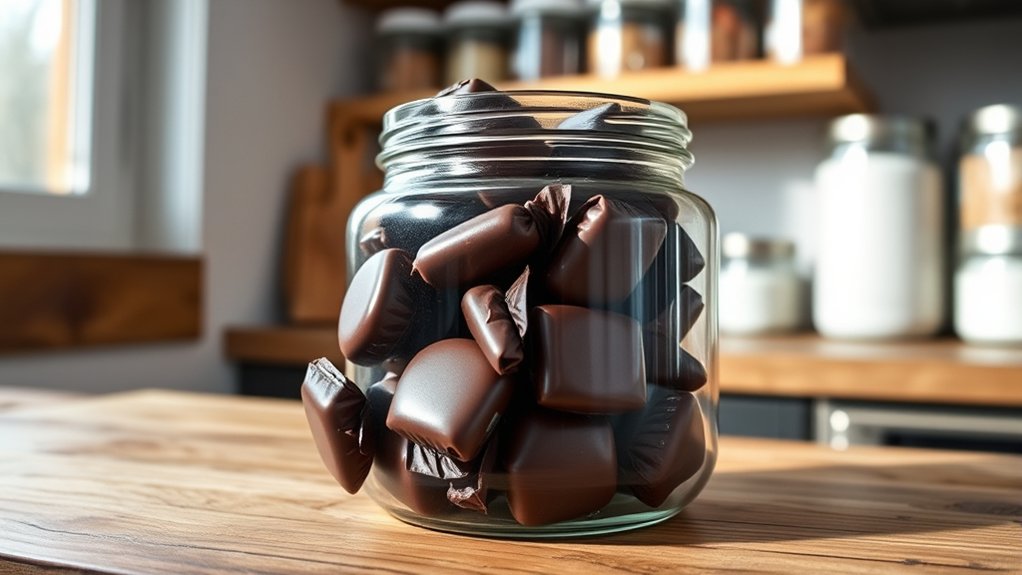
The best place to store chocolate in your home is a cool, dark, and stable environment away from direct sunlight and changing temperatures. A pantry or cupboard away from heat sources like the stove or oven works well.
Keep chocolate away from strong odors since it can absorb strange flavors, which could ruin your pairing and flavor combos. Avoid storing it in the fridge unless you really need to because condensation can cause bloom.
When choosing a spot, think about a drawer or box that keeps light and air exposure minimal. Proper storage helps preserve the chocolate’s texture and flavor, so it stays delicious for everyday snacking or special treats.
A stable, cool environment keeps the integrity of your chocolate intact, making it perfect for pairing with wines, cheeses, or fruit later on. Keeping it at a consistent, cool temperature enhances its sweetness and flavor richness, making your tasting experience even better.
How to Prevent Melting and Blooming in Chocolate
To prevent chocolate from melting and developing bloom, it’s essential to control both temperature and handling. Melting can ruin the chocolate flavor, while blooming causes a dull appearance, which is often misunderstood due to storage myths. To keep your chocolate in peak condition:
- Store it at a consistent temperature between 60-70°F (15-21°C). Avoid temperature fluctuations, which cause condensation and bloom.
- Keep it away from direct sunlight and heat sources. Light and heat accelerate melting and affect flavor.
- Use airtight containers to prevent moisture and strong odors from seeping in, which can compromise quality.
Handling also matters. Minimize touching chocolate with bare hands to prevent temperature transfer. Many storage myths suggest refrigerating chocolate; however, rapid temperature changes can cause blooming. Proper storage preserves the chocolate’s flavor and appearance, ensuring every bite stays delicious.
Tips for Storing Chocolate Long-Term (Freezing & More)
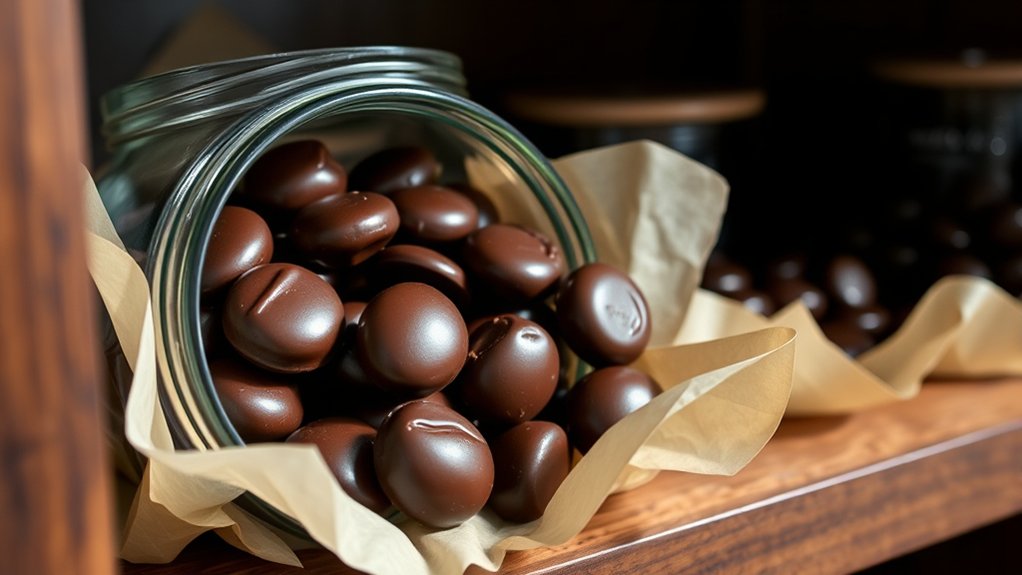
If you’re looking to store chocolate for the long haul, the main thing to keep in mind is how you pack it. You want to make sure it’s protected from moisture and smells from other foods, so good packaging is key. Wrapping it tightly in plastic wrap or placing it in an airtight container can really help keep it fresh.
Now, temperature is also super important. Aim to keep your chocolate somewhere between 60°F and 70°F. That way, it won’t melt or develop that unsightly white coating called bloom. With the right environment and packaging, your chocolate can stay tasty and good-looking for months. Just a few simple steps, and you’ll be set!
Proper Packaging Techniques
Proper packaging is essential for preserving chocolate’s flavor and texture during long-term storage. To keep your chocolates fresh and appealing, focus on:
- Using airtight containers or resealable bags to prevent moisture and air exposure, which can cause flavor loss.
- Wrapping individual pieces in foil or parchment paper for added protection and to keep the packaging looking nice.
- Labeling packages with dates so you can track freshness and avoid forgetting how long they’ve been stored.
This approach helps keep the chocolate flavor intact and prevents spoilage. Clear, attractive packaging also makes your treats look more inviting.
Properly packaged chocolates resist absorbing odors and stay visually appealing, ensuring every bite is as delicious as when you first stored them.
Optimal Temperature Settings
Once your chocolates are properly packaged, keeping the right temperature is essential to preserve their quality over time. Aim for a steady temperature between 65°F and 70°F (18°C to 21°C).
This range helps maintain the flavor by preventing melting or blooming, which can ruin the texture and appearance. Try to avoid temperature fluctuations, as they can cause condensation and moisture buildup, leading to spoilage.
If you need to store chocolates for longer, consider freezing them at around 0°F (-18°C). Just make sure they’re airtight to prevent freezer burn and odor absorption.
When you’re ready to enjoy them, let the chocolates gradually come to room temperature. This helps maintain their flavor and texture.
Proper temperature control keeps your chocolates fresh and delicious for as long as possible.
How Does Light Exposure Impact Chocolate’s Freshness?
Light exposure can really impact the freshness and quality of your chocolate. Since chocolate is sensitive to light, even a short amount of exposure can cause it to deteriorate and shorten its shelf life.
Light exposure can quickly diminish chocolate’s freshness and extend shelf life deterioration.
Ultraviolet and visible light can trigger chemical reactions that break down flavor and texture. To keep your chocolate at its best, store it in a dark, opaque container away from direct sunlight.
Here’s what happens when chocolate is exposed to light:
- Flavor Loss: Light can cause the delicate flavors to fade, making the chocolate taste dull or stale.
- Color Changes: Over time, exposure can lead to discoloration, affecting how it looks.
- Texture Alteration: Light may speed up fat bloom, giving the surface a waxy or grainy feel, which impacts mouthfeel.
Signs That Your Chocolate Has Spoiled or Bloomed
If you see a white or grayish coating on your chocolate, don’t worry—it’s called bloom. This happens when the fat or sugar crystallizes on the surface, and while it might look a bit unappetizing, it doesn’t mean your chocolate has gone bad.
Other signs to look out for include changes in texture or taste. If your chocolate feels chalky or stale, it’s a good indicator that it’s no longer at its best. Recognizing these signs can help you decide whether your chocolate is still good to enjoy or if it’s time to say goodbye.
Visible White or Gray Film
A visible white or gray film on your chocolate isn’t necessarily a sign that it has gone bad, but it does indicate a change in quality known as bloom. This happens when fats or sugar rise to the surface, forming a white or gray film. You might notice:
- A dull, matte look on the surface.
- A powdery or chalky feel when you touch it.
- Slight changes in flavor, often less rich or creamy.
While bloom doesn’t make the chocolate unsafe to eat, it does affect how it looks and feels. The white or gray film is just a cosmetic issue caused by temperature swings or humidity. Proper storage can help prevent bloom and keep your chocolate looking and tasting its best.
Changes in Texture or Taste
While bloom mainly affects how your chocolate looks, changes in texture or taste can mean it’s no longer at its best. If your chocolate feels grainy, crumbly, or develops a waxy feel, that’s a sign the flavor isn’t preserved well and the quality has dropped.
If the taste becomes dull, sour, or strange, it suggests the chocolate has spoiled or absorbed unwanted odors. These changes can mess with both the texture and flavor, making it less enjoyable to eat.
Don’t worry—eating chocolate with altered texture or taste isn’t harmful, but it might not taste as good. To keep your chocolate fresh, store it in a cool, dry spot and check for these signs regularly.
Proper storage helps maintain its freshness, flavor, and smooth texture, so you can enjoy it at its best every time.
Common Mistakes to Avoid When Storing Chocolate
One common mistake to avoid when storing chocolate is exposing it to temperature fluctuations. This can cause blooming, which shows up as those unsightly white streaks or spots on the surface. It not only looks unappealing but can also dull the flavor, making the chocolate less tasty.
To prevent this, keep your chocolate in a cool, stable environment. Avoid storing it near strong odors because chocolate easily absorbs them, ruining its delicate flavor. Also, don’t keep it in the fridge or freezer, as rapid temperature changes can cause condensation and blooming.
Make sure to use airtight containers to prevent moisture and odor transfer. Proper packaging helps preserve the chocolate’s flavor nuances and keeps it fresh longer.
Quick Troubleshooting for Chocolate Storage Problems
When you notice white streaks or spots on your chocolate, it’s usually a sign of blooming caused by temperature changes. Blooming doesn’t affect the flavor or safety but can make it look less appealing.
To fix this, gently reheat the chocolate until it’s just above room temperature, then cool it down slowly. This process helps restore its texture and appearance without shortening its storage time.
Here’s a quick troubleshooting guide:
| Problem | Cause | Solution |
|---|---|---|
| White streaks/spots | Blooming from temperature shifts | Reheat gently, then cool slowly |
| Melting or soft texture | Excess heat or humidity | Store in a cooler, dry place |
| Loss of flavor | Extended storage or exposure | Use within recommended time |
Frequently Asked Questions
Can Certain Types of Chocolate Be Stored Together Without Issues?
Yes, you can store certain types of chocolate together if you focus on preserving flavor and keeping the temperature steady. Dark and milk chocolates usually do fine together.
Just avoid mixing them with white chocolate because it’s more sensitive to temperature changes. Keep the storage area cool, dry, and consistent to prevent melting or flavor transfer.
Proper temperature control helps the chocolates keep their original taste, texture, and aroma. This way, they stay sweet and high-quality for longer.
How Long Can Chocolate Be Stored Before It Goes Bad?
You can usually store chocolate for about 6 to 12 months before it starts to go bad, depending on how you store it. Keep the temperature between 60 and 70°F to help it stay fresh longer.
Exposure to heat, humidity, or direct sunlight can shorten its shelf life, leading to bloom or spoilage. Always check for changes in texture, smell, or appearance before you eat it.
Proper storage makes sure your chocolate stays tasty and fresh for as long as possible.
Does the Aroma of Stored Chocolate Affect Its Flavor?
Did you know that a strong aroma can impact flavor preservation? When you store chocolate, its aroma impact can change the way it tastes over time.
If it absorbs strong odors from nearby items, the flavor might become dull or off-putting. To keep your chocolate tasting fresh and sweet, store it in a sealed container away from strong-smelling foods.
This way, the aroma won’t interfere with its rich, delightful flavor.
Should Chocolate Be Stored Away From Other Strong-Smelling Foods?
Yes, you should store chocolate away from strong-smelling foods. When exposed to strong odors, chocolate can absorb these smells, which can change its flavor or make it taste off.
To keep your chocolate tasting great, store it in an airtight container in a cool, dark place. This helps preserve its flavor and prevents it from picking up other odors.
Proper storage keeps your chocolate sweet and full of its original aroma, making sure it stays fresh and delicious longer.
Is It Necessary to Wrap Chocolate Before Storing It Long-Term?
Yes, you should wrap chocolate before storing it long-term. Proper wrapping helps control temperature and humidity, preventing moisture from damaging the chocolate and keeping out strong odors.
Use airtight packaging or foil to shield it from air exposure. Store it in a cool, dark place with consistent temperature control, ideally between 60-70°F.
Manage humidity levels to avoid blooming or spoilage, ensuring your chocolate stays fresh and delicious.
Conclusion
Think of your chocolate as a treasured gem. Its sparkle depends on how well you protect it. Controlling temperature, humidity, and light is like nurturing its sweetness, similar to a gardener tending delicate blooms.
Avoid common pitfalls, and your chocolate will stay a shining symbol of indulgence. With mindful storage, you keep its charm alive, preserving every bite’s magic.
Treat it as the precious treasure it is. Proper storage ensures your chocolate remains delicious longer and retains its delightful glow.