How Long Does Chocolate Candy Last After Expiration Date?
Ever wonder if that box of chocolate candy sitting in your pantry is still good to enjoy? You’re not alone—many people struggle with figuring out if their treats are safe after the expiration date. It’s frustrating to toss out something that still tastes fine, right?
You can usually enjoy chocolate candy months after its expiration date as long as it shows no signs of spoilage. Proper storage in a cool, dry, dark place helps maintain quality, but watch for dull appearance, off smells, or mold.
Dark chocolates tend to last longer than milk or white varieties. If your chocolate still looks, smells, and tastes normal, it’s likely safe to eat.
To uncover more about how to tell if your chocolate is still good, keep exploring.
Key Takeaways
- Chocolate candy can stay safe to eat for months after the expiration date if it’s stored properly and shows no signs of spoilage.
- Over time, the quality, flavor, and texture might decline, making the chocolate taste stale or bitter.
- If you see white or gray bloom on the surface, it’s just fat bloom and isn’t spoilage. It’s mainly a cosmetic issue.
- Before eating expired chocolate, check for mold, strange odors, discoloration, or texture changes.
- Keeping your chocolate in a cool, dry, airtight place helps extend its shelf life beyond the expiration date.
How Long Does Chocolate Candy Stay Good After Its Expiration Date?
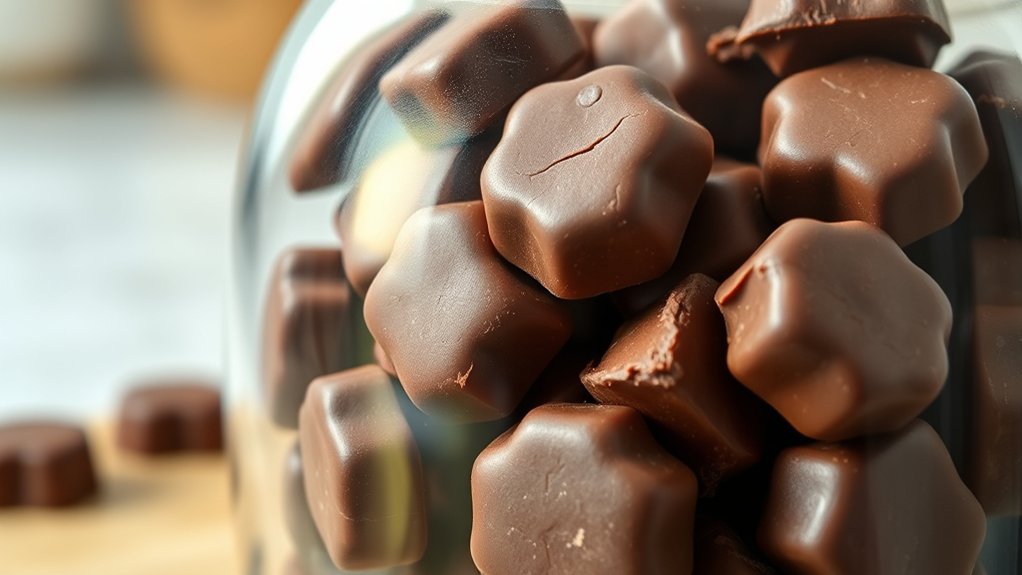
Generally, chocolate candy can stay safe to eat for some time after its expiration date, but its quality might decline. The flavor can fade or become stale, especially if it’s not stored properly.
Chocolate candy may remain safe after expiration, but its flavor and texture could diminish over time.
The packaging design helps preserve freshness; airtight packaging keeps out moisture and odors that can spoil the candy. If the packaging is intact and sealed, your chocolate might stay good a few months past the expiration date.
Once the packaging is damaged or opened, the risk of flavor and texture changes goes up. You might notice a duller taste or a different mouthfeel, which shows the quality has declined.
While the candy may still be safe to eat, your experience with its flavor and texture could be less enjoyable. Proper storage in a cool, dry place away from sunlight can help extend its freshness.
Always check for signs of spoilage before indulging, even if the expiration date has passed.
How Are Chocolate Expiration Dates Determined?
You might be curious about how those expiration dates on chocolate are decided. Well, it all begins with knowing exactly when the chocolate was made. Manufacturers keep a close eye on the production date to help figure out how long the chocolate will stay fresh.
Then, they consider things like ingredients, storage conditions, and how the chocolate might change over time. By checking all these factors, they can set a “best-by” or expiration date that lets you enjoy your chocolate at its best quality and safety.
Manufacturing Date Tracking
Manufacturers figure out chocolate expiration dates by looking at the ingredients, how it was made, and how it’s stored. They track the manufacturing date to make sure you get the freshest product possible.
This date helps you know how long the chocolate will keep its flavor and texture. The packaging usually has a clear code or date stamp, so it’s easy to see when it was made.
Imagine the process—large mixers blending cocoa, sugar, and milk under strict controls. During packaging, temperature and humidity are carefully monitored.
Labels with coded dates help track batches effectively. This careful process keeps your chocolate tasty and safe, no matter how long it’s stored.
Knowing the manufacturing date helps you enjoy your favorite treats at their best quality.
Quality Control Standards
Quality control standards play an essential role in determining chocolate expiration dates by setting strict guidelines for ingredient quality, production processes, and storage conditions. These standards help ensure the chocolate stays fresh, flavorful, and safe throughout its shelf life.
Manufacturers rigorously test ingredients for freshness and consistency to prevent spoilage or off-flavors. Packaging integrity is also key; durable packaging protects against moisture, air, and light, which can damage quality.
During quality checks, companies assess how well the packaging preserves the chocolate’s texture and flavor over time. By following these standards, producers can set accurate expiration dates that reflect the product’s best quality period.
This careful control allows you to enjoy chocolate at its peak flavor and guarantees safety even beyond the listed date.
What Are the Signs That Your Chocolate Has Gone Bad?
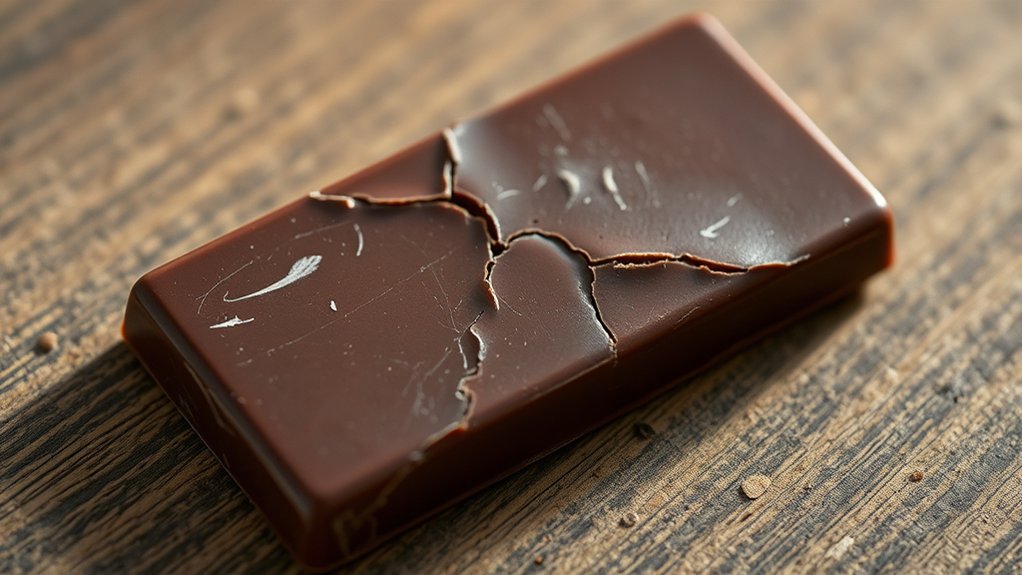
Chocolate that has gone bad often shows noticeable changes in appearance, texture, or smell. If your chocolate exhibits these signs, it’s time to pay attention.
Chocolate showing changes in appearance, texture, or smell may be spoiled—trust your senses to decide if it’s still good.
A dull or faded color can indicate oxidation, while a greasy or grainy texture suggests spoilage. You might also notice a sour or off smell that wasn’t there before.
Changes in chocolate flavor can also signal it’s past its prime. It may taste bitter or strange instead of its usual sweetness.
Packaging integrity is important; if the wrapper is torn, swollen, or has lost its seal, contaminants could have entered.
Look for these signs: white or grayish streaks or spots, known as bloom, which don’t necessarily mean spoilage but indicate it’s no longer at peak quality.
A rancid or sour odor that’s different from the typical chocolate scent is another red flag.
Unusual texture, such as excessive hardness or a powdery feel, can also be a sign your chocolate has gone bad.
Trust these clues to determine if your chocolate is still good to eat or should be discarded.
How Storage Conditions Affect Chocolate Freshness
Storing your chocolate the right way can really help it stay fresh longer. The best temperature to keep it at is between 60 and 70°F. If it gets too warm or too cold, it can affect the quality.
Also, try to keep the humidity low. Too much moisture can cause melting or something called blooming, where the chocolate develops a whitish coating. To avoid that, it’s a good idea to store your chocolate in airtight containers. This helps keep out moisture and odors from other foods, so your chocolate stays delicious and fresh.
Proper Storage Temperatures
Maintaining the right storage temperatures is essential for preserving the freshness and flavor of your chocolate. Too warm and the chocolate can melt or develop a dull appearance, while too cold can cause sugar bloom, affecting texture and taste. Ideally, keep your chocolates between 60-70°F.
Proper temperature control helps improve flavor pairing by keeping aromas intact and prevents packaging design from deteriorating. Visualize your chocolate tucked in a cool, dark cabinet, away from direct sunlight, with a consistent temperature.
A cozy spot in your pantry, away from heat sources, works well. Use an airtight container to prevent flavor transfer. Avoid refrigeration, which can cause moisture and bloom issues.
Humidity Control Tips
Humidity levels are key to keeping your chocolate at its best. Too much moisture can cause it to bloom or look dull, while dryness might make it stale.
To keep it fresh, store your chocolates in a cool, dry place away from humidity sources. Proper packaging like resealable bags or airtight containers helps protect against moisture.
When thinking about flavor pairing, lower humidity prevents flavors from blending improperly or losing their distinct qualities. Avoid storing chocolates near kitchens, bathrooms, or windows with high humidity.
Controlling humidity helps preserve texture, flavor, and appearance. This way, your chocolates stay delicious longer. Keep an eye on storage conditions, and your treats will stay fresh and tasty well past their expiration date.
Does Different Types of Chocolate Last Longer?
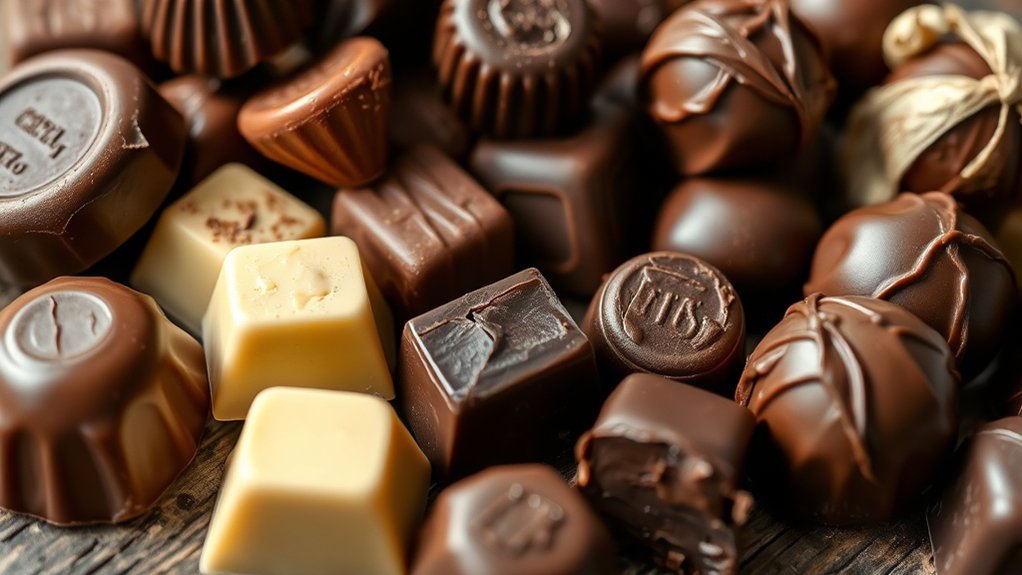
Different types of chocolate vary in how long they stay good after their expiration date, mainly because of their ingredients and moisture content. Dark chocolate, with its high cocoa content and lower moisture, tends to last longer than milk or white chocolates. Milk chocolates, with added dairy and sugar, are more prone to spoilage.
You might notice these features when checking for freshness:
- The rich, complex chocolate flavor profiles diminish over time, especially in softer chocolates.
- Packaging innovations like airtight wrappers or vacuum seals help extend shelf life by protecting against moisture and air.
- Hard chocolates with minimal ingredients usually last longer than those with added fillings or additives.
Knowing these factors can help you judge how long your chocolates will stay enjoyable. If stored properly, dark chocolate can often last longer than other types, making it a more durable option when considering expiration.
Is It Safe to Eat Chocolate Past Its Expiration Date?
While eating chocolate past its expiration date isn’t necessarily dangerous, it’s important to check its condition first. Start by inspecting the packaging—if it’s torn, swollen, or damaged, the chocolate could be contaminated and should be thrown out.
Next, look at the chocolate itself. Smell it for any strange odors, check for discoloration, or unusual textures, which can signal spoilage. Keep in mind that flavorings may fade over time, so it might taste dull or stale, but that doesn’t usually mean it’s unsafe.
If the chocolate looks and smells normal, it’s generally safe to eat, though the taste might not be as good as fresh. Always trust your senses—if anything seems off, it’s better to avoid eating it. Proper storage helps, but the overall condition is what really matters for safety.
Tips to Keep Your Chocolate Candy Fresh Longer
Want your chocolate candy to stay fresh and delicious for as long as possible? The key is to store it in a cool, dry spot—think pantry or cupboard—and keep it away from direct sunlight. When chocolate gets exposed to heat or sunlight, it can melt or develop that white film called blooming, which isn’t harmful but can make it look less appealing.
Also, try to avoid big temperature swings. Moving your chocolate from a warm room to a cold fridge and back again can cause condensation and affect its texture and flavor. So, keep things steady! By storing your candy in the right conditions, you’ll help preserve its great taste and smooth texture for longer.
Proper Storage Conditions
Proper storage is key to keeping your chocolate candy fresh for as long as possible. To preserve its rich flavor and maintain its packaging design, store your candies in a cool, dark place away from sunlight and heat.
Avoid areas with fluctuating temperatures or humidity, which can cause bloom or spoilage. Use airtight containers or resealable bags to prevent exposure to air and moisture, which can degrade quality.
Consider placing your chocolates in a cabinet or pantry with consistent conditions. Visualize a cozy shelf, protected from light, where your candies stay fresh longer.
Keep in mind, the right storage not only extends shelf life but also preserves the chocolate’s texture and flavor, ensuring every bite remains delightful.
Avoid Temperature Fluctuations
Keeping your chocolate candies fresh means paying attention to temperature stability. Fluctuations can cause the chocolate to develop bloom, which affects flavor and texture.
Sudden changes between cold and warm environments lead to moisture problems, causing sugar or fat bloom that reduces quality. To avoid this, store your chocolates in a consistent, cool place—ideally between 60-70°F.
Stay away from heat sources, direct sunlight, or humid areas. Using airtight containers helps keep conditions stable and protects against moisture.
Common Myths About Eating Expired Chocolate
Many people believe that eating expired chocolate is always unsafe, but that’s a common myth. While the flavor may decline over time, it doesn’t automatically become dangerous to eat.
Expired chocolate often remains safe if stored properly, though its taste and texture might suffer. If you bite into a piece with a smooth, glossy surface and a rich aroma, it’s a good sign that it’s still safe.
A chocolate bar that has developed a white coating is just fat bloom, not mold or bacteria. Look for other signs like a dull, grayish hue instead of shiny gloss, or a faint, off smell that’s not sour or rancid.
You might notice a slight change in flavor, like being less sweet or more bitter than usual. Recognizing these signs can help you decide if your chocolate is still good to enjoy, regardless of the expiration date.
How to Check If Your Chocolate Is Still Safe to Eat
Even if your chocolate has passed its expiration date, it doesn’t automatically mean it’s unsafe to eat. To check if it’s still good, start by inspecting the packaging integrity. If the wrapper or box is torn, broken, or swollen, bacteria or mold could have entered, so discard it.
Next, examine the chocolate’s appearance. Look for signs of discoloration or a white or grayish coating called bloom. While harmless, bloom can affect the flavor. Smell the chocolate—if it has a sour or off odor, it’s best not to eat it.
Finally, consider the flavor and texture. If it tastes stale, bitter, or strange, or if the texture is waxy or crumbly, discard it. These simple checks help ensure your chocolate is safe and enjoyable, even if it’s past its expiration date.
When Should You Discard Chocolate to Avoid Health Risks?
You should discard chocolate immediately if you notice any mold growth, a strong sour smell, or an unusual taste, as these are clear signs of contamination that could pose health risks. Even if the chocolate’s flavor seems fine, changes in texture or appearance can indicate spoilage.
Pay attention to the packaging design; if it’s swollen, torn, or broken, bacteria could have entered, making the chocolate unsafe. Also, if the chocolate has developed a dull or grayish surface, it’s best to discard it.
Swollen, torn, or broken packaging indicates potential contamination and makes the chocolate unsafe to eat.
Look out for mold spores spreading across the surface, a sour, off-putting aroma, or cracks and holes in the packaging that could allow air or bacteria inside. These signs mean it’s time to get rid of the chocolate.
Always trust your senses and visual cues to decide whether to keep or discard chocolate. Remember, expired or compromised chocolate can carry health risks, so when in doubt, it’s safer to throw it out.
Frequently Asked Questions
Can Chocolate Still Be Edible After the Expiration Date?
Yes, chocolate can still be edible after its expiration date if stored properly.
You should check its texture—if it feels greasy or develops a white coating, called bloom, it’s best to discard it. Proper storage in a cool, dry place away from sunlight helps keep it good longer.
As long as the chocolate looks and smells fine, it’s probably safe to enjoy even after the expiration date.
Does the Type of Chocolate Affect Its Shelf Life?
Yes, the type of chocolate affects how long it stays good. Dark chocolate usually lasts longer because it has less dairy.
Milk and white chocolates tend to spoil sooner since they contain more dairy and moisture. Storing your chocolate in a cool, dry place helps keep it fresh longer.
Always check for signs of spoilage before eating, no matter what kind of chocolate it is. Proper storage and handling make a big difference in its shelf life.
How Does Temperature Influence Chocolate Longevity?
Temperature influences chocolate longevity like a delicate dance, where the wrong step can ruin the performance. You should keep your chocolate in consistent, cool storage conditions, ideally between 60-70°F.
Avoid temperature fluctuations, which cause blooming and spoilage. If stored properly, chocolate can last months beyond its expiration date.
Keep it away from heat and direct sunlight, and you’ll preserve its texture and flavor for longer, enjoying every bite.
Are There Health Risks in Eating Expired Chocolate?
Eating expired chocolate can pose health risks, especially if it develops mold or if the flavor has significantly changed. Mold can produce harmful toxins, making the chocolate unsafe to eat.
Even if you don’t see mold, the taste might be off, which is a sign it’s gone bad. Always check your chocolate for discoloration, strange odors, or unusual textures before eating.
If you notice any signs of spoilage, it’s best to avoid eating it to stay safe.
Can Packaging Affect How Long Chocolate Stays Good?
Packaging has a big impact on how long chocolate stays good. Studies show that well-sealed packaging can extend a chocolate’s shelf life by several months.
If your dark chocolate’s packaging is intact, it helps prevent exposure to air, moisture, and odors that cause spoilage.
Conclusion
Remember, your chocolate’s freshness is like a delicate bloom that fades with time. While it might still be edible after the expiration date, it’s best to trust your senses—look, smell, and taste—to decide if it’s still good.
Proper storage keeps your treats from turning into a distant memory. When in doubt, toss it out. Your health is the sweetest reward, and no chocolate is worth risking a sour surprise.
In general, chocolate candy can last beyond its expiration date if stored properly. But always check for any signs of spoilage before indulging.