Understanding Chocolate Liquor in Candy: A Quick Guide
Ever tried making your own chocolates and felt stuck trying to get that perfect smoothness and rich flavor? You’re not alone—many people struggle with achieving that ideal texture and taste in their confections. The secret often lies in understanding chocolate liquor and how to use it right.
Chocolate liquor is a key ingredient in making high-quality candy, consisting of ground cacao beans that provide both flavor and texture. It influences how smooth, creamy, and glossy your chocolates turn out, while also affecting their richness and shelf stability.
Choosing good-quality liquor and handling it properly guarantees better flavor and texture in your confections. Keep exploring these techniques to reveal even more about using chocolate liquor effectively in your sweet creations.
Key Takeaways
- Chocolate liquor is a paste made from ground cacao beans, containing both cacao solids and cacao butter. It serves as the base for many confections.
- It influences the texture, mouthfeel, and melting properties of candy by contributing smoothness and richness.
- High-quality liquor enhances flavor complexity and aroma, which is especially important for premium chocolate products.
- The amount and quality of liquor used determine the chocolate’s firmness, gloss, and overall sensory experience.
- Proper processing, including roasting, grinding, and tempering, is essential to maximize chocolate liquor’s role in candy making.
What Is Chocolate Liquor and Why Is It Essential?
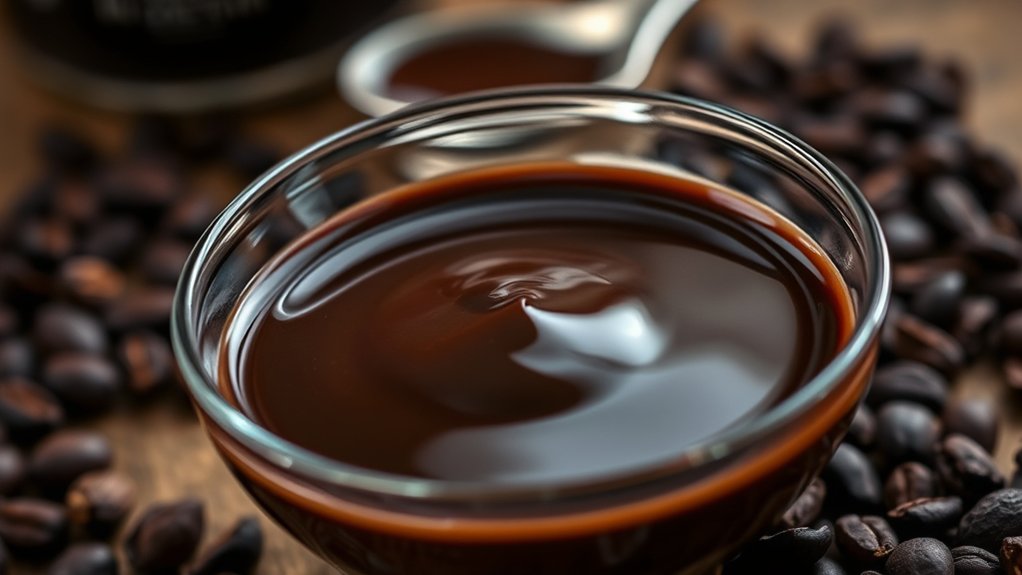
Have you ever wondered what gives chocolate its rich, smooth texture? That’s where chocolate liquor comes in. It’s a key ingredient that forms the base for many chocolates and confections.
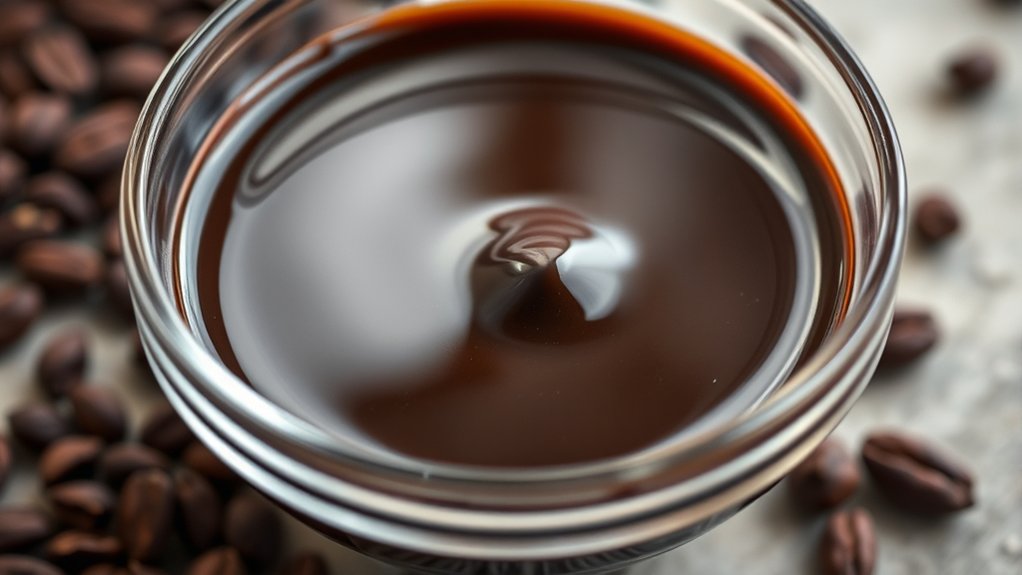
Made by grinding cacao beans into a paste, chocolate liquor contains both cacao solids and cacao butter. This combination shapes the flavor profiles of finished products.
Its natural bitterness balances sweetness, creating complex taste experiences. Historically, chocolate liquor has played a big role in the cultural importance of chocolate, especially in Mesoamerican civilizations where cacao was highly revered.
Today, it’s essential because it controls the quality and consistency of chocolate, influencing both texture and flavor. Without it, chocolates would lack depth and richness.
Whether in dark, milk, or specialty chocolates, chocolate liquor ensures an authentic chocolate experience. It connects modern confections to their rich, historical roots.
How Is Chocolate Liquor Made From Cacao Beans?
Sure! So, the process begins when you harvest ripe cacao pods from the cacao trees—making sure to pick only the best beans. After that, the beans go through fermentation, which is super important because it helps develop the rich flavors and get rid of any bitterness. Once that’s done, the beans are ground up and refined until they turn into a smooth chocolate liquor, which is then ready to be used in making all kinds of delicious candies and chocolates.
Harvesting Cacao Pods
How are cacao pods harvested to guarantee the best quality for chocolate liquor? During cacao harvesting, careful pod selection is really important. You want to pick ripe pods that have fully developed flavors, so the beans are high quality.
Timing is key. Harvesting too early or too late can hurt the flavor. Skilled farmers usually look for pods with bright, consistent color, which shows ripeness. They also check for slight softness when gently pressed.
Another thing to watch out for is cracks or blemishes on the pods. Uniform size within the tree is a good sign, and they also avoid pods with signs of pests or disease. This careful selection process helps keep the beans’ quality high.
Proper harvesting methods prevent damage to the beans and help preserve their flavor profile. By paying attention to these details, farmers set the stage for making premium chocolate liquor. The result is a rich, smooth final product you can enjoy.
Fermentation Process Overview
Once the cacao pods are carefully harvested and selected, the next step in making chocolate liquor is fermentation. During fermentation, the beans sit in shallow containers or heaps, allowing natural yeasts and bacteria to break down sugars.
This process greatly impacts the cacao flavor, developing complex, fruity, and floral notes. It’s essential because it reduces bitterness and acidity, laying the foundation for high-quality chocolate.
Typically lasting between five to seven days, fermentation transforms the beans’ chemical makeup and releases aromatic compounds. Proper control of fermentation conditions ensures consistency in flavor profiles.
Without proper fermentation, the final chocolate liquor might lack depth or develop off-flavors. This step is crucial in shaping the unique taste characteristics that define different cacao origins.
Grinding and Refining Steps
After the fermentation process, the cacao beans are cleaned and roasted to bring out their flavor. During grinding and refining, the beans are broken down into smaller particles, releasing the chocolate aroma that you associate with high-quality chocolate.
This step is really important because the flavor developed during fermentation fully comes out here. It influences the final taste of the chocolate liquor.
You’ll notice that the nibs are ground into a thick paste called chocolate liquor. The heat generated during grinding melts the fat, creating a smooth texture.
Refining reduces the particle size, giving the chocolate a silky mouthfeel. It also intensifies the aroma, highlighting the impact of fermentation.
Consistent grinding ensures uniformity in flavor and texture, making the chocolate more refined and delicious.
This stage turns raw beans into a luscious base for chocolate, capturing the essence of fermentation and rich chocolate aroma.
What’s the Difference Between Chocolate Liquor, Cocoa Mass, and Cocoa Paste?
Sure! Here’s a more conversational version of the text:
—
You might have come across the terms chocolate liquor, cocoa mass, and cocoa paste and wondered, “Are they all the same thing?” Well, they’re pretty closely related, but there are some subtle differences in how they’re made and what they’re used for. Getting the hang of these differences can actually help you understand why different chocolates taste and feel the way they do. So, let’s break down what sets chocolate liquor, cocoa mass, and cocoa paste apart.
—
Would you like me to continue and expand on this or make further adjustments?
Composition and Ingredients
Understanding the differences between chocolate liquor, cocoa mass, and cocoa paste is important because these terms are often used interchangeably. Even though they refer to slightly different forms of processed cacao, they are closely related.
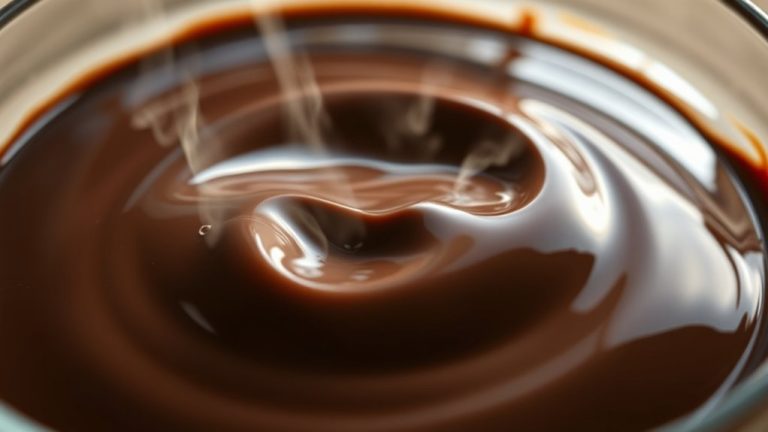
Chocolate liquor is a thick, paste-like substance made from ground cacao beans. It contains both cocoa solids and cocoa butter. Cocoa mass and cocoa paste are usually used as synonyms, highlighting their composition.
Their ingredients include ground cacao beans, cocoa solids, cocoa butter, trace amounts of residual moisture, and sometimes added ingredients like emulsifiers. These components influence flavor pairing options and nutritional benefits.
For example, higher cocoa butter content makes the chocolate smoother, while the cocoa solids give it a richer flavor. Knowing this helps you choose ingredients that match your candy’s desired taste and nutritional profile.
Processing Methods and Uses
The terms chocolate liquor, cocoa mass, and cocoa paste all refer to similar products from cacao beans, but they differ slightly in how they’re processed and used.
Chocolate liquor is made by grinding roasted cacao beans into a smooth paste that contains both cocoa solids and cocoa butter.
Cocoa mass is often used interchangeably but may focus more on the solid part, which can influence flavor pairing options.
Cocoa paste is a more refined version, sometimes with added ingredients, mainly used in high-quality confections.
These products are versatile in candy making and greatly affect flavor pairing. Proper storage is key to keeping them fresh and preventing oxidation, which can change the taste.
Knowing these differences helps you pick the right product for your desired flavor and ensures they stay fresh for your creations.
How Does Chocolate Liquor Influence Chocolate Flavor?
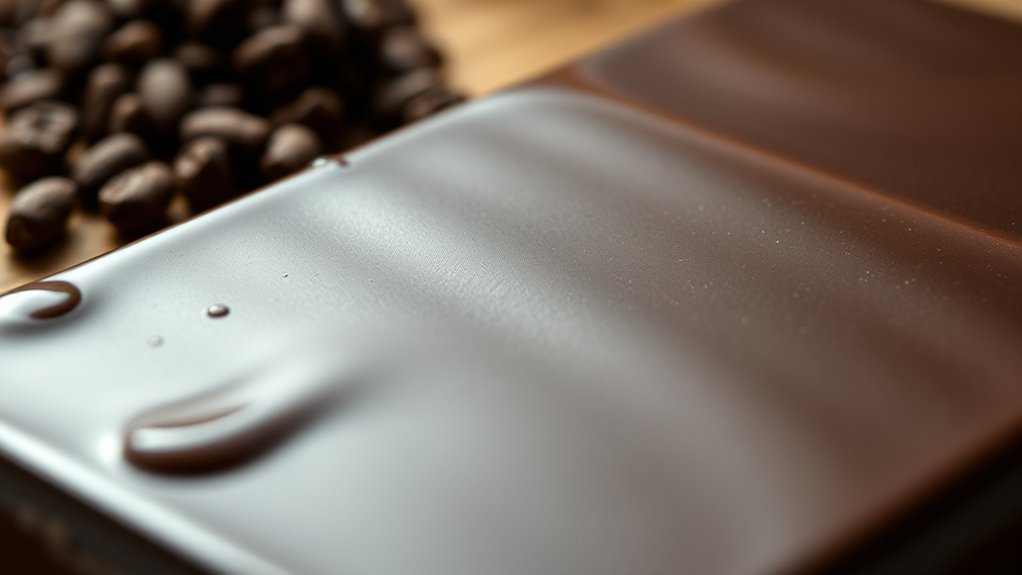
Chocolate liquor plays a crucial role in shaping the flavor profile of your favorite candies because it contains both cocoa solids and cocoa butter, which contribute to the depth and richness of the final product. It influences the chocolate flavor by providing a complex, robust taste that balances bitterness and sweetness. The cacao aroma from the liquor is fundamental in creating the signature scent that entices your senses. Variations in the fermentation and roasting processes of the cacao beans impact this flavor, adding nuanced notes.
Chocolate liquor shapes rich, complex flavors with earthy, nutty, and fruity notes, balancing bitterness and sweetness.
Key influences include:
- Enhancing the overall chocolate flavor with rich, earthy tones
- Contributing to the aromatic complexity through the cacao aroma
- Balancing bitterness with subtle sweetness
- Adding depth via roasted, nutty, or fruity undertones
- Allowing flavor development during conching and aging processes
How Does Chocolate Liquor Affect Chocolate Texture?
Chocolate liquor really has a big impact on the texture of your chocolate. It helps give your candy that smooth and creamy feel we all love. When you bite into it, the way it melts in your mouth is partly thanks to the chocolate liquor.
Plus, it can affect how thick or runny your chocolate turns out. So, understanding how chocolate liquor influences texture can help you make those chocolate treats just the way you want them — whether you like them super smooth or a little more firm.
Influences Smoothness and Creaminess
- Proper conching helps improve mouthfeel and creates a smoother texture.
- Adjusting cocoa butter content adds silkiness to the chocolate.
- Ensuring fine grinding minimizes grittiness and enhances creaminess.
- Balancing sugar and fat is key for a harmonious, smooth texture.
- Using emulsifiers helps promote even distribution for a luxurious feel.
Together, these factors, along with the natural properties of chocolate liquor, create a smooth, creamy chocolate experience that delights your senses.
Affects Melting Properties
The presence of chocolate liquor plays a crucial role in determining how smoothly and quickly your finished chocolate melts in your mouth. It influences melting properties by contributing to the fat content, which affects how the chocolate releases flavor and melts evenly.
Higher-quality chocolate liquor can improve flavor and create a more desirable melting experience. It also helps increase shelf stability, preventing spoilage and maintaining texture over time.
Getting the right balance of chocolate liquor ensures your candy melts effortlessly, delivering a satisfying mouthfeel.
| Aspect | Effect |
|---|---|
| Melting speed | Faster, smoother melting |
| Flavor release | Enhanced, more immediate |
| Fat content | Influences melting consistency |
| Shelf stability | Improves longevity and preservation |
| Texture retention | Maintains desired mouthfeel |
Alters Textural Consistency
Since chocolate liquor contains both cocoa solids and cocoa butter, it directly impacts the final texture of your chocolate. It’s essential for shaping how your chocolate feels and melts in your mouth.
The presence of cocoa butter gives a smooth, glossy surface, which enhances mouthfeel and creates a luxurious experience. You can fine-tune these effects during production to reach your desired texture.
Think about balancing cocoa solids and cocoa butter to get the perfect consistency. This helps achieve that silky, melt-in-your-mouth feel.
It also improves the snap and firmness of your chocolate without making it brittle. Plus, better particle dispersion can boost overall mouthfeel and smoothness.
Finally, adjusting viscosity during processing allows for better control over texture and workability.
How Do Different Types of Chocolate Use Chocolate Liquor?
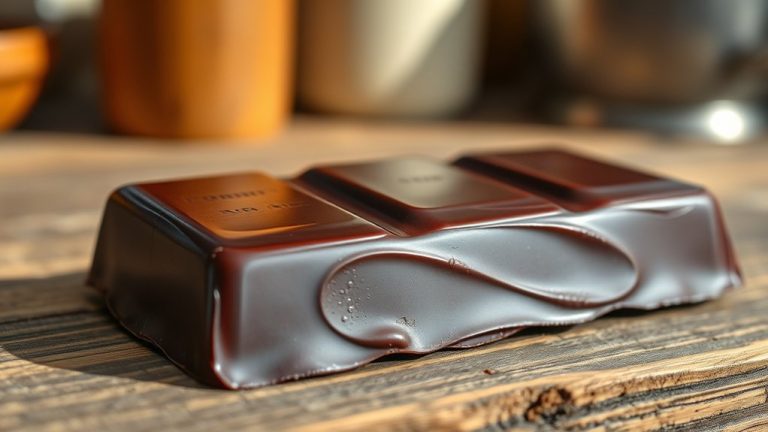
Different types of chocolate incorporate chocolate liquor in different ways to get their unique flavors and textures. Dark chocolate uses a higher amount of chocolate liquor, giving it a deep, intense flavor and a firm texture.
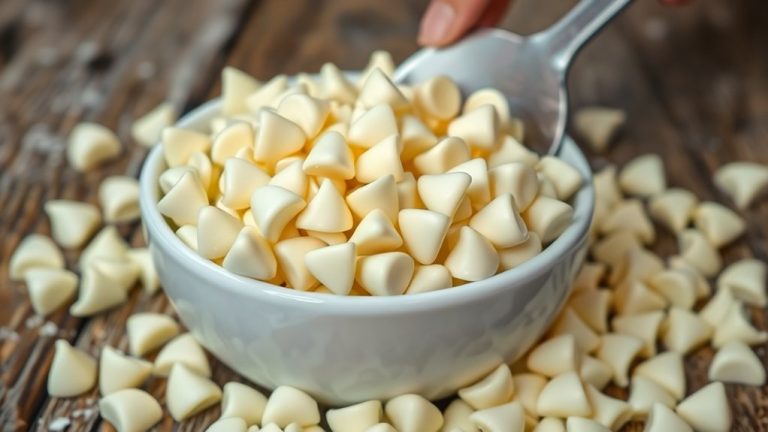
Milk chocolate combines chocolate liquor with milk solids and sugar, making it smoother and creamier. White chocolate, on the other hand, has little to no chocolate liquor and focuses more on cocoa butter, so it doesn’t use liquor directly.
When making different chocolates, flavor pairing is really important. Chocolate liquor’s strong taste works well with ingredients like nuts, fruits, or spices. It can also be used as a substitute—some recipes replace cocoa solids with liquor to boost the chocolate flavor.
Knowing how each type uses liquor helps you appreciate their unique profiles. It also guides you in choosing the right chocolate for your recipes, whether you want something rich and bitter or sweet and mild.
Why Does Quality Matter When Choosing Chocolate Liquor?
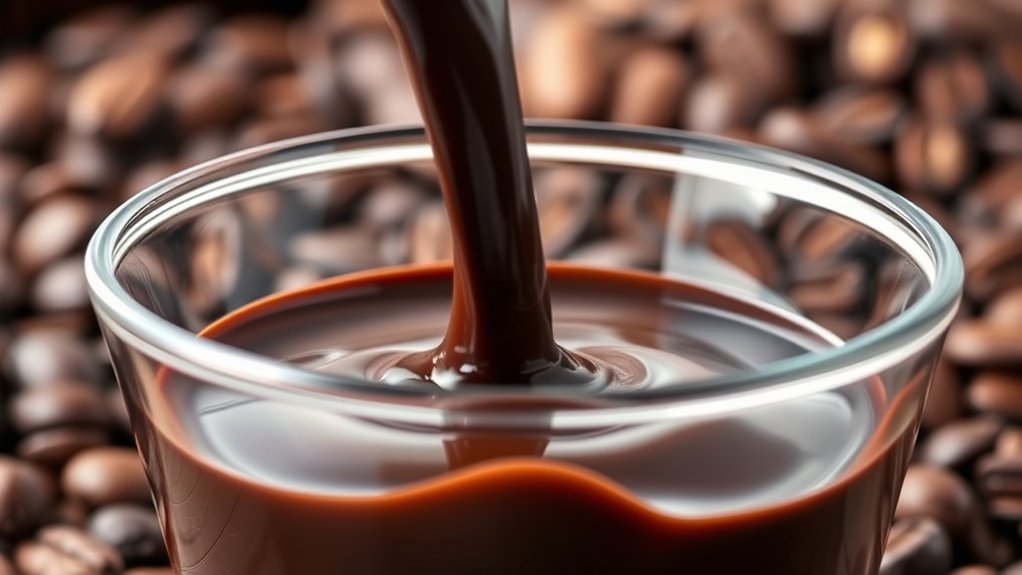
Choosing high-quality chocolate liquor is essential because it directly impacts the flavor, texture, and overall quality of your finished product. Superior chocolate liquor offers richer, more complex flavor profiles, making your candies more flavorful and memorable.
When selecting quality, consider the sourcing ethics behind the product. Ethically sourced chocolate often results in better flavor and supports sustainability. Higher-quality chocolate liquor typically undergoes minimal processing, which helps preserve nuanced taste qualities.
Key factors include authentic flavor profiles that enhance your candy’s depth, as well as consistent texture for smoothness and mouthfeel. Ethical sourcing practices support fair labor and environmental standards, making your product not just better but also responsible.
Good quality chocolate liquor has less bitterness and off-flavors from inferior beans. It also offers a better aroma and color, elevating the final product you create.
What Are Common Myths About Chocolate Liquor?
Many people believe that chocolate liquor is just a raw, unprocessed form of chocolate, but this is a common misconception. Some myths suggest that chocolate liquor is simply melted chocolate, but it’s actually made from ground cacao beans, not finished chocolate products.
Many believe chocolate liquor is raw chocolate, but it’s actually ground cacao beans, not melted or finished chocolate.
Tasting myths also circulate, claiming you can identify high-quality chocolate liquor just by taste, which isn’t true—the flavor depends heavily on processing and blending.
Another misconception is that chocolate liquor contains alcohol, but it’s alcohol-free; the name refers to the liquor-like appearance of the paste.
Some believe that all chocolate liquor is bitter and unpalatable, but quality processing can produce a smooth, rich product.
Recognizing these myths helps you better understand what chocolate liquor truly is and dispels the false ideas that often mislead consumers and even some chocolatiers.
How Is Chocolate Liquor Processed to Ensure Quality?
To guarantee the quality of chocolate liquor, manufacturers follow precise processing steps that focus on preserving flavor and purity. They start by carefully selecting beans based on their origin, which influences the chocolate flavor.
The beans are roasted at optimal temperatures to develop complex aromas without over-roasting, which helps maintain the flavor profile. Next, the beans are winnowed to remove shells, leaving behind the nibs that are ground into a smooth paste.
This paste undergoes refining and conching, where heat and agitation improve texture and flavor clarity. To ensure consistency, quality control involves testing for purity, aroma, and flavor nuances.
Key steps include selecting beans with specific origins for desired flavor, roasting to develop chocolate flavor, winnowing to isolate nibs, grinding into a fine paste, and conching for flavor refinement.
Practical Tips for Working With Chocolate Liquor in Your Confections
Working with chocolate liquor in your confections requires paying attention to temperature and handling to keep its smooth texture and rich flavor. Keep it at a consistent, moderate temperature—around 88-90°F (31-32°C)—so it stays fluid without seizing up.
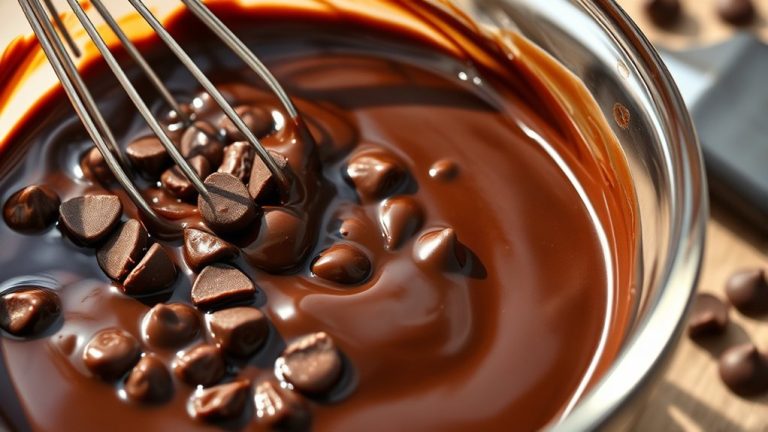
When melting, use a double boiler or microwave in short bursts, stirring often. For flavor pairing, try ingredients like nuts, berries, or spices that enhance the chocolate’s depth without overpowering it.
Proper storage is key. Keep chocolate liquor in an airtight container in a cool, dark place, ideally between 60-70°F (15-21°C). This helps prevent blooming or spoilage. Avoid refrigerating unless necessary, because moisture can ruin its texture.
While working with chocolate liquor, taste test frequently. This helps you balance flavors and achieve a smooth, glossy finish. These tips will help you create confections that are flavorful, appealing, and professional-looking.
Frequently Asked Questions
Can Chocolate Liquor Be Used in Non-Candy Applications?
Yes, chocolate liquor can be used in non-candy applications. You might explore other culinary uses like adding it to desserts or sauces for a rich flavor.
In industrial chocolate processing, it’s essential for making various chocolate products beyond candies. Using chocolate liquor outside candy-making lets you enjoy its deep cocoa taste in baking, drinks, or gourmet dishes.
This makes it a versatile ingredient whether you’re in a home kitchen or an industrial setting.
How Long Does Chocolate Liquor Last Before It Spoils?
Chocolate liquor typically lasts about one to two years if stored properly. Its shelf life depends on how you store it, like keeping it in a cool, dry place away from direct sunlight and in an airtight container.
Make sure to check for signs of spoilage, like an off smell or mold. When stored correctly, your chocolate liquor stays fresh longer and keeps its quality for use in chocolates or other confections.
Is Chocolate Liquor the Same as Dark Chocolate?
Chocolate liquor isn’t the same as dark chocolate. During chocolate processing, cacao beans are ground into a paste called chocolate liquor, which then develops flavor.
Dark chocolate has added ingredients like sugar and cocoa butter, giving it a sweeter taste and different texture. So, while chocolate liquor is a key ingredient in dark chocolate, they’re not interchangeable.
You can think of chocolate liquor as the raw base, not the finished product.
What Are the Health Benefits or Risks of Consuming Chocolate Liquor?
Chocolate liquor offers nutritional benefits like antioxidants that support your heart and mood. However, health concerns exist, such as high caffeine and sugar levels that can lead to insomnia or weight gain.
You enjoy its rich flavor, but moderation is key. While it boosts your antioxidant intake, overconsumption risks outweigh benefits.
Balance your treats to enjoy chocolate liquor’s perks without risking your health.
How Does Fermentation Impact the Flavor of Chocolate Liquor?
Fermentation really impacts the flavor development of chocolate liquor through the fermentation process. It breaks down the cocoa beans’ sugars and acids, creating complex flavor compounds.
During fermentation, you’ll notice fruity, tangy notes emerge, which shape the final taste. This step is crucial in developing the depth and richness of high-quality chocolate.
Basically, fermentation is essential for crafting that exceptional chocolate flavor. It’s what gives high-quality chocolate its unique character and complexity.
Conclusion
Understanding chocolate liquor helps you appreciate its role in flavor, texture, and quality. Knowing how it’s made, processed, and differentiated empowers you to select and use it wisely. Recognize the myths, accept the facts, and prioritize quality.
Whether you’re crafting confections or enhancing recipes, your knowledge transforms your approach. With insight and care, you can raise your chocolates, sharpen your skills, and elevate your creations.
In the world of chocolate, understanding chocolate liquor deepens your passion and perfects your craft. It’s the key to making better chocolates and truly appreciating what makes them special.