How to Determine if Chocolate Bars Are Candy
Are you often confused about whether a chocolate bar is real chocolate or just candy? You’re not alone—many people struggle with telling the difference, especially when shopping or trying to satisfy their sweet tooth.
Luckily, a few simple tricks can help you identify genuine chocolate quickly.
To tell if a chocolate bar is genuine chocolate or just candy, start by checking the ingredients list for cocoa solids, cocoa butter, and sugar.
Look at the packaging—real chocolate usually has a smooth, glossy appearance and simple labeling, while candy may be brighter or more decorated.
Notice the texture and flavor: chocolate melts smoothly and has a rich cocoa taste, whereas candy can be chewy or overly sweet.
Keep exploring to uncover more useful tips.
Key Takeaways
- Check the ingredient list for simple, recognizable components like cocoa, cocoa solids, and minimal additives. If it’s mostly these, it’s probably real chocolate.
- Look at the packaging. Subdued colors and cocoa bean icons usually suggest genuine chocolate, while bright colors tend to mean candy.
- Examine the surface. A shiny, smooth appearance often indicates high-quality chocolate, while a dull or uneven surface might be candy.
- Read the label for words like “candy,” “sweets,” or “confectionery.” These clues can help you identify non-chocolate treats.
- Finally, consider the texture and taste. Chocolate tends to be smooth and melt-in-your-mouth, while candy might be chewy or gritty.
What Are the Main Ingredients in a Chocolate Bar?
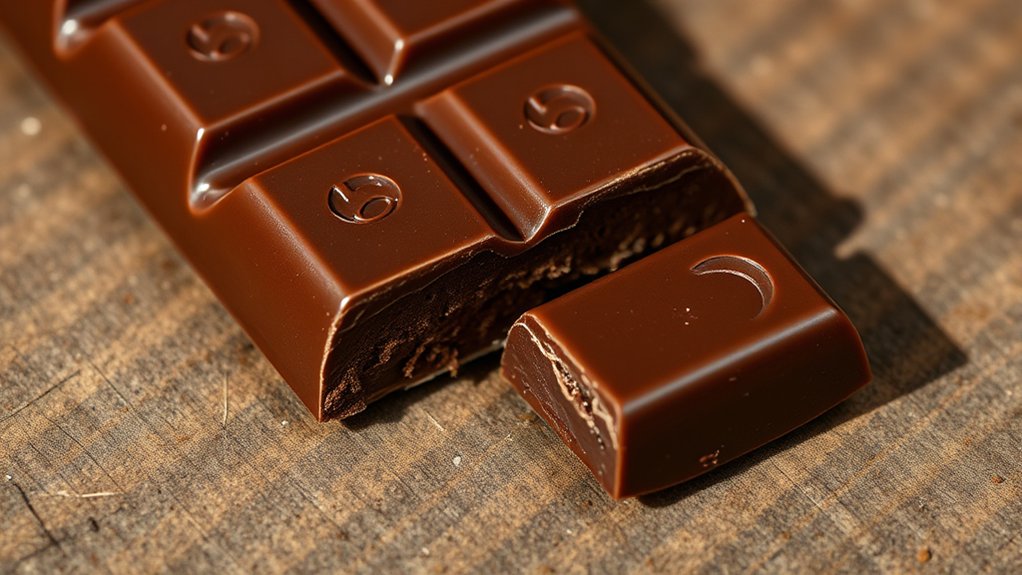
Chocolate bars mainly consist of cocoa solids, cocoa butter, and sugar. Knowing these ingredients helps you understand chocolate chemistry and how it fits into different candy types.
Cocoa solids include cocoa mass and cocoa powder, giving chocolate its rich flavor and color. Cocoa butter, the fat from cocoa beans, provides that smooth, melt-in-your-mouth texture.
Sugar adds sweetness and affects the final product’s consistency. The right balance of these ingredients determines if the chocolate is dark, milk, or white.
Dark chocolate has high cocoa solids and less sugar, while milk chocolate includes milk solids for creaminess. White chocolate doesn’t have cocoa solids at all, mainly relying on cocoa butter, sugar, and milk.
Recognizing these main ingredients helps you identify the type of chocolate and understand its place in the broader candy world. This knowledge is key when figuring out if a chocolate bar qualifies as candy.
How to Read Labels to Spot Candy
When you’re trying to spot candy on a label, the first thing to do is take a look at the ingredient list. You want to see simple, recognizable ingredients—things like sugar, cocoa, or fruit. If the list is full of long, complicated words, it might not be the candy you’re looking for.
Next, pay attention to any words that mention added sugars or syrups, like high fructose corn syrup, glucose, or corn syrup. These are clues that the product is extra sweetened and likely to be candy or a sweet treat.
Finally, check the packaging or the label itself for clear identification. Labels that say “candy,” “confectionery,” or similar terms make it easier to spot the treats right away. So, a quick glance at these details can help you find the candy you’re after!
Check Ingredient List
When checking the ingredient list on a chocolate bar, it’s important to look beyond the word “chocolate” and focus on what’s actually inside. Pay attention to ingredient purity, which shows how clean the product is—more natural ingredients mean less processing and fewer fillers.
Watch for additives like artificial flavors, preservatives, or emulsifiers, which are common in candies. These additives often signal a candy-like product rather than authentic chocolate. If the list contains unfamiliar or highly processed ingredients, it’s a sign you’re dealing with a candy rather than pure chocolate.
Identify Added Sugars
While examining the ingredient list helps identify artificial additives, paying attention to added sugars reveals even more about whether a bar is true chocolate or just candy. Look for natural sweeteners like honey or maple syrup, which are less processed and indicate genuine ingredients.
If the label lists high fructose corn syrup, glucose, or cane sugar, it’s a sign you’re dealing with candy rather than pure chocolate. Some bars may contain artificial additives, such as artificial sweeteners or flavorings, to boost sweetness artificially.
These often suggest a product designed to mimic chocolate’s taste without the authentic cacao flavor. By checking the amount and type of added sugars, you can better determine whether the bar is real chocolate or just a sugary candy coating.
Look for Food Labels
Reading food labels carefully is the best way to spot whether a chocolate bar is truly made of chocolate or just candy coated. Look for detailed allergen information, which can show if nuts are included or if the product is processed alongside nuts.
Nut content is often listed clearly, helping you see if nuts are a main ingredient or just a potential allergen. Genuine chocolate usually highlights cocoa content and lists minimal added ingredients, whereas candy coatings may emphasize sugar or artificial flavors.
Checking for allergen warnings also helps determine if nuts are present, indicating a higher-quality chocolate. By scrutinizing labels, you can confidently tell real chocolate from candy coatings, making sure you choose based on ingredients and food safety.
What Sets Chocolate Apart From Other Candies?
Chocolate really stands out from other candies, mainly because of its unique ingredients and smooth texture. You know that rich, creamy flavor it has? It’s pretty hard to find that same taste in other sweets. There’s just something special about how it melts in your mouth.
And the way chocolate is made also sets it apart. The process involves some specific steps that give it that particular look and feel we all love. All these little details come together to make chocolate a truly one-of-a-kind treat.
Ingredient Composition Differences
The key to telling chocolate bars apart from other candies is in their ingredients. Chocolate usually contains cocoa solids, cocoa butter, and sugar, giving it a rich, smooth flavor. Many candies, on the other hand, often use ingredients like corn syrup, artificial flavors, or gelatin.
To distinguish them, think about these points:
- Flavor combinations: Chocolate has a deep, complex taste from cocoa, unlike candies that often have artificial or simple fruit flavors.
- Primary ingredients: Chocolate bars mainly focus on cocoa and fat, while other candies might rely heavily on syrups or gelatin.
- Texture: The presence of cocoa butter makes chocolate melt in your mouth in a unique way.
- Packaging design: Chocolate packaging often highlights the cocoa origin, setting it apart from colorful, novelty candy wrappers.
These differences help you figure out if what you’re eating is truly chocolate.
Flavor and Texture Variations
Because of its unique ingredients, chocolate offers a distinctive flavor and texture that set it apart from other candies. Its flavor profiles combine bitterness, sweetness, and sometimes hints of fruit or nuts, creating a complex taste experience.
Texture differences are just as notable; chocolate is smooth and melts easily, unlike many chewy or hard candies. These variations make chocolate a versatile treat.
Its rich, layered flavors and melt-in-your-mouth feel distinguish it from typical candies, emphasizing its unique status in the confectionery world.
Manufacturing Processes Distinction
While many candies are made through straightforward cooking or molding methods, chocolate involves a more complex, multi-stage process. Its manufacturing reflects cultural perceptions and historical origins that distinguish it from other candies.
You’ll notice four key steps:
- Fermentation and drying: Cocoa beans are fermented, shaping chocolate’s unique flavor.
- Roasting and grinding: Beans are roasted then ground into cocoa mass, emphasizing its rich texture.
- Conching and tempering: This process refines texture and appearance, reflecting traditional techniques rooted in cultural perceptions.
- Molding and cooling: Final products are molded into bars, highlighting chocolate’s craftsmanship heritage.
These stages create a refined product, visibly different from simpler candies produced through basic cooking or molding methods.
How Cocoa Content Affects Your Chocolate
Cocoa content plays a crucial role in determining the flavor and quality of your chocolate. The cocoa percentage indicates how much cocoa solids are present, which directly impacts bitterness, richness, and overall taste.
Higher cocoa percentages, typically above 70%, produce dark chocolates that are more intense and less sweet. They’re often preferred by connoisseurs who enjoy a bold flavor.
Higher cocoa percentages above 70% create intense, less sweet dark chocolates favored by connoisseurs.
Lower percentages, under 50%, tend to be sweeter and milder, resembling milk chocolates. They’re great if you prefer a smoother, sweeter taste.
Beyond flavor, cocoa content also influences health benefits. Dark chocolates with higher cocoa percentages are richer in antioxidants, fiber, and minerals like magnesium and iron.
These nutrients can support heart health and boost your immune system. When choosing chocolate, consider the cocoa percentage to match your taste and health goals.
Remember, higher cocoa content usually means less sugar, making it a smarter choice for those seeking healthier options.
Understanding cocoa content helps you pick chocolates that suit your palate and wellness needs.
Does Texture and Appearance Help Identify Candy or Chocolate?
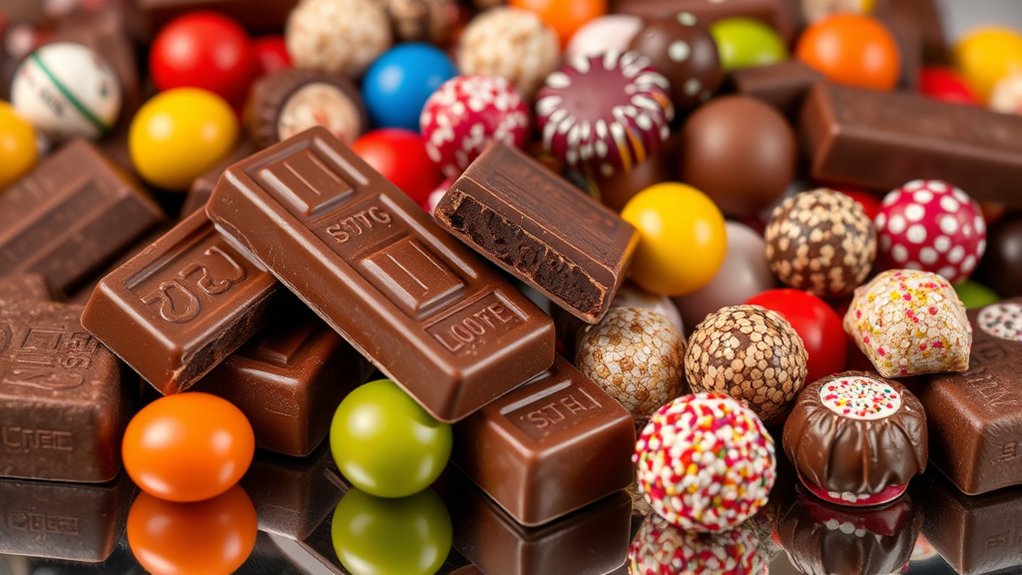
Your first clue is how it looks on the surface. If it’s shiny and smooth, chances are you’re dealing with high-quality chocolate. On the other hand, dull or uneven surfaces might mean it’s candy.
Now, take a feel of it too. Is it creamy, firm, or crumbly? These textures can help you tell the difference between chocolate and candy. So, by paying attention to how it looks and feels, you can quickly figure out whether you’re holding a real chocolate bar or just some candy.
Surface Finish and Shine
The surface finish and shine of a treat can give you helpful clues about whether it’s candy or chocolate. When you look at the surface, focus on how it appears.
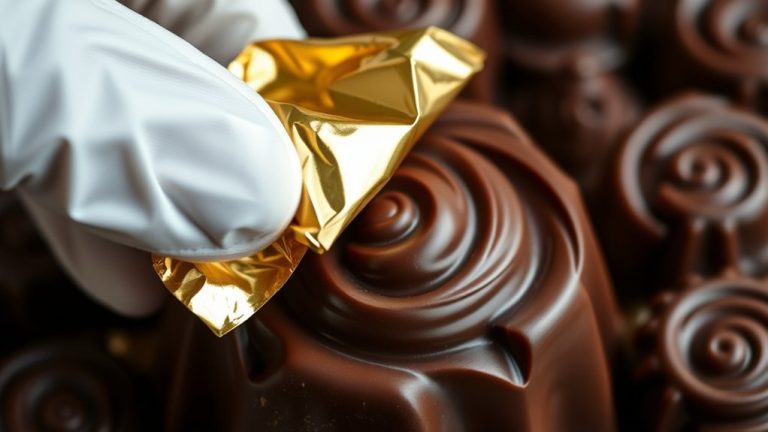
Shine is a good way to tell them apart. Chocolate usually has a smooth, glossy surface, while many candies look matte or uneven.
To spot chocolate, look for a glossy sheen—a shiny, reflective surface that shows quality. It should also have a smooth texture with no rough patches or dull areas.
Make sure the finish is even, without streaks or dull spots. Small imperfections are normal, but avoid treats that look dull or chalky.
Texture Consistency and Feel
Since texture often reveals a lot about what you’re eating, feeling how a treat is can help you tell candy from chocolate.
Chocolate usually feels smooth and firm, with a consistent texture that melts gently on your tongue, giving a melty sensation. You’ll notice a clear contrast between the solid outside and the smooth, creamy inside.
Candy, on the other hand, often has a more uniform texture—sometimes chewy, hard, or gritty—without that luxurious melt.
When you press or bite into a piece, chocolate will soften and dissolve, while candy usually keeps its shape or offers a different tactile feel.
Paying attention to these tactile clues is a quick way to figure out if you’re dealing with chocolate or candy.
What Does Packaging Reveal About Your Treat?
Packaging can reveal a lot about whether a chocolate bar is classified as candy or a different treat. By paying attention to packaging symbolism, you can find clues about its category.
Packaging hints reveal if a chocolate bar is candy or a different treat. Look for visual clues to identify its category.
First, look at the color coding. Bright, playful colors often mean candy, while more subdued or sophisticated hues suggest a premium or different kind of treat.
Next, examine the design elements. Simple or minimalist packaging tends to hint at a snack or health-focused product, whereas busy, colorful graphics are common for candy.
Also, check for symbols or icons. Images like hearts or stars usually suggest candy, while symbols like cocoa beans point toward chocolate.
Finally, read the text carefully. Words like “candy,” “sweets,” or “chocolate bar” clarify what you’re holding.
Packaging symbolism and color coding are visual cues that help you quickly determine if your treat is candy or something else.
Common Candy Types That Look Like Chocolate Bars
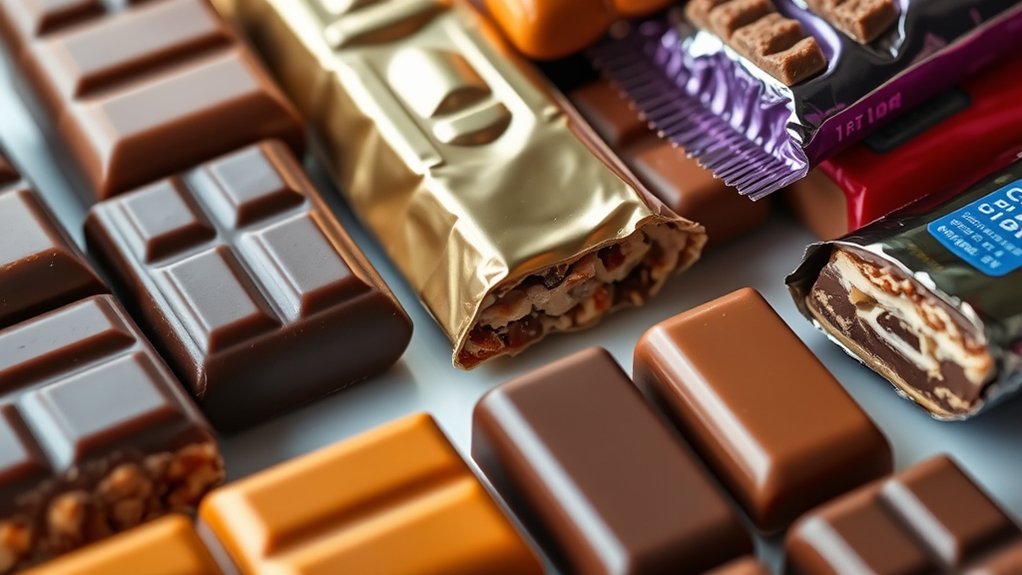
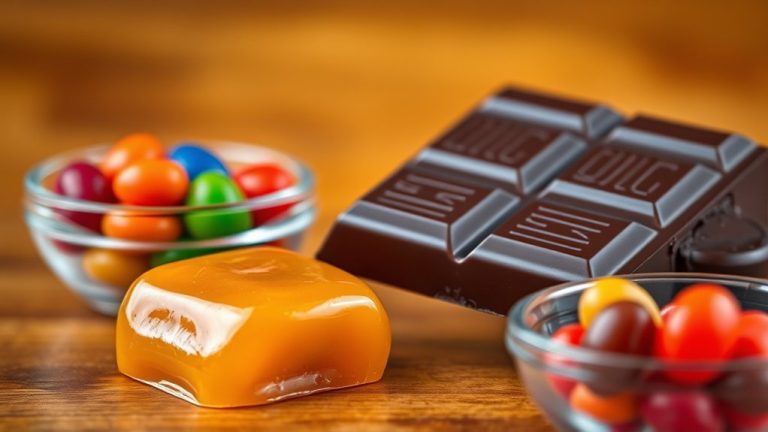
Many candy types are crafted to resemble traditional chocolate bars, making it easy to mistake one for the other at a glance. These candies often use artificial coloring to mimic the look of real chocolate, such as deep browns or shiny, metallic finishes.
Packaging design also plays a role. Some candies come wrapped in foil or paper that mimic the appearance of classic chocolate bars, tricking your eye.
You might find candies shaped like rectangular bars or with segmented patterns similar to those in chocolate. Some brands use bright, flashy wrappers that draw attention but don’t necessarily indicate chocolate content.
Keep in mind that while the visual cues can be convincing, examining the packaging and ingredient list will help you determine whether it’s actually candy designed to look like chocolate or real chocolate itself.
This awareness makes it easier to tell the difference, especially when visual tricks are involved.
How Flavor Profiles Help Differentiate Candy From Chocolate
Understanding the flavor profiles of candy and chocolate can be a quick way to tell them apart. Candy often features bold, layered flavor combinations, while chocolate provides a more consistent, rich taste. Paying attention to sensory impressions helps you differentiate them easily.
Here are four key points to evaluate:
- Flavor combinations: Candy usually mixes sweet, sour, fruity, or spicy flavors, creating complex taste experiences. Chocolate mainly highlights cocoa’s deep, bittersweet notes.
- Sweetness level: Candy tends to be intensely sweet, while chocolate offers a more balanced, mellow sweetness.
- Texture and aroma: Candy might have fruity or tangy scents, whereas chocolate’s aroma is often nutty or roasted.
- Taste progression: Candy flavors change quickly on your palate. Chocolate’s taste lingers, revealing subtle layers over time.
Are Brand Names and Product Labels Good Clues?
While brand names and product labels can give you some hints, they shouldn’t be your only clues when figuring out if a chocolate bar is candy or chocolate.
Brand recognition can help—famous brands often market their products clearly as either candy or premium chocolate. But keep in mind, some brands make both, so a name alone isn’t enough.
Label clarity is more reliable. A well-made label with clear descriptions helps you understand what you’re buying. Look for terms like “milk chocolate,” “dark chocolate,” or “candy” on the packaging.
Be cautious of vague labels or confusing branding that blurs the line between a candy and a high-quality chocolate bar. Sometimes, packaging is designed to attract attention but doesn’t really tell you what’s inside.
Tips for Making Confident Choices About Your Sweets
Making confident choices about your sweets starts with paying attention to your own preferences and habits. To do this effectively, consider these tips:
- Look for creative packaging that hints at the product’s ingredients or cultural influences. This can help you understand what you’re choosing.
- Recognize cultural variations—what’s considered candy in one country might be different elsewhere. Be open-minded and discover new styles.
- Read ingredient lists carefully. If you prefer less processed treats, choose options with recognizable ingredients.
- Trust your taste buds and instincts. If a certain type of sweet always appeals to you, go for it instead of unfamiliar options.
Frequently Asked Questions
Can the Shape of a Chocolate Bar Indicate if It’s Candy?
Yes, the shape of a chocolate bar can give you a hint if it’s candy, but it’s not a sure thing. You really need to look at the texture and ingredients to be certain.
Candy usually has a smoother, more uniform look, while some chocolates can have varied textures. Checking the ingredients for added flavors or fillings can also help; candies might have more artificial stuff, while chocolates focus on cocoa and sugar.
Always read the ingredient list if you want to be sure.
Do Price Differences Help Identify Genuine Chocolate?
Price differences can hint at genuine chocolate, but they shouldn’t be your only clue. Usually, authentic chocolate has specific ingredients like cocoa solids and cocoa butter, which impact its cost.
Packaging details matter too. Quality labels or detailed ingredient lists can help you spot real chocolate. Cheaper bars might skip these details or use cheaper substitutes.
How Does Melting Point Distinguish Candy From Chocolate?
You can tell candy from chocolate by their melting points. Chocolate melts at about 86-90°F because of its ingredients, mainly cocoa butter.
Candy, on the other hand, is usually made with hard sugars that melt at higher temperatures, often above 140°F.
If you gently warm the item, you’ll see chocolate melts easily, but candy stays solid. This helps you figure out whether it’s real chocolate or just candy.
Are Specialty Chocolates Easier to Identify Than Regular Candies?
Specialty chocolates are often easier to identify than regular candies because they have unique flavor profiles and detailed ingredient lists, like a fingerprint. You can usually tell if a chocolate is specialty by tasting for special ingredients or noticing fancy packaging.
Regular candies tend to have simpler ingredients and more uniform flavors, making them less distinctive. So, with a good eye on flavor and labels, you’ll be able to spot specialty chocolates easily.
Can Storage Conditions Affect the Appearance of Chocolate Bars?
Yes, storage conditions can affect how chocolate bars look. If you don’t store them properly, like exposing them to moisture or heat, they can develop blooming. That’s when you see white streaks or spots, and it makes the chocolate look dull.
If the container isn’t sealed right, humidity and air can cause discoloration or changes in the texture. So, it’s best to keep your chocolate in a cool, dry place.
Always seal the container tightly to keep your chocolate looking good and tasting fresh. Proper storage helps maintain both its appearance and quality.
Conclusion
So, next time you’re wondering whether that shiny bar is candy or chocolate, look at the labels, ingredients, and texture. These clues are your best friends in making a quick call.
Ironically, the more you scrutinize, the more you’ll see that some treats are masters of disguise, tempting you with appearances that hide their true nature. Sometimes, they look like candy but are actually a type of chocolate.
Ultimately, your taste buds might be the most honest judge. But with some knowledge, you’ll confidently navigate the world of confections and their sweet deceptions.
In the end, in the world of confections, appearances can be delightfully deceiving—so trust your instincts and your info.