What Makes a Chocolatier a Unique Person in Chocolate Production?
Are you passionate about chocolate but often feel overwhelmed by the endless options or unsure what makes one chocolatier stand out? You’re not alone—many people struggle to find those truly exceptional chocolates that offer more than just sweetness.
A chocolatier’s uniqueness comes from blending science, artistry, and ethics to create exceptional chocolates. You master techniques like tempering for perfect texture and choose high-quality, ethically sourced beans to develop rich, complex flavors.
Your creativity shines through innovative combinations and artistic presentation, building emotional connections with customers.
By continuously uncovering new ideas and telling compelling stories, you shape a distinctive identity. Keep exploring, and you’ll discover how these elements come together to make a truly exceptional chocolatier.
Key Takeaways
- Their mastery of tempering and bean selection shows their technical skill and dedication to perfecting chocolate quality.
- They get creative with flavors, ingredients, and presentation to craft chocolates that are both distinctive and emotionally engaging.
- Strong storytelling and branding help them build a unique identity that truly resonates with customers on a deeper level.
- Ethical sourcing and sustainability practices reflect their commitment to responsible craftsmanship and protecting the environment.
- Personalized engagement and attention to individual tastes help build deeper connections and foster loyalty with consumers.
Understanding Cocoa: The Foundation of Unique Chocolates
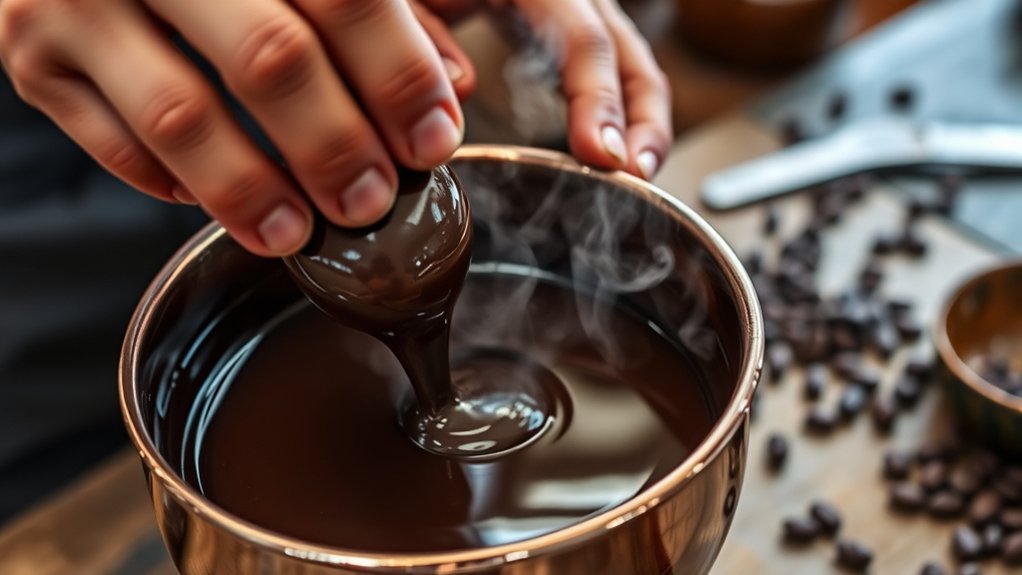
Have you ever wondered what really makes a chocolate stand out? It all starts with understanding cocoa, the foundation of good chocolate.
Pay close attention to cocoa fermentation, which develops the beans’ flavor and aroma. Proper fermentation unlocks complex tastes that influence the final product’s depth.
Bean sourcing is just as important. Where you get your beans affects the flavor profiles and quality. Sourcing from regions like Madagascar or Venezuela adds unique characteristics to your chocolate.
As a chocolatier, you choose beans carefully, considering their origin, fermentation methods, and quality. This foundation shapes the entire production process.
Mastering cocoa fermentation and bean sourcing helps you create chocolates with distinct flavors and profiles. It reflects your expertise and dedication.
These initial choices are what truly make your chocolates exceptional.
Mastering Tempering and Texture in Chocolate Making
Achieving the perfect texture and shine in chocolate depends on mastering tempering. Tempering is key to creating smooth, glossy chocolate with a satisfying snap.
Mastering tempering ensures smooth, glossy chocolate with the perfect snap and melt.
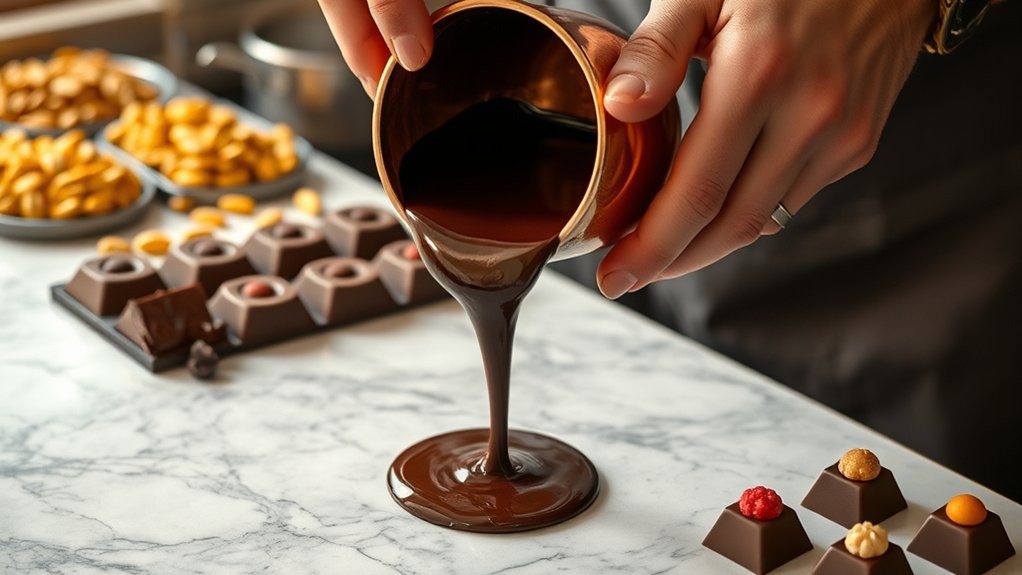
It involves carefully heating, cooling, and stirring the chocolate to stabilize its crystal structure. When done right, your chocolate will have a refined texture that melts beautifully on the tongue.
As a chocolatier, you also focus on flavor pairing, making sure the texture complements your ingredients. Proper tempering lets you craft chocolates that look stunning and deliver a consistent, pleasant mouthfeel.
Mastering this art takes patience and precision because each step affects the final product’s appearance and texture. Developing this skill sets you apart, helping you produce chocolates that impress visually and taste great.
Ultimately, mastering tempering and texture elevates your creations from simple confections to true works of culinary art.
Innovative Flavors: How Creativity Shapes a Chocolatier’s Style
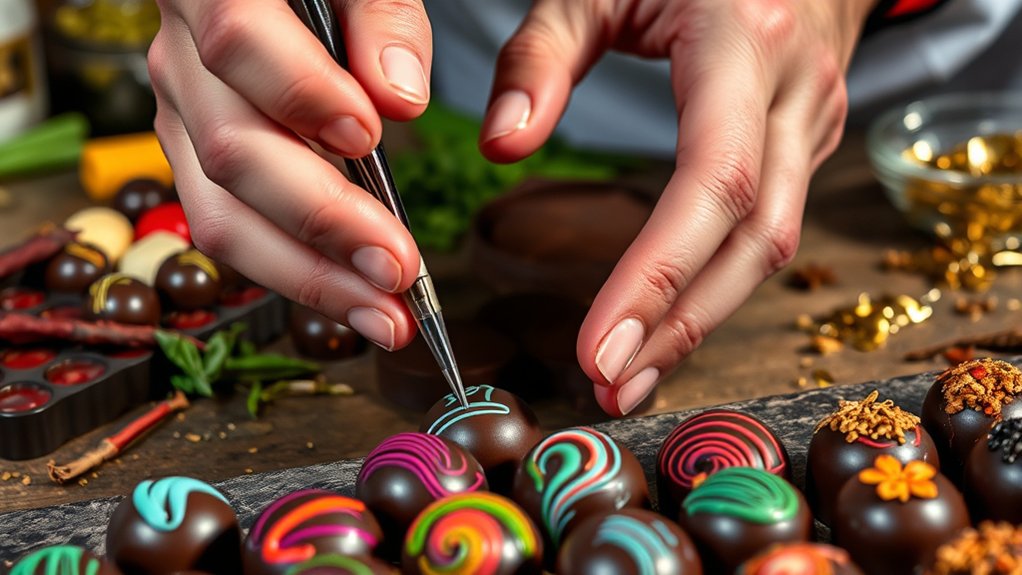
Creativity is the heartbeat of a chocolatier’s craft, turning simple ingredients into unforgettable flavor experiences. Your ability to experiment with flavor fusion lets you mix unexpected tastes, surprising and delighting your customers.
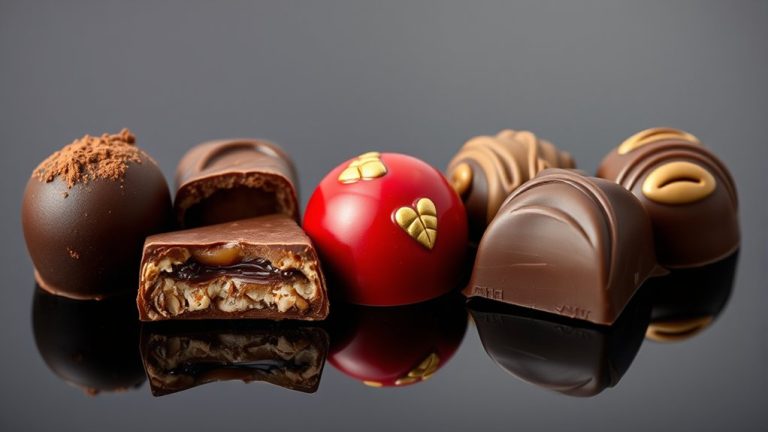
This innovation also shows in artistic presentation, where visual appeal takes the experience to the next level. To stand out, you might incorporate exotic spices or herbs into your fillings.
You could also blend sweet and savory elements for unique contrasts, or use vibrant colors and creative shapes for visual impact. Pairing chocolates with fruit or floral infusions is another way to add excitement.
Finally, developing signature flavor combinations helps define your style and makes your chocolates truly memorable.
The Science Behind Crafting Perfect Chocolate
When you’re making chocolate, it’s super important to pick high-quality beans. The flavor and aroma from those beans really make a difference in the final taste of your chocolate. If you start with good beans, you’re already on the right track!
Next up is tempering — and trust me, it’s a bit of a science. Tempering helps give your chocolate that perfect texture and shiny appearance. It’s all about controlling the temperature and stirring just right. When you understand these steps and how they work, you can create chocolate that’s not only smooth but also bursting with flavor.
Bean Selection and Quality
Selecting the right cacao beans is the foundation of crafting exceptional chocolate. You need to consider factors like origin, fermentation, and roasting to guarantee top quality. High-quality beans will deliver complex flavors that allow for better flavor pairing and richer profiles.
When choosing beans, pay attention to origin and terroir influence, fermentation and drying processes, bean variety and genetics, size and appearance, and freshness and storage conditions. These elements directly impact the chocolate’s aroma, taste, and texture.
As a chocolatier, you can improve the appeal through thoughtful packaging design, emphasizing the beans’ quality. Ultimately, quality beans give you the flexibility to craft unique, memorable chocolates that stand out in flavor and presentation.
Your careful selection process defines your artistry and the experience you create for your customers.
Tempering and Texture
Tempering is a crucial process that transforms melted chocolate into a glossy, firm, and crisp product, ensuring the ideal texture and appearance. By carefully controlling temperature, you create stable cocoa butter crystals that give chocolate its smooth mouthfeel and shiny finish.
Proper tempering improves your chocolate’s ability for excellent pairing, as it provides the perfect snap and melts seamlessly on the tongue. It also influences packaging choices because well-tempered chocolate maintains its form and looks appealing.
Achieving consistent texture requires skill and attention to detail, making your craftsmanship stand out. When you master tempering, you not only produce high-quality chocolate but also elevate the overall experience for your customers, ensuring every piece reflects your expertise and dedication.
Developing Personal Flavors to Stand Out in the Market
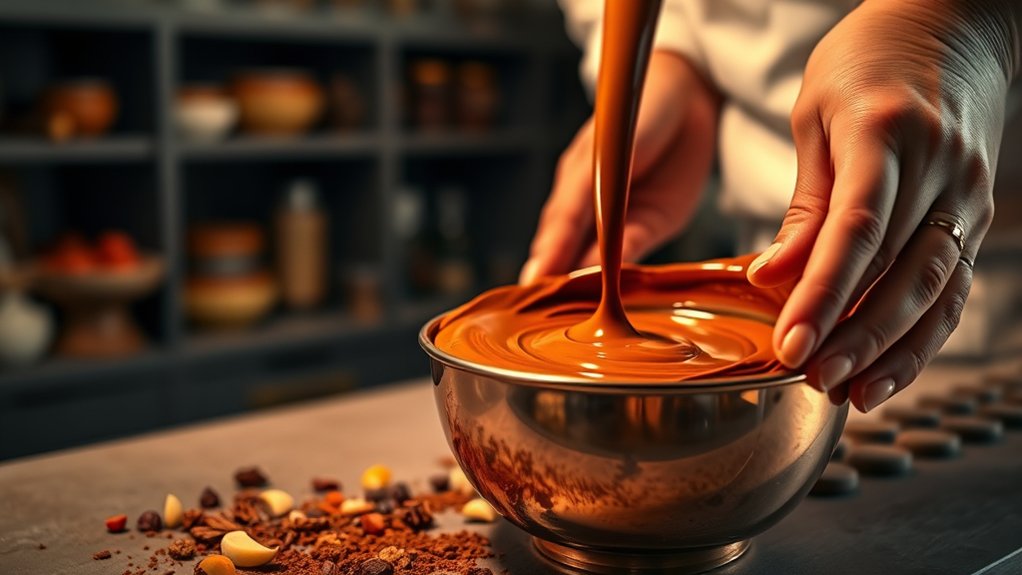
Developing personal flavors is essential for chocolatiers aiming to stand out in a crowded market. You can do this by experimenting with unique flavor pairings and sourcing ingredients carefully.
Your goal is to create distinctive chocolates that leave a lasting impression. To achieve this, consider combining unexpected ingredients like herbs, spices, or fruits.
Explore regional or rare ingredients through thoughtful sourcing. Balancing flavors can enhance the chocolate’s natural profile.
Incorporating textures adds complexity and interest. Test different flavor pairings to find your signature taste.
Knowing Your Customers: Personalizing Chocolate Creations
To really stand out, it’s all about getting to know your customers’ tastes on a deeper level. When you take the time to understand what they love, you can get creative with customizing chocolates that feel personal and special.
And honestly, that personal touch makes all the difference. When customers see that you’ve tailored their treats just for them, it helps build a stronger connection. Plus, it makes your chocolates truly unique and memorable—something they’ll want to come back for again and again.
Understanding Preferences Deeply
Understanding your customers’ preferences is key to creating personalized chocolates that truly connect. By exploring their taste profiles, you can fine-tune flavor pairings and enhance sensory experiences.
This involves discovering which combinations trigger specific emotions or memories. To do this well, consider trying different ingredient pairings in taste tests.
Gather feedback on flavor strength and balance, and pay attention to preferences for textures and mouthfeel. Also, note aroma profiles your customers enjoy the most.
Analyzing how subtle flavor details influence overall satisfaction helps you craft chocolates that match their unique palates. It’s about more than just ingredients—it’s about reading sensory cues to create memorable, personalized experiences that set you apart in chocolate making.
Customization Through Creativity
By harnessing your creativity, you can craft personalized chocolates that truly resonate with your customers’ individuality. Artistic presentation plays a key role in making each piece unique, turning simple chocolates into memorable visual experiences.
You can incorporate custom shapes, colors, and designs that reflect your customers’ personalities or special occasions. Flavor innovation allows you to surprise and delight by blending unexpected ingredients or creating signature combinations that stand out.
Personalization isn’t just about appearance; it’s about creating an emotional connection through thoughtful details. When customers see their preferences reflected in your chocolates, they feel valued and understood.
This blend of artistic presentation and flavor innovation enhances your craft, making your chocolates not just treats but expressions of your customers’ unique tastes and stories.
Storytelling and Branding: Building a Chocolate Identity
Have you ever wondered what makes a memorable chocolate brand stand out? It’s all about storytelling and branding that create a unique chocolate identity.
You craft a story that connects with your audience, highlighting your special flavor ideas and the story behind each piece.
Your packaging design is key, making your chocolates instantly recognizable and tempting.
To build a strong brand, focus on sharing the origin story behind your chocolates.
Use packaging that reflects your brand’s personality.
Emphasize the artistry in flavor pairing to showcase your creativity.
Create a visual identity that catches the eye on shelves.
And most importantly, connect emotionally with your customers through consistent messaging.
Pushing Boundaries: Continuous Learning and Experimentation
To truly push boundaries in chocolate making, you need to adopt continuous learning and experimentation. This mindset fuels your growth as a chocolatier and elevates your chocolate artistry.
By exploring new techniques and ingredients, you expand your skill set and challenge traditional methods. Experimenting with flavor fusion allows you to create innovative combinations that surprise and delight the palate.
You might blend unexpected spices, herbs, or fruits to craft unique taste profiles. Staying curious keeps your work fresh and encourages you to refine your craft constantly.
Attending workshops, tasting diverse chocolates, and collaborating with other artisans help you stay inspired. This relentless pursuit of knowledge pushes you beyond comfort zones, resulting in bold creations that stand out in the industry.
Ultimately, continuous learning and experimentation are what make your approach to chocolate production truly distinctive and innovative.
Sourcing Ethically: Sustainability and Its Impact on Quality
Ever wondered how ethical sourcing influences the quality of your chocolates? When a chocolatier commits to ethical sourcing, they prioritize sustainable practices that protect the environment and improve the beans’ quality. This approach supports artisanal techniques, allowing for more careful selection and handling of cacao, which raises flavor and texture.
Ethical sourcing also guarantees fair wages for farmers, motivating them to produce better beans. You’ll notice these benefits:
- Improved bean quality through careful harvesting
- Richer, more complex flavors from sustainably grown cacao
- Stronger relationships with farmers, promoting transparency
- Consistent supply of high-grade ingredients
- Positive environmental impact, leading to healthier crops
Connecting With Chocolate Enthusiasts and Building Loyalty
Building genuine connections with chocolate enthusiasts is key to cultivating lasting loyalty. When you share your passion for chocolate craftsmanship, you invite others to appreciate the artistry behind each bar.
Engage your audience by explaining your creative process, from selecting high-quality ingredients to perfecting flavor fusion. People love learning about how you innovate with unique combinations that surprise and delight their palates.
Host tasting events or offer behind-the-scenes glimpses into your production to make your audience feel involved. Personal stories about your journey as a chocolatier can deepen their emotional connection to your brand.
Consistent, authentic communication helps build trust and encourages repeat business. By emphasizing your dedication to quality and innovation, you turn casual customers into loyal fans who appreciate the craftsmanship and flavor fusion that set you apart.
Ultimately, connecting sincerely with enthusiasts transforms their appreciation into ongoing support for your craft.
Frequently Asked Questions
How Does a Chocolatier’s Background Influence Their Unique Style?
Your background shapes your unique style by fueling your artistic expression and flavor experimentation. If you have a culinary or artistic background, you might craft visually stunning chocolates with innovative flavors.
Cultural influences inspire your creative choices, making your chocolates stand out. Your personal experiences and skills allow you to push boundaries, blending tradition with originality.
This mix of influences and talents creates a distinctive approach that sets you apart in chocolate production.
What Role Does Cultural Heritage Play in Chocolate Creation?
You see, cultural heritage deeply influences your chocolate creations, shaping flavors and symbolism. For example, a Mexican chocolatier might incorporate traditional spices and recipes, reflecting local heritage influence.
Cultural symbolism guides your design choices too, like using specific colors or motifs to honor community traditions. This blend of heritage and symbolism makes your chocolates distinctly meaningful.
It connects consumers to cultural stories through every bite, enriching the chocolate experience.
How Do Personal Values Impact a Chocolatier’s Production Choices?
Your personal values directly shape your production choices by guiding your craftsmanship philosophy and commitment to ethical sourcing. When you prioritize quality and integrity, you choose ingredients responsibly and craft chocolates that reflect your principles.
This dedication influences every step, from bean selection to the final presentation. Your values ensure you create confections that resonate with consumers who appreciate not just taste but also the ethics behind each piece.
In What Ways Does a Chocolatier Innovate Beyond Traditional Methods?
Imagine you’re a chocolatier in a world where innovation is your secret weapon. You push boundaries by experimenting with unique flavor combinations, blending unexpected ingredients to create memorable tastes.
You also innovate through eye-catching packaging designs that stand out on shelves, making your chocolates irresistible. These creative approaches go beyond traditional methods, allowing you to craft a distinctive brand that captures the imagination and cravings of your customers.
Much like a modern-day Renaissance artist, you bring a fresh perspective to your craft, constantly surprising and delighting everyone who tastes your chocolates.
How Important Is Storytelling in a Chocolatier’s Brand Identity?
Storytelling is key to your brand identity because it boosts your marketing and deepens customer connections. When you share the story behind your chocolates—like where they come from, how they’re made, or what inspired you—you create an emotional link with your audience.
Being genuine like this encourages loyalty and helps your brand stand out. By weaving engaging stories, you turn simple chocolates into memorable experiences. This makes your customers feel part of your journey and builds lasting relationships.
Conclusion
You’re not just a chocolatier; you’re a chocolate wizard shaping dreams with every bar. Your passion, creativity, and dedication turn simple cocoa into magical masterpieces that enchant hearts and minds alike.
With each innovative twist and ethical choice, you elevate chocolate to an art form far beyond the ordinary. Keep pushing boundaries, and you’ll create legendary experiences that leave everyone craving more.
A truly unique chocolatier continually redefines what it means to craft exceptional chocolates. Your individuality and artistry make you stand out in the world of chocolate production.