How Does Gummy Candy Expire?
Ever wondered how long your favorite gummy candy actually lasts? You’re not alone—many people struggle with knowing when their treats have gone bad. It’s frustrating to find a bag of gummies that’s lost its appeal, especially when you’re craving a sweet snack. Understanding how gummy candy expires can help you enjoy them at their best and avoid surprises.
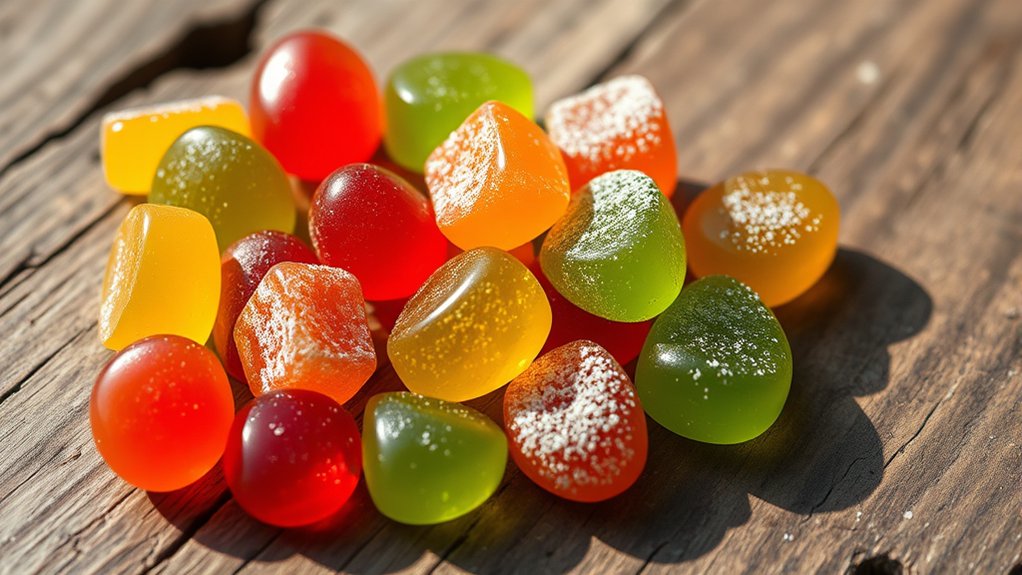
Gummy candy expires when its ingredients break down, causing changes in texture, flavor, and appearance. Over time, they can become hard, sticky, or stale, and may develop mold or off-flavors if stored improperly. Humidity, heat, and light quicken spoilage, while airtight packaging helps keep them fresh longer.
Recognizing these signs can help you tell if your gummies are still good. If you want to learn more, there’s plenty of useful info ahead.
Key Takeaways
- Gummy candies expire because they can absorb moisture, which can lead to mold growth, texture changes, and flavor loss.
- When exposed to light and air, their colors fade, and oxidation speeds up spoilage.
- High humidity and temperature swings can make gummies sticky, hard, or stale over time.
- Natural ingredients might spoil faster, causing off-flavors and noticeable sensory changes.
- Damaged packaging raises the risk of contamination and can shorten their shelf life.
What Factors Affect Gummy Candy Shelf Life?
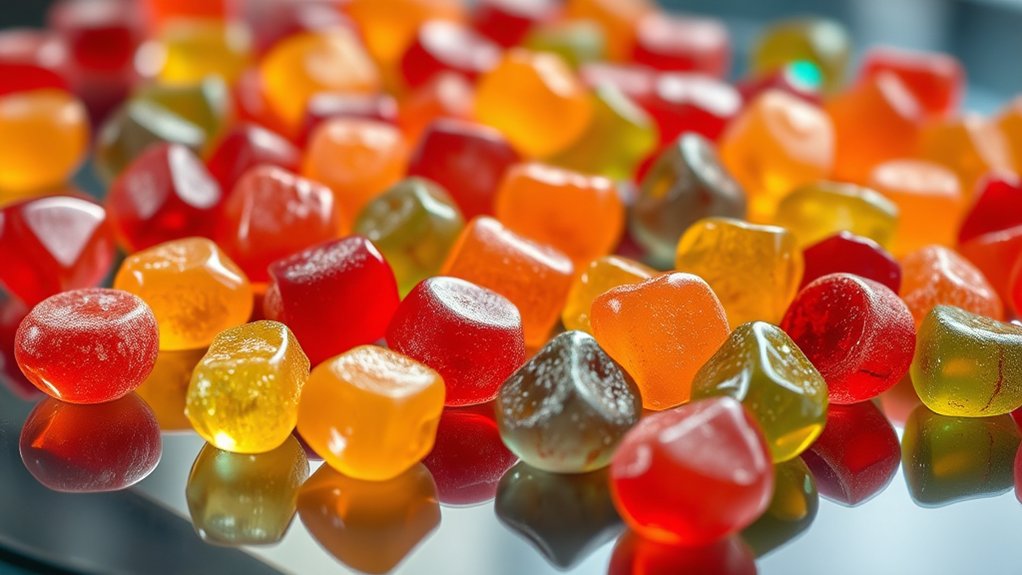
Several factors influence how long gummy candies stay fresh and safe to eat. The first is gummy candy packaging. Proper packaging creates a barrier against moisture, air, and contaminants, helping extend shelf life. If the packaging is damaged or not airtight, gummies can become sticky, hard, or moldy faster.
Ingredient quality also plays an important role. High-quality ingredients maintain their integrity longer, reducing the chances of spoilage. Cheaper ingredients may contain preservatives or stabilizers that degrade quickly, shortening shelf life.
Temperature and storage conditions further impact freshness. Store gummies in a cool, dry place away from direct sunlight. Humidity and heat accelerate deterioration, making gummies stale or moldy sooner.
Consequently, paying attention to the packaging and ingredient quality is essential for keeping gummy candies fresh and safe for as long as possible. Proper storage and high-quality ingredients work together to preserve their texture, flavor, and safety.
How Do Gummy Candies Naturally Change Over Time?
Over time, gummy candies start to change in their texture. You might notice they become a bit harder or more brittle than when you first bought them. It’s pretty normal for gummies to lose their soft, chewy feel as they sit around.
Their flavor can also shift a little. Sometimes, they might not taste as fresh or vibrant as they did initially. You might even notice a slight change in taste or aroma. Knowing these natural changes can help you decide if your gummies are still good to eat or if it’s time to toss them out.
Changes in Texture
Gummy candies naturally change in texture as they age, especially when exposed to air and varying temperatures. Over time, they can become softer or chewier depending on how they are stored.
Packaging plays a big role in slowing down this process by limiting exposure to moisture and air. During manufacturing, ingredients are carefully balanced to create the perfect texture.
As gummies age, moisture loss or absorption can alter that texture. For example, after a few weeks, they might become slightly softer if humidity is high or if the packaging isn’t sealed well.
Over months, gummies can turn chewier or harder, especially if temperatures fluctuate. Years of poor storage can make them drier and more brittle.
Flavor Alterations Over Time
Over time, the flavor of gummy candies gradually shifts, influenced by their exposure to air, moisture, and temperature changes.
Gummy candy packaging plays a vital role in slowing this process, but it can’t stop flavor alterations entirely. As candies sit, their flavors can become muted or develop off-notes due to oxidation and moisture absorption.
The candy manufacturing processes also impact how quickly these changes occur; candies made with preservatives tend to retain flavor longer. When stored improperly, flavors can become stale or change entirely, affecting your enjoyment.
Ultimately, even with proper packaging, gummy candies are prone to natural flavor alterations over time. Recognizing these changes helps you understand why fresher candies taste better and why older gummies might not deliver the same flavor experience.
What Causes Gummy Candies to Spoil or Go Bad?

Gummy candies tend to spoil or go bad mainly because of moisture and humidity. When they’re exposed to moisture, they can become sticky or even develop mold, which isn’t exactly what you want when you’re craving a sweet treat.
Plus, exposure to air plays a big role too. It can dry them out or change their texture and flavor, making them less enjoyable. So, if you want to keep your gummies fresh and tasty for longer, it’s best to store them in a cool, dry place and keep the packaging sealed tight.
Moisture and Humidity
Moisture and humidity play a crucial role in determining how long gummy candies stay fresh. If they’re exposed to high humidity, moisture can seep into the packaging, making the candies sticky or causing them to dissolve prematurely.
Excess moisture also encourages mold growth and bacteria, which speeds up spoilage. Proper packaging helps control moisture levels, keeping gummies firm and chewy longer.
Many gummy candies contain preservatives that slow spoilage, but they’re less effective if moisture levels fluctuate. To extend shelf life, store gummies in a cool, dry place and keep the packaging sealed tightly.
Avoid exposing them to humid environments, as even small amounts of moisture can significantly shorten their freshness and quality over time.
Exposure to Air
When gummy candies are exposed to air, they can quickly lose their freshness and quality. Oxygen interacts with the ingredients, causing the texture to harden and the flavor to fade. Proper gummy candy packaging helps minimize this exposure, keeping candies soft and flavorful longer.
Ingredient preservatives in the packaging also slow down spoilage by preventing microbial growth. To prevent air damage, use airtight packaging or store candies in a sealed container. Keep them away from air and humidity to maintain their texture.
Relying on ingredient preservatives also helps reduce microbial growth, extending shelf life. Overall, proper storage and packaging are key to keeping gummy candies fresh, soft, and tasty longer.
How Can You Tell If Gummy Candies Are Expired?
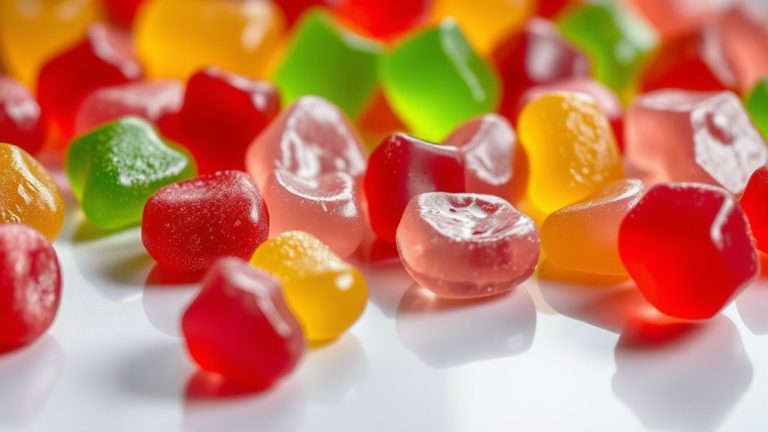
To determine if gummy candies have expired, start by examining their appearance and texture. Fresh gummies are usually shiny, firm, and chewy, while expired ones may look dull, sticky, or hard.
Fresh gummies are shiny and chewy; dull or hard ones may be expired and unsafe to eat.
If they feel unusually soft or crumbly, it’s a sign they might be past their prime. Check the packaging for any signs of damage or bulging, which can indicate spoilage.
Review the gummy candy ingredients and nutritional facts on the label. Look for any changes like unusual discoloration or an off-putting smell. Expired gummies might have altered flavors or a sour, rancid smell, meaning they’re no longer safe to eat.
Always trust your senses. If something seems off, it’s better to discard the candies. Properly stored gummies can last longer, but once they show these signs, avoid eating them to prevent health risks.
How Do Storage Conditions Impact Gummy Shelf Life?
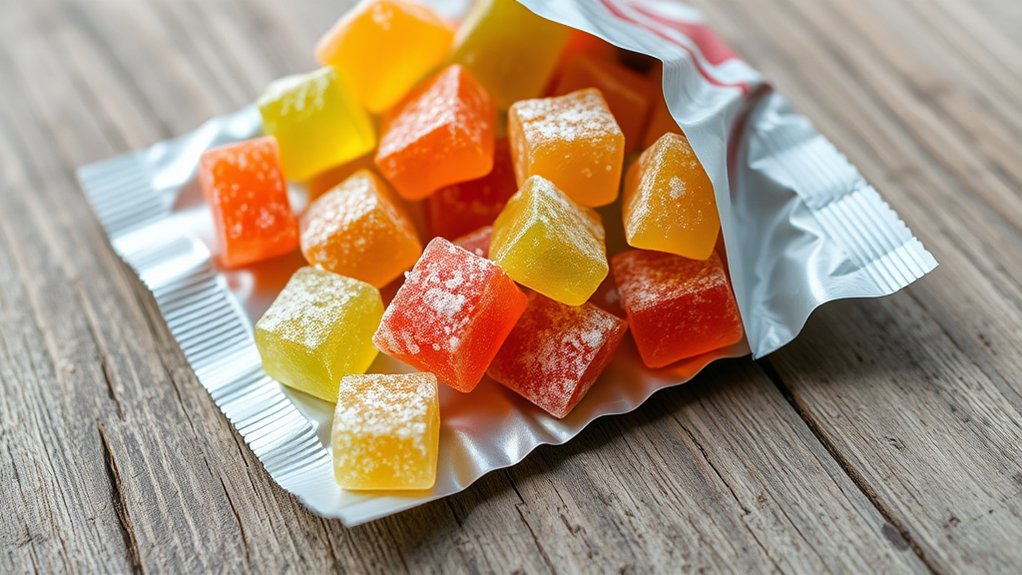
Your storage conditions really play a big role in how long gummies stay fresh. If you keep them in a place with high humidity, they can mold more quickly, which is definitely not something you want. On the other hand, if the temperature keeps going up and down, it can mess with their texture—making them either too hard or too soft, and nobody likes that.
And don’t forget about light! If gummies sit in direct sunlight or bright spots for too long, their colors can fade, which is usually a sign that their quality is starting to decline. So, to keep your gummies tasting great and looking appealing, it’s best to store them in a cool, dry, and dark place.
Humidity Accelerates Mold Growth
Humidity plays a big role in how long gummy candies stay fresh because excess moisture creates the perfect environment for mold to grow. When the ingredients in gummies absorb humidity, mold spores can settle and develop more easily, shortening their shelf life.
The way gummies are made affects how resistant they are to moisture. For example, proper coating and packaging help prevent moisture from getting in. To show this, check out the table below:
| Storage Condition | Effect on Gummy Candy | Best Practice |
|---|---|---|
| High humidity | Speeds up mold growth | Use airtight containers |
| Low humidity | Keeps gummies fresh | Store in cool, dry places |
| Packaging type | Changes how much moisture gets in | Choose vacuum-sealed packs |
| Gummy ingredients | Affects how resistant they are | Pick stable formulations |
Storing gummies in dry places helps reduce mold risk and makes them last longer.
Temperature Affects Texture
Temperature directly influences the texture of gummy candies, affecting how long they stay enjoyable to eat. If stored in warm environments, gummies can become sticky or melt, ruining their firm bite.
Conversely, cold temperatures can make them hard and difficult to chew. Proper gummy candy packaging helps maintain a consistent temperature, preventing unwanted texture changes.
When exposed to fluctuating temperatures, sugar crystallization can occur, leading to a gritty or grainy surface that diminishes the candy’s appeal. Keep gummies in a cool, stable spot to preserve their chewy consistency.
Extreme heat or cold accelerates these changes, decreasing shelf life and enjoyment. By controlling storage conditions, you can keep your gummies tasting fresh and maintain their ideal texture longer.
Light Causes Color Fading
Exposure to light can really impact the vibrant colors of gummy candies, causing them to fade over time. When gummies are exposed to sunlight or artificial lighting, the pigments break down and dull their appearance.
Proper gummy candy packaging helps shield candies from light, helping to keep their bright hues. Manufacturers often use opaque or tinted packaging to prevent this issue and extend shelf life.
Think about storing gummies in a cool, dark place to reduce light exposure. Choosing packaging with UV protection can also help preserve their color longer.
Avoid transparent containers that let in sunlight, and try to minimize exposure during transportation and display. All these steps help keep your gummies looking fresh and colorful.
How to Properly Store Gummies to Keep Them Fresh Longer
To keep gummies fresh for as long as possible, proper storage is essential. First, make sure they’re stored in airtight gummy candy packaging to prevent exposure to air and moisture, which can speed up spoilage.
Keep your gummies in a cool, dry place away from direct sunlight, as heat and light can cause them to melt or fade in color. Using airtight containers or resealable bags helps maintain their texture and keeps them from becoming sticky or hard.
Many gummy candies contain preservatives that extend shelf life, but these work less effectively if exposed to moisture and temperature changes. Avoid storing gummies in the fridge, as humidity can cause clumping.
Instead, choose a consistent, cool environment. Properly sealed and stored gummies will stay fresher longer, preserving their flavor, texture, and appearance. Regularly check your storage area to ensure it remains dry and cool for maximum freshness.
Signs of Mold or Off-Flavors in Gummy Candies
Even when stored properly, it’s important to stay alert for signs that your gummy candies may have gone bad. Mold or off-flavors are clear indicators that something’s wrong, often due to changes in the gummy candy ingredients or issues during the candy manufacturing process.
Here are some key signs to watch for:
- Visible mold or fuzzy spots on the surface, which shouldn’t happen if the candy was stored correctly.
- Unusual odors, like sour or musty smells, indicating spoilage.
- Off-flavors or a strange taste, which might come from chemical changes or contamination.
- Texture changes, such as excessive stickiness or hardness, signaling deterioration.
These signs often result from improper handling or problems during production, affecting the quality of your gummies. Recognizing these indicators helps prevent you from eating spoiled candy and ensures you enjoy safe, fresh treats.
How Long Do Gummy Candies Usually Last?
Gummy candies usually last several months when stored properly, but their freshness depends on factors like ingredients, packaging, and storage conditions. The ingredients, such as sugars, gelatin, and flavorings, affect how long they stay fresh—more natural ingredients may spoil faster.
Good packaging is really important. Airtight containers or resealable bags help keep out moisture and air, which helps extend their shelf life. Newer packaging methods like vacuum sealing or moisture barriers also help keep gummies fresh longer.
Good packaging, like resealable bags and vacuum sealing, helps keep gummies fresh longer.
Storing gummies in a cool, dry place away from direct sunlight is key to preventing melting or spoilage. Most gummies stay good for about 6 to 12 months, but this can vary depending on the brand and how they’re packaged.
Always check for changes in texture, flavor, or appearance before eating, even if the expiration date hasn’t passed. Proper storage and quality packaging are essential for maximizing their shelf life.
Are Expired Gummy Candies Safe to Eat?
Consuming expired gummy candies can be safe in some cases, but it depends on how long they’ve been past their expiration date and how they’ve been stored. Over time, the ingredients may break down, affecting texture and flavor, but not necessarily safety.
The manufacturing process and quality control also play a role in how well gummies hold up beyond their expiration date.
Consider these points:
- Gummy candies with no visible mold or discoloration are less likely to pose health risks.
- A hard or stale texture means spoilage but doesn’t necessarily mean they’re unsafe to eat.
- The stability of ingredients varies; preservatives can help extend shelf life.
- Proper storage in a cool, dry place helps keep them safe and good quality longer.
While the ingredients might still be safe, always check for unusual smells or tastes before eating expired gummies. If you’re unsure, it’s better to toss them out.
How to Safely Dispose of Old or Spoiled Gummy Candies
When disposing of old or spoiled gummy candies, it’s important to do so safely to avoid any health or environmental issues. First, check the packaging—if it’s torn or damaged, the candies might be contaminated.
To trash them, wrap the candies in newspaper or a biodegradable bag. This helps contain any residual sugar and prevents sticky messes. Never pour leftover gummy candies down the drain, as the sugar can clog pipes and attract pests.
Here’s a quick guide:
| Step | What to Do | Why |
|---|---|---|
| Wrap securely | Use biodegradable or paper wrapping | Prevent mess and pests |
| Dispose in trash | Place wrapped candies in the trash bin | Safe disposal |
| Avoid recycling | Don’t put gummy candies in recycling | Not recyclable and may cause contamination |
Proper disposal keeps your environment clean and reduces health risks from spoiled gummy candies.
Frequently Asked Questions
Can Gummy Candies Be Resold After Their Expiration Date?
You shouldn’t resell gummy candies after their expiration date. The shelf life depends on proper storage conditions, which help maintain freshness and safety.
Over time, gummies can become stale, lose flavor, or develop unwanted mold or bacteria. Reselling expired candies can pose health risks and damage your reputation.
Always check the packaging date and storage conditions, and discard any gummies past their expiration to guarantee quality and safety for consumers.
Do Different Flavors of Gummy Candies Have Varying Shelf Lives?
Different flavors of gummy candies can have different shelf lives because flavor stability changes over time, which affects taste and aroma. Some flavors might keep their original taste longer, while others fade quickly.
This fading can lead to color loss and less flavor impact. Ingredients and preservatives play a role in how long a flavor lasts.
It’s a good idea to check the packaging for expiration or best-by dates. Proper storage can also help preserve both flavor and color longer.
How Does Exposure to Sunlight Affect Gummy Candy Longevity?
Did you know that exposure to sunlight can reduce a gummy candy’s shelf life by up to 30%? Sunlight can cause the vibrant colors to fade and change the texture, making the candies less appealing.
When you leave gummy candies in direct sunlight, the heat and UV rays speed up spoilage. This leads to flavor loss and can even promote microbial growth.
To keep your candies fresh, it’s best to store them in a cool, dark place away from sunlight.
Are Organic or Natural Gummy Candies Less Prone to Spoilage?
Organic or natural gummy candies are generally less prone to spoilage because they use natural ingredients and organic preservatives, which may limit microbial growth. However, they can still spoil over time, especially if exposed to moisture or heat.
You should store them in a cool, dry place and check for changes in texture or smell. While natural ingredients are healthier, they don’t guarantee a longer shelf life.
Can Gummy Candies Develop Bacteria Even if They Look and Smell Fine?
Yes, gummy candies can develop bacteria even if they look and smell fine. Microbial growth can happen in tiny crevices or moisture inside the candies, making them unsafe to eat.
Even though they seem shelf-stable, bacteria can still grow if they’re stored improperly or kept for a long time. Always check for sliminess or strange odors before eating.
If you notice anything unusual, it’s best to throw the candies away to avoid any health risks. Better safe than sorry!
Conclusion
Just like the fleeting moments of a summer breeze, gummy candies don’t last forever. Understanding how they change and what to watch for can help you enjoy their sweetness safely.
You don’t want to risk eating spoiled treats, so keep an eye out for signs of expiration. When in doubt, remember that even the most tempting pleasures have a shelf life.
Cherish the freshness of your gummies and treat expired ones with caution. Knowing how gummy candy expires helps you enjoy them at their best and stay safe.