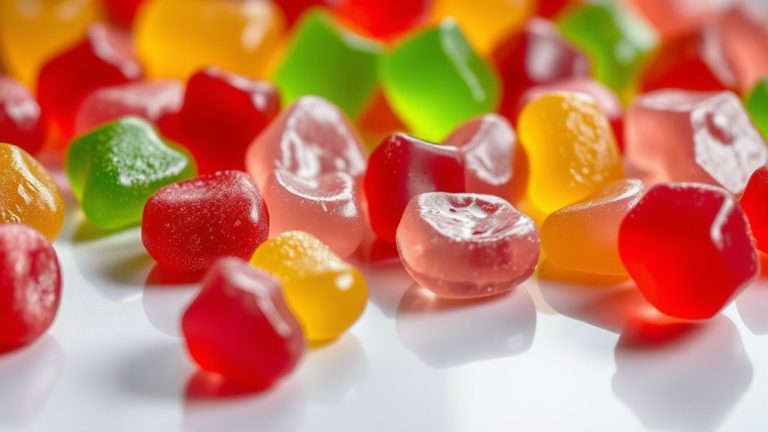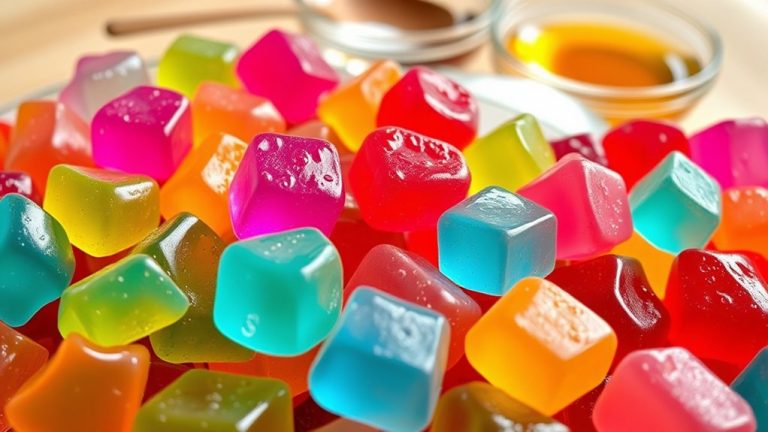
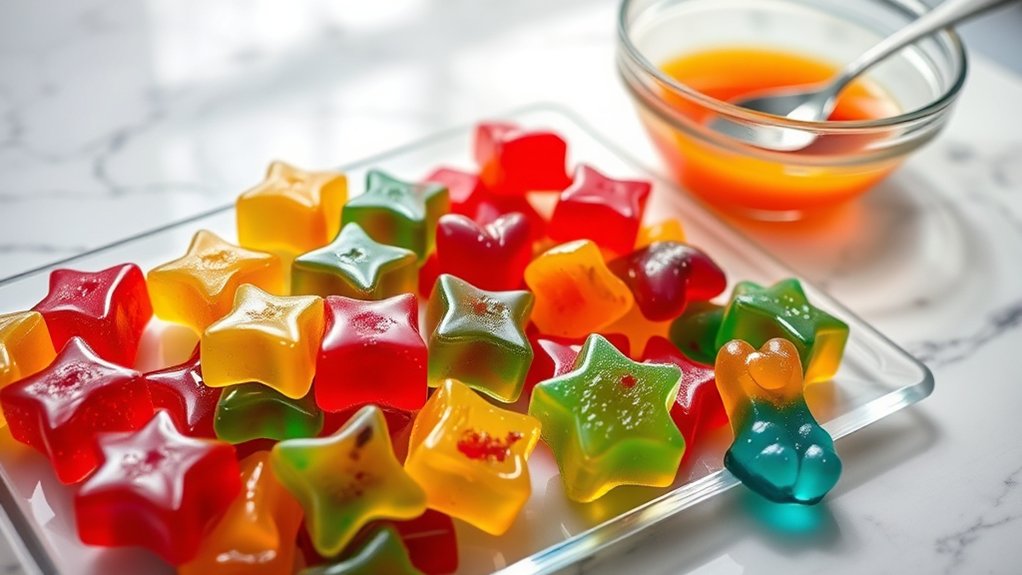
How to Make Gummy Candy Without Gelatin?
Are you craving gummy candies but want to avoid gelatin? You’re not alone—many people struggle with finding tasty, plant-based options. Luckily, making gummy candy without gelatin is easier than you might think.
To make gummy candy without gelatin, you can use plant-based gelling agents like agar-agar, pectin, or carrageenan. Combine fruit juice or puree with your chosen gelling agent and heat gently until thickened.
Pour the mixture into molds and let it set until firm.
Experiment with different flavors, colors, and textures to suit your taste. If you want detailed steps and tips, keep exploring for all the essential tricks to perfect your homemade gummies.
Key Takeaways
- Use plant-based gelling agents like agar-agar, pectin, or carrageenan instead of gelatin.
- Heat fruit juice with your chosen gelling agent until it’s fully dissolved and the mixture starts to thicken.
- Pour the mixture into molds and chill until it’s set for firm, chewy gummies.
- Adjust the amount of gelling agent to get the firmness and texture you want.
- Store your gummies in airtight containers away from heat and sunlight to keep them fresh.
What Are Gelatin-Free Gummies and How Do They Differ From Traditional Gummies?
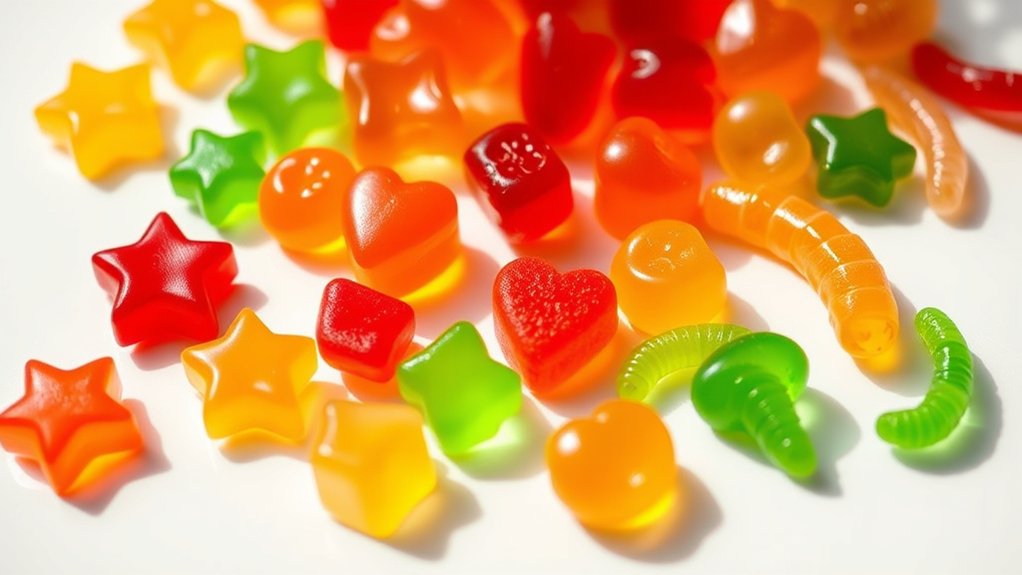
Gelatin-free gummies are chewy candies made without animal-derived gelatin, making them suitable for vegetarians and vegans. Instead of gelatin, plant-based substitutes like agar-agar, pectin, or carrageenan are used.
These ingredients help achieve the desired vegan textures, mimicking the firmness and chewiness of traditional gummies. Unlike gelatin, which melts at body temperature, many plant-based options offer a firmer bite or a slightly different mouthfeel, giving you unique textures to explore.
The main difference is the source: traditional gummies rely on animal collagen, while gelatin-free versions depend on plant-based agents. This switch makes the candies accessible to more people and opens up room for creative variations in consistency.
When choosing gelatin substitutes, think about the texture you want. Each offers a different level of chewiness and firmness. Overall, gelatin-free gummies provide a satisfying chew while respecting dietary choices.
Essential Ingredients and Tools for Making Vegan Gummies
If you’re looking to make vegan gummies, you’ll want to have some plant-based gelling agents on hand, like agar-agar or pectin. These are great alternatives to gelatin and help give your gummies that classic chewy texture.
For flavor, natural ingredients like fruit juices and extracts work perfectly—they add taste without any synthetic stuff. Plus, they keep your gummies healthy and vibrant.
As for tools, a saucepan is essential for heating and mixing, while silicone molds are perfect for shaping your gummies. Don’t forget a whisk to blend everything smoothly. Having these ingredients and tools ready makes the whole process much easier and ensures your gummies turn out delicious and vegan-friendly.
Plant-Based Gelling Agents
Plant-based gelling agents are essential for creating vegan gummies with the right texture and firmness. You can’t rely on traditional gelatin, so options like vegan collagen alternatives and plant-based pectin become vital.
Vegan collagen, derived from plant sources, helps mimic the structure and elasticity that gelatin provides in classic gummies. Meanwhile, plant-based pectin, extracted from fruits like apples and citrus, acts as a natural thickener and gelling agent.
Pectin forms a firm, chewy texture when heated with sugar and acid, making it ideal for vegan gummies. Combining these ingredients allows you to customize the firmness and chewiness of your candies.
This ensures they hold together well without animal products. Using these plant-based gelling agents guarantees your gummies are both vegan-friendly and satisfying.
Natural Flavor Additions
Adding natural flavors *amplifies* vegan gummies by infusing them with vibrant, authentic tastes without artificial additives. Fruit infusions are a great way to *achieve* this, allowing you to incorporate fresh or dried fruits directly into your mixture for rich, natural flavor.
You can also use fruit juices or purees to *boost* both taste and color. Sugar alternatives like agave syrup or stevia not only reduce sugar content but also influence flavor profiles, so choose them carefully to complement the fruit flavors.
Using these natural options *guarantees* your gummies stay plant-based and wholesome while delivering genuine, compelling tastes. Experiment with different fruit combinations and sweeteners to find your perfect balance of flavor and sweetness without relying on artificial ingredients.
Essential Equipment Needed
Making vegan gummies requires a few essential tools and ingredients to ensure your process runs smoothly and your results turn out perfect. You’ll need a sturdy saucepan for heating ingredients and a whisk or spoon for stirring.
A silicone mold or small baking tray helps shape your gummies, so pick one with flexible, non-stick surfaces. For sweeteners, compare options like agave syrup, maple syrup, or coconut sugar to find your favorite flavor and consistency.
Measuring cups and spoons help you stay accurate, while a dropper or squeeze bottle makes pouring easier. Packaging materials, such as resealable bags or small containers, keep your gummies fresh and portable.
Having these tools and supplies ready makes the process easier and results in delicious, well-formed vegan gummies.
Choosing the Best Plant-Based Gelling Agents for Your Gummies
When choosing gelling agents for your gummies, it’s important to pick options that come from plants, especially if you want a gelatin-free treat. Popular plant-based gelling agents include agar-agar, pectin, and carrageenan.
Agar-agar is made from seaweed and creates a firm, jelly-like texture. It’s great for fruit flavors because it enhances natural tastes without overpowering them.
Pectin, which comes from fruits like apples and citrus, works well for softer, more pliable gummies. It can also help improve shelf stability when used correctly.
Carrageenan is also derived from seaweed. It provides a smooth texture and can help extend shelf life by keeping the gel intact over time.
Each of these gelling agents reacts differently depending on the acidity and sugar levels in your recipe. Picking the right one depends on the texture you want and how well the gummies will hold up during storage.
Choosing the proper gelling agent ensures your gummies are tasty, stable, and align with your plant-based goals.
Step-by-Step Guide to Making Vegan Gummies at Home
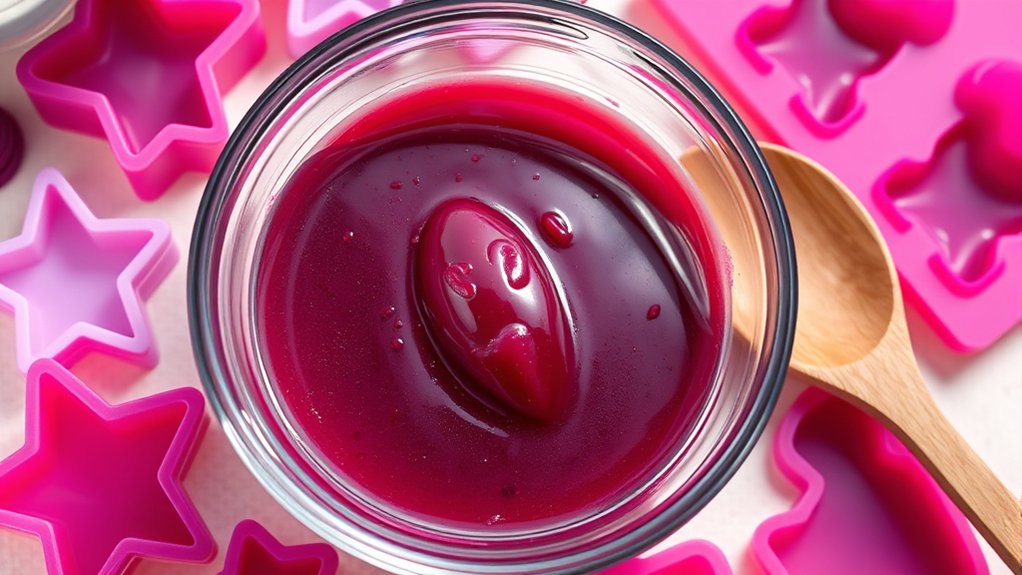
Once you’ve picked your plant-based gelling agent, gather your ingredients and get ready to make your homemade vegan gummies.
Start by combining fruit juice or puree with your gelling agent in a saucepan. Heat over low heat, stirring constantly until it thickens up nicely.
Pour the mixture into silicone molds or a lined baking dish for easy shaping. Chill it until it’s firm, usually about an hour.
Once set, pop your gummies out of the molds. Now, it’s time for coating. You can dip them in melted vegan chocolate for a rich, chocolatey finish or toss them in sugar for a classic look.
If you’re using chocolate, let the melted chocolate cool slightly before dipping to prevent melting the gummies. For sugar coating, roll them gently in fine sugar until fully coated.
Let the coatings set either at room temperature or in the fridge. And just like that, your vegan gummies are ready to enjoy!
How to Achieve the Perfect Chewy Texture Without Gelatin
Want that perfect chewy texture but don’t want to use gelatin? No problem! The key is to pick the right gelling agents like agar-agar, pectin, or carrageenan. These ingredients can give you that satisfying chewiness without relying on gelatin.
And don’t forget, technique matters too! Heating and cooling at just the right moments really makes a difference. When you get the timing right, you’ll end up with gummies that are just the right level of chewy and totally delicious.
Alternative Gelling Agents
If you’re aiming for a chewy texture without using gelatin, there are several alternative gelling agents that can help you get that perfect consistency. These options work well with different flavors, including chocolate, and can be combined with sugar alternatives for a healthier twist.
Agar-agar comes from seaweed and creates a firm, jelly-like texture that’s perfect for chewy candies. It’s a great vegan option for those looking for a solid, chewy bite.
Pectin is commonly used in jams, but it also produces a softer, more elastic chew. It’s ideal when you want your candies to have a tender, chewy feel.
Carrageenan is extracted from red seaweed and offers a smooth, chewy texture. It pairs well with chocolate flavors and sugar alternatives for a delicious, vegan treat.
Experimenting with these agents lets you customize your gummy candies’ texture while keeping them vegan and full of flavor.
Proper Texture Techniques
Achieving the perfect chewy texture in gummy candies without gelatin requires careful attention to your gelling agents and cooking process. To improve chewiness, make sure your sugar crystals are fully dissolved but avoid overcooking, as that can make the candies tough.
Using the right amount of pectin or agar-agar helps create a firm yet tender bite. During cooking, keep a gentle simmer to encourage even gelling and prevent uneven textures.
Add your desired flavors early on, since they influence both the taste and final texture. Controlling sugar concentration is important not just for sweetness but also for achieving the right chewiness.
Once you pour the mixture into molds, let it set undisturbed to develop a uniform, chewy consistency. Fine-tuning these techniques will help you make gummies with a satisfying, chewable texture without using gelatin.
Flavor and Color Ideas to Make Your Gummies Pop
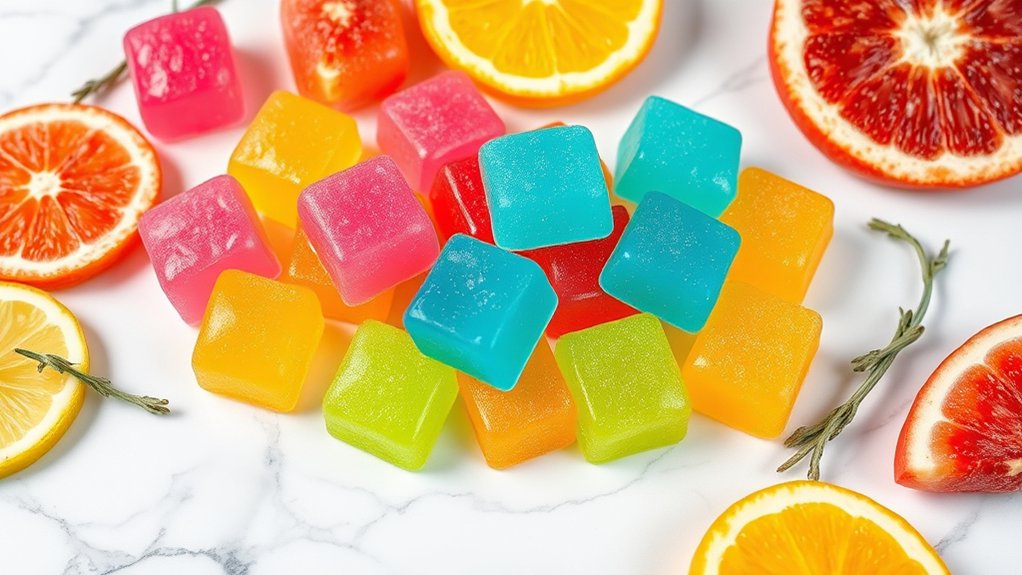
Adding vibrant flavors and eye-catching colors can make your homemade gummies truly stand out. To do this, try experimenting with lively fruit combos like strawberry and kiwi or lemon and blueberry. These mixes create natural, appealing flavors that excite your taste buds.
For colors, blending different fruit juices or purees can give you stunning, multi-layered effects. This adds visual interest and makes your gummies more tempting. You can also use natural colorants like beet juice for red or turmeric for yellow to keep things healthy and vibrant.
If you want a more dynamic look, consider layering different colors and flavors for a rainbow effect. Using bright, fresh ingredients helps ensure your gummies look as good as they taste. Remember, the key is balancing flavor intensity with visual appeal, so don’t be afraid to get creative with your fruit combos and color blending techniques.
Tips for Storing and Preserving Your Homemade Gummies
Want your homemade gummies to stay fresh and tasty? Make sure to store them in containers that seal tightly. This way, they won’t dry out or lose their flavor too quickly.
Also, try to keep them away from heat sources—hot spots can cause them to melt or become sticky. Using airtight containers really helps keep their texture just right and preserves that delicious flavor for longer.
Proper Storage Containers
Choosing the right storage containers is key to keeping your homemade gummies fresh and preventing them from sticking together or drying out. Airtight containers help extend their shelf life and keep the candies’ texture and flavor intact.
Go for containers made of glass or BPA-free plastic with tight-fitting lids for the best preservation. Properly stored gummies can last up to two weeks, depending on the ingredients used.
Here are some tips to help you store your gummies better: Use small, airtight jars for portion control and freshness. Layer the gummies with parchment paper to prevent sticking. And avoid clear containers if you want to keep the gummies away from light.
Keep Away From Heat
Heat can quickly ruin your homemade gummies, so it’s important to store them in a cool, dry place away from direct sunlight or heat sources.
To keep them fresh, try placing the container in a pantry or cupboard away from appliances that generate heat.
If you’ve used ingredient substitutions, like fruit juice instead of gelatin, be aware that these may be more sensitive to temperature changes and need extra care.
Avoid stacking gummies where heat can build up, and consider chilling them briefly before storage if the environment is warm.
Proper storage helps your gummies stay firm, flavorful, and chewy for longer.
Keeping them away from heat is key to preserving their texture and taste without needing preservatives.
Use Airtight Sealing
Once you’ve made your gummies, sealing them tightly is the best way to keep them fresh and maintain their chewy texture. Airtight sealing prevents air from entering, which can cause drying out or mold.
Store your gummies in an airtight container or resealable bag, pressing out excess air. This helps preserve flavor infusion, keeping your candies tasting vibrant longer.
For added freshness, consider placing a moisture-absorbing packet inside. Keep your gummies in a cool, dark place away from direct sunlight.
Proper sealing and storage not only extend shelf life but also maintain their texture and flavor. Remember, the key is to minimize exposure to air and humidity, ensuring your homemade gummies stay delicious and chewy for as long as possible.
Common Mistakes to Avoid When Making Vegan Gummies
Avoiding common mistakes is key to making successful vegan gummies. One mistake is not properly balancing ingredients. Using too much sweetener or thickening agent can make the texture sticky or too firm.
When replacing gelatin, it’s tempting to rely solely on vegan options like agar-agar. But using the right amount and preparing it correctly is crucial. Overcooking agar can weaken its gelling ability, leading to unappealing results.
Don’t forget to add vegan vitamins or flavorings carefully. Adding them at the wrong stage can affect texture and appearance. Another mistake is rushing the setting process; patience is essential for firm, bite-sized gummies.
Also, avoid using too much fruit gelato or fruit puree without adjusting other ingredients. This can make the mixture too runny. Paying attention to these details helps ensure your vegan gummies turn out just right—smooth, firm, and enjoyable.
Customizing Gummies for Dietary Restrictions and Allergies
Customizing gummies to suit dietary restrictions and allergies requires careful ingredient selection and preparation. You need to read labels thoroughly, focusing on nutritional labels and allergy warnings to avoid cross-contamination or hidden allergens.
To make safe, allergen-free gummies, consider using plant-based alternatives like fruit juices or purees that are free from common allergens.
Here are some tips to customize your gummies:
- Use allergy-friendly thickeners like agar-agar or pectin instead of gelatin.
- Choose flavorings and colorings labeled as allergen-free and non-GMO.
- Double-check packaging for nutritional labels and allergy warnings to guarantee ingredients meet your dietary needs.
Creative Packaging Ideas for Your Homemade Vegan Gummies
Creative packaging can turn your homemade vegan gummies from simple treats into memorable gifts or eye-catching snacks. Using creative ideas helps showcase your effort and makes your gummies stand out.
Eco-friendly wrappers are a great choice, aligning with sustainable values while adding a natural touch. Consider reusable glass jars or tins—they preserve freshness and also look charming as storage.
Small, colorful paper boxes or cardboard containers with fun designs can add a playful vibe. For a personal touch, add custom labels or handwritten tags with a sweet message.
Silicone molds can double as packaging by creating mini gummy containers perfect for gifting. Tie everything together with twine or ribbons made from recycled materials for a charming finish.
These creative packaging ideas not only improve presentation but also make sharing your vegan gummies more special. Plus, eco-friendly wrappers show your commitment to sustainability, making your treats appealing to environmentally conscious friends and family.
Frequently Asked Questions
Are Vegan Gummies Suitable for All Dietary Restrictions?
Vegan gummies are generally suitable for many dietary restrictions because they use plant-based alternatives like agar-agar, carrageenan, or pectin.
However, it’s important to check ingredient labels for potential allergens or animal-derived additives that might not fit your specific needs.
While they work well for most vegans and vegetarians, people with food sensitivities or allergies should review ingredients carefully to ensure they’re compatible with their dietary restrictions.
How Long Do Homemade Vegan Gummies Last?
Your homemade vegan gummies will last about a week or two if stored properly. Think of them as sweet treasures, best kept in an airtight container in the fridge, where they stay fresh and vibrant.
To extend their shelf life, avoid exposing them to heat or direct sunlight. Following these storage tips guarantees your vibrant, chewy delights stay delicious, turning each bite into a tiny moment of joy.
Can I Make Gummies Without Any Sweeteners?
You can make gummies without any sweeteners by using natural sweeteners or sugar alternatives like honey, maple syrup, or agave nectar. These options add sweetness without refined sugar, and you can adjust the amount to suit your taste.
Keep in mind, though, that omitting sweeteners might result in less flavorful gummies. Trying out different natural sweeteners can help you find the perfect balance for your desired taste and texture.
Are There Gluten-Free Options for Vegan Gummy Ingredients?
Yes, there are gluten-free options for vegan gummy ingredients that are like finding a needle in a haystack. You can use plant-based alternatives like agar-agar or pectin, which are naturally gluten-free and work well as gelling agents.
These ingredients make your gummies suitable for both vegan and gluten-free diets, giving you a delicious treat without crossing dietary boundaries. Just check labels to confirm they’re certified gluten-free.
How Can I Make Sugar-Free Vegan Gummies?
To make sugar-free vegan gummies, you can use vegan gelatin alternatives like agar-agar or pectin, which set in a similar way to gelatin.
For sweetness, choose sugar substitutes like erythritol, stevia, or monk fruit sweetener.
Combine your vegan gelatin alternative with fruit juice or puree, then add your preferred sugar substitute.
Heat the mixture until everything is dissolved and well combined.
Pour it into molds and chill until firm.
Enjoy your delicious, sugar-free vegan gummies!
Conclusion
Making your own vegan gummies is a fun, creative way to enjoy a sweet treat without gelatin. With the right ingredients and techniques, you can craft chewy, colorful candies tailored to your dietary needs.
Did you know that the global vegan snack market is projected to grow at a CAGR of 12.8% from 2021 to 2028? This trend shows more people crave plant-based options.
So why not join the movement and make your own delicious, ethical gummies today? And if you’re wondering how to make gummies without gelatin, there are plenty of plant-based alternatives like agar-agar, pectin, or carrageenan that work perfectly.