How Soon Can You Eat Gummy Candy After Tooth Extraction?
Many people love gummy candies but worry about when they can safely enjoy them after a tooth extraction. You’re not alone in this concern—recovering while still craving your favorite treats can be tough. Knowing when and how to reintroduce chewy candies is important for a smooth healing process.
You should wait at least a week or until your gums are fully healed before eating gummy candies after a tooth extraction. During the first few days, soft foods and gentle chewing are key to protecting the blood clot and avoiding discomfort.
Once your gums are pink, firm, and free of pain or swelling, you can start with small bites of chewy treats. For more tips on safe reintroduction, keep exploring the details below.
Key Takeaways
- Wait at least one week, or until your gums are fully healed and pain-free, before reintroducing gummy candies.
- Make sure there’s no swelling, bleeding, or discomfort before trying to eat sticky treats.
- Start with soft, easy-to-chew foods, then gradually introduce gummy candies in small bites.
- Check with your dentist that your healing is complete before eating sticky or chewy foods.
- Keep good oral hygiene and avoid sticky or hard candies until your dentist says it’s okay.
How Long Does Healing Take After Tooth Extraction?
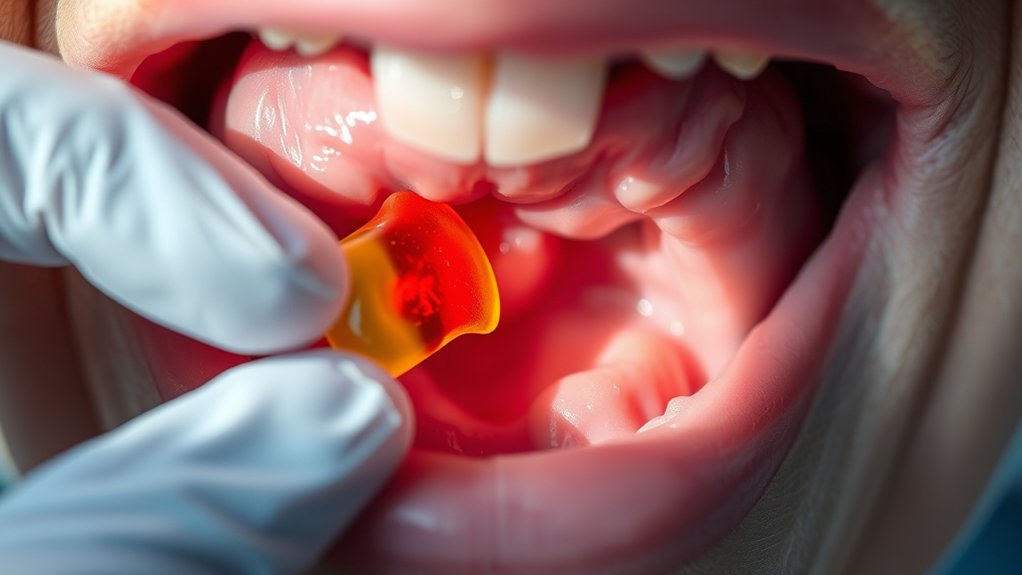
Healing after a tooth extraction usually takes about one to two weeks for the initial recovery. But full healing of the bone and tissue can take several months.
During this time, you’ll need to follow specific diet restrictions to avoid irritating the extraction site. Soft foods like yogurt, mashed potatoes, and smoothies are good options at first.
Follow diet restrictions and choose soft foods like yogurt, mashed potatoes, and smoothies initially.
Hard or chewy foods should be avoided until you’re fully healed. Managing pain is important—over-the-counter pain relievers can help, and applying ice packs can reduce swelling.
You might notice some bleeding and swelling in the first few days, which is normal. Keeping good oral hygiene without disturbing the area helps prevent infection and speeds up healing.
Everyone heals at their own pace, so listen to your dentist’s advice and give your body time to recover fully before eating normally again.
Why Gummy Candies Can Disrupt Your Recovery
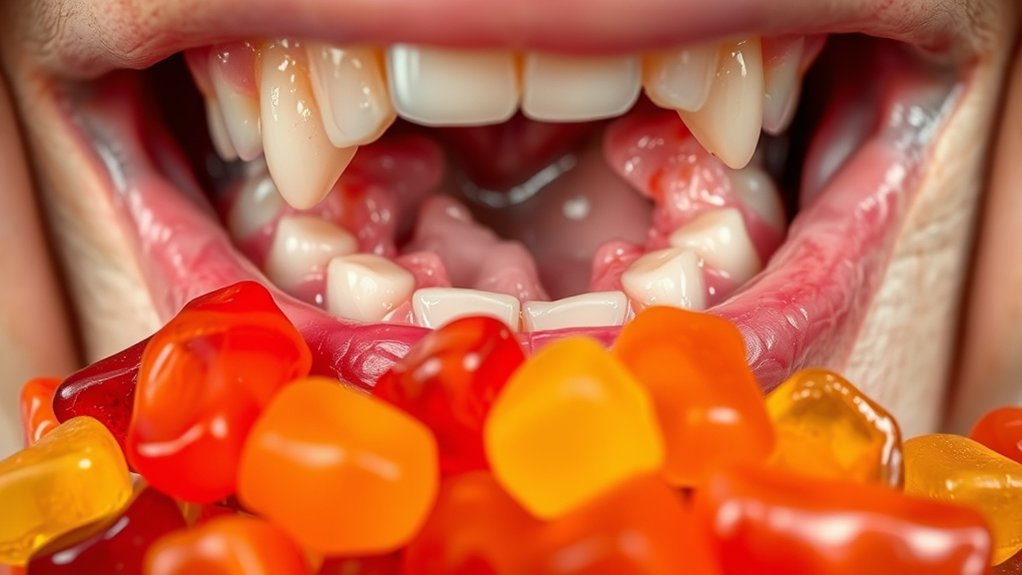
Gummy candies can easily disrupt your recovery because their sticky, chewy texture can loosen blood clots and irritate the tender tissue in your mouth. When you bite into a gummy, the stickiness can pull on the healing site, increasing the risk of a dry socket.
Plus, their high sugar content can promote bacteria growth, leading to infections or delayed healing. If you’re craving sweets, it’s better to choose healthier options like soft fruits or sugar-free candies that won’t interfere with your healing.
These alternatives can satisfy your sweet tooth without risking your recovery. Maintaining good oral hygiene and avoiding sticky, sugary treats is essential during this healing phase.
Staying disciplined now helps your mouth heal faster and reduces the chance of complications. Remember, delaying gummy candy consumption is a small price to pay for a smooth, quick recovery.
When Is It Safe to Eat Gummy Candies Again?
You should hold off on eating gummy candies until your gums have completely healed. Usually, that takes about a week or even longer, depending on your situation. If you start eating them too soon, it could mess with your healing process and might cause pain or bleeding.
It’s a good idea to follow your dentist’s advice and be extra cautious while you’re recovering. Just give your gums the time they need to heal fully, and you’ll be able to enjoy your favorite treats again without any worries!
Healing Timeline for Gums
After a tooth extraction, your gums need time to recover and form a protective blood clot. This healing process usually takes about 7 to 10 days, but full tissue regeneration can take several weeks. During this time, avoid foods like gummy candy to prevent disturbing the healing site.
To understand the timeline:
- First 48 hours: Blood clot forms, and you might feel some discomfort and swelling.
- Days 3-7: Gums start healing, but the area stays sensitive. It’s best to avoid sticky or hard foods.
- Weeks 2-4: Significant healing happens. Your gums become stronger, but caution still helps prevent complications like infection or tooth discoloration.
Being patient helps reduce dental anxiety and ensures proper healing. So, try not to eat gummy candies too soon.
Risks of Early Consumption
Eating gummy candies too soon can pose significant risks to your healing process. If you indulge before your gums are fully healed, you risk dislodging the blood clot, which can lead to a dry socket and prolonged pain.
Sugary treats like gummies can also promote bacterial growth, increasing the chance of infection. If you’re feeling anxious about your dental recovery, it might be tempting to reach for comfort foods early.
But rushing your recovery can make your discomfort worse. Sugar cravings might tempt you to indulge, but it’s best to wait until your dentist says it’s okay. Eating gummy candies too soon can irritate sensitive tissues and delay healing.
To avoid complications, follow your dentist’s advice and wait until you’re fully healed. Doing so will help ensure a smoother recovery and prevent unnecessary setbacks.
Signs You’re Ready to Reintroduce Gummy Candies
Once you see some progress in your healing and your mouth feels pretty comfortable, that’s usually a good sign you might be ready to try gummy candies again. Just make sure there’s no pain or swelling around the extraction site before diving back in. If anything feels uncomfortable, it’s probably best to wait a little longer.
Healing Progress Evident
As your mouth heals, you’ll notice some signs that you might be ready to try gummy candies again. Reduced discomfort and minimal swelling are good indicators that your healing is going well.
Look for these key signs: no persistent bleeding or oozing from the extraction site, and no significant pain or sensitivity. When these are present, pain management becomes easier, and your recovery is progressing.
The healing tissue should look pink and firm, not red or raw. While you can start easing dietary restrictions, it’s still best to be cautious with chewy, sticky candies.
If your mouth is healing well, you can cautiously reintroduce gummy candies. Just remember to chew gently and watch for any discomfort. These signs suggest you’re on the right track to full recovery.
No Pain or Swelling
When your mouth no longer feels painful or swollen, it’s a good sign you might be ready to try gummy candies again. But make sure your oral health has fully stabilized first.
Gummy candies are sticky and can irritate healing tissues or cause damage if you start eating them too soon. Before trying gummies, check for any discomfort or signs of swelling.
| Indicator | What to Watch For | Recommendation |
|---|---|---|
| No pain | No throbbing or tenderness | Gummy candies are likely safe to reintroduce |
| Reduced swelling | Less puffiness or inflammation | Proceed cautiously and keep an eye on your mouth |
| Stable healing tissue | No bleeding or open wounds | Reintroduce candies slowly and carefully |
| Good oral health | No sensitivity or irritation | Keep up good oral hygiene to avoid issues |
Healthy Alternatives to Satisfy Your Sweet Tooth

If you’re craving something sweet but want to protect your healing process, there are plenty of healthier options to consider. Using sugar substitutes can satisfy your sweet tooth without harming your mouth. Try options like stevia or erythritol, which provide sweetness without the risk of cavities.
Fruit alternatives are another great choice—fresh berries, sliced apples, or melon offer natural sweetness and added nutrients. These options are gentle on your healing gums and help prevent irritation.
Here are some healthy alternatives to think about:
- Sugar substitutes: Use stevia, monk fruit, or erythritol to enjoy sweetness without the sugar spike.
- Fruit options: Fresh berries, banana slices, or melon chunks provide natural sugars and hydration.
- Dried fruit: Small amounts of dried apricots or dates can satisfy your craving, but enjoy them in moderation to avoid excess sugar.
These choices keep your mouth safe while still indulging your sweet cravings.
How to Gradually Reintroduce Chewy and Hard Foods
Reintroducing chewy and hard foods after a tooth extraction takes patience and care. You want to avoid damaging your healing gums, so be cautious. If you have dental anxiety or tooth sensitivity, take extra care to prevent discomfort and setbacks.
Start with soft, easy-to-chew options like cooked vegetables or small, soft bread pieces. Gradually work your way up to more complex foods, paying attention to how your mouth feels. Chewing slowly helps prevent unnecessary strain on your healing site.
Begin with soft foods and chew slowly to protect your healing gums.
If you notice increased sensitivity or discomfort, pause and stick to softer foods until your gums get stronger. Don’t rush into tough or resilient foods too soon, as they can irritate your gums or dislodge the blood clot. Remember, everyone’s healing timeline is different, so listen to your body.
Managing dental anxiety by sticking to gentle foods during this phase can make the transition smoother and safer for your recovery.
Common Mistakes to Avoid When Eating After Extraction
After you start eating soft foods, it’s easy to make mistakes that could slow your healing or cause complications. One common error is neglecting proper dental hygiene, which can lead to infection or delayed recovery.
Avoid disturbing the blood clot by not rinsing vigorously or using a straw, as these actions can cause dry socket, a painful complication. Also, don’t rush into chewy or hard foods too soon; this can dislodge the clot or damage the healing tissue.
To prevent issues, keep these in mind:
- Maintain gentle oral hygiene—brush carefully around the extraction site without disturbing the stitches or clot.
- Limit intake of sticky or crunchy foods until your dentist gives the go-ahead.
- Follow your dentist’s instructions on eating and rinsing routines to avoid complications and promote smooth healing.
What Your Dentist Recommends About Reintroducing Gummy Candies
Your dentist suggests holding off on gummy candies until your mouth has fully healed. It’s best to stick with soft, easy-to-chew foods during this time. Things like yogurt, mashed potatoes, or smoothies are usually good options.
And don’t forget, you want to steer clear of sticky or chewy treats. They can disturb your healing site or even cause discomfort. Always make sure to follow your dentist’s specific advice before you start enjoying candies again.
Wait Until Healing Is Complete
Once the healing process is complete, most dentists advise waiting a bit longer before indulging in gummy candies. This helps ensure your mouth has fully recovered and reduces the risk of complications like pain or infection.
During this time, your dental anxiety should decrease, and pain management becomes easier as inflammation subsides. To safely reintroduce gummy candies, consider these steps:
- Confirm with your dentist that healing is complete.
- Start with small bites to test your comfort level.
- Maintain good oral hygiene to prevent irritation or infection.
Patience is key; rushing can cause setbacks. Waiting until your mouth feels completely healed helps you enjoy treats like gummy candies without risking re-injury or discomfort.
This careful approach supports a smooth, pain-free transition back to your favorite snacks.
Avoid Sticky, Chewy Textures
Because gummy candies are sticky and chewy, dentists strongly recommend avoiding these textures during your recovery. Sticky foods can cling to the extraction site, increasing the risk of infection or dislodging the blood clot.
Chewy textures put extra pressure on your healing tissue, which can cause irritation or even reopen the wound. It’s best to stay away from gummy candies and other sticky foods like caramel or taffy until your dentist gives the all-clear.
Instead, choose soft, easy-to-eat foods that won’t disturb your healing process. Remember, the goal is to protect the extraction site from unnecessary strain or contamination.
Avoiding sticky foods and chewy textures helps ensure a smoother, faster recovery.
Follow Dentist’s Specific Advice
Following your dentist’s specific advice is really important when reintroducing gummy candies after a tooth extraction. Your dentist will look at things like how well you’re healing, whether you have dental implants, and if you’re experiencing tooth sensitivity.
They might suggest waiting longer if you have dental implants because that area needs extra protection. If you have sensitivity, gummy candies could make discomfort worse or irritate the healing site.
To do this safely, follow these steps:
- Wait until your dentist says your healing is complete.
- Start with soft, non-sticky candies to see how your mouth tolerates them.
- Keep an eye out for any pain or increased sensitivity, and tell your dentist if you notice anything unusual.
Sticking to your dentist’s advice helps prevent complications and makes your recovery smoother.
How Good Oral Hygiene Supports a Faster Recovery
Maintaining excellent oral hygiene is key for a quicker and smoother recovery after tooth extraction. Keeping your mouth clean helps reduce the risk of infection and promotes healing.
Be mindful of your sugar intake, especially from candies. Too much sugar feeds bacteria and can slow down your recovery. Avoid sticky or sugary candies that can stick to the extraction site, making it harder to keep clean.
Instead, gently rinse your mouth with salt water as recommended by your dentist. This helps remove debris and prevents plaque buildup. Brush your teeth carefully, avoiding the extraction site, to keep your mouth healthy without causing irritation.
Good hygiene practices not only prevent complications but also support the natural healing process. This allows tissue to regenerate faster, helping you recover more comfortably.
Long-Term Tips for Maintaining Oral Health After Extraction
To keep your mouth healthy long after a tooth extraction, it’s key to develop habits that prevent future issues. First, follow your dentist’s dietary advice; stay away from hard, sticky, or sugary foods that might irritate the healing site or cause damage.
Next, make sure to schedule regular dental checkups to keep an eye on your progress and catch any problems early. These visits help ensure your extraction site heals properly and your overall oral health stays in good shape.
Finally, practice good oral hygiene by gently brushing and flossing, but avoid the extraction area at first. This helps prevent plaque buildup and lowers the risk of infection.
Frequently Asked Questions
Can Eating Gummy Candies Cause Dry Socket?
Eating gummy candies can increase your risk of dry socket because they’re sticky and can dislodge the blood clot that forms after a tooth extraction. Gummy candies also contain sugar, which promotes tooth decay and can lead to infection.
To protect your healing process, avoid sticky, sugary treats for at least a few days. Follow your dentist’s advice to prevent complications like dry socket and tooth decay.
How Can I Tell if My Mouth Is Healed Enough?
You can tell your mouth is healed enough when the pain and swelling have gone down significantly, and you don’t see any raw or open areas anymore.
Keep up with good oral hygiene by gently brushing your teeth and avoiding the extraction site.
Start eating soft foods again, but steer clear of sticky or hard things like gummy candies.
Follow your dentist’s diet advice, and only switch back to regular foods once your mouth feels comfortable and fully healed.
Are There Specific Signs That Indicate It’s Safe to Eat Chewy Foods?
You know it’s safe to eat chewy foods when swelling has significantly gone down and your oral hygiene feels comfortable.
Look for signs like minimal tenderness, no ongoing bleeding, and no swelling or pain.
If your gums look healthy and you can chew without discomfort, that’s a good sign.
Always follow your dentist’s advice and avoid hard or sticky foods until you’re fully healed to prevent issues.
Does Sugar Intake Affect Healing After Extraction?
Yes, sugar intake can affect your healing after a tooth extraction. Eating too much sugar feeds the bacteria in your mouth, which can cause infections or slow down healing.
To help your recovery, try to limit sugary foods and drinks, especially during the first few days. Keeping good oral hygiene and avoiding sweets will help reduce bacteria and promote faster healing.
This will also lower your chances of complications and help you recover more smoothly.
How Soon Can I Enjoy Other Chewy or Sticky Foods?
You should wait at least a week before enjoying other chewy or sticky foods after an extraction. During this time, focus on keeping your dental hygiene good and managing pain effectively.
Chewy foods can irritate the extraction site and slow down healing. Keep up with gentle rinses and pain relief as recommended by your dentist.
When you start eating sticky foods again, do so gradually. This helps prevent disrupting the healing process and keeps everything on track.
Conclusion
In your journey to joyful, healthy healing, patience and proper care pave the way.
Don’t rush reintroducing gummy candies; instead, focus on patience, good hygiene, and following your dentist’s advice.
By embracing these mindful steps, you’ll support a future free from complications and discomfort.
Remember, slow steps lead to stellar smiles. Stay cautious, stay committed, and soon, gummy candies can safely satisfy your cravings again.