How Long Does Chocolate Candy Last?
Many people love indulging in chocolate candy, but figuring out how long it stays fresh can be tricky. You’re not alone—keeping your treats tasting their best is a common concern. Proper storage is key, and knowing what to look for helps avoid disappointment.
Chocolate candy generally stays fresh for 6 months to over a year if stored properly in a cool, dark place and in airtight containers. The type of chocolate affects how long it lasts—dark chocolate can last up to 2 years, while milk and white chocolates last about 1 year. Flavored varieties with nuts or fruit spoil faster.
Proper packaging, stable temperature, and low humidity help extend freshness. To keep your chocolates at their best, learn more about signs of spoilage and best storage methods.
Key Takeaways
- Unopened chocolate candy usually lasts between 6 months to over a year if stored correctly in a cool, dark place.
- Dark chocolate can last up to 2 years, while milk and white chocolates typically last 1 to 2 years.
- Keep your chocolates in airtight containers at around 60-70°F to prevent spoilage, bloom, and flavor loss.
- Signs that your chocolate has gone bad include discoloration, a strange smell, changes in texture, or visible mold.
- If your chocolate looks and smells fine, it’s generally safe to eat even past the expiration date.
How Long Does Unopened Chocolate Candy Last?
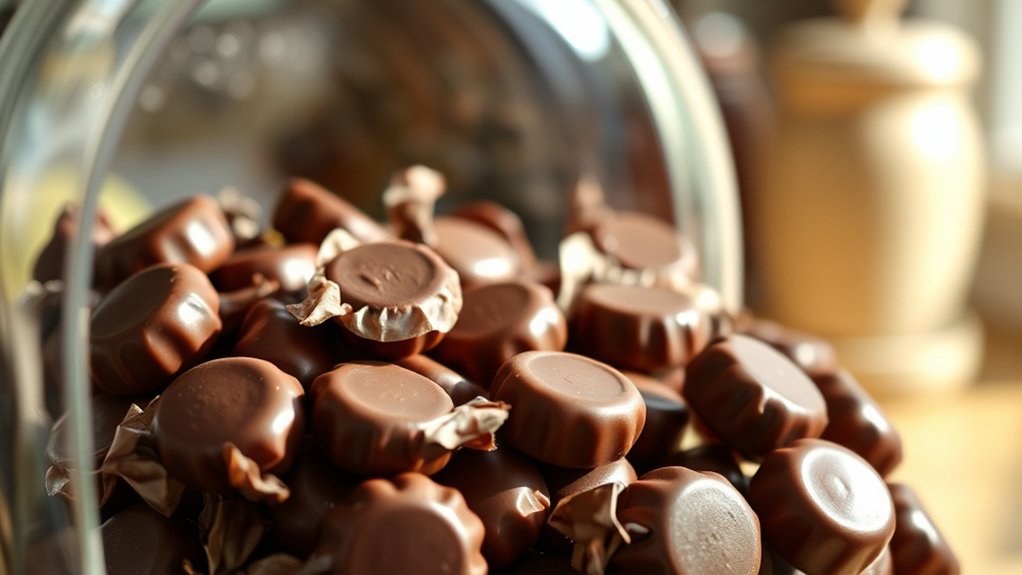
If you store unopened chocolate candy properly, it can last quite a while before its quality starts to decline. The chocolate flavor stays intact for months if kept in a cool, dark place, away from direct sunlight and heat.
Different candy types, like milk, dark, or filled chocolates, have similar shelf lives when unopened. But some might last a bit longer depending on their ingredients.
Proper storage helps prevent the chocolate from melting or developing off-flavors. This way, you can enjoy its original taste later on.
Typically, unopened chocolate can last anywhere from six months to a year or more. This depends on keeping it at consistent, moderate temperatures.
High-quality, sealed packaging also helps preserve freshness longer. If stored correctly, your unopened chocolate maintains its texture, flavor, and appeal.
It’s a reliable treat to enjoy even after quite some time.
Does the Type of Chocolate Affect Its Shelf Life?
Different types of chocolate have different shelf lives because their ingredients and processing methods affect their stability. Dark chocolate, with fewer ingredients, tends to last longer thanks to its lower moisture content. Milk and white chocolates, which have dairy, spoil faster.
The ingredients also influence how quickly fats and sugars oxidize, which impacts freshness. Plus, flavor pairings matter—chocolates with added nuts or fruit may spoil sooner because of moisture and oil content. Proper storage can help extend their shelf life.
Here’s a quick comparison:
| Chocolate Type | Typical Shelf Life | Key Factors |
|---|---|---|
| Dark | Up to 2 years | Low moisture, fewer ingredients |
| Milk | 1-2 years | Dairy content, higher fat |
| White | 1 year | Dairy and fat content |
| Flavored | 6 months-1 year | Additives, fruit, nuts |
| Premium | 2+ years | Quality, packaging |
Understanding the ingredients and flavor additions can help you predict how long your chocolate will stay fresh.
How Can You Tell If Your Chocolate Candy Has Gone Bad?
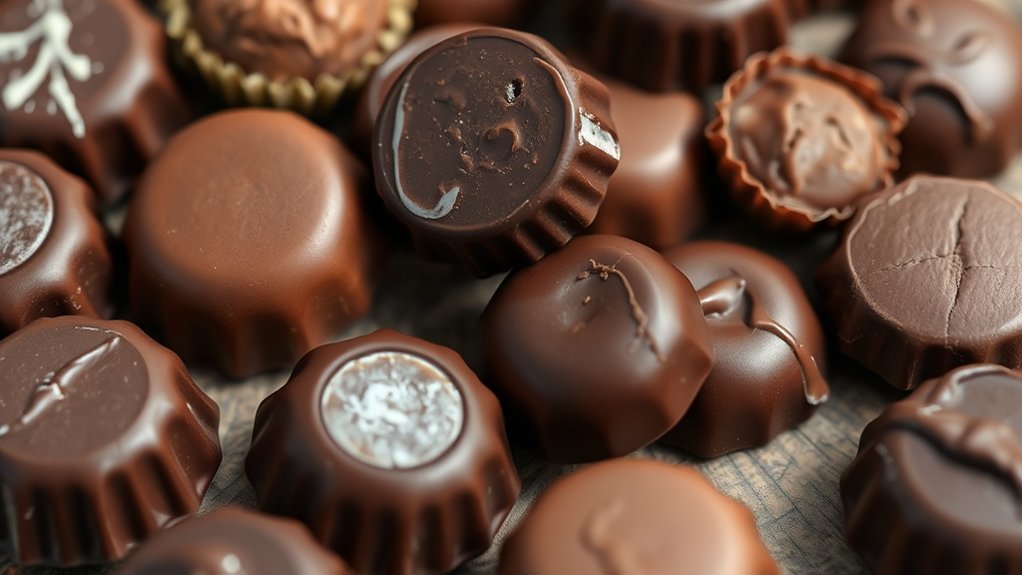
Wondering if your chocolate candy has gone bad? Well, the first thing you should do is take a good look at it. If the chocolate looks dull or has any weird discoloration, that’s usually a sign it might be past its prime.
Next, give it a sniff or even a tiny taste—if it smells off or tastes strange, it’s probably best to toss it. Sometimes, spoiled chocolate can develop an unpleasant odor or flavor that just doesn’t seem right.
Finally, check out its texture. If it feels unusually hard, greasy, or crumbly, those are clues that the candy isn’t fresh anymore. When in doubt, it’s better to be safe than sorry and just get rid of it.
Appearance and Color Changes
A quick glance at your chocolate candy can reveal noticeable changes in appearance and color that signal spoilage. If the chocolate’s color looks dull or faded, it’s a sign that the color has lost its stability, which can affect the flavor.
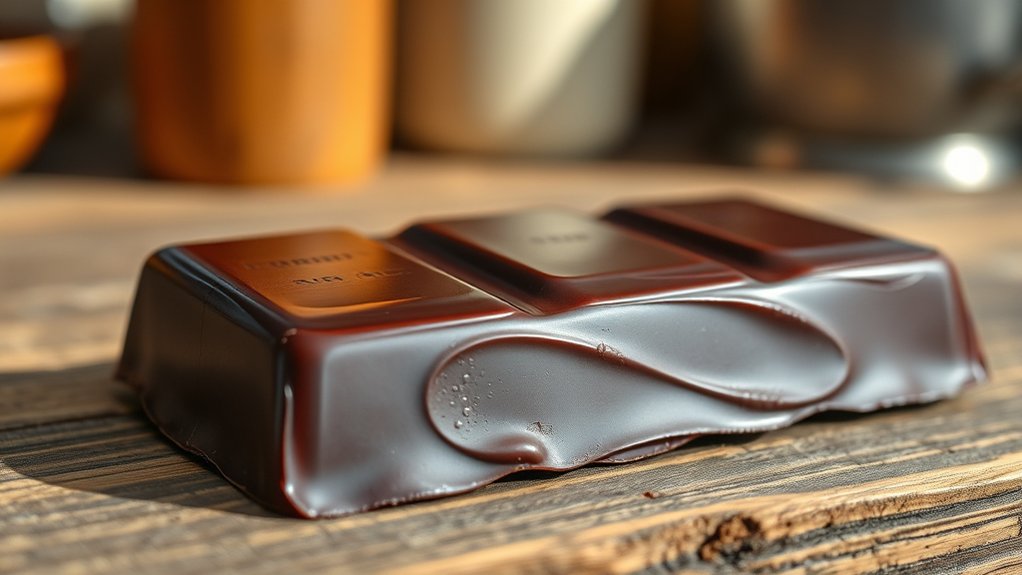
White streaks or a grayish coating, called bloom, happen when fat or sugar separates. This isn’t necessarily spoilage, but it means the quality has degraded. Cracks or a waxy surface can also mean the chocolate has dried out.
Other visual cues include uneven discoloration or a waxy, greasy look. Paying attention to these signs helps you figure out if your candy is past its best.
Unusual Odors or Flavors
Unusual odors or flavors are clear signs that your chocolate candy has gone bad. If you notice a sour, rancid, or musty smell, it’s a strong indicator that the chocolate has spoiled.
Likewise, if the taste is off—like a bitter or metallic note—avoid eating it further. Sometimes, spoiled chocolate develops strange flavors like a chemical or rubbery taste, which means it’s no longer safe to eat.
These changes happen because the fats in chocolate oxidize or absorb odors from the environment over time. Trust your senses—if your chocolate smells or tastes different from fresh, it’s best to toss it out.
Eating spoiled chocolate can cause stomach upset or other digestive issues, so it’s better to be safe than sorry.
Texture and Consistency
When chocolate develops an off-putting texture or inconsistent firmness, it’s a sign it may have gone bad. You might notice a change in its usual smoothness or feel that it’s greasy or crumbly. This can also affect the flavor, making it less enjoyable.
Changes in melting point can also be a clue. If it melts too easily or not at all, that’s a red flag. You should watch out for a chalky or grainy texture, or excessive greasiness and oil separation.
A crumbly or hard consistency is another sign. Loss of smoothness when biting into it or an unusual or dull appearance can also indicate spoilage. These signs suggest the chocolate’s quality has declined.
Its flavor and texture may no longer be trustworthy. Always pay attention to these clues to avoid eating spoiled candy.
How to Store Chocolate Candy for Maximum Freshness
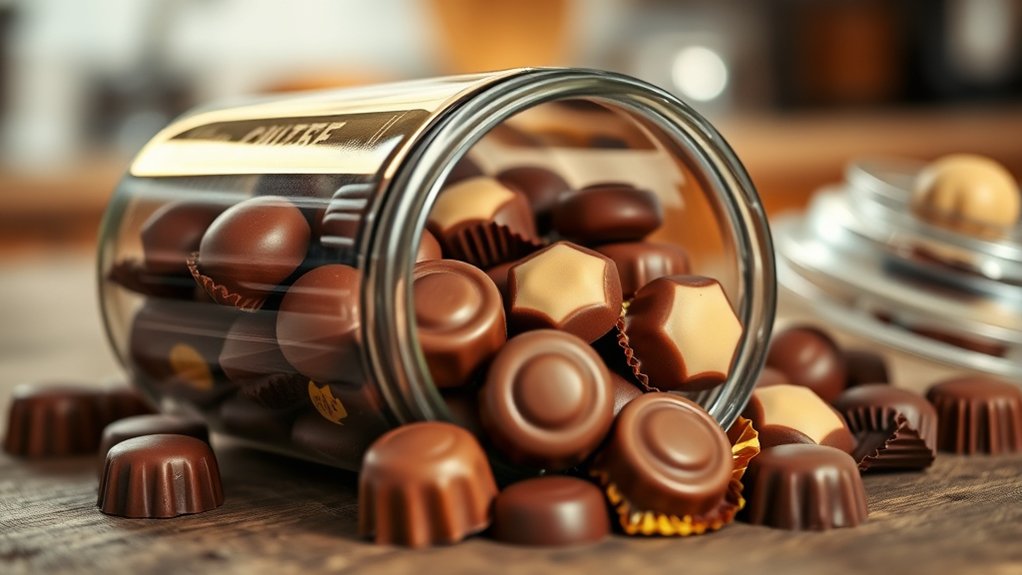
To keep chocolate candy at its freshest, proper storage is essential. Store your chocolates in a cool, dry place away from direct sunlight. Keep them in an airtight container to prevent moisture and odors from affecting the flavor.
For ideal freshness, avoid storing chocolates near strong-smelling items. If you’re planning to use candy decorations or pairings, consider organizing them separately to prevent flavor transfer.
Here’s a simple storage guide:
| Temperature | Ideal Storage Tips |
|---|---|
| Cool (60-70°F) | Keep chocolates away from heat sources. |
| Humidity | Store in a low-humidity environment to prevent bloom. |
| Light | Keep in a dark place to avoid melting or discoloration. |
Proper storage preserves texture and flavor, ensuring your chocolates stay delicious and ready for any occasion.
Does Packaging Help Keep Chocolate Fresh Longer?
So, when it comes to keeping chocolate fresh longer, the packaging you pick really makes a difference. Whether you’re using foil, plastic, or paper, the way you seal it up is super important. A good seal keeps air out, which helps prevent spoilage and that pesky white bloom that can sometimes form on chocolate.
But it’s not just about the packaging itself. How you store your chocolate matters too—things like temperature and humidity play a big role. When the environment is just right, and your packaging does its job, your chocolate can stay fresh and delicious for a lot longer.
Packaging Material Types
Choosing the right packaging material can considerably extend the freshness of your chocolate. The type of packaging influences how well it preserves the chocolate’s flavor and texture, and a good packaging design can prevent spoilage. Materials like foil wrappers, vacuum-sealed bags, or airtight containers help block moisture, light, and air, which can degrade chocolate.
Consider these points:
- Barrier properties protect against environmental factors that harm flavor.
- Light resistance keeps UV rays from damaging the chocolate’s flavor.
- Material durability ensures the packaging doesn’t tear or puncture easily.
- Airtight seals prevent humidity and oxygen from getting in.
- Design simplicity makes storage and handling easier without losing freshness.
Choosing the right packaging material is key to keeping your chocolate fresh and delicious for longer.
Proper Sealing Methods
Proper sealing methods are essential for keeping chocolate fresh longer because even small gaps can let in moisture, air, and light that accelerate spoilage. To guarantee maximum freshness, choose packaging designs that create a tight seal, like resealable bags or airtight containers.
This helps preserve flavor pairing by preventing flavor transfer and maintaining the chocolate’s original aroma. When sealing, make sure to press out excess air to reduce oxidation, which can cause dullness and bloom.
Proper sealing also protects chocolate from environmental factors that cause texture changes. If you’re packaging for storage or gifting, consider using vacuum sealing or foil wrapping for extra protection.
Effective sealing keeps your chocolate tasting fresh longer and preserves its quality, ensuring every bite remains delicious.
Storage Environment Impact
While sealing methods protect chocolate from immediate environmental factors, the storage environment itself plays a big role in keeping it fresh. Temperature, humidity, and light exposure directly impact how long your chocolate stays at its best.
A cool, dark, and steady environment helps prevent blooming and flavor loss. Proper storage also keeps your pairing options and flavor combos vibrant and enjoyable. If stored poorly, the delicate flavors can fade or change, making your chocolates less appealing.
Keep chocolates in a cool, dark place, away from direct sunlight. Avoid storing them near strong odors that might transfer to the candy. Maintaining a steady temperature is key to preventing blooming.
Use airtight containers to improve packaging benefits. Also, store chocolates separately from other scented or flavored items to keep their taste pure.
How Long Can Homemade or Artisanal Chocolate Stay Good?
Homemade or artisanal chocolate can last quite a while if stored properly, but its freshness depends on several factors. The key to keeping it quality is controlling temperature, humidity, and exposure to light.
When stored correctly, the chocolate’s flavor stays vibrant, and the ingredients stay fresh. Usually, homemade or artisanal chocolate can last up to two months at room temperature if kept in an airtight container and away from direct sunlight.
If you refrigerate it, it might last a bit longer, around three to four months. Just keep in mind that refrigeration can sometimes cause condensation, which can affect the texture.
To get the most out of your chocolate’s shelf life, avoid frequent temperature changes and store it in a cool, dark place. Proper storage helps preserve the delicate flavor and prevents fats from turning rancid, keeping your homemade or artisanal chocolate delicious for as long as possible.
Is It Safe to Eat Chocolate After Its Expiration Date?
Many people wonder if it’s safe to eat chocolate after its expiration date, and the answer depends on a few factors. Generally, if the chocolate looks, smells, and tastes normal, it’s probably safe to eat. But spoilage or mold can develop, especially if it’s been stored improperly.
When deciding whether to indulge, think about how the flavor and pairing might have changed over time. Old chocolate may lose its original richness or develop a dull, stale aroma.
Check for visible mold or discoloration. Smell for rancid or off-putting odors. Taste a small piece to see if there’s any bitterness or strange flavor. Also, consider if the packaging was sealed tightly.
Keep in mind that high-quality dark chocolate tends to last longer than milk or white varieties. While eating expired chocolate isn’t usually dangerous, trust your senses to see if it’s still enjoyable.
Tips to Keep Your Chocolate Candy Fresh Longer
Want to keep your chocolate candy fresh and delicious for as long as possible? The best way is to store it in a cool, dry spot away from sunlight. Think of places like a pantry or a cupboard—somewhere that stays steady in temperature.
And don’t forget to use airtight containers! They help keep moisture and pesky odors out, so your chocolate stays tasty and pure. Also, try to avoid sudden temperature changes, because they can cause your chocolate to melt or develop that white, powdery bloom. Keeping these tips in mind will help your chocolate stay perfect and enjoyable for longer!
Store in Cool, Dry Place
Storing your chocolate candy in a cool, dry place is essential to keeping it fresh and preventing spoilage. Temperature fluctuations can cause the flavor to fade or develop a dull taste.
Proper storage helps protect the candy packaging from moisture and heat damage. Keep your chocolates away from direct sunlight, which can cause melting or bloom— that whitish coating that affects appearance and texture.
A consistent, cool environment slows down deterioration, ensuring your treats stay delicious longer. Avoid storing near heat sources or in humid areas.
Choose a spot with stable temperature and low humidity. Keep candies away from strong odors that can seep into the packaging.
Store your chocolates in a dark place to preserve their flavor and appearance. A dedicated, cool pantry or cupboard works best.
Use Airtight Containers
Using airtight containers is one of the best ways to keep your chocolate candy fresh longer. Proper candy packaging prevents exposure to air, which can cause chocolate to become stale or develop unwanted flavors.
When storing your candy, choose containers with tight seals to lock in moisture and maintain the integrity of chocolate flavorings. Airtight containers also protect against humidity and odors that can affect taste.
Consider using clear, food-grade containers so you can easily see your treats while ensuring they’re kept fresh. Avoid flimsy or porous packaging that allows air and moisture in.
Avoid Temperature Fluctuations
Even slight temperature fluctuations can cause your chocolate candy to spoil faster or develop unwanted changes in texture and appearance. To keep the flavor fresh and benefit from packaging innovations, store your chocolates in a stable environment.
Rapid changes between warm and cold can lead to melting, blooming, or cracking. Keep your chocolates away from heat sources, sunlight, and areas with high humidity. Using insulated containers or climate-controlled storage can help minimize temperature shifts.
Aim to keep chocolates at a consistent, cool temperature around 60-70°F. Avoid storing them near ovens, radiators, or windows that might cause temperature swings.
For extra protection, use airtight, insulated containers. Regularly check your storage conditions to prevent surprises. Prioritize controlled environments to maintain your chocolates’ freshness and flavor.
How Temperature and Humidity Impact Chocolate Shelf Life
Temperature and humidity levels play a crucial role in determining how long your chocolate stays fresh and delicious. Excessive heat can cause chocolate to melt or develop a white coating called bloom, which affects appearance but not taste.
High humidity speeds up spoilage by promoting mold growth and changing flavor profiles. Keeping chocolate in a cool, dry place helps preserve its texture and taste, making it easier to enjoy when pairing with other treats.
When choosing chocolates for pairing, think about how temperature impacts their flavors. Warmer temperatures may mute delicate notes, while cooler, stable environments help keep those nuanced flavors intact. Avoid storing chocolate near strong odors, as humidity can carry scents and affect quality.
Proper storage ensures your chocolates keep their intended taste and look, so you can enjoy them longer. Controlling temperature and humidity is key to extending the shelf life of your favorite chocolates.
What Should You Do If Your Chocolate Looks or Smells Off?
If your chocolate looks or smells off, it’s a sign that something may be wrong with its quality or safety. Don’t ignore these signs; eating spoiled chocolate can cause health issues.
Check for visual cues like mold, discoloration, or a dull surface, which indicate spoilage. Unusual odors, such as sour or rancid smells, suggest the fats have gone bad.
Look for changes in texture, like stickiness or a powdery residue, which signal deterioration. Keep in mind that pairing chocolate with fresh ingredients can sometimes hide or emphasize these signs.
Remember, spoiled chocolate offers fewer health benefits. It’s better to choose fresh options for the best taste and nutrition. When in doubt, it’s safest to discard questionable chocolate.
Proper storage helps maintain its quality, preserving both its health benefits and enjoyable flavor.
Frequently Asked Questions
Can Chocolate Be Frozen to Extend Its Shelf Life?
Yes, you can freeze chocolate to extend its shelf life. Proper storage involves wrapping it tightly in foil or plastic wrap, then placing it in an airtight container before freezing.
This helps prevent moisture and odor from being absorbed. When you’re ready to enjoy it, let the chocolate thaw slowly at room temperature.
Freezing can significantly prolong its freshness, keeping your favorite treats good for months.
Does the Presence of Fillings Affect Chocolate’s Longevity?
Yes, the presence of fillings can affect how long chocolate stays good. Fillings like caramel or fruit can cause flavors to fade and change the texture over time, especially if they have moisture or are perishable.
You might notice the candy becoming softer, sticky, or developing off-flavors sooner than plain chocolate. To keep filled chocolates fresh longer, store them in a cool, dry place.
It’s also a good idea to eat them within the recommended timeframe so you can enjoy their best flavor and texture.
How Does Exposure to Sunlight Impact Chocolate’s Freshness?
Exposure to sunlight causes sunlight degradation in chocolate, which speeds up spoilage and impacts its flavor and texture.
Sunlight’s heat sensitivity makes the chocolate melt or develop a dull appearance. You should store chocolate in a cool, dark place to keep it fresh.
Direct sunlight can also change its color and aroma, making it less enjoyable. Protect your chocolate from sunlight to preserve its quality and extend its shelf life.
Are Sugar or Preservatives Added to Prolong Chocolate Shelf Life?
Sugar addition and preservatives are often used to extend chocolate’s shelf life, acting like superheroes defending against spoilage. These ingredients help inhibit mold growth and keep the chocolate fresh, especially in warmer or humid environments.
Preservatives help keep your chocolate tasting delicious longer, while added sugar can improve texture and flavor stability. So, yes—many chocolates contain these additives to ensure you enjoy their sweetness for as long as possible without worrying about spoilage.
What Are Common Signs of Mold or Bacteria in Chocolate?
You can spot mold or bacteria in chocolate through signs like fuzzy, discolored spots or a white, powdery film.
Bacteria indicators include an off smell, sour taste, or a slimy texture.
Always check your chocolate carefully, especially if it’s been stored for a while.
If you notice any of these signs, it’s safest to discard the candy to avoid health risks.
Conclusion
Remember, while unopened chocolate can last months and opened treats a few weeks, the real test is your senses—smell, sight, and touch.
Even if it’s past the expiration date, your chocolate might still be good. But if it looks or smells off, it’s best to toss it.
Proper storage is key—keep it in a cold, dark, and airtight place.
Enjoy your chocolate while it’s fresh and don’t let spoilage ruin your sweet moments.