Make Gummy Candy Without Corn Syrup
Are you tired of store-bought gummy candies that are loaded with artificial ingredients and corn syrup? You’re not alone—many people want to enjoy sweet treats without the unnecessary additives.
Luckily, making gummy candy without corn syrup is easier than you think.
You can make gummy candy without corn syrup by using natural sweeteners like honey, agave, or fruit juice, combined with plant-based gelling agents such as gelatin, pectin, or agar-agar.
Focus on balancing the right amount of sweetener and gelling agent to get the perfect texture.
Use natural flavors and colors like fruit extracts and plant juices for a vibrant, wholesome look.
For tips on achieving the best results and avoiding common mistakes, keep exploring this guide for all the details.
Key Takeaways
- Use natural sweeteners like honey, agave, or fruit juice instead of corn syrup to add flavor and moisture.
- Incorporate natural gelling agents such as gelatin, pectin, or agar-agar to get that perfect gummy texture.
- Be careful with the heating temperature, aiming for around 230°F to 240°F to set the gummies properly without overcooking.
- Add natural fruit extracts and plant-based dyes for authentic flavors and vibrant colors without artificial ingredients.
- Store your gummies in airtight containers in a cool, dry place to keep them fresh and maintain their texture.
How to Make Gummy Candy Without Corn Syrup: A Complete Guide
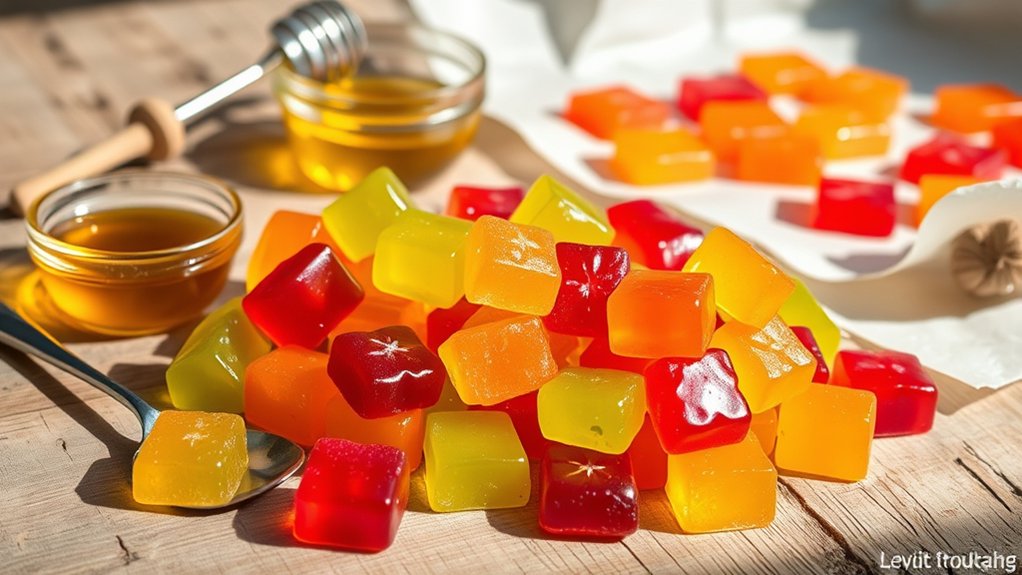
Making gummy candy without corn syrup is simple once you know the right ingredients and techniques. Start with natural sweeteners like honey, agave, or fruit juice to replace corn syrup’s sticky texture.
When choosing flavors, think about flavor pairing to create appealing combinations—like citrus and berry or mint and chocolate. This makes your gummies tastier and more fun to eat.
Once you’ve perfected your mixture, pour it into silicone molds or a lined pan. Then refrigerate until they’re firm and ready.
Good packaging is key for keeping your gummies fresh and attractive. Use clear, resealable containers or cello bags with colorful labels to showcase your homemade treats.
Attractive packaging not only preserves flavor and texture but also invites people to try your gummies. By focusing on flavor pairing and packaging design, you can craft delightful, healthy candies that stand out—even without traditional corn syrup.
Choosing Natural Sweeteners for Healthy Gummies
Choosing natural sweeteners is key to making healthy gummies that taste great without refined sugars. Options like honey, maple syrup, and agave not only sweeten but also bring unique flavors rooted in culinary traditions.
When picking a sweetener, think about how it pairs with your desired flavor profile to boost the overall taste. For example, honey works well with fruity flavors, while maple syrup pairs nicely with citrus or nutty notes.
| Sweetener | Flavor Profile | Best for |
|---|---|---|
| Honey | Floral, rich | Fruity, herbal gummies |
| Maple Syrup | Caramel, earthy | Citrus, nutty, spice gummies |
| Agave | Mild, neutral | Delicate fruit flavors |
| Coconut Sugar | Caramel, toasty | Tropical, berry flavors |
Key Ingredients for Corn Syrup-Free Gummy Recipes
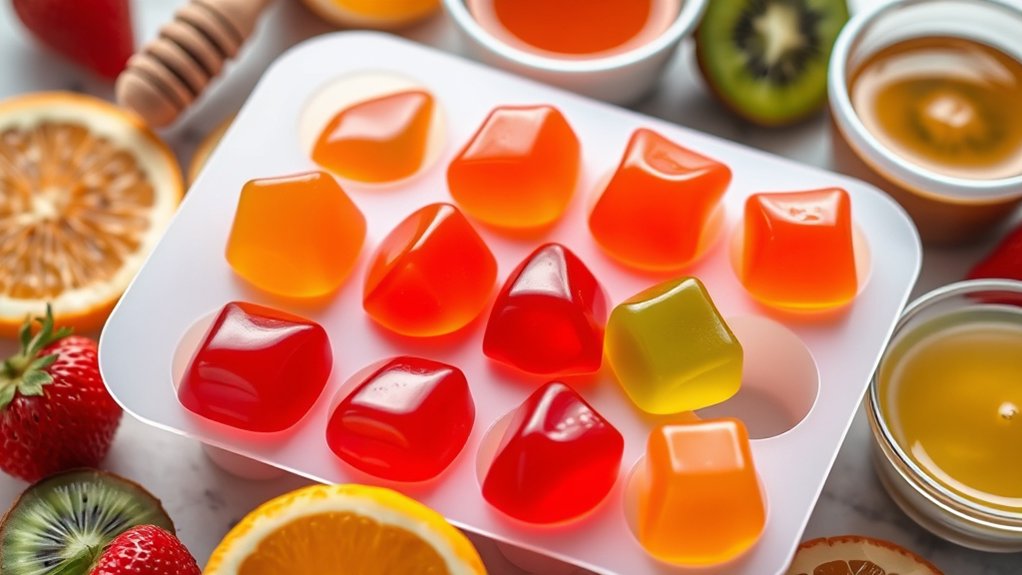
To create chewy, vibrant gummies without corn syrup, choosing the right key ingredients is essential. Candy chemistry plays a big role, so pick natural gelling agents like agar-agar, gelatin, or pectin to get the right texture. These help build the structure and chewiness usually provided by corn syrup.
Sweeteners like honey, agave syrup, or fruit juice concentrate are key for replacing the sweetness and moisture-retaining qualities of corn syrup. When it comes to flavor, focus on pairing fruity or botanical flavors with acids like lemon or lime juice to boost taste and stability.
Putting these ingredients together thoughtfully ensures your gummies are not only delicious but also have the right consistency. Remember, understanding how your ingredients interact is key to making successful, corn syrup-free gummies.
How Can You Achieve the Perfect Texture and Chewiness?
Want to get that perfect texture and chewiness in your gummies? It all comes down to the right gelatin ratios. You want them not too soft, not too firm—just the right bite. So, make sure you’re measuring carefully and balancing your ingredients well.
Heating plays a big role here too. If you go overboard, the heat can break down the gelatin and mess up the texture. On the other hand, not enough heat might leave you with a rubbery gummy that’s hard to chew. So, keep a close eye on your temperature and control it carefully.
If you pay attention to these little details, you’ll end up with gummies that have the ideal bite and mouthfeel—soft enough to enjoy but firm enough to hold their shape. Trust me, a little patience and precision will really make a difference!
Proper Gelatin Ratios
Getting the right gelatin ratio is key to creating the perfect gummy candy texture and chewiness. In the history of gummy candy, the ideal gelatin content helps replicate the soft, chewy feel of commercial treats.
To make gummies with the right bite, keep these points in mind:
- Use enough gelatin to give the candy structure, but not so much that it becomes too firm.
- Too little gelatin makes the gummies soft and rubbery.
- More gelatin results in a firmer, chewier texture.
- Experiment with different ratios to find the balance between chewiness and tenderness you like.
Knowing these basics helps you avoid common mistakes and make gummies that match store-bought quality. It’s also helpful to understand how commercial producers fine-tune gelatin levels for the perfect texture.
Controlled Heating Techniques
Achieving the perfect gummy texture depends on controlling the heating process during preparation. You want to heat your mixture gently and evenly, avoiding boiling or overheating, which can make the candy tough or sticky.
Use a candy thermometer to keep an eye on the temperature, aiming for around 230°F to 240°F. This precise control helps ensure the right chewiness and smooth texture.
While heating, experiment with flavor combinations by adding extracts or fruit juices at specific stages to enhance the taste. Once set, consider packaging options like airtight containers to keep your gummies fresh and prevent sticking.
Proper controlled heating helps you craft gummies with consistent texture and flavor, making your homemade candies as appealing as store-bought treats.
What Natural Flavors and Colors Can You Use?
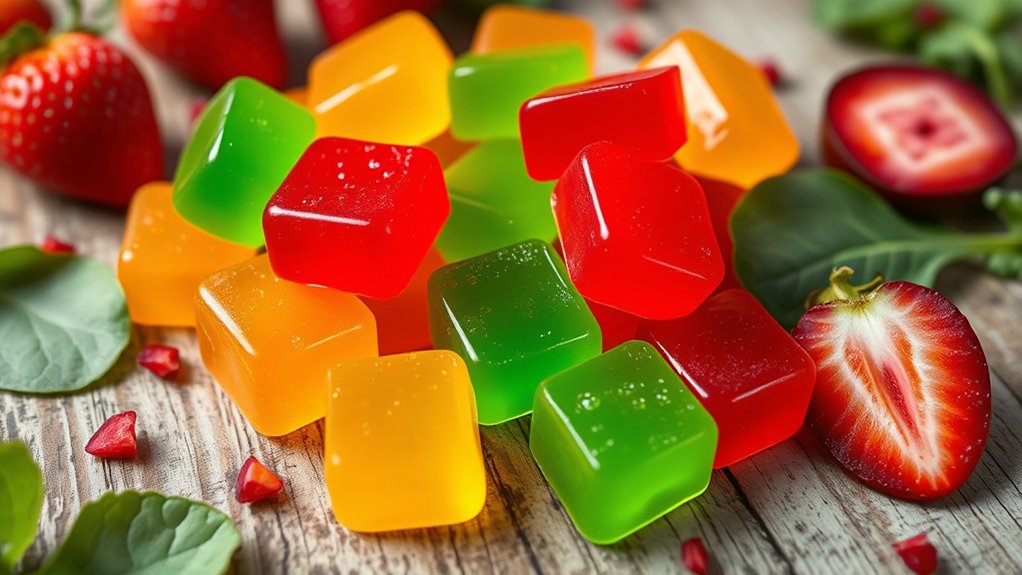
You can really boost the flavor of your gummies by using natural fruit extracts like strawberry, lemon, or blueberry. They give that authentic, fresh taste that everyone loves. Plus, they make your treats look as good as they taste!
When it comes to adding color, there are plenty of plant-based options. For example, beet juice can give a lovely red hue, spirulina adds a vibrant green, and turmeric provides a warm, golden tone. These natural dyes help keep your gummies colorful and appealing—all without any artificial ingredients.
Natural Fruit Extracts
Have you ever wondered what natural flavors and colors you can use to make your gummy candies vibrant and tasty? Natural fruit extracts are perfect for this. They give authentic flavor and natural preservatives, helping to extend shelf life without artificial additives.
You can choose from:
- Strawberry or raspberry for a bright red hue and sweet taste.
- Lemon or lime for a zesty flavor and fresh yellow-green color.
- Blueberry for deep blue shades and antioxidant benefits.
- Pineapple or mango for tropical flavors and subtle orange tones.
Using fruit extraction guarantees your gummies are both flavorful and visually appealing. It keeps ingredients natural while boosting your candies’ appeal and healthfulness. These extracts are a smart choice for homemade treats.
Plant-Based Colorants
Plant-based colorants provide a vibrant, natural way to brighten your gummy candies without artificial dyes. You can use sources like beet juice for reds, spirulina for greens, turmeric for yellows, and purple cabbage for purples.
These colorants not only make your gummies look appealing but also support your goal of creating healthier treats. To make the colors pop even more, consider adding plant-based sweeteners like agave nectar or maple syrup, which can subtly influence the hue.
Using natural options lets you craft colorful, eye-catching gummies without synthetic dyes. Plus, they often add extra flavor and nutritional benefits, making your homemade candies more wholesome.
Experiment with different plant-based dye sources to find the perfect shades for your gummy creations.
Creative Variations: Fruit, Herbal, and Vegan Gummies
Exploring creative variations lets you customize gummy candies to fit different tastes and dietary needs. You can try fruit-flavored, herbal, or vegan gummies, building on the traditional recipes and production methods.
Creative variations allow personalized, healthier gummy candies for diverse tastes and dietary preferences.
Use fruit purees or juices for natural flavors, just like in traditional methods. Adding herbs like mint or basil can give your gummies a refreshing, unique twist inspired by herbal remedies.
Choose plant-based gelatin alternatives like agar-agar or carrageenan to make vegan gummies. Experimenting with sweeteners like honey or agave can boost flavor without relying on corn syrup.
These variations let you personalize your gummies, making them healthier and more inclusive. Understanding how recipes have evolved helps you craft gummies that reflect different cultures and dietary choices without sacrificing taste or texture.
How to Store Your Homemade Gummies for Freshness
Want to keep your homemade gummies fresh and tasty? Well, the key is to use airtight storage containers. These help keep moisture and air out, so your gummies stay in great shape longer.
And don’t forget about where you store them! Find a cool, dry spot—somewhere away from heat sources—that won’t cause your gummies to melt or get sticky. When you store them properly, they’ll stay chewy and flavorful for a lot longer.
Proper Storage Containers
Choosing the right storage containers is key to keeping your homemade gummies fresh and chewy. Proper storage helps extend their shelf life and keeps their texture just right.
Use airtight containers to prevent moisture from ruining your treats. Pick containers with tight-fitting lids to cut down on air exposure.
Go for glass or BPA-free plastic to avoid any chemicals leaching into your gummies. Layer them with parchment paper to stop sticking.
Finally, store your gummies in a cool, dark place. This helps preserve their flavor and texture so they stay delicious longer.
Keep Away From Heat
Since heat can quickly melt or soften gummies, it’s important to store them somewhere cool. Exposure to heat can change their texture, making them stick together or become sticky.
Keeping your gummies away from heat also helps keep their flavor intact. Heat can cause them to melt or lose their vibrant taste.
Avoid storing gummies near stoves, direct sunlight, or warm spots in your kitchen. Instead, pick a cool, dry place like a pantry or cupboard.
If you live somewhere hot, consider refrigerating your gummies in an airtight container. This helps keep them fresh and prevents them from melting.
Proper storage ensures your homemade gummies stay firm, flavorful, and enjoyable for longer. Protecting them from heat means you get the best texture and taste every time.
Common Mistakes When Making Gummy Candies Without Corn Syrup (And How to Avoid Them)
Making gummy candies without corn syrup can be tricky if you’re not aware of common pitfalls. One mistake is rushing the process, which can lead to improper setting or sticky textures. To avoid this, pay attention to temperature and timing.
Another mistake involves neglecting flavor combinations. Experimenting with complementary flavors can really improve your gummies. It’s a simple way to make your candies more appealing.
Moreover, ignoring texture adjustments can result in gummies that are either too firm or too soft. Use precise measurements and carefully incorporate ingredients like gelatin or pectin.
Finally, not stirring enough can cause uneven consistency or flavor distribution. Remember these key points:
- Don’t rush the heating process to ensure proper setting.
- Experiment with flavor combinations for a more appealing candy.
- Adjust textures by controlling gelatin or pectin quantities.
- Stir thoroughly to promote even consistency and flavor blending.
Troubleshooting Gummy Setbacks: Tips for Success
Gummy setbacks can be frustrating, but knowing common issues and how to fix them can save your batch. If your gummies don’t set properly, check your heat level—too high, and the gelatin won’t firm up; too low, and it won’t activate fully.
If your gummies are sticky or too soft, try adjusting the gelatin amount or adding a bit more flavoring. This can also help improve the flavor combinations.
Here’s a quick troubleshooting guide:
| Issue | Cause | Solution |
|---|---|---|
| Not setting | Insufficient gelatin or incorrect temp | Increase gelatin or ensure proper cooling |
| Sticky texture | Excess moisture or overmixing | Reduce moisture or handle gently |
| Weak flavor | Diluted or poor-quality ingredients | Use stronger flavor combinations |
| Packaging issues | Improper storage | Choose airtight packaging options |
Proper troubleshooting helps make sure your gummies are firm, flavorful, and ready for appealing packaging.
Frequently Asked Questions About Making Gummy Candy Without Corn Syrup
Many people have questions when they start making gummy candy without corn syrup, especially about ingredients, texture, and storage. Here are common concerns:
- What sugar alternatives work best? You can use honey, agave syrup, or fruit juice concentrates to replace corn syrup, but each affects the texture differently.
- How do I achieve the right texture? Getting chewy gummies depends on balancing gelling agents like gelatin or agar with your chosen sweeteners.
- Can I customize flavor combinations? Absolutely! Mix fruit purees, extracts, or spices to create unique flavors that suit your taste.
- How should I store homemade gummies? Keep them in airtight containers in a cool, dry place to stay fresh and prevent melting or hardening.
Frequently Asked Questions
Can I Substitute Honey for Corn Syrup in Gummy Recipes?
Yes, you can substitute honey for corn syrup in gummy recipes. Honey adds natural sweetness and can improve the gummy texture, making it slightly chewier and more flavorful.
Keep in mind, honey is thicker and sweeter, so you might need to adjust the amount to prevent overly sticky or sweet gummies. Using honey can give your candies a unique, natural taste while still keeping the right gummy consistency.
How Long Do Homemade Gummies Last Without Preservatives?
Like a fleeting rainbow, homemade gummies won’t last forever. Without preservatives, they typically stay fresh for about a week if stored in an airtight container at room temperature.
For longer shelf life, keep them in the fridge, where they can last up to two weeks. Storage tips like proper sealing and avoiding humidity are key.
Are There Any Allergens in Natural Sweeteners Used?
Allergen awareness is key when using natural sweeteners, as some like honey or agave can trigger allergies in sensitive individuals.
Natural sweetener safety varies; most are considered safe, but always check labels for potential allergens or contaminants.
If you have allergies, choose allergen-free options like pure maple syrup or fruit-based sweeteners.
Being cautious guarantees your homemade gummies are safe for everyone to enjoy, with minimal allergen risk.
Can I Make Sugar-Free Gummies Without Corn Syrup?
Yes, you can make sugar-free gummies without corn syrup using sweeteners like erythritol, stevia, or monk fruit. These options work well as sugar substitutes.
To get the right gummy texture, use gelatin or agar-agar. Don’t forget to experiment with the amount of liquid and sweetener to find what works best.
Keep in mind that some sugar substitutes may change how firm or chewy your gummies turn out. Chilling the mixture can help achieve the perfect consistency.
What Is the Best Method for Removing Gummies From Molds?
To remove gummies from molds, gently flex the silicone mold to help release the gummies without sticking.
You can also give the mold a light tap on a flat surface or pop it in the fridge for a few minutes to firm up the gummies.
Silicone molds are flexible, which makes it easier to pop out the candies without damaging them.
Always handle the mold gently to keep your gummies intact.
Conclusion
Now that you’re armed with all these secrets, your homemade gummies will blow store-bought versions out of the water! Say goodbye to boring, artificial candies and hello to vibrant, healthy treats that could make even Willy Wonka jealous.
With the right ingredients and a little practice, you’ll create gummy masterpieces that are impossible to resist. Your kitchen is about to become the next candy-making sensation.
And the best part? You can make gummy candy without corn syrup, making your treats even healthier. Get ready to impress everyone with your corn syrup-free gummy creations!