What Makes Gummy Candy Softer?
If you love gummy candy but often find it disappointingly hard or chewy, you’re not alone. Many people struggle with achieving that perfect soft, melt-in-your-mouth texture. Luckily, there are simple ways to make your gummies softer and more enjoyable.
To make gummy candy softer, you can adjust the amount of gelling agents like gelatin, pectin, or agar-agar—less gelatin makes it less chewy.
Also, increasing moisture content, controlling pH with acids like citric acid, and storing them in a cool, humid environment help keep gummies tender.
Proper handling, such as sealing tightly or softening with a microwave, can improve texture.
Keep exploring to uncover more easy tips for perfect softness.
Key Takeaways
- Reducing the amount of gelling agents like gelatin makes gummies softer and more melt-in-the-mouth.
- Increasing moisture content with humectants or adding water also softens gummies.
- Adjusting pH with acids such as citric acid weakens the gel network, resulting in a softer texture.
- Storing gummies in humid environments or sealing them with moisture helps keep them soft.
- Lowering storage temperatures, like refrigerating, can make gummies physically softer and more pliable.
What Makes Gummy Candies Soft or Hard?
The texture of gummy candies—whether they’re soft or hard—mainly depends on their ingredients and how they’re made. Different flavor combinations can also influence their structure; for example, some flavors need different amounts of sweeteners or acids, which affects how firm the candies are.
Packaging innovations play a big role in keeping gummies just right. Modern packaging protects them from humidity and environmental factors that can make them soften or harden too quickly. When gummies are stored in airtight, moisture-controlled packaging, they stay softer for longer.
If they aren’t stored properly, gummies can become tough or sticky. The choice of ingredients like gelatin, pectin, or starch also impacts firmness. But smart packaging helps maintain these textures from the moment they’re made all the way to when you enjoy them.
In the end, a good balance of flavor combinations and clever packaging ensures your gummies stay perfectly soft or hard, just the way you like them.
How Do Gelling Agents Influence Gummy Softness?
The kind of gelling agents you pick really plays a big role in determining how soft or firm your gummies will be. If you use a higher concentration of these agents, your candies tend to turn out firmer and more chewy. On the flip side, using less of them usually results in a softer, more melt-in-your-mouth texture.
Getting the hang of how different gelling agents work and adjusting their amounts can help you create the perfect gummy consistency. It’s all about finding that sweet spot where your candies are just the right amount of soft and chewy!
Types of Gelling Agents
Different gelling agents play an essential role in shaping the texture of gummy candies.
Gelling agent varieties like gelatin, agar-agar, and pectin each give a different feel. Gelatin makes gummies soft and chewy, while agar-agar results in a firmer bite. Pectin offers a more tender texture.
The type you choose also affects how you can infuse flavors, such as fruit juices or extracts. These differences influence how the gelling agents interact with other ingredients.
Concentration Effects on Texture
Adjusting the amount of gelling agent in your recipe directly impacts the texture of your gummies. Using more gelling agent results in firmer, chewier candies, while less creates a softer, more delicate bite.
This concentration also influences the gummy’s flavor experience. A softer texture allows flavors to release more quickly, enhancing overall taste.
When developing packaging design, think about how texture affects consumer perception. Softer gummies can be seen as more premium or enjoyable.
Keep in mind that too much gelling agent can make gummies rubbery, which reduces their appeal. Finding the right balance ensures your gummies stay soft enough to enjoy but still keep their shape and flavor.
Ultimately, getting this right helps satisfy customer expectations and boosts your product’s success.
Why Moisture Content Is Key to Gummy Texture
Moisture content plays a big role in how your gummies turn out. If they lose too much moisture, they can become hard and chewy, which might not be what you’re aiming for. On the flip side, if there’s too much moisture, they might end up sticky or overly soft, making them less enjoyable to eat.
That’s why keeping the right humidity levels is so important. When you maintain proper moisture, your gummies stay consistently tender and just the right texture. It’s all about finding that sweet spot to make sure they’re always enjoyable to bite into.
Moisture Levels Impact Softness
Have you ever wondered why some gummy candies feel perfectly soft while others are disappointingly tough? It all comes down to moisture levels. When gummies keep just the right amount of water, they stay chewy and tender.
Too little moisture makes them hard, and too much can make them sticky. Flavor variations can also influence moisture content because some flavors absorb more water. Packaging innovations, like resealable bags, help keep gummies soft longer by maintaining ideal moisture.
Proper Humidity Preservation
Maintaining the right humidity level is essential for keeping gummy candies at their best texture. Proper humidity preserves the gummy flavor, making sure it stays vibrant and authentic.
If the environment is too dry, gummies become hard and lose their chewiness. On the other hand, too much moisture can make them sticky and degrade their quality.
To keep them fresh, store gummies in airtight containers or resealable bags. These help control moisture exposure and prevent unwanted texture changes.
Consistent humidity levels are key to extending shelf life. They help maintain the soft, chewy feel that makes gummies so enjoyable.
How Temperature Changes Affect Gummy Chewiness
Temperature plays a crucial role in determining how chewy a gummy candy feels. When it’s warm, the gummies soften, making them easier to chew and boosting their flavor.
On the flip side, cold temperatures cause gummies to harden, which reduces their chewiness and can dull the taste. If you store gummies in a warm environment, they become noticeably softer, but too much heat can cause melting or stickiness.
Cold storage, like in the refrigerator, can make gummies tougher and less fun to eat. Your packaging materials also matter—airtight containers help keep the texture consistent by shielding gummies from temperature swings.
Proper packaging prevents rapid changes that could make gummies too hard or sticky. So, controlling temperature during storage is key to keeping the right chewiness and flavor intact.
Adjusting storage conditions ensures you get to enjoy the perfect gummy texture every time.
How Manufacturing Processes Impact Gummy Softness
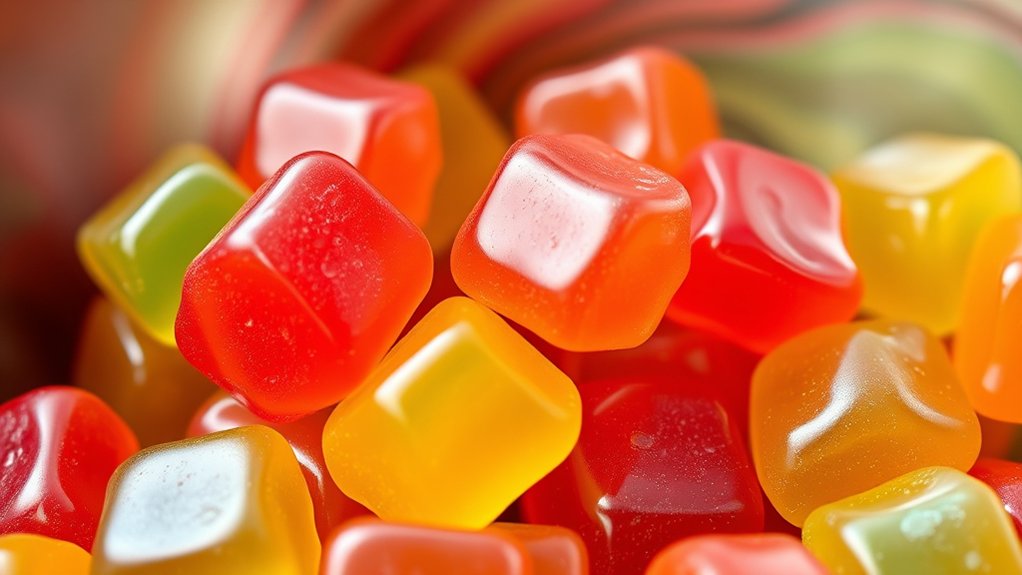
The way gummies are made directly influences their softness and texture. Manufacturing techniques like ingredient selection and mixing speed determine how tender or firm the final product feels.
Gummy softness and texture depend on manufacturing methods, ingredient choices, and mixing techniques.
For example, using different gelling agents results in flavor variations that can also affect chewiness. A softer gummy usually has less gelatin or pectin, making it easier to bite through.
Controlled cooling and humidity management help achieve consistent softness across batches. Packaging innovations also play a role; airtight packaging prevents moisture loss, keeping gummies softer longer.
Some manufacturers add moisture-retaining layers or use resealable pouches to preserve texture. These steps not only impact how the gummies feel but also affect shelf life and overall consumer experience.
The Role of pH Levels in Gummy Texture
Your gummy’s softness really depends a lot on its pH level. When the environment is more acidic, the gummies tend to be softer, making them more enjoyable to bite into. On the other hand, if the pH is neutral, the gummies usually stay firmer and keep their original texture.
Acidic pH Enhances Softness
Ever wondered how the pH level affects the softness of gummy candies? An acidic pH makes gummies softer because it weakens the gelatin network, allowing for a more tender bite. This increased softness not only improves texture but also enhances flavor perception and allows for better coloring techniques.
To achieve this, manufacturers often adjust pH with acids like citric acid for a tangy flavor. They also use acids to boost flavor by releasing more aromatic compounds. Incorporating acids helps pigments disperse evenly, which boosts coloring techniques.
Controlling acidity is key to balancing softness without sacrificing stability or shelf life. Overall, managing pH carefully makes a big difference in the quality of gummy candies.
Neutral pH Maintains Texture
Maintaining a neutral pH level is key to keeping the right texture in gummy candies. When the pH stays balanced, the gelatin bonds stay stable, so the candies don’t get too soft or too brittle.
This stability also helps boost flavor because a neutral pH preserves the natural taste and aroma of the ingredients. It even impacts packaging design since consistent texture means less chance of spoilage or damage during shipping.
Gummies with a balanced pH keep their chewiness longer and hold their shape better. By controlling pH levels, manufacturers make sure the candies stay soft yet firm, giving a pleasant mouthfeel.
Ultimately, this careful pH balance makes consumers happier and extends shelf life, so your gummy experience stays consistently enjoyable.
How Different Ingredients Make Gummies Chewier or Softer
The texture of gummy candies really depends on the ingredients used during production. Different ingredients can make gummies chewier or softer.
For example, gelatin plays a big role. More gelatin makes gummies firmer and chewier, while less gelatin results in a softer bite.
Sweeteners like glucose syrup or corn syrup are also important. Using more of these improves flavor and adds moisture, making gummies softer.
Adjusting acids such as citric acid can change firmness. More acid can make the gummies chewier and give them a slight tang.
Additives like flavor enhancers and color stabilizers don’t just improve taste and color. They also influence how chewy or soft the gummies turn out.
How Storage Conditions Can Harden or Soften Gummies
Storage conditions can really change the texture of gummies, with temperature and humidity being the main factors. When kept in warm or humid places, gummies tend to soften or become sticky, which changes how they feel.
On the other hand, cold and dry environments can make gummies harden and less fun to eat. If stored poorly, their flavor can also shift because heat and moisture affect the taste and aroma.
Your packaging makes a difference too. Airtight containers help keep gummies soft by blocking air and humidity, while loose or poorly sealed packages make them harden faster.
To keep gummies at their best, store them in a cool, dry spot in a sealed container. Proper storage keeps their texture perfect and ensures their flavor stays vibrant and consistent over time.
Tips to Make Your Gummy Candies Softer at Home
If your gummies have become too firm or hard, there are simple ways to soften them up at home. First, put the gummies in a sealed container with a small piece of bread or a damp paper towel. The moisture helps soften the texture.
Second, microwave the gummies in short bursts of 5 seconds, checking often so they don’t melt. Third, add a few drops of water or fruit juice directly to the gummies, then let them sit for 10-15 minutes to absorb moisture.
Fourth, think about changing how you store them by using an airtight container. This keeps the right humidity and helps preserve their chewy texture.
These tips will help you get that soft, chewy feel back, making your candies more enjoyable. Proper storage and handling are key to keeping gummies soft, so try out these methods to see what works best for you.
Troubleshooting Common Gummy Texture Problems
When gummies turn out too hard or chewy, figuring out what’s causing it can help you fix the problem quickly. One common reason is overcooking the mixture, which can make the gummies dense and tough.
To get a softer gummy and improve flavor, try cutting back on cooking time or lowering the temperature. Improper storage also plays a role; if gummies aren’t sealed well, they can become dry and tough.
Using airtight containers keeps moisture in, helping maintain their flexibility. Additionally, too much gelatin can make gummies overly chewy, so adjusting the amount can help find the right balance.
If your gummies are too firm, adding a small amount of sweetener or moisture-rich ingredient during mixing can help. Always test small batches first to perfect the texture.
Troubleshooting these issues helps you make gummies that are softer, more flavorful, and fresher.
Frequently Asked Questions
Can Artificial Sweeteners Affect Gummy Softness?
Artificial sweeteners can affect gummy softness by interacting with other ingredients. They often have different moisture absorption properties, which can change the candy’s texture.
Depending on how they influence moisture content, artificial sweeteners might make gummies firmer or softer. They can also impact sweetness levels, sometimes requiring recipe tweaks to keep the right chewiness and softness in your gummies.
How Does Adding Fruit Juice Influence Gummy Texture?
Adding fruit juice infusion to gummy candy recipes naturally improves flavor and can make gummies softer. The moisture from the juice interacts with the gelatin, increasing flexibility and reducing firmness.
This natural flavor boost not only enhances taste but also helps create a more tender, chewy texture. Just keep an eye on the juice’s sugar content, because too much sugar can sometimes make gummies less soft, which might counteract the effect you’re going for.
Does the Size or Shape of Gummies Impact Their Softness?
The size and shape of gummies work like the skeletons of a dance—larger or thicker gummies tend to be firmer, while smaller or thinner ones are softer.
The gummy ingredient and manufacturing process also influence softness, but size directly affects how much moisture escapes during production.
Can Dietary Modifications Change Gummy Chewiness?
Yes, dietary modifications can change gummy chewiness through texture variation and ingredient substitution. You might swap gelatin for plant-based thickeners like agar or pectin, which can alter how chewy the gummies are.
Adjusting sugar levels or adding liquids like fruit juice can also influence their texture. These tweaks can make gummies softer or firmer, depending on what you prefer.
This way, you can customize the chewiness while still enjoying a tasty treat that fits your dietary needs.
How Do Preservatives Alter Gummy Texture Over Time?
Preservatives are like the superhero sidekicks of gummy candy, battling the villain of spoilage. They slow down flavor loss and keep the texture firm longer.
But over time, they can also make your gummies less bouncy and more rubbery—like chewing on a tire. By preventing microbial growth, preservatives help maintain flavor and texture.
However, beware—they might secretly turn your sweet treats into a chewy, everlasting mystery.
Conclusion
Now that you know the secrets behind gummy candy’s texture, you can become a master of chewy delights. Whether you want softer gummies or a firmer bite, understanding ingredients, temperature, and storage is like having a magic wand.
With a little tweak here and there, you can turn your kitchen into a gummy factory. So, go ahead—craft your perfect chewy treat and enjoy the sweet success of your newfound gummy expertise.
Knowing what makes gummy candy softer can make all the difference. It’s a simple way to customize your candies to match your ideal texture.
By adjusting ingredients or controlling temperature and storage, you’ll be able to create gummies that are just right. Master these tricks, and you’ll be a gummy pro in no time.