
Where Was Gummy Candy First Produced?
Many of us have a sweet tooth, but finding the perfect gummy candy can feel overwhelming. With so many options out there, it’s easy to wonder where these chewy treats actually come from. If you’re curious about their origins, you’re not alone.
You’ll find that gummy candy was first produced in Germany, where innovative confectioners created chewy, fruit-flavored treats as an alternative to hard candies. German companies like Haribo pioneered the development of uniform shapes and improved textures, making gummies popular worldwide.
Their advancements in recipes, molding techniques, and marketing helped establish Germany as the birthplace of gummy candy. If you want to delve deeper into its fascinating origins and how it became a global favorite, keep exploring!
Key Takeaways
- Gummy candy was first developed in Germany in the early 20th century by confectioners experimenting with gelatin-based treats.
- Hans Riegel, a German confectioner, is credited with creating the first modern gummy candy and founding Haribo.
- Germany’s confectionery industry pioneered gummy production techniques, shaping how gummy candies developed initially.
- Early gummy recipes used local ingredients like fruit extracts and gelatin, reflecting regional tastes and traditions.
- The innovation and commercialization of gummy candy started in Germany, making it the global leader in the industry.
The Origins of Gummy Candy: How It All Began

The story of gummy candy begins in the early 20th century, when confectioners started experimenting with new ways to create chewy, fruit-flavored treats. During this time, traditional confections focused on simple, hard candies, but innovators wanted softer, more playful options.
Gummy candies emerged in the early 20th century, offering a fun, chewy alternative to traditional hard sweets.
They explored flavor development, combining fruit extracts and sweeteners to craft appealing tastes. This era marked a shift toward more complex flavor profiles, emphasizing both taste and texture.
Confectioners used gelatin and other gelling agents to achieve the chewy consistency that defines gummy candies today. Their goal was to make treats that offered a fun, satisfying bite while maintaining rich, natural flavors.
These early experiments laid the foundation for modern gummy candy, blending traditional techniques with creative flavor development. As a result, gummy candies became a popular, innovative product that appealed to a broad audience hungry for new, enjoyable sweets.
Who Invented Gummy Candy? Key Innovators and Patents
Ever wondered who actually invented gummy candy and what made it special? Well, some key innovators like Hans Riegel played a big role in bringing these chewy treats to life. His patents and ideas really set the stage for the gummies we all love today.
Looking into these pioneers shows us how their creativity and inventions turned candy into a worldwide favorite. It’s pretty fascinating to see how one person’s idea can become a global sensation!
Pioneers of Gummy Innovation
Ever wonder who first brought gummy candy to life? The pioneers of gummy innovation shaped what we enjoy today. They introduced key ideas like:
- Developing unique gummy textures that appeal to consumers.
- Crafting eye-catching gummy candy marketing strategies to boost popularity.
- Designing innovative gummy candy packaging that preserves freshness and attracts buyers.
- Experimenting with flavors and shapes to stand out on shelves.
These trailblazers transformed simple gelatin treats into a global phenomenon. Their focus on appealing marketing and attractive packaging helped grow the industry.
Their innovations laid the groundwork for the wide variety of gummies we see today. Without their creativity, gummy candy might still be a niche treat.
Their inventive spirit continues to inspire new flavors, designs, and marketing techniques. This keeps gummies exciting and fresh for consumers worldwide.
Key Patents and Inventors
Uncovering who truly invented gummy candy involves exploring a series of key patents and the innovators behind them. Early inventors focused on sugar refinement techniques to get that smooth, chewy texture we love.
One notable patent from the early 20th century improved sugar processing, helping create the perfect consistency for gummies. Another breakthrough involved packaging innovations that kept the candies fresh and durable.
Inventors like Hans Riegel, the founder of Haribo, secured patents related to gummy production methods and packaging designs. These innovations contributed to the candy’s massive commercial success.
These patents show the technological progress behind gummy candies. They highlight how improvements in sugar refinement and packaging helped turn these treats into a global phenomenon.
Germany’s Role in Developing Gummy Candy
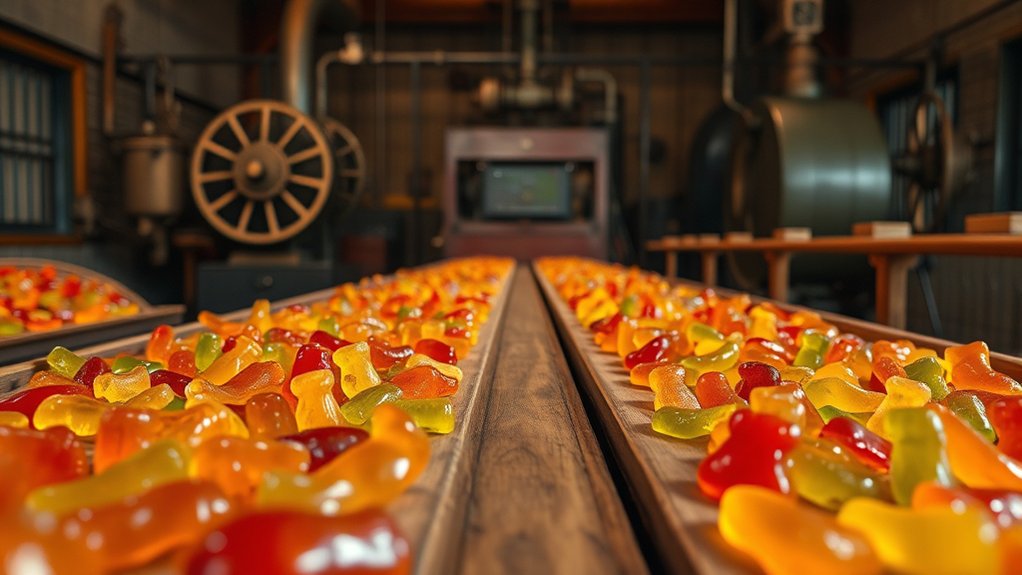
Germany has really made a big impact on how gummy candy is today. They took some early ideas in candy-making and ran with them. Haribo, in particular, was a game-changer. They introduced new techniques and fun designs that made gummy sweets so popular. It’s pretty cool to see how Germany’s long-standing candy traditions created the perfect setting for these sweet innovations.
Early Gummy Candy Innovations
While the origins of gummy candy are often linked to the early 20th century, it was in Germany that big innovations turned the idea into the chewy, fruit-flavored treats we know today.
During this time, German confectioners made key advances in gummy candy history, improving texture and flavor.
They introduced gelatin-based recipes that made the candies chewier, along with fruit flavoring techniques for a more authentic taste.
Molding methods were also developed to give gummy candies their uniform shapes, making them more appealing.
Plus, packaging innovations helped keep the candies fresh longer.
All these innovations took gummy candies from simple sweets to popular treats around the world.
Germany’s focus on quality and creativity pushed gummy candy development forward, paving the way for their global popularity.
Your understanding of gummy candy history shows how innovation shaped the delicious confections we enjoy today.
Haribo’s Pioneering Role
Haribo played a key role in turning gummy candies from local treats into a worldwide phenomenon. They revolutionized gummy candy marketing with memorable branding and big advertising campaigns that caught everyone’s attention.
Their packaging was innovative, with bright colors and playful designs that made their products instantly recognizable. This appealing look attracted people of all ages.
Haribo’s focus on quality and presentation helped make gummy candies a popular snack across the globe. By emphasizing fun and freshness, they set new standards for the industry.
Their smart marketing and packaging efforts not only increased sales but also helped Germany become a leader in gummy candy making. This mix of branding and design made Haribo a true industry pioneer.
German Confectionery Traditions
Have you ever wondered how Germany became a hub for creative confectionery treats? Its rich candy-making traditions laid the groundwork for the success of gummy candies.
Germany’s Gummy candy marketing is smart, focusing on quality and nostalgia. You’ll see that packaging often features bright colors and playful designs that catch your eye.
The country’s long history of candy craftsmanship includes emphasizing natural ingredients, trying new textures and flavors, and making attractive packaging. They also build brand loyalty by sticking to tradition.
All these elements help German gummy candies become iconic worldwide. Their focus on quality and presentation has shaped the industry and set global standards.
Germany’s mix of tradition and innovation keeps gummy candy popular today.
How Haribo Made Gummy Bears Famous

How did gummy bears become a household favorite? Haribo played a key role by using clever gummy candy marketing and eye-catching packaging. They introduced colorful, playful designs that appealed to both kids and adults, making the product instantly recognizable.
Their marketing campaigns focused on fun and nostalgia, which helped build a loyal customer base around the world. Haribo also innovated with packaging that kept the gummies fresh while showcasing vibrant images of the bears to catch your eye on store shelves.
Here’s a quick look at how Haribo made the gummy bear famous:
| Strategy | Impact | Result |
|---|---|---|
| Gummy candy marketing | Created brand awareness and excitement | Boosted sales and popularity |
| Gummy candy packaging | Attracted attention with bright visuals | Increased shelf appeal |
| Consistent branding | Built trust and recognition | Established a global presence |
Thanks to these efforts, Haribo turned gummy bears into a beloved treat enjoyed worldwide.
Traditional Confectionery Techniques Behind Gummy Candy
Traditional confectionery techniques form the foundation of gummy candy production, combining precise ingredient preparation with careful mixing and heating processes. To get that signature gummy texture and vibrant colors, you usually follow these steps:
Traditional techniques ensure perfect gummies with vibrant colors and satisfying chewiness.
- Ingredient Mixing: You blend gelatin, sugars, and flavorings until smooth, making sure everything is evenly distributed.
- Heating: The mixture is heated to dissolve the sugars and activate the gelatin, creating a viscous, glossy syrup.
- Molding: You pour the hot syrup into molds, shaping the candy into different forms and sizes.
- Cooling and Setting: The molds are cooled so the gelatin can set, giving you chewy, resilient gummies with a shiny look.
This careful process ensures the gummies have the perfect chewy texture and bright, appealing colors that delight consumers. These traditional techniques are key to creating the enjoyable sensory experience that defines gummy candies.
How Gummy Candy Flavors and Shapes Changed Over Time
Over time, gummy candies have really expanded their flavor lineup. It’s not just the basic fruit tastes anymore; now we see all sorts of unique and inventive combinations that surprise your taste buds.
And when it comes to shapes, things have gotten a lot more interesting too. We started with simple bear shapes, but now you can find gummies inspired by cultures, movies, and popular themes — they’re often quite intricate and creative. All these changes show how advances in technology and the influence of different cultures have shaped what we enjoy munching on today.
Evolution of Flavors
Over the years, gummy candy flavors and shapes have changed a lot, reflecting shifting tastes and new technology. Today’s options include more complex, natural flavors that appeal to health-conscious consumers.
Gummy candy marketing now highlights unique flavor combinations, aligning with trends like organic ingredients and less sugar.
You’ll notice a move away from artificial to natural fruit flavors.
Plus, there’s been an introduction of exotic and seasonal flavors that keep things exciting.
Many gummies now blend multiple flavors into a single piece, creating a more interesting taste experience.
Shape innovations also play a role, making flavors seem even more intense and fun.
These changes have led to nutritional improvements, with manufacturers reducing artificial additives and sugar.
As a result, the evolving flavors reflect consumers’ desire for treats that are both enjoyable and healthier.
At the same time, gummies maintain their fun, nostalgic appeal that keeps people coming back.
Shape Innovations Over Time
Innovations in gummy candy shapes have played a big role in making the eating experience more fun and keeping people interested. Over time, manufacturers tried different shapes to appeal to various age groups and tastes, from classic bears to more playful figures.
These shape changes helped boost marketing by making gummies look more appealing and memorable. Packaging also evolved with transparent wrappers and collectible containers that showcased the unique shapes and encouraged repeat buys.
As brands wanted to stand out on store shelves, creative shapes and eye-catching packaging became essential for catching shoppers’ attention. This evolution turned gummy candies from simple treats into fun, collectible items that continue to delight people all around the world.
Cultural Influences on Designs
Cultural influences have played a big role in shaping gummy candies, from their shapes to flavors, reflecting local tastes and traditions. You’ll see how artistic expression and culinary fusion come into play in this evolution.
For example, traditional symbols like hearts and stars become popular in certain regions, representing cultural values. Local ingredients inspire unique flavors, blending regional tastes with global trends.
Shapes often tell stories or showcase motifs from a culture, turning candies into storytelling tools. Seasonal and festival themes also incorporate cultural festivities, making candies more meaningful.
These influences lead to innovative designs that honor heritage while appealing to modern consumers. Over time, these cultural shifts have transformed gummies into edible art, blending tradition with creativity and reflecting local identity.
The Evolution of Gummy Candy From Local Treat to Global Favorite
The journey of gummy candy from a regional treat to a worldwide phenomenon shows clever marketing and changing tastes. As producers reached beyond local markets, they improved packaging to stand out on store shelves. Bright colors, fun shapes, and creative designs made them more eye-catching and memorable.
Marketing also played a big role. Companies launched campaigns focused on fun, nostalgia, and sharing. Ads moved from local stores to TV and digital platforms, reaching bigger audiences. Collaborations with popular brands and characters boosted their popularity even more.
Over time, gummy candy transformed from a simple regional snack into a cultural icon enjoyed by all ages and countries. Its adaptable packaging and smart marketing turned it into a beloved global favorite, symbolizing childhood joy and modern candy innovation.
Cultural Influences on Early Gummy Recipes
Have you ever wondered how early gummy recipes were shaped by the cultural traditions of their regions? These recipes often reflect local values, ingredients, and tastes.
Early gummy recipes reflect regional cultures, ingredients, and tastes shaping their unique flavors and textures.
For example, Asian cultures used sticky rice and fruit extracts, which influenced chewy, fruit-flavored candies.
European traditions incorporated regional ingredients like honey and herbal extracts, making more medicinal or herbal confections.
In the Middle East, recipes used dates and nuts, creating rich, dense treats rooted in local agriculture.
Native American recipes often included natural sweeteners like maple syrup or berries, emphasizing seasonal availability.
These regional ingredients and customs played a key role in shaping early gummy candies, giving them a unique sense of place.
Cultural traditions dictated not just flavors but also textures and shapes, making each region’s gummies distinctive.
Knowing this history shows how local ingredients and customs continue to influence candy-making today.
Modern Manufacturing and Gummy Candy’s Global Reach
Advancements in manufacturing technology have turned gummy candy from a local treat into a global sensation. Modern methods let producers make gummies in large quantities while keeping quality and flavor consistent.
These innovations help companies meet increasing international demand and expand their reach. Marketing now focuses on different markets, customizing flavors and packaging to appeal worldwide.
Automation cuts costs, making gummies more affordable and accessible everywhere. New techniques like precision molding and better ingredient blending also improve the texture and look of gummies, making them more appealing.
As a result, gummy candy’s popularity has spread beyond its origins to different continents and cultures. You can see this in the wide variety of flavors, shapes, and brands now available.
Thanks to these manufacturing advances, production has increased significantly, and gummy candy has become a beloved treat around the world.
Why Germany Is Considered the Birthplace of Gummy Candy
Germany is widely recognized as the birthplace of gummy candy because of its pioneering innovation in creating the first modern versions of these chewy treats. In the early 20th century, German confectioners perfected techniques that laid the groundwork for today’s gummies.
Germany pioneered modern gummy candy with innovative techniques that set industry standards and shaped global tastes.
Their success was driven by unique recipes that emphasized texture and flavor. They also developed gummy candy packaging that made products visually appealing and easy to carry around.
German companies like Haribo transformed the industry by combining quality with clever marketing. They understood that attractive packaging and engaging campaigns could boost sales and build brand loyalty.
This approach helped Germany establish a dominant position in gummy candy production, influencing tastes and standards worldwide. Today, German gummies are seen as a symbol of quality, innovation, and smart marketing strategies that continue to shape the industry globally.
Frequently Asked Questions
What Ingredients Are Traditionally Used in Early Gummy Candy Recipes?
In early gummy candy recipes, you’d find traditional ingredients like gelatin, sugar, and flavorings forming the base of the recipe.
You might also see variations, such as honey or fruit juices, used to add natural sweetness and flavor.
These ingredients create the chewy texture and vibrant taste we associate with gummies today. Your choice of ingredients influences the final product’s texture, flavor, and overall appeal in homemade or vintage recipes.
How Did Gummy Candy Spread to Other Countries Initially?
You might find it fascinating that, during the early stages of gummy candy history, it spread to other countries through global confectionery trends and international trade.
As manufacturers uncovered its popularity, they adapted recipes and marketed gummies worldwide.
This expansion was driven by consumers’ growing demand for unique, chewy treats.
Today, gummy candy remains a beloved global confectionery trend, showing how innovation and cultural exchange continue to shape sweet industries worldwide.
Were There Any Health Concerns Associated With Early Gummy Candies?
Early gummy candies did raise some health concerns, mainly because of their high sugar content. This could lead to tooth decay and obesity over time.
People also worried about allergy risks, especially since some gummies contained gelatin or other allergens.
As a result, consumers became more cautious, which prompted manufacturers to look into healthier ingredients and clearer labels.
You should always check labels to avoid potential allergy risks and keep sugar intake in check.
How Did Gummy Candy Packaging Evolve Over the Years?
You might think packaging is just wrapping, but it’s really a game changer. Over the years, gummy candy packaging has gone from simple wrappers to eye-catching designs that grab your attention.
Bright colors, fun shapes, and resealable bags help candies stand out on shelves and stay fresh longer. Today, packaging isn’t just about protecting the candy; it’s a big part of what makes gummy treats so appealing.
It draws you in and makes each piece irresistible, showing just how much packaging can influence your craving for that sweet, chewy goodness.
Are There Regional Variations of Gummy Candy Around the World?
Yes, there are regional variations of gummy candy around the world. You’ll find different flavor profiles that reflect local tastes, like tropical fruits in Southeast Asia or traditional herbs in Middle Eastern versions.
These candies often hold cultural significance, representing local ingredients or customs. Exploring these regional types lets you *immerse yourself* in diverse traditions.
Gummy candies are a sweet way to experience global cultures through unique flavors. Each region’s version offers a little taste of its special heritage.
Conclusion
So, if you’re curious about where gummy candy first came to life, you’ll find that Germany holds a special place in its history. Haribo, in particular, played a key role in popularizing these sweet treats worldwide.
Remember, every great idea starts somewhere. Don’t forget, “Rome wasn’t built in a day.” Gummy candies evolved through innovation and passion, transforming into the beloved confections we enjoy today across the globe.
Gummy candy was first produced in Germany, and the country’s confectionery craftsmanship helped shape what these sweets are today.