How to Determine if Dark Chocolate Is Candy
Many people love dark chocolate but often find it tricky to tell if what they’re buying is genuinely rich and authentic. You’re not alone—sorting through labels and packaging can be confusing, especially with so many options out there.
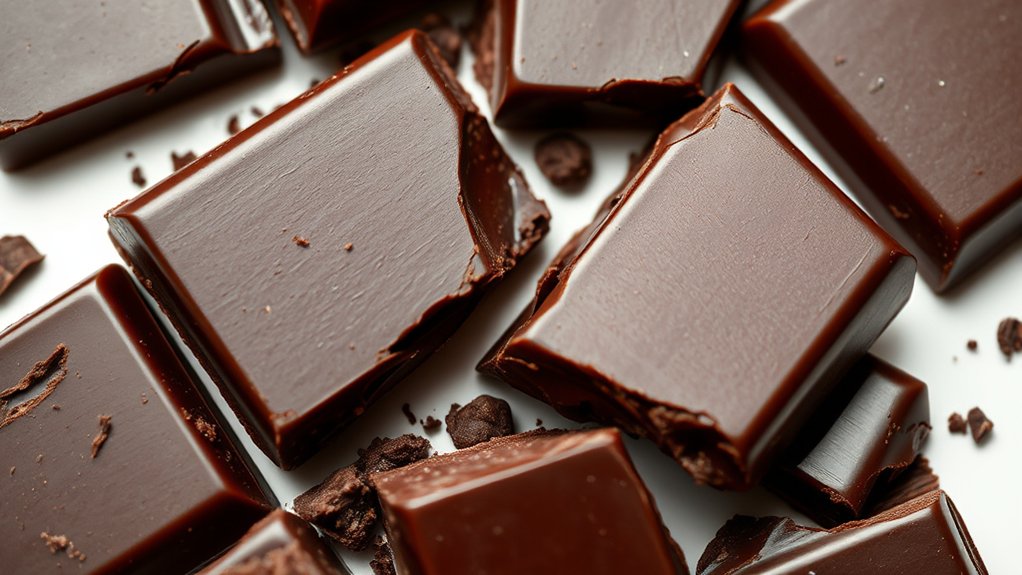
To tell if dark chocolate is candy, check the ingredients for added sugars, artificial flavors, or fillers—high sugar content and bright packaging are common signs of candy. Look at the color and texture; genuine dark chocolate usually has a deep, matte finish and melts smoothly, while candy often looks shiny and feels gritty or chewy.
A cacao percentage over 70% indicates richer, less sweet chocolate. Keep exploring to uncover more ways to identify authentic dark chocolate.
Key Takeaways
- Check the ingredient list for added sugars, artificial flavors, and fillers. Candy usually has more sweeteners.
- Look for a high cocoa percentage, like 70% or more, and minimal additives. That’s a sign of real dark chocolate.
- Observe the packaging design. Elegant, minimalist labels often mean quality, while bright, playful designs tend to be candy.
- Examine the texture and melting behavior. Smooth, slow-melting chocolate shows good quality. Candy might be hard or gritty.
- Identify the flavor profile. Complex, layered flavors suggest authentic dark chocolate. If it’s overly sweet or has a uniform taste, it’s probably candy.
How Can You Identify the Key Ingredients in Dark Chocolate
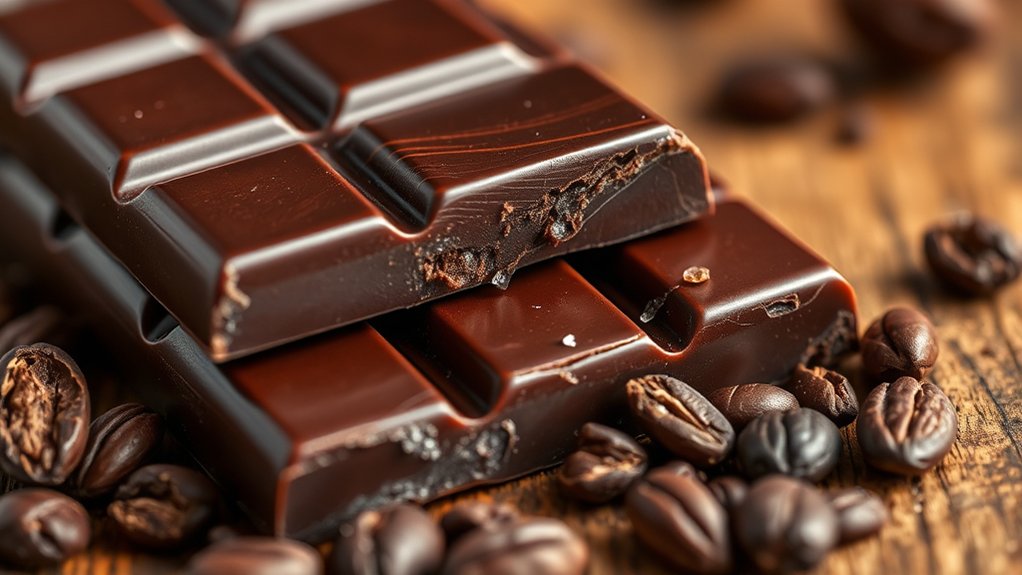
Ever wondered how to tell what’s truly in your dark chocolate? The key is examining its ingredients and flavor profiles. When you read the label, look for cocoa solids, cocoa butter, and minimal added sugars.
Pure dark chocolate usually highlights cocoa content, which shows the quality and flavor intensity. Knowing where the ingredients come from helps you see if the cacao is ethically and sustainably sourced, often marked by certifications like Fair Trade or Organic.
The flavor profiles give you more than just sweetness. They can include hints of fruitiness, bitterness, or earthiness, pointing to the specific cacao beans used. High-quality dark chocolate tends to have a short, straightforward ingredient list, emphasizing pure, well-sourced components.
What Does the Production Process Tell Us About Dark Chocolate and Candy?
The production process reveals key differences between dark chocolate and candy, highlighting their quality and authenticity. During chocolate manufacturing, high-quality dark chocolate undergoes a careful process that emphasizes ingredient sourcing, ensuring only pure cocoa solids, cocoa butter, and minimal additives are used.
This meticulous approach preserves the authentic flavor and texture of the chocolate. In contrast, candy production often involves extensive use of artificial ingredients, preservatives, and added sugars, which can be identified through the manufacturing steps.
The sourcing of ingredients in dark chocolate is typically more transparent and focused on quality, whereas candies may rely on synthetic flavorings and cheaper fillers. By understanding these differences, you can better distinguish genuine dark chocolate from candy-like products.
The production process therefore serves as a clear indicator of a product’s authenticity, emphasizing the importance of ingredient sourcing and manufacturing practices in determining whether dark chocolate is truly a premium product or just a confection.
How Can You Read Nutritional Labels to Spot Candy-Like Dark Chocolate?
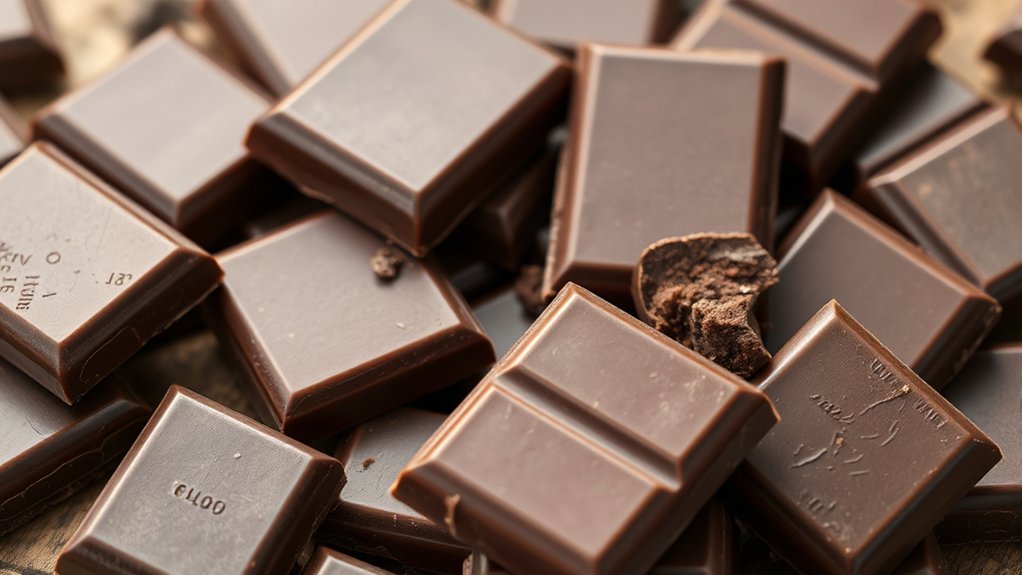
Reading nutritional labels is one of the quickest ways to see if dark chocolate is closer to candy or a high-quality treat. Look beyond the ingredients to check sugar content and additives, which can give clues about candy-like qualities. Here’s what to look for:
Checking sugar levels and ingredients reveals whether dark chocolate is a quality treat or just candy.
Sugar levels: If the sugar content is high, it’s more candy-like. Genuine dark chocolate usually has less than 10 grams of sugar per serving.
Cocoa percentage: A higher percentage, like 70% or more, indicates richer, less sweet chocolate, unlike candy.
Ingredients list: Keep an eye out for added flavors or fillers that mimic taste but reduce quality.
Packaging design: Premium dark chocolates often come in minimalist, elegant packaging, while candy-like products tend to use bright colors and playful fonts to attract attention.
What Visual Cues Help Differentiate Dark Chocolate From Candy?
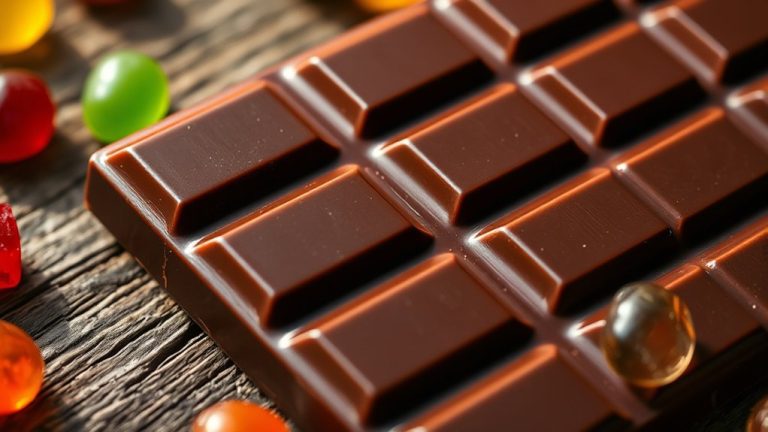
Visual cues are often the quickest way to tell dark chocolate from candy at a glance. One main indicator is color contrast. Dark chocolate usually has a deep, rich brown hue, sometimes with a matte or glossy finish that shows its cocoa content.
Candy, on the other hand, tends to have bright, vibrant colors designed to catch your eye. Packaging can also give you clues; dark chocolate usually comes in elegant, minimalist wrappers that highlight quality and tradition.
Candy packaging is often colorful, playful, and flashy to attract attention. Look for labels mentioning “dark chocolate,” “bittersweet,” or “unsweetened” — these help confirm the product’s identity.
How Do Taste and Texture Help Tell Dark Chocolate Apart From Candy?
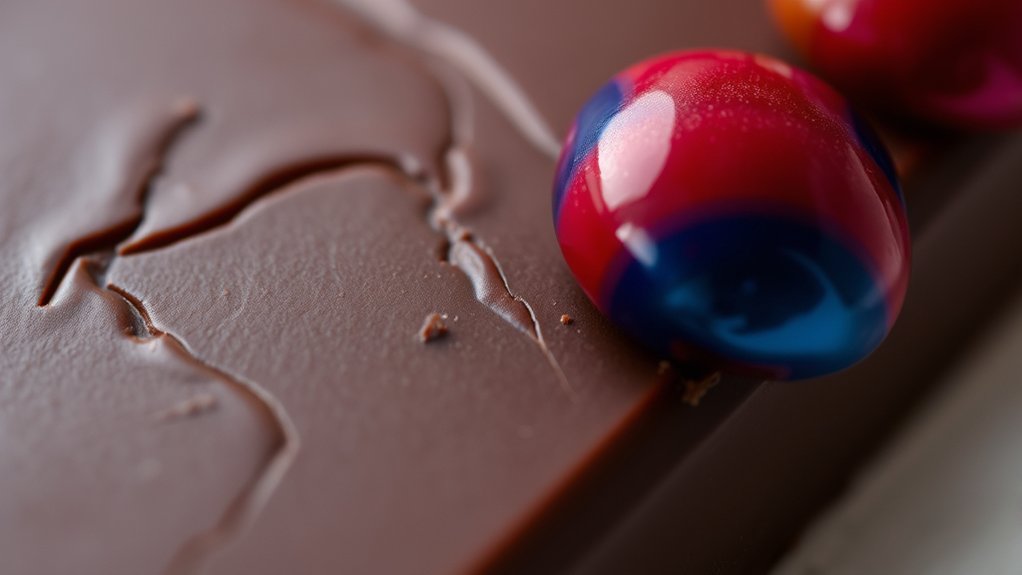
While both dark chocolate and candy can satisfy your sweet tooth, their taste and texture reveal key differences. Dark chocolate has complex flavor profiles, often featuring bitter, nutty, and fruity notes. Candy, on the other hand, tends to be uniformly sweet and simple.
Texture differences also set them apart. Dark chocolate usually feels smooth and melts slowly on your tongue, giving a rich, velvety experience. Candy’s texture can vary—chewy, hard, or gritty—depending on the type.
Here’s how to tell them apart:
- Flavor profiles: Dark chocolate balances bitterness with subtle fruit and nut hints. Candy is mostly just sweet.
- Mouthfeel: Dark chocolate melts smoothly and gradually, while candy can be crunchy or chewy.
- Taste complexity: Dark chocolate offers layered flavors, but candy usually has a single sugary taste.
- Aftertaste: Dark chocolate leaves a lingering, slightly bitter finish. Candy’s sugary taste disappears quickly.
How Does Cocoa Content Influence Whether Dark Chocolate Is Considered Candy or Gourmet?
Cocoa content really makes a difference when it comes to telling apart regular candy from gourmet dark chocolate. Usually, chocolates labeled as dark start somewhere around 50-60% cocoa, but what does that actually mean? Well, the higher the cocoa percentage, the richer and more complex the flavor tends to be. It’s like the chocolate’s way of showing off its true character.
When you see a dark chocolate with a higher cocoa content—say, 70% or even more—it’s often a sign that you’re dealing with a more refined, high-quality product. These chocolates usually have a deeper, more nuanced taste, which is what gourmet lovers really appreciate. So, understanding these differences can help you figure out whether you’re just grabbing a sweet candy or indulging in a sophisticated, gourmet treat.
Cocoa Percentage Standards
The cocoa percentage in dark chocolate plays a crucial role in determining whether it’s classified as candy or gourmet. Generally, higher cocoa content means a more intense flavor and less sweetness, which is often linked to gourmet chocolates.
On the other hand, lower percentages tend to be sweeter and more approachable. Here’s how cocoa percentages influence how chocolates are categorized:
- 70-85%: Usually considered gourmet, with rich, complex flavors.
- 60-69%: Seen as premium candy, balancing sweetness and bitterness.
- 50-59%: Labeled as everyday candy, with a milder cocoa taste.
- Below 50%: Typically milk or flavored chocolates, which are less gourmet.
Packaging design also reflects the cocoa percentage, emphasizing either sophistication or approachability based on the target audience.
Quality and Flavor Differences
Higher cocoa content in dark chocolate directly shapes its quality and flavor profile, influencing whether it’s perceived as a gourmet treat or just candy. As cocoa content rises, you’ll notice more complex flavor profiles, with deeper bitterness and richer cocoa notes.
Gourmet dark chocolates often have nuanced flavor contrasts, such as fruity, nutty, or earthy undertones, unlike simpler candy varieties. Texture contrasts also become more pronounced—higher cocoa percentages typically result in a firmer, smoother mouthfeel and less sweetness.
Lower cocoa content chocolates tend to be sweeter, with a softer, more confectionery texture. Recognizing these flavor and texture differences helps you determine if a dark chocolate leans toward being a high-quality, gourmet product or just a sweet, candy-like treat.
What Additives and Sweeteners Make Dark Chocolate More Candy-Like?
Adding certain additives and sweeteners can make dark chocolate taste more like traditional candy. These ingredients influence flavor and texture, making the chocolate sweeter and more appealing.
- Sugar boosts sweetness, giving it that familiar candy-like taste.
- Honey or glucose syrup add richness and smoothness, enhancing the texture.
- Milk solids or milk powder introduce creaminess, softening the bitterness of dark chocolate.
- Emulsifiers like soy lecithin improve texture, making the chocolate smoother and more cohesive.
These additives can change the flavor profiles, making dark chocolate taste more like the candy you’re used to while also softening or creamy-ing the texture. By adjusting these components, you can find a balance that makes dark chocolate more candy-like without losing its core qualities.
When Is Dark Chocolate a Healthier Choice Than Candy?
You’ll notice that dark chocolate generally has better nutritional value compared to candy, mainly because it has higher cocoa content and less added sugar. It’s like getting more of the good stuff and less of the stuff you don’t want.
The quality of the ingredients makes a difference too. Purer dark chocolate usually has fewer fillers and additives, which is better for you overall. So, when these factors come together, dark chocolate can be a smarter, healthier choice when you’re craving something sweet.
Nutritional Content Differences
Ever wondered how dark chocolate compares to candy in terms of nutrition? Dark chocolate usually has less added sugar and more healthful compounds like antioxidants, making it a smarter pick. Its flavor is often richer and more complex because of natural ingredients and better sourcing.
Here’s a quick rundown:
- Sugar Content – Dark chocolate generally contains less sugar than candy.
- Fat Levels – It has healthy fats, unlike many candies with unhealthy additives.
- Antioxidants – Dark chocolate is packed with antioxidants, which most candies lack.
- Nutritional Value – It offers minerals like magnesium and iron that candy usually doesn’t have.
Choosing dark chocolate with minimal processing can boost these benefits, making it a healthier, more nutritious choice.
Ingredient Quality Variations
Since ingredient quality varies a lot, dark chocolate from high-quality, minimally processed cacao is often a healthier choice than candy. These chocolates usually have richer flavors, highlighting natural bitterness and complex notes that come from better sourcing.
When cacao is ethically sourced and minimally processed, it keeps more antioxidants and fewer artificial additives. Look for labels that mention origin or fair trade certifications—they’re signs of better ingredient sourcing.
These factors lead to a more authentic taste and higher nutritional value. On the other hand, lower-quality chocolates or candies often contain artificial flavors and additives that reduce health benefits.
How Do Packaging and Branding Affect How We Perceive Dark Chocolate?
Packaging and branding play a big role in shaping how you perceive dark chocolate, often influencing your expectations before you even taste it. The way the product is presented, from packaging design to brand recognition, sets the tone.
A sleek, minimalist package might suggest high quality, while bright colors could hint at a sweeter, candy-like experience. Think about these points:
- Packaging design: It shows what the product is about—luxury, health, or indulgence—and affects how you see it.
- Brand recognition: Known brands often make you trust the quality more, influencing your choice.
- Label details: Words like “artisanal” or “dark” can make it seem authentic and premium.
- Visual cues: Imagery and font style help you interpret the chocolate’s taste and purpose.
All these elements shape your expectations, guiding you to see dark chocolate as either a sophisticated treat or just another candy.
What Questions Should You Ask When Choosing Dark Chocolate for Health or Indulgence?
When choosing dark chocolate for health benefits or indulgence, you should ask specific questions to make an informed decision. Start by considering flavor profiles—do you prefer a bitter, fruity, or nutty taste? Knowing this helps you pick chocolates with the right flavor complexity for your palate or health goals.
Next, inquire about texture variations—do you want a smooth, creamy feel or a slightly gritty, artisanal crunch? Texture can influence your enjoyment and how the chocolate melts in your mouth. Also, check the cacao percentage; higher percentages typically mean more antioxidants but a more intense flavor.
Don’t forget to ask about added ingredients—are there unnecessary additives or preservatives? Finally, consider the source of the chocolate—single-origin options often have richer, more distinctive flavor profiles. Asking these questions ensures you pick dark chocolate that aligns with your health needs or indulgent cravings.
Frequently Asked Questions
Can the Origin of Cocoa Beans Indicate if Dark Chocolate Is Candy?
Yes, the cocoa bean origin can give clues about whether dark chocolate is candy.
Different regions produce beans with unique flavor profiles, like fruity from West Africa or earthy from Central America. If the origin is listed, you can get a sense of the flavor.
This helps you decide if the chocolate leans more toward a candy-like sweetness or a rich, complex taste. It’s a handy way to understand the chocolate’s quality and character better.
Do Certain Brands Label Dark Chocolate Differently to Distinguish It From Candy?
Like a secret code, some brands label their dark chocolate differently to set it apart from candy. You might see terms like “bittersweet” or “extra dark” on the packaging.
Many brands also focus on ingredient transparency, listing cocoa content and minimal additives. That usually means it’s more like fine chocolate than just candy.
Always check the label carefully because clear branding helps you spot authentic dark chocolate, not just sugary confections.
Is There a Specific Certification That Classifies Dark Chocolate as Candy?
There’s no specific certification that labels dark chocolate as candy. Instead, how it’s classified depends on ingredient labels and marketing strategies.
If the label highlights added sugars or uses words like “sweet,” it’s more likely to be considered candy. Pure dark chocolate usually focuses on cocoa content instead.
Just take a close look at the ingredients and packaging. These clues can help you figure out if it’s marketed as candy or a more authentic chocolate product.
How Does Packaging Design Influence Perceptions of Dark Chocolate as Candy?
Packaging design really shapes how you see dark chocolate as candy, mainly through its visuals and branding. Bright colors, fun fonts, and attractive images can make dark chocolate look more like regular candy. This draws your attention and makes it seem more indulgent.
Smart branding also plays a big role. Highlighting premium quality or health benefits can change your view, making you see dark chocolate as a tasty treat instead of just a confection.
Are There Cultural Differences in How Dark Chocolate Is Categorized as Candy or Gourmet?
You’ll find that cultural differences shape how dark chocolate is classified as candy or gourmet based on historical classifications and consumer perceptions. In some regions, dark chocolate is viewed as an artisanal, gourmet product that highlights quality and craftsmanship.
In other areas, it’s categorized as candy because of its sweet taste and packaging. These perceptions change over time, influenced by cultural traditions, marketing, and historical views.
All of these factors affect whether people see dark chocolate as a luxury or an everyday treat.
Conclusion
By paying close attention to ingredients, production details, and visual cues, you can confidently distinguish dark chocolate from mere candy. Look for high cacao content and minimal added sugars to identify authentic dark chocolate.
Next, check how it’s made. Dark chocolate typically has a smooth, glossy appearance and doesn’t contain bright colors or shiny coatings that are common in candy. These visual clues can help you tell them apart.
Remember, what seems tempting on the surface might hide a different story inside. So, next time you indulge, consider whether you’re truly savoring a healthful treat or just a sweet illusion.
With a keen eye and a little knowledge, you’ll always make choices that delight your palate without misleading your senses—especially when it comes to distinguishing dark chocolate from candy.