How to Determine if Chocolate Candy Is Gluten Free
Finding gluten-free chocolate candy can feel like a challenge, especially if you’re trying to avoid gluten for health reasons or allergies. Many people struggle with figuring out which treats are safe and which aren’t. You’re not alone in this—navigating labels and ingredients can be confusing.
To determine if chocolate candy is gluten-free, check the ingredient list for gluten or wheat-based additives like barley malt or cookie crumbles. Look for trusted certification labels such as GFCO.
Be cautious of vague terms like “may contain traces,” and consider cross-contamination risks from shared manufacturing equipment.
Confirm the brand’s transparency and safety practices. If you’re still unsure, you can find more tips to make safe choices and identify verified gluten-free options.
Key Takeaways
- Check ingredient labels for anything that might contain gluten or wheat-based additives. Also, look for certified gluten-free symbols or labels on the packaging.
- See if the product has official gluten-free certification from trusted organizations like GFCO or USDA. That can give you extra peace of mind.
- Reach out to the manufacturer to ask if the chocolate is processed in gluten-free facilities. It’s also helpful to inquire about measures taken to prevent cross-contact.
- Be cautious of vague claims like “may contain traces” or “processed in facilities that handle gluten.” These can be red flags.
- Use trusted resources and apps to find certified gluten-free chocolates. Always double-check ingredient lists before making a purchase.
How to Tell if Your Chocolate Is Gluten-Free by Reading Labels
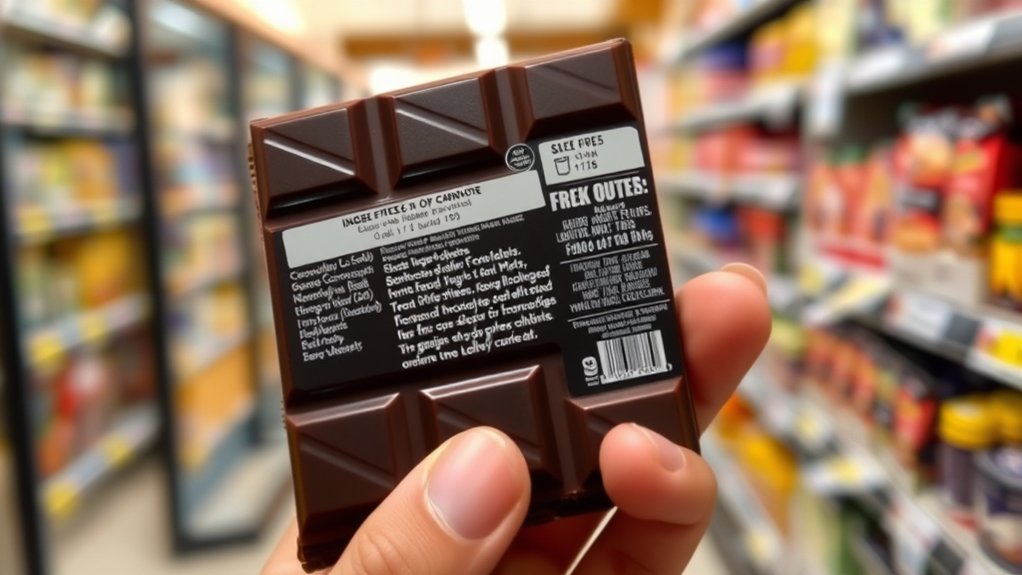
How can you determine if your chocolate is gluten-free just by checking the label? Start by reading the ingredient list carefully. Many chocolates now highlight whether they’re gluten-free, especially if they follow current packaging design trends that emphasize transparency.
Look for certifications like “gluten-free” or symbols indicating allergen info, which are often prominently displayed on modern packaging. While the flavor profiles of chocolates vary—from dark, bitter, and intense to sweet, creamy, and milk-based—the label’s focus is on ingredients, not flavor notes.
Look for gluten-free certifications or allergen symbols on modern packaging.
Packaging design trends have shifted toward cleaner, straightforward labels, making it easier to spot gluten content quickly. Be cautious of vague terms like “may contain traces” or “processed in facilities that handle gluten,” which can signal cross-contamination risks.
Ultimately, reading labels thoroughly helps you identify whether your chosen chocolate aligns with your gluten-free needs, regardless of its flavor profile or trendy packaging.
Which Ingredients in Chocolate Might Contain Gluten?
While pure chocolate itself is naturally gluten-free, certain ingredients added during processing or manufacturing can introduce gluten into the final product. For example, some candies include barley malt, wheat-based fillers, or cookie crumbles that contain gluten.
To avoid gluten, seek out products with clear labels or choose chocolates with gluten-free certifications. If you’re unsure, gluten detection methods such as testing kits can help identify hidden gluten traces.
When ingredients are unclear, consider gluten-free substitutions like cocoa butter, sugar, and natural flavorings, which are typically safe. Be cautious with additives like malt flavoring or certain emulsifiers, as they might contain gluten.
Reading ingredient lists carefully and opting for brands that explicitly label their products as gluten-free helps guarantee safety. Remember, even small amounts of gluten can cause reactions, so double-check ingredients and use reliable gluten detection methods when in doubt.
How to Spot Cross-Contamination Risks in Chocolate Manufacturing
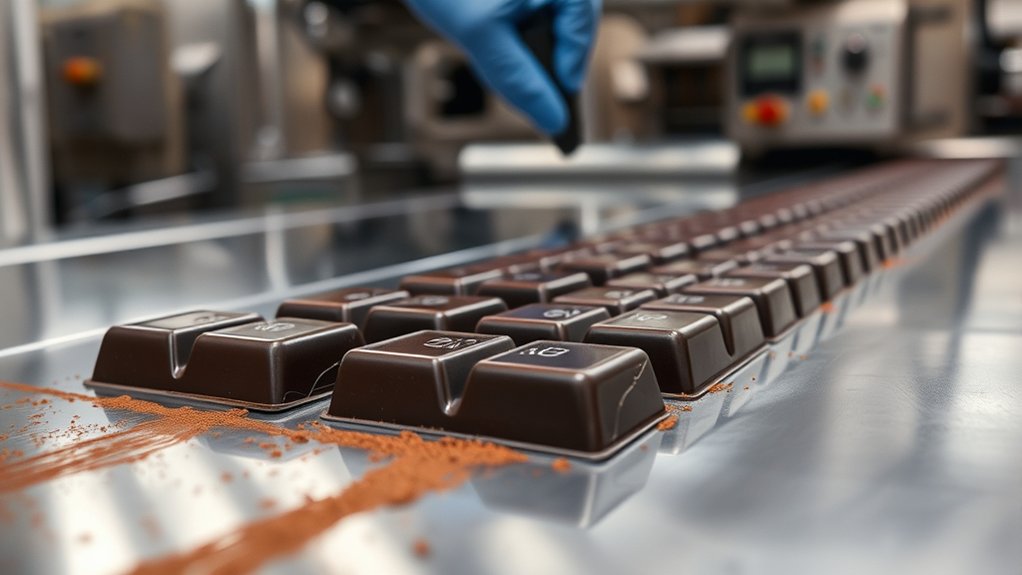
Cross-contamination can happen at many points in chocolate manufacturing, often without obvious signs. Equipment used for different products might not be thoroughly cleaned, which can lead to cross-contact with gluten-containing ingredients.
Even tiny traces can affect the chocolate’s flavor, especially if shared machinery processes both gluten and gluten-free products. Be aware that facilities making multiple items might accidentally introduce gluten into the chocolate, risking safety.
Look for clues about how the chocolate is made, like whether the facility specializes in gluten-free chocolates or handles wheat-based ingredients. Some companies are open about their cleaning routines, which can help reduce contamination risks.
Always check if the manufacturer follows strict protocols to prevent cross-contact. Remember, even if the ingredients are gluten-free, contamination during processing could still happen. Knowing the manufacturing process is key to ensuring your chocolate is truly gluten-free.
What Do Gluten-Free Certification Labels on Chocolate Mean?
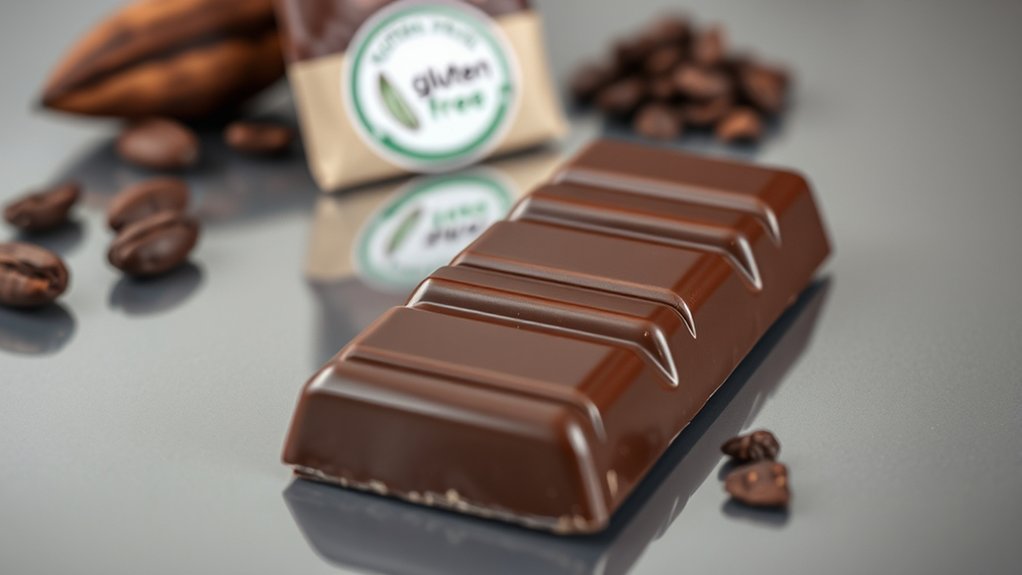
When you spot a gluten-free certification label on a chocolate bar, it’s actually a good sign. It means the product has been checked to meet certain safety standards for people who can’t eat gluten. These labels aren’t just random—they come from trusted certification organizations that carefully review how the chocolate is made and what ingredients go into it.
Certification Standards Explained
Understanding what gluten-free certification labels on chocolate mean can help you make informed choices and avoid gluten exposure. These labels show that the product meets specific standards for gluten content, ensuring it’s safe for those with gluten sensitivities.
When you’re checking certification, keep a few key points in mind:
- Certification Body: Reputable organizations like GFCO or USDA Organic verify ingredient sourcing and do strict testing.
- Testing Threshold: Certified gluten-free products have less than 20 parts per million (ppm) gluten, which aligns with safety standards.
- Ingredient Sourcing: Certified labels confirm there are no cross-contact issues or gluten-containing ingredients in the chocolate flavor.
- Label Validity: Look for consistent certification marks. They show that the product is regularly tested and in ongoing compliance.
Recognizing Authentic Labels
Recognizing authentic gluten-free labels on chocolate is key to making sure you’re choosing safe products. Look for trusted certification logos from organizations like the Gluten-Free Certification Organization (GFCO) or USDA Organic, which verify strict standards.
These labels confirm that the chocolate is free from gluten ingredients and cross-contamination. More brands now include clear gluten-free claims to meet consumer demand for transparency.
When browsing, think about how the label might influence your flavor pairings. Authentic gluten-free chocolates can be confidently paired with various ingredients without worries.
Always read the fine print because some labels can be misleading or incomplete. Genuine certification labels give you peace of mind, confirm product authenticity, and reflect current market trends toward clearer, safer gluten-free options.
How to Research and Trust Gluten-Free Chocolate Brands
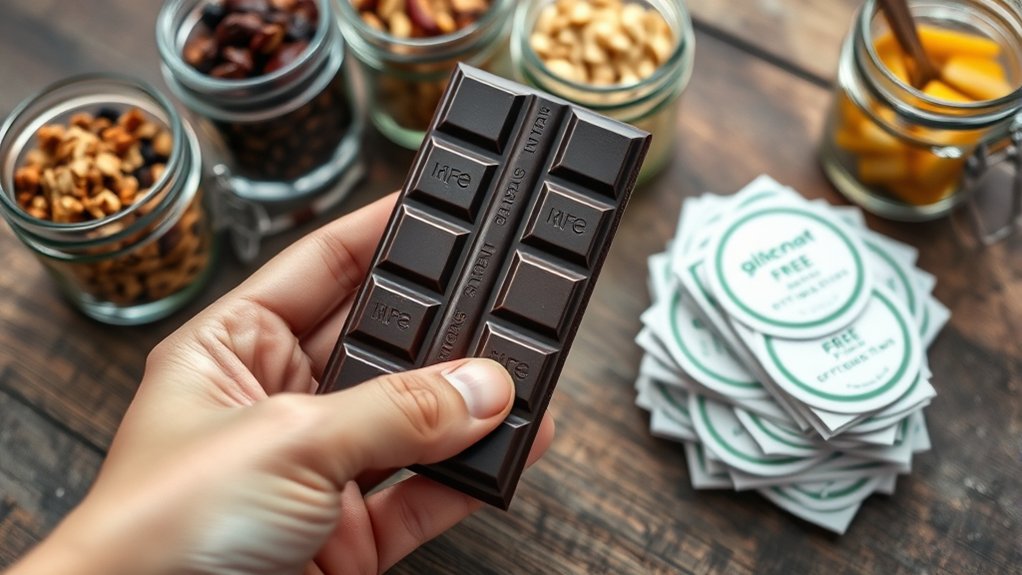
To confidently identify gluten-free chocolate brands, you need to do thorough research and verify their claims. Start by checking the brand’s website for clear gluten-free certifications or statements. Look into their ingredient sourcing—trustworthy brands often disclose how they prevent cross-contamination and ensure gluten-free standards.
Consider the chocolate flavor, which can hint at quality and authenticity. Authentic, high-quality chocolates typically use pure ingredients without additives that could contain gluten.
Here are four key steps to trust a gluten-free chocolate brand:
- Verify official gluten-free certifications from recognized organizations.
- Review ingredient sourcing details, ensuring ingredients are gluten-free and uncontaminated.
- Read customer reviews for real-world experiences on gluten safety.
- Contact the manufacturer directly if you’re unsure about their gluten-free process.
Tips for Enjoying Store-Bought Gluten-Free Chocolate Safely
When you’re grabbing store-bought gluten-free chocolate, it’s a good idea to always take a moment to read the ingredient labels carefully. Sometimes, gluten can hide in unexpected ingredients, so spotting those sneaky sources is key to staying safe.
Also, keep an eye out for certification symbols from trusted organizations—they’re like a quick thumbs-up that the product is truly gluten-free. Being mindful of labels and symbols can help you enjoy your chocolate treats without any worry or stress.
Check Ingredient Labels Carefully
Careful examination of ingredient labels is essential to guarantee your store-bought chocolate is truly gluten-free. Always read labels thoroughly to identify hidden gluten sources.
Consider these key points:
- Look for gluten-containing ingredients like wheat, barley, or malt.
- Check for potential cross-contact warnings, especially in flavor pairing components like caramel or nougat.
- Pay attention to packaging considerations—labels may vary between regions or brands, so verify if the product is labeled gluten-free.
- Use your knowledge of common flavor pairings to spot unusual additives that could hide gluten, ensuring the product’s purity.
Being diligent helps you enjoy chocolate safely and confidently, knowing you’ve checked every detail to prevent gluten exposure.
Recognize Certification Symbols
Recognizing certification symbols on packaging is a simple way to confirm that a chocolate product is truly gluten-free. These symbols are usually found on the front or back of the packaging and quickly show that the product is safe.
You don’t have to read every ingredient to be sure. Look for specific gluten-free certifications from trusted organizations. These are often displayed clearly and prominently on the packaging.
The design of the package often highlights these symbols, making them easy to spot. Once you see a certification, it makes it easier to enjoy your chocolate with confidence.
These symbols also indicate if the product meets strict quality standards. That means less worry about cross-contamination.
Relying on these visual cues helps you enjoy store-bought gluten-free chocolate with peace of mind. You can trust that it’s been independently verified.
How to Make Homemade Gluten-Free Chocolate Candies Safely
Making homemade gluten-free chocolate candies can be both fun and rewarding, but it’s essential to follow strict safety measures to prevent cross-contamination. Start by thoroughly cleaning all utensils, bowls, and surfaces before beginning.
Creating gluten-free chocolate candies requires thorough cleaning and careful separation to ensure safety and delicious results.
Select certified gluten-free chocolate to guarantee safety. When melting and mixing, keep ingredients separate from non-gluten-free products. Use dedicated tools for gluten-free candy preparation to avoid accidental contamination.
For an appealing candy presentation, think about how chocolate pairing amplifies flavor and visual appeal. Layer textures or add toppings that complement the chocolate.
To deepen your understanding, use separate tools for gluten-free ingredients and others. Store ingredients in clearly labeled, sealed containers. Avoid shared equipment with gluten-containing products.
Focus on a clean, organized workspace for safety and aesthetics. Following these steps ensures your candies are safe to eat, beautifully presented, and perfect for sharing or gifting.
Questions to Ask When Buying Chocolate at Cafés or Restaurants
Use this guide to ask key questions:
| Question | What to Ask | Why It Matters |
|---|---|---|
| Is this chocolate gluten-free? | Ask if the chocolate contains gluten or traces. | To prevent gluten exposure. |
| Are ingredients sourced safely? | Check if suppliers follow gluten-free standards. | To avoid cross-contamination. |
| Is there a risk of cross-contact? | Inquire about how the chocolate is prepared. | To ensure safety during handling. |
| Does the chocolate contain additives? | Ask about flavorings or preservatives. | To spot hidden gluten sources. |
| Can you confirm the sourcing? | Request details on ingredient suppliers. | To make sure ingredients are transparent and safe. |
What Should You Do If You’re Unsure About a Chocolate Product?
If you’re unsure whether a chocolate product is gluten-free, the best approach is to ask directly and seek additional information. Don’t rely solely on packaging design or assumptions. Instead, take these steps:
- Check the ingredients list for any mention of gluten or wheat-based additives.
- Inquire about chocolate flavorings used, as some may contain gluten or be processed in facilities that handle gluten.
- Look for clear labeling, such as “gluten-free,” but verify its authenticity.
- Contact the manufacturer if the packaging isn’t transparent; they can provide detailed info about cross-contamination risks.
Resources and Apps to Help You Find Gluten-Free Chocolate
Thankfully, there are many resources and apps designed to help you quickly find gluten-free chocolates. Food allergy apps like Find Me Gluten Free and AllergyEats let you search by product or restaurant, showing reviews and ingredient details.
Many of these apps even have features to scan packaging, making it simple to verify gluten-free labels on candy wrappers. Some also offer flavor pairings, helping you discover chocolates that match your dietary needs while highlighting gluten-free options.
Trusted online databases, such as the Gluten-Free Certification Organization (GFCO), list certified products, including popular chocolate brands. Social media groups and forums can be great for real-life tips and recommendations.
Using these tools, you can confidently check store shelves, examine packaging, and read ingredient lists to ensure your chocolate choices are gluten-free. These resources make your search easier and help you enjoy your treats with peace of mind.
Frequently Asked Questions
Can Gluten Be Hidden in Flavorings or Additives in Chocolate?
Yes, gluten can be hidden in flavorings or additives in chocolate, which might affect those with a gluten allergy. Some flavor additives, like malt or certain thickeners, contain gluten and aren’t always obvious on labels.
Always read ingredient lists carefully and look for certifications. If you’re unsure, contact the manufacturer directly to confirm whether specific flavorings or additives are gluten-free.
This way, you can ensure your safety and have peace of mind.
Are Organic or Specialty Chocolates More Likely to Be Gluten-Free?
Are organic or specialty chocolates more likely to be gluten-free? They often are because of higher standards in sourcing and organic certifications that focus on purity and fewer additives.
Many specialty chocolates avoid gluten-containing ingredients, but it’s always best to check labels or certifications to be sure. Organic chocolates usually have fewer processed ingredients, which lowers the risk of cross-contamination.
How Reliable Are Gluten-Free Claims on Homemade Chocolate Recipes?
Gluten-free claims on homemade chocolate recipes can be a bit tricky because of potential cross contact during ingredient handling or preparation. Since there’s no official label, you have to rely on your own process and ingredients.
Be cautious with items like vanilla or powdered cocoa, which might contain gluten. Always double-check ingredient labels to be sure, and use gluten-free certified ingredients whenever possible. That way, you can be more confident your homemade chocolates are safe for gluten-sensitive eaters.
What Are Common Gluten Cross-Contact Points in Chocolate Packaging?
You should watch out for cross contact points like shared equipment, packaging contamination, and processing areas where gluten ingredients are handled.
To prevent cross contact, always check if packaging is sealed properly, look for dedicated gluten-free facilities, and avoid products with ambiguous labels.
Staying vigilant helps you prevent gluten exposure and keeps your chocolate safe.
Clear labels, strict hygiene, and careful handling are your best tools against gluten cross contact in chocolate packaging.
Is There a Difference Between Gluten-Free and Gluten-Safe Chocolates?
Gluten-free chocolates are made with ingredients that don’t contain gluten, but they might not be officially certified gluten-free. Gluten-safe chocolates, however, have strict measures to prevent cross contact and avoid gluten contamination.
Look for products with gluten-free certification to be sure they’re safe. Always read labels carefully, especially if the packaging doesn’t mention cross contact prevention, since contamination can happen during manufacturing even with gluten-free ingredients.
Conclusion
Journeying through the world of gluten-free chocolates might remind you of a quest for the Holy Grail, but with these tips, you’re well on your way. Always read labels carefully, ask questions, and trust reputable brands.
Making your own treats adds peace of mind, and today’s tech tools are like your trusty sidekick. So, don your explorer’s hat and enjoy your sweet journey—finding gluten-free chocolate is easier when you know what to look for.