Unwrapping History: Who Invented Chocolate Candy?
Many people struggle to understand where their favorite chocolate candy really comes from. It’s easy to enjoy a sweet treat without knowing the fascinating history behind it. If you’re curious about the story of chocolate candy and its evolution, you’re not alone.
You might think one person invented chocolate candy, but it’s a story built over centuries. Indigenous cultures like the Mayans and Aztecs first used cacao in sacred rituals, turning it into bitter, frothy beverages.
Europeans later added sugar, refined techniques, and innovative packaging to create the sweet treats we enjoy today. Modern technology and cultural influences continue to shape chocolate’s flavors and presentation.
If you want to uncover more about this fascinating evolution, keep exploring.
Key Takeaways
- The shift from cacao’s sacred ceremonial use to edible chocolate candy started with European innovations in processing and sweetening techniques.
- Early European chocolatiers refined chocolate through tempering, molding, and flavoring, turning it into the modern candy we enjoy today.
- Mass production and industrialization in the 19th century, especially by companies like Fry’s and Cadbury, made chocolate candies widely popular.
- The creation of solid chocolate bars and confections is credited to pioneers like Joseph Fry and John Cadbury in the 1800s.
- Today’s modern chocolate candy is the result of centuries of cultural exchange, technological progress, and commercial innovation.
Where Did Chocolate Candy Come From?
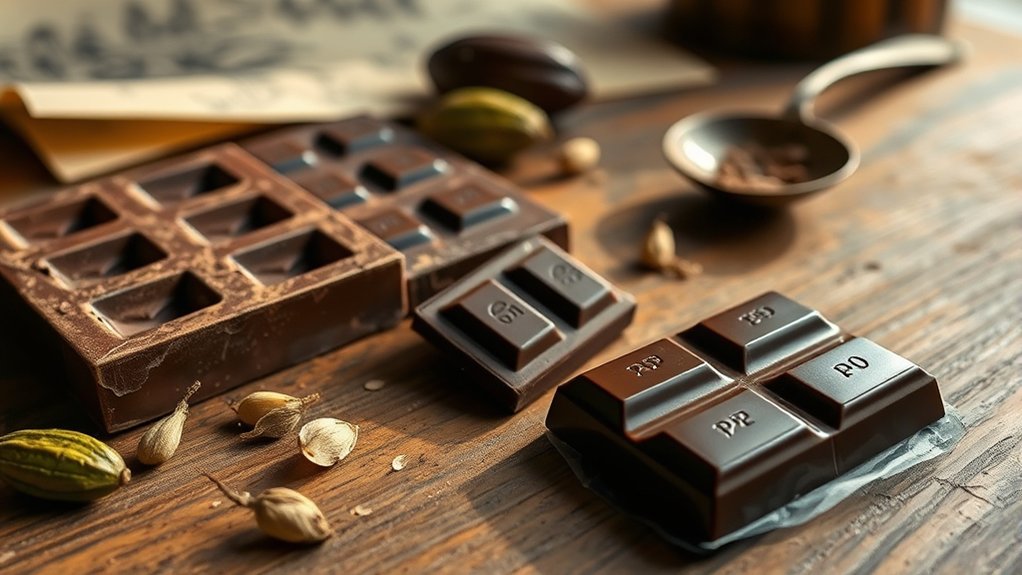
Chocolate candy’s origins go back thousands of years to ancient Mesoamerican civilizations like the Olmecs, Mayans, and Aztecs. These societies valued cacao deeply and incorporated it into their culture and traditions.
Ancient Mesoamerican civilizations treasured cacao, shaping cultural rituals and traditions that influence chocolate today.
Cacao beans were considered precious. They were used in religious rituals, offerings, and even as currency. The Mayans, for example, made a bitter, frothy drink called “xocolatl” that was important in ceremonies.
The Aztecs also prized cacao and included it in their social and spiritual practices. They believed cacao had divine qualities and used it in many important rituals.
Over time, these civilizations learned to ferment, roast, and grind cacao beans. This created the basic techniques that led to modern chocolate.
Their culinary efforts turned cacao from a sacred object into a flavor enjoyed across generations. This history shows how chocolate’s cultural importance helped shape the treats we love today.
How Did Indigenous Cultures Use Cacao Beans?
Indigenous cultures highly valued cacao beans, using them not just as food but as symbols of spirituality and social status. Ancient cacao held a sacred place, often linked to religious rituals and ceremonies.
They believed cacao had divine origins and used it in rituals to communicate with gods or ancestors. In many Mesoamerican societies, cacao beans represented wealth and power, sometimes used as currency.
During rituals, cacao was prepared as a bitter, frothy beverage, not the sweet candy we recognize today. These ceremonies often marked important events like weddings, offerings, or rites of passage.
The beans’ significance went beyond sustenance, serving as a bridge between the physical and spiritual worlds. Cultures like the Maya and Aztecs incorporated cacao into their spiritual practices, emphasizing its sacred role.
This deep spiritual respect for cacao set the foundation for its later transformation into a popular treat.
How Did Cacao Transition From a Beverage to Candy?
As cacao moved from sacred rituals into everyday life, its role expanded beyond spiritual ceremonies to become a popular treat. This shift happened as people started experimenting with chocolate flavorings, turning cacao from a beverage into solid forms.
Here are three key steps in this progression:
- Cacao cultivation improved, leading to larger harvests and better-quality beans, making chocolate more accessible.
- Innovations in processing transformed cacao paste into solid bars by combining sugar, cacao, and flavorings. This created the first chocolate candies.
- The use of flavorings and sweeteners masked the bitter taste of raw cacao, making it more appealing as a sweet treat.
What European Innovations Made Chocolate Candy Popular?
European innovations played a vital role in transforming chocolate from a luxury item into a widely enjoyed candy. One key development was the adoption of European confectionery techniques, which improved chocolate’s texture and taste.
Artisans learned to refine the tempering process, creating a glossy finish and a smoother, more appealing consistency. Moreover, the introduction of sugar blending made chocolate sweeter and more accessible to the masses.
Refining tempering created glossy, smooth chocolates, while sugar blending made treats sweeter and accessible to all.
Colonial trade impacts also played a crucial role. Europeans gained access to cacao through colonization, increasing supply and driving down costs. This availability encouraged producers to experiment with new recipes and presentation styles.
These changes made chocolate candies more popular across different social classes. The blending of European craftsmanship with global ingredient exchange sparked innovation.
It transformed chocolate into a versatile and desirable treat. These innovations laid the foundation for the modern, mass-produced chocolate candies we enjoy today.
Who Pioneered Chocolate Sweets?
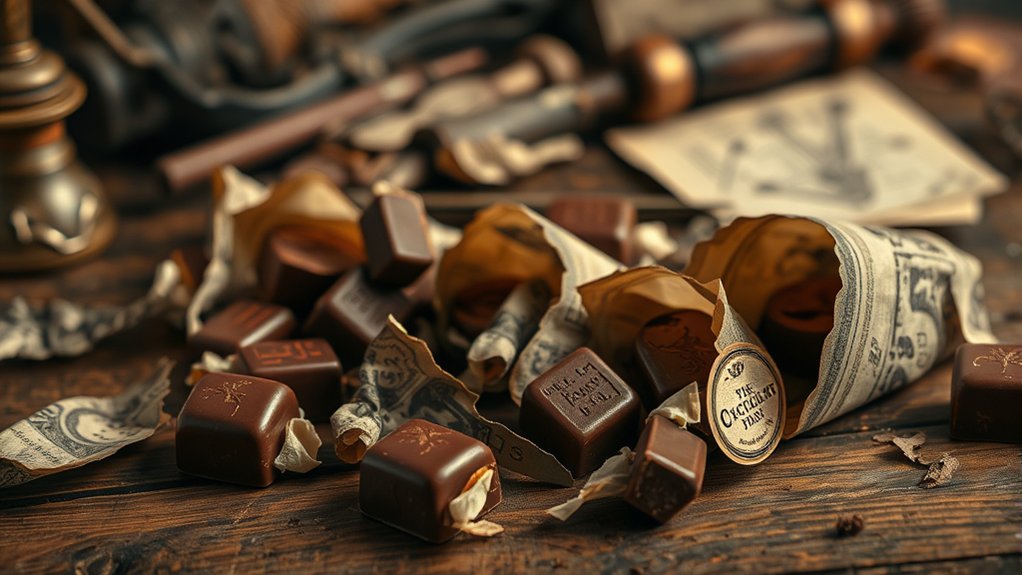
Who truly pioneered the creation of chocolate sweets? It’s a question that takes us back to early innovators who turned cacao cultivation into delicious treats. These pioneers experimented with flavor combos, shaping what we love today.
Here are three key milestones:
- Mesoamerican civilizations: The Olmec, Maya, and Aztec cultures first grew cacao and used it to make ceremonial drinks, laying the foundation for chocolate sweets.
- European innovators: In the 16th century, Europeans like the Spanish refined how cacao was processed, adding sugar and spices that made chocolate candies more tempting.
- Early chocolatiers: By the 19th century, artisans started making solid chocolate, inventing bars and candies that made chocolate sweets popular worldwide.
These advances in cacao growing and flavor testing set the stage for today’s wide variety of chocolate candies, making these pioneers true trailblazers in chocolate history.
How Did Industrialization Change Chocolate Candy Production?
The innovations by early chocolatiers set the stage for a more extensive and efficient production process, but it was industrialization that truly transformed chocolate candy making.
With the rise of factories, you no longer relied solely on artisanal craftsmanship; instead, mass production took center stage. This shift allowed manufacturers to produce large quantities of chocolate quickly and consistently, making it more accessible to the public.
Automation and new machinery increased efficiency, reduced costs, and improved quality control. As a result, chocolate candy became a popular treat beyond elite circles, reaching a broader audience.
Industrialization also spurred flavor innovation by enabling companies to experiment with new ingredients and formulations on a larger scale. Now you could enjoy a variety of flavors and textures that wouldn’t have been possible through traditional methods alone.
What Technologies Transformed Modern Chocolate Making?
Modern chocolate making has been transformed by a range of advanced technologies that streamline production and improve quality. These innovations guarantee consistent, high-quality products and increase efficiency.
- Chocolate tempering is now automated, allowing precise control over temperature. This results in glossy, crisp chocolates that melt perfectly. It used to be manual, but now advanced machines keep the tempering consistent.
- The conching process has evolved with modern machinery, reducing the time needed to develop flavor and smoothness. This step kneads and aerates chocolate, giving it a refined texture and better taste.
- Sophisticated refining techniques use high-speed rollers and grinders to create ultra-fine cocoa particles. This improves mouthfeel and texture, making the chocolate much better.
These technologies have changed how chocolates are crafted, making production faster, more uniform, and elevating overall quality.
How Do Cultural Flavors Influence Chocolate Candy Recipes?
Cultural flavors play a big role in shaping chocolate candy recipes around the world, reflecting local ingredients, traditions, and taste preferences. This cultural influence encourages flavor fusion, where chocolates incorporate spices, fruits, and herbs unique to a region.
For example, Mexican chocolate often includes cinnamon and chili, creating a spicy-sweet profile rooted in tradition. In Asia, flavors like yuzu or matcha blend seamlessly into chocolates, highlighting local ingredients.
Across Africa, palm oil and exotic spices add distinctive notes to confections. These regional influences mean that chocolate makers adapt recipes to suit local palates, resulting in diverse flavor profiles.
Cultural influence doesn’t just add variety; it deepens the story behind each treat. By embracing local ingredients and taste preferences, chocolatiers craft unique products that celebrate their heritage.
This blending of flavors creates exciting culinary experiences and shows how cultural identity can shape chocolate exploration.
How Has Packaging and Marketing Evolved?
As consumer preferences and technological advances have transformed the marketplace, packaging and marketing strategies for chocolate have evolved a lot. Today, you notice how innovative packaging grabs your attention, from eco-friendly wraps to eye-catching designs that stand out on shelves.
Companies now focus on targeted marketing, tailoring messages to specific audiences, whether it’s health-conscious consumers or luxury seekers. This shift helps brands connect more personally and effectively.
To better understand this evolution:
- Packaging became more functional and visually appealing, emphasizing freshness, quality, and sustainability.
- Marketing shifted from generic ads to personalized campaigns, leveraging social media and digital platforms.
- Limited editions and collaborations create excitement and exclusivity, encouraging you to try new flavors or brands.
These changes show how the industry adapts to your preferences, making chocolate not just a treat but a carefully marketed experience.
Who Really Invented Chocolate Candy?
Here’s a quick overview:
| Culture | Contribution | Notable Feature |
|---|---|---|
| Mayans | First to ferment and consume cacao | Ritual use and cultural symbolism |
| Aztecs | Used cacao as currency and in ceremonies | Strong connection to tradition |
| Europeans | Introduced sugar, refined chocolate | Artistic presentation and packaging |
| Modern Makers | Innovate with flavors and designs | Artistic presentation and branding |
This history shows how chocolate evolved from a sacred symbol to a widely loved, artistically crafted treat.
Frequently Asked Questions
When Did Chocolate Candy First Become Commercially Available?
You’ll find that chocolate candy first became commercially available in the mid-19th century, around the 1840s. During this time, advancements in chocolate manufacturing allowed producers to create solid chocolate bars.
Historical sources like the cacao bean played a vital role in this evolution. As techniques improved, more people gained access to chocolate treats, turning it from a luxury into a popular worldwide confection.
Are There Any Traditional Recipes Still Used Today?
Imagine a timeless dance, where traditional techniques spin stories through generations. Yes, many recipes still hold cultural significance today, like hand-tempered chocolates or recipes passed down through families in regions like Mexico and Belgium.
These recipes serve as edible heirlooms, preserving history and craftsmanship. By sticking to these traditional techniques, you’re keeping alive the rich cultural significance that makes chocolate candy not just sweet, but a symbol of heritage.
How Did Trade Routes Influence Chocolate’s Popularity?
Trade routes greatly influenced chocolate’s popularity by enabling cultural exchange and trade evolution. As explorers and merchants traveled, they introduced cacao to new regions, spreading its use beyond Mesoamerica.
This trade expansion allowed chocolate to become a luxury item in Europe and other parts of the world. You can see how these routes fostered a global appreciation for chocolate, transforming it from a sacred Mesoamerican ritual into a beloved worldwide treat.
What Are the Oldest Known Chocolate Candy Recipes?
Ancient cacao crafted the earliest chocolate candy recipes, dating back to the Olmec, Maya, and Aztec civilizations. These traditional recipes often combined cacao with spices, honey, and chili to create rich, flavorful treats.
You’ll find that these ancient concoctions prioritized bold, bitter tastes, unlike modern sweet chocolates. Exploring these traditional recipes offers a fascinating glimpse into the origins of chocolate candy, showcasing centuries-old techniques still appreciated today.
How Has Chocolate Candy Influenced Modern Confectionery Trends?
Chocolate candy influences modern confectionery trends by emphasizing sustainable sourcing and flavor innovation. You see brands prioritizing ethically sourced ingredients, appealing to eco-conscious consumers.
They also explore new flavor combinations, textures, and presentation styles, pushing boundaries and creating unique experiences. This focus on sustainability and creativity drives the industry forward.
It makes chocolate candies more diverse, responsible, and exciting for your taste buds, shaping the future of confectionery.
Conclusion
Imagine a timeless tree, its roots deep in ancient jungles, branches reaching across centuries, and leaves transforming with each new breeze. Just as this tree’s history intertwines countless stories, so does chocolate candy’s journey.
From humble cacao beans to decadent treats, it’s a tapestry woven by many hands, ideas, and cultures. You now hold a piece of that legacy, a sweet symbol of innovation and tradition.
Chocolate candy’s story is rooted in history, with its invention often credited to early Mesoamerican civilizations like the Mayans and Aztecs. But the modern chocolate candy we enjoy today was shaped by many innovators over centuries.