
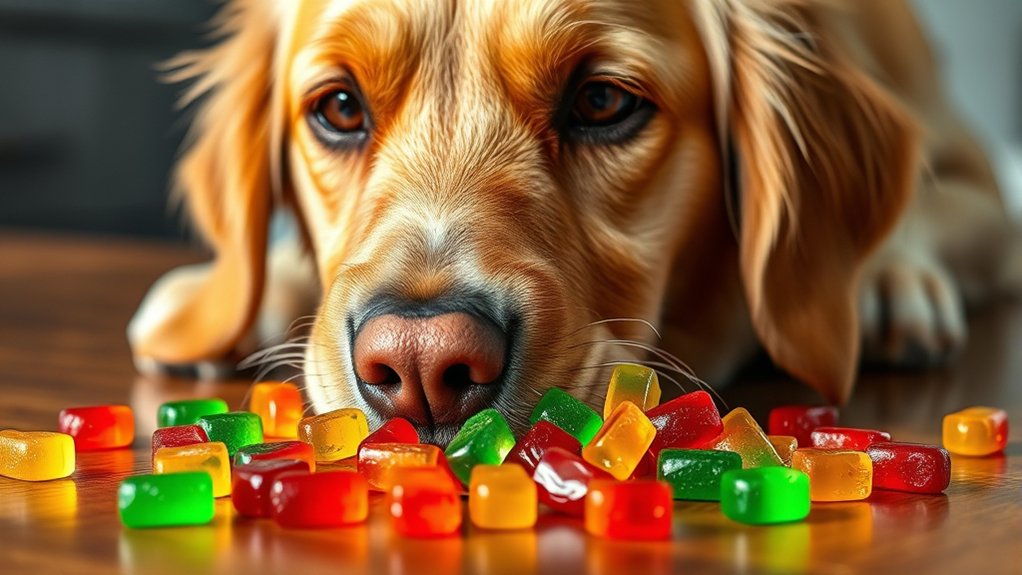
Can Dogs Eat Gummy Candy?
Many dog owners struggle with knowing what treats are safe for their furry friends. It’s easy to feel overwhelmed by the endless options and conflicting advice out there.
Can dogs eat gummy candy? No, dogs should never eat gummy candy because it contains ingredients like xylitol, artificial sweeteners, and high sugar levels that can be toxic or cause health problems.
Xylitol is especially dangerous, leading to rapid insulin release, seizures, and liver failure. The sticky texture also poses choking risks and can damage your dog’s teeth.
Keep your dog safe by choosing healthier treats. Learn more about how to prevent accidents and protect your canine companion.
Key Takeaways
Gummy candies often contain toxic ingredients like xylitol and artificial sweeteners that can be harmful to dogs. Eating them can lead to symptoms like vomiting, diarrhea, seizures, and even liver failure.
The sticky textures and hard candies also pose choking risks and can damage your dog’s teeth or gums. Regular consumption might cause obesity, nutritional imbalances, and digestive problems.
It’s best to give your dog healthy treats like fruits or specially formulated dog treats instead of candy. This keeps them safe and healthy.
Did Your Dog Eat Gummy Candy? Here’s What You Need to Know

If your dog has eaten gummy candy, it’s important to act quickly and understand what risks are involved. Gummy candies can affect your dog’s behavior, leading to symptoms like vomiting, diarrhea, or excessive drooling.
Watch your pet closely for signs of distress or unusual behavior. Keep calm and avoid panicking, since your dog can pick up on your anxiety, which might make things worse.
Observe your dog carefully and stay calm to prevent further stress or panic.
Training tips can help you handle these situations better. Teaching commands like “leave it” or “drop it” can prevent future incidents.
If your dog shows any signs of discomfort or you think they’ve eaten a lot, contact your veterinarian right away. Quick action can make a big difference.
Staying calm, monitoring your dog, and knowing some basic training tricks will help you respond effectively and keep your pet safe.
Why Is Gummy Candy Dangerous for Dogs?
Gummy candies are dangerous for dogs mainly because they often contain ingredients that are toxic or harmful to them, like xylitol, artificial sweeteners, and lots of sugar. These ingredients can cause serious health problems because a dog’s metabolism handles them differently than ours.
The risks include toxic candy ingredients like xylitol, which can cause a quick insulin spike and lead to hypoglycemia. Artificial sweeteners can mess up your dog’s metabolic balance, and high sugar levels might lead to obesity, dental issues, or pancreatitis.
Artificial additives in gummies can also trigger allergic reactions. Plus, unabsorbed ingredients might upset your dog’s stomach or cause blockages. Because their metabolism is sensitive, even small amounts of gummy candy can be dangerous.
That’s why it’s so important to keep these sweets out of your dog’s reach and avoid giving them any gummy candies.
Are Artificial Sweeteners Like Xylitol Harmful to Dogs?
Xylitol is a popular artificial sweetener found in many products, but it’s actually really dangerous for dogs. If your pup happens to swallow something with xylitol, it can cause serious problems like vomiting, loss of coordination, or even seizures. So, it’s best to keep anything containing xylitol out of their reach.
Instead of giving your dog treats with artificial sweeteners, look for safe options that are made specifically for dogs. There are plenty of delicious, dog-friendly treats available that don’t contain any harmful ingredients. Always check the labels and when in doubt, stick to foods and treats that are made just for your furry friend.
Xylitol Toxicity Risks
Artificial sweeteners like xylitol pose serious health risks to dogs, even in small amounts. Consuming products with xylitol can cause rapid insulin release, leading to hypoglycemia (low blood sugar), seizures, or liver failure.
To keep your dog safe, always check ingredient labels carefully. Awareness of harmful ingredients is key to preventing accidental poisoning.
Keep these points in mind:
- Not all sugar-free candies contain xylitol; always verify ingredients.
- Xylitol is often found in gum, mints, and baked goods.
- Even tiny doses can be dangerous.
- Symptoms might not show up right away.
- If your dog ingests xylitol, contact your vet immediately.
Being vigilant about what’s in your treats helps prevent dangerous situations and keeps your dog safe.
Symptoms in Dogs
When dogs ingest artificial sweeteners like xylitol, they often show symptoms quickly, but sometimes signs can be subtle or delayed. You might notice vomiting, loss of coordination, or weakness, which can escalate rapidly.
In some breeds, like small or highly energetic ones, symptoms may be harder to detect at first, but breed characteristics can influence severity. If untreated, xylitol poisoning can cause hypoglycemia, seizures, or liver failure.
During dog training, you learn to recognize subtle cues—these apply here too. Keep an eye out for unusual lethargy or behavioral changes, especially after accidental ingestion.
Prompt veterinary attention is essential to prevent serious complications and ensure your dog recovers fully.
Safe Alternatives to Xylitol
Many sweeteners labeled as “sugar-free” or “low-calorie” might seem like safe treats for your dog, but not all are harmless. Xylitol, in particular, is toxic to dogs and can cause serious health problems.
When choosing alternatives, go for natural options that support good dog nutrition and candy safety. Here are some safer choices:
- Small amounts of fresh fruit, like blueberries or apple slices
- Carrots or cucumber slices
- Unsweetened plain popcorn
- Frozen banana pieces
- Commercial dog treats with natural ingredients
Always read labels carefully and steer clear of artificial sweeteners. While these options are safer, moderation is key. Consulting your vet helps ensure you’re making the best choices for your dog’s health and well-being.
What Toxic Ingredients Are in Gummy Candies?
Certain ingredients in gummy candies can pose health risks to dogs, so it’s important to know what to watch out for. Many gummies contain ingredients that are harmless to humans but can be toxic to dogs.
For example, artificial sweeteners like xylitol are common in sugar-free gummies and can be very dangerous, even in small amounts. Other ingredients, like artificial flavors and colors, might not be directly toxic but can still cause upset stomachs or allergic reactions.
Some gummies also contain preservatives or additives that aren’t safe for dogs. Always check ingredient labels carefully, especially for xylitol, artificial sweeteners, or questionable preservatives.
Knowing what toxic ingredients to look for can help you prevent accidental poisoning and keep your dog safe. Remember, what’s safe for you might not be safe for your pup, so always be cautious with any candy or treats.
How Can I Tell If My Dog Ate Gummy Candy? Signs to Watch For
If you think your dog might have gotten into some gummy candy, keep an eye on how they’re acting. Sudden changes like pacing or being unusually sleepy could be signs something’s up.
Also, watch out for any tummy troubles, like vomiting, diarrhea, or even signs of pain when they try to move or touch their belly. Catching these symptoms early can make a big difference, so if you notice anything odd, don’t hesitate to reach out to your vet for advice.
Unusual Behavior Changes
When dogs eat gummy candy, their behavior often changes noticeably, which is a sign something isn’t right. You might see your dog acting differently than usual, such as:
- Being more restless or agitated
- Losing interest in playing or going for walks
- Having trouble focusing during training or leash walks
- Licking or pawing at their mouth excessively
- Making unusual sounds or whining
These signs can mean they’ve ingested something harmful. If you notice these changes, it’s important to act quickly. Don’t force your dog to walk or train until they calm down and act normally.
Recognizing these unusual behavior changes helps you catch the problem early. This way, you can seek veterinary care promptly and keep your dog safe.
Signs of Digestive Distress
Gummy candy can cause noticeable signs of digestive distress in dogs, signaling that they’ve ingested something harmful. Watch for vomiting, diarrhea, or excessive drooling, which indicate your dog’s system is struggling. Keep in mind that chocolate from other treats may worsen symptoms and make things worse.
You might also notice abdominal pain or discomfort, like whining or pawing at the stomach. Dental concerns can happen if your dog chews on gummy candies, risking broken teeth or gum irritation. If you see these signs, contact your vet immediately.
Prompt action is essential to prevent further problems. Remember, even if symptoms seem mild, eating gummy candy can lead to serious health issues. Stay vigilant and seek professional guidance right away.
What Should I Do Immediately If My Dog Eats Gummy Candy?
The moment you realize your dog has eaten gummy candy, act quickly to minimize potential harm. First, remove any remaining candy from their reach. Then, call your veterinarian for advice or take your dog to the nearest emergency clinic if they show symptoms like vomiting or diarrhea. While waiting, keep your dog calm to prevent stress or accidental choking.
Here are some steps to follow:
- Monitor your dog closely for signs of distress or toxicity.
- Do not induce vomiting unless instructed by your vet.
- Keep your dog relaxed, avoiding stressful situations like leash pulling or rough play.
- Prepare to provide details about the candy, such as ingredients and amount eaten.
- Use this incident as an opportunity to reinforce dog training, especially leash training, to prevent future accidents.
Quick action and calm handling can make a difference in your dog’s safety.
How Gummy Candy Can Cause Obesity and Digestive Problems in Dogs
Eating gummy candy can quickly turn into more than just a temporary stomach upset; it can lead to serious health issues like obesity and digestive problems in dogs.
Gummy candies have a long history because of their fun, chewy texture and bright colors, but they’re made with high sugar and artificial ingredients. When dogs eat gummies, they take in excess sugar and calories, which can cause weight gain over time.
This extra weight puts stress on their joints and organs, leading to long-term health issues. Gummies also contain artificial sweeteners and flavorings that can upset your dog’s digestive system, causing diarrhea or discomfort.
Since gummies are made for humans, they don’t consider canine health. Regular ingestion can cause nutritional imbalances and digestive upset, so it’s best to keep gummy candies out of your dog’s reach to protect their health.
Can Chewing Gummy Candies Damage My Dog’s Teeth or Cause Choking?
Chewing gummy candies can be risky for your dog’s dental health and safety. The chewy texture might damage their teeth or cause broken pieces that can get stuck, leading to pain or infections.
Chewing gummies can harm your dog’s teeth and cause choking or blockages.
Plus, gummies are sticky, which increases the choking risk, especially if your dog tries to swallow large bites quickly.
To keep your dog safe, watch out for these dangers: broken or cracked teeth from chewing, gummy pieces stuck in their teeth or gums, choking on large or poorly chewed pieces, blockages in the throat or digestive tract, and damage to oral tissues from sticky candy residue.
Always prioritize your dog’s dental health by avoiding treats that could harm their teeth. Be cautious about choking hazards, especially if your dog tends to gulp food down.
If you think your dog has swallowed a gummy or shows signs of choking, seek veterinary help immediately.
Healthy Alternatives to Gummy Candy for Your Dog’s Snacks
Instead of giving your dog gummy candy, why not try offering some nutritious, dog-friendly treats that satisfy their sweet tooth safely? There are plenty of options out there that are both tasty and healthy for your furry friend.
Natural fruit-based snacks are a fantastic choice too! They provide essential vitamins and lots of flavor without any added sugars or artificial ingredients. Plus, your pup will love the natural sweetness that comes from real fruit.
Nutritious Dog-Friendly Treats
When choosing treats for your dog, opt for nutritious, dog-friendly options to boost their health and happiness. Healthy treats can support good grooming habits and make training sessions more effective.
Look for treats that are low in sugar, free from artificial additives, and made with natural ingredients. Consider options like carrot sticks or cucumber slices, small pieces of cooked chicken or turkey, frozen blueberries, sweet potato chews, or commercial treats made from wholesome ingredients.
These treats provide essential nutrients and work well as rewards during training. They keep your dog energized and motivated without the health risks linked to sugary snacks like gummy candy.
Always pick treats that match your dog’s dietary needs to ensure their overall well-being.
Natural Fruit-Based Snacks
Looking for a healthier alternative to gummy candy that your dog will love? Natural fruit-based snacks are a fantastic choice, offering sweetness without artificial ingredients or excess sugar.
Fruits like apples, blueberries, and watermelon can be sliced into small, manageable pieces for easy snacking. These treats can also support your dog’s training by providing healthy motivation.
Keep breed differences in mind—some breeds may have sensitive stomachs or specific dietary needs—so introduce new fruits gradually. Using natural fruit snacks as treats helps you avoid unhealthy additives found in gummies.
Making the switch to fruit snacks makes your dog’s diet more nutritious. Plus, sharing fruit can strengthen your bond during training sessions, making these snacks both healthy and fun for your canine companion.
Tips to Keep Candy Out of Reach and Prevent Emergencies
To prevent your dog from accidentally ingesting candy, it’s important to keep sweets out of their reach at all times. Store candies in high cabinets or locked containers, away from your dog’s sight.
Be mindful when entertaining guests or children, who may leave treats unattended. Regularly check common areas for dropped wrappers or candies.
Train your dog to ignore food on counters or tables to reduce temptation. Keep emergency contact numbers handy, including your vet and poison control.
Consider creating a designated safe space where your dog can’t access hazardous items. Remember, quick action can save your pet’s life if they do manage to get into candy.
Being proactive ensures your dog’s safety and helps you respond swiftly during emergencies, minimizing health risks associated with candy ingestion.
Frequently Asked Questions
Are There Any Safe Types of Gummy Candies for Dogs?
There are no safe types of gummy candies for dogs. Candy ingredients often include xylitol, artificial sweeteners, and other additives that can harm your dog’s health.
Feeding your dog candy can disrupt their nutrition and cause digestive issues or toxicity. To protect your dog’s well-being, stick to dog-friendly treats and prioritize proper nutrition.
Always check ingredient lists and consult your vet before offering any human treats to your canine companion.
How Much Gummy Candy Can Be Toxic to a Dog?
A small amount of gummy candy can quickly turn into a wolf in sheep’s clothing for your dog. Even tiny quantities can upset their digestion because of ingredients like xylitol, artificial sweeteners, or chocolate.
Toxicity depends on your dog’s size and what’s in the candy, but generally, any amount can be risky. To keep your pup safe, it’s best to avoid giving them gummy candies altogether since their digestion just isn’t built for these human treats.
Can Gummy Candies Cause Allergic Reactions in Dogs?
Gummy candies can cause allergic reactions in dogs, especially if they have sensitivities to certain ingredients like artificial colors, flavors, or preservatives.
These ingredients are common in many candies and can trigger symptoms such as itching, swelling, or stomach upset.
It’s best to carefully evaluate your dog’s diet and avoid giving them gummy candies, since their immune system might react negatively to these additives.
Doing so helps prevent potential health issues and keeps your dog safe.
Do Dogs Experience Symptoms From Swallowing Gummy Wrappers?
Swallowing gummy wrappers can cause your dog to behave differently, choke, or block their digestive system.
You might see them pawing at their mouth, gagging, or even vomiting—these are signs they’re in distress.
Just like humans like candy, dogs can be curious about wrappers, but these aren’t safe for them.
Always keep an eye on your pet when treats are around, and if they swallow a wrapper, call your vet right away.
What Are Long-Term Health Risks of Dogs Eating Gummy Candies?
If your dog eats gummy candies regularly, they risk long-term health issues like chocolate toxicity if the gummies contain chocolate. Sugar addiction can also develop, leading to obesity and dental problems.
Over time, high sugar intake can cause insulin resistance and diabetes. Keep gummies out of reach, and watch your dog for signs of poisoning or behavioral changes.
If you notice anything unusual, seek vet help right away to prevent serious health problems.
Conclusion
Just like a child reaching for candy, your dog might snatch a gummy without thinking. Remember, even a small piece can cause serious health issues, much like a tiny pebble can clog a stream. Keep candies out of reach and opt for healthy treats instead.
If your dog does get into gummies, act quickly. Early intervention can prevent a small leak from flooding your home. Stay vigilant, and your loyal companion will stay safe and happy.
When it comes to dogs eating gummy candy, prevention is key. Keep gummies away from your pup, and if they do get into some, contact your vet right away. This way, you’ll protect your furry friend from potential harm.