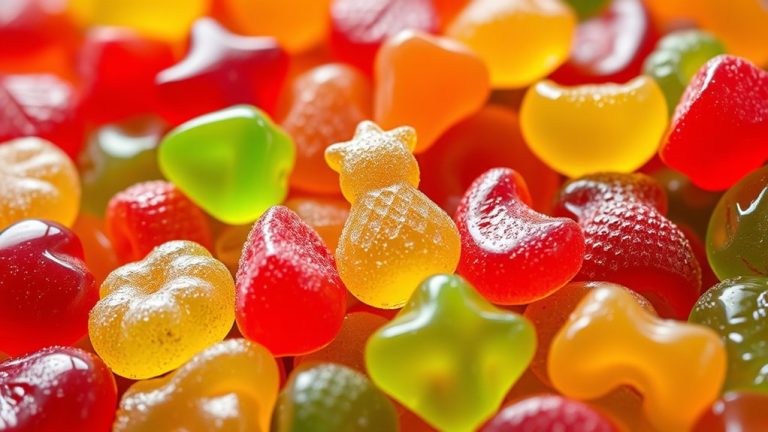
DIY Guide to Make Edible Gummy Candy at Home
Many people love the idea of making their own gummy candies at home but often feel overwhelmed by the process or unsure where to start. You’re not alone—crafting perfect gummies can seem tricky at first, but with a little guidance, you’ll be creating delicious treats in no time.
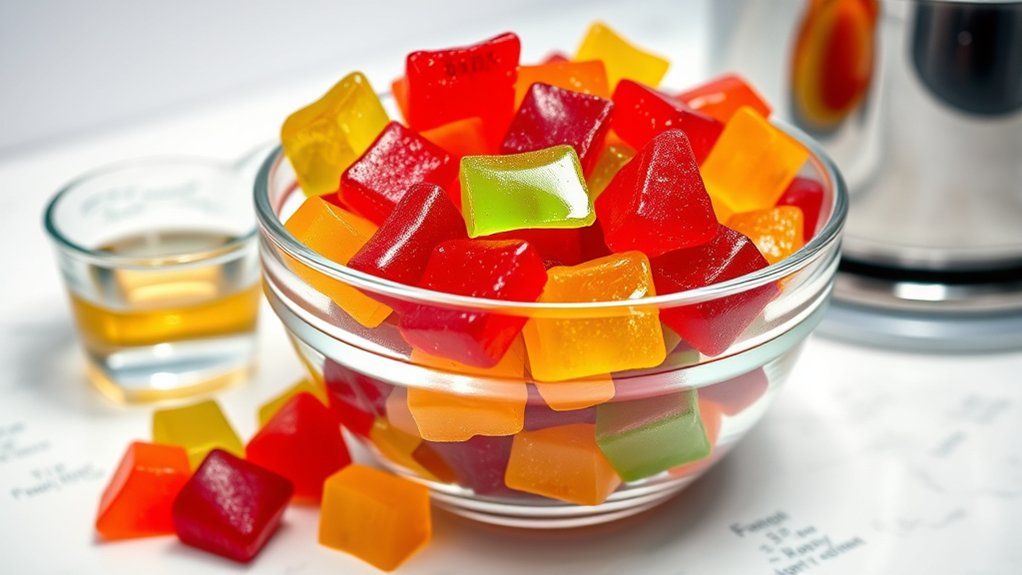
To make edible gummies at home, gather ingredients like gelatin or agar-agar, your preferred sweeteners, fruit juice, and flavorings. Choose flexible silicone molds or your favorite shapes, then carefully heat the mixture, pouring it into molds before refrigerating until set.
For the perfect texture, adjust gelatin levels and add natural colors or flavors. Store in airtight containers, and if you keep exploring, you’ll find even more tips to perfect your gummy-making skills.
Key Takeaways
- Gather ingredients like gelatin or agar-agar, fruit juice, sweetener, and flavorings, then thoroughly prepare and measure them.
- Choose appropriate molds, clean them well, and pour the mixture carefully for shaped gummies.
- Heat the mixture gently, stir constantly, and set in the refrigerator until firm.
- Customize flavors, colors, and shapes using natural extracts, food coloring, and decorative molds.
- Store gummies in an airtight container in a cool, dry place to maintain freshness and texture.
Gather the Essential Ingredients for Homemade Gummies

Before you start making your homemade gummies, gather all the essential ingredients. Begin with gelatin or agar-agar for that chewy texture. If you’re a vegetarian, agar-agar works perfectly as a substitute.
Gather gelatin or agar-agar and essential ingredients to craft delicious homemade gummies.
Next, pick your sweetener—honey, agave syrup, or sugar—based on your taste and dietary preferences. For flavor, add fruit juice or extracts; you can also use fresh or frozen fruit for a natural touch.
To get the right consistency, consider adding a small amount of citric acid or lemon juice. Remember to clean your gummy molds thoroughly to prevent sticking and make removal easier.
If you’re tweaking your recipe, ingredient substitution might be needed to match your desired texture or flavor. With these ingredients ready, you’re all set to create delicious homemade gummies.
Choose the Right Gummy Molds and Shapes
When you’re picking out gummy molds, it’s good to think about what they’re made of and how flexible they are. That way, they’ll be easier to use and last longer. You’ll also want to choose shapes that match your theme or style — whether it’s fun animals, fruity shapes, or something else you love. And don’t forget about size; smaller molds are great for portion control, while larger ones can make fun, bigger gummies.
Basically, picking the right molds that fit your needs will help your homemade gummies turn out perfect — they’ll look great and taste even better!
Material Types and Flexibility
Selecting the right gummy molds depends on the material’s flexibility and durability. Material types like silicone, plastic, or metal each offer different flexibility options.
Silicone molds are highly flexible, making them easy to remove and perfect for intricate shapes. Plastic molds tend to be stiffer but still offer some flexibility, suitable for simpler designs.
Metal molds are usually rigid, providing durability but less flexibility. Think about how often you’ll use the molds and the level of detail you want in your gummies.
Flexible materials like silicone make demolding straightforward and reduce breakage. In contrast, stiffer materials may need more careful handling.
Choosing the right material guarantees your gummies come out perfectly shaped without damaging the mold or the candy.
Shape Variety Options
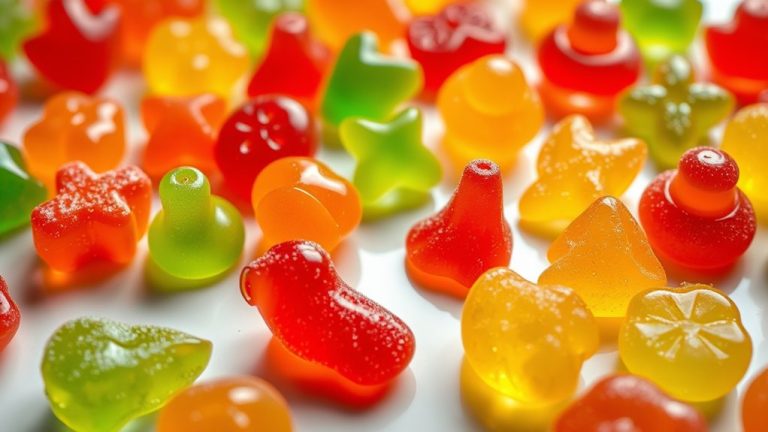
The variety of gummy mold shapes you choose really affects how your candies look and appeal. Picking the right shapes can highlight different fruit flavors or seasonal themes, making your gummies more eye-catching.
For example, fun seasonal shapes like pumpkins or snowflakes add a festive touch, while classic fruit shapes emphasize natural flavors. Think about using molds that match your favorite fruit for a more authentic taste.
Here’s a quick guide to help you choose:
| Shape Type | Occasion | Flavor Focus |
|---|---|---|
| Fruit Shapes | Everyday treats | Fruit flavors |
| Seasonal Shapes | Holidays & seasons | Themed flavors |
| Novelty Shapes | Special events | Unique flavors |
| Classic Shapes | Casual snacking | Traditional flavors |
| Custom Shapes | Personal preferences | Personalized flavors |
Size and Portion Control
Picking the right gummy molds and shapes is key for controlling portion sizes and making sure your treats are just the right size for snacking or gifting. Smaller molds help you manage how much candy each person gets with ease.
If you want size options, go for molds that come in different shapes and sizes. That way, you can customize your gummies to suit different preferences. Silicone molds are flexible and easy to work with, offering uniform shapes and quick release.
Larger molds create more substantial treats, while mini molds are great for bite-sized pieces. Choosing the right molds helps you make consistent sizes, reduce waste, and create visually appealing gummies perfect for any occasion.
Make Your Gelatin-Based Gummies Step-by-Step
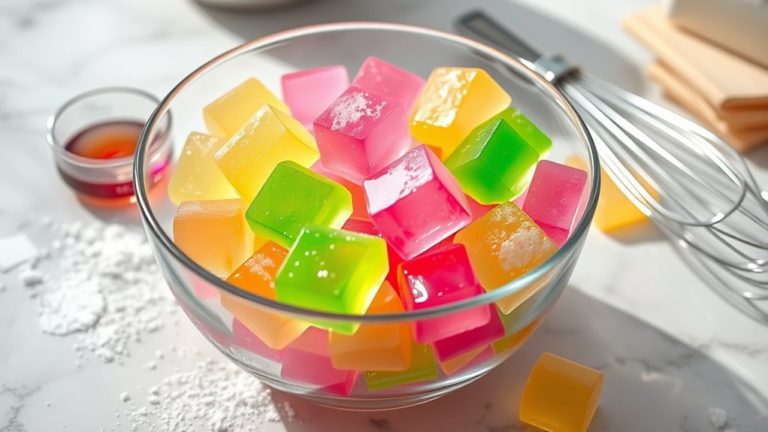
First, gather all your ingredients and tools. You’ll need gelatin powder, water, sweetener, and flavorings. If you want to switch things up, try using fruit juice instead of water or honey instead of sugar.
Prepare your molds by thoroughly cleaning them to prevent sticking or residue. This will make removing the gummies much easier later on.
Next, sprinkle the gelatin evenly over your liquid to avoid clumps. Heat the mixture gently until the gelatin dissolves completely, stirring constantly.
Carefully pour the liquid into your molds, filling each cavity. Then, chill in the refrigerator for at least an hour until they’re firm.
| Step | Tip | Note |
|---|---|---|
| Ingredient prep | Use substitutions wisely | Adjust flavor and texture with alternative ingredients |
| Mold handling | Clean thoroughly | Ensures easy removal and hygiene |
| Filling | Fill evenly | Prevents air bubbles and uneven gummies |
Get Perfect Texture and Consistency in Your Gummies

Achieving the perfect texture and consistency in your gummies depends on balancing your ingredients and process carefully. To improve texture, try adding a little extra gelatin or agar-agar for firmness, but don’t go overboard — too much can make gummies rubbery.
Adjust gelatin or agar-agar carefully for the ideal gummy firmness without becoming rubbery.
Stir constantly during heating to ensure ingredients are evenly mixed and prevent clumps. Using a thermometer helps keep the temperature around 200°F (93°C), which is ideal for proper gel formation.
If your gummies turn out too soft, increase the gelatin slightly. If they’re too firm, reduce it a bit. Keep in mind that humidity and storage conditions can affect texture over time, so store your gummies in airtight containers.
For a smooth, uniform consistency, strain the mixture through a fine sieve before pouring into molds. These tips will help you create gummies with a satisfying chew and a professional finish every time.
Customize Flavors and Colors for Your Gummies
Adding vibrant flavors and colors is a fun way to personalize your gummies and make them visually appealing. Feel free to get creative by experimenting with flavor pairings like citrus with berry or mint with chocolate.
When it comes to color blending, mix different food coloring drops to create unique shades that match your flavor choices. This adds depth and excitement to your gummies.
Here are some tips to improve your customization:
- Use natural extracts like vanilla, lemon, or raspberry for authentic flavor pairing.
- Mix primary food colors to create custom shades that match your desired look.
- Pair bold flavors with vibrant colors to make each gummy stand out.
- Balance intense flavors with subtle ones to avoid overwhelming taste and color profiles.
Avoid Common Gummy-Making Mistakes
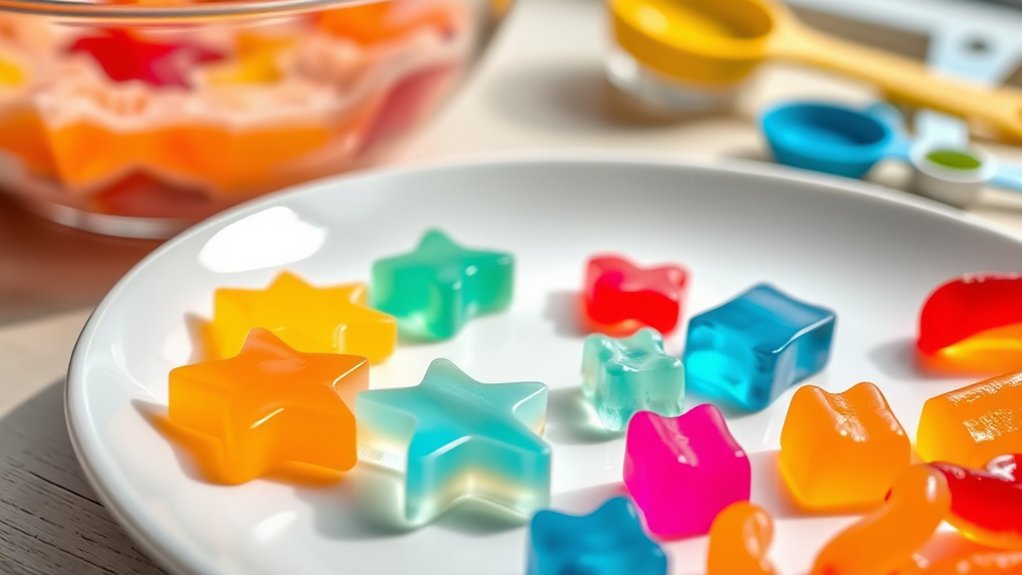
Even experienced candy makers can stumble into common mistakes that affect the texture and appearance of their gummies. One major error is over- or under-heating the mixture, which can make the gummy either too sticky or too firm. Be precise with your heat; simmer gently and avoid boiling vigorously.
Another mistake is making ingredient substitutions without considering their properties. For example, replacing gelatin with agar-agar may change the gummy’s texture significantly, so adjust the recipe accordingly. Using too much or too little liquid can also cause uneven gummies or poor setting.
Rushing the cooling process or not giving the gummies enough time to set can make them sticky or misshapen. Always follow your recipe carefully, measure ingredients accurately, and give the gummies enough time to firm up. Paying attention to these details helps ensure your gummies turn out perfect—chewy, clear, and appealing every time.
Create Dietary-Friendly and Creative Gummy Variations
Sure! When you’re thinking about making gummies that fit different dietary needs, trying out vegan options with plant-based ingredients is a great start. It’s fun to experiment with different flavors and natural extracts—you can really get creative and come up with some unique, personalized treats.
With just a few simple tips, you’ll be able to turn your gummies into both delicious and inventive snacks that everyone can enjoy. So, go ahead and have fun customizing your gummy creations!
Vegan Gummy Alternatives
For those seeking vegan gummy alternatives, plant-based ingredients offer a delicious and flexible way to create colorful, chewy treats at home. You can swap traditional gelatin with vegan options like agar-agar, carrageenan, or pectin, which set quickly and give a similar texture.
Using plant-based sweeteners such as agave syrup, maple syrup, or coconut sugar keeps your gummies sweet without using animal products. When experimenting, consider choosing high-quality vegan gelling agents for the best consistency.
Adjust sweetener levels based on how sweet you want your gummies to be. Incorporate natural fruit juices for flavor and color, making your treats more vibrant and tasty.
Be mindful of setting times to get that perfect chewy texture. These options let you craft colorful, cruelty-free gummies tailored to your taste and dietary needs.
Flavorful Customization Tips
Once you’ve picked your base ingredients and gelling agents, it’s time to get creative with flavors and dietary tweaks. Flavor infusion is a fun way to experiment with extracts, herbs, or spices to make unique gummy varieties.
For visual appeal, try color blending by mixing natural food colorings to create vibrant, personalized hues. To spark your creativity, check out this table:
| Flavoring Ideas | Color Blending Techniques |
|---|---|
| Fruit purees or zest | Mix different natural dyes |
| Herbal infusions | Layered color effects |
| Essential oils | Ombre or rainbow styles |
| Juices and concentrates | Swirling colors in molds |
These tips help you craft dietary-friendly, eye-catching gummies that delight both taste buds and eyes.
Store and Preserve Your Homemade Gummies
Proper storage is essential to keep your homemade gummies fresh and chewy. To get the most out of them, store your gummies in an airtight container in a cool, dry place away from direct sunlight.
Keeping your gummy mold in good shape helps prevent candies from sticking together and staying intact. If you notice any moisture, toss in a silica gel packet to absorb excess humidity, which helps prevent mold and keeps your gummies fresh longer.
For even longer shelf life, try wrapping each gummy in plastic wrap or sealing them in resealable bags. Don’t forget to label each container with the date you made them so you know when to enjoy or toss them out.
Make a habit of checking your stored gummies for any signs of spoilage. Temperature swings can impact their texture and quality, so keep them in a consistent environment.
Troubleshoot Common Gummy Problems
Even with careful planning, you might encounter some common gummy problems that can affect their texture, appearance, or taste. One frequent issue is a gummy texture that’s too soft or too firm.
If your gummies are too soft, try reducing the amount of gelatin or adding a bit more during the next batch. Conversely, if they’re too firm, add a splash of warm liquid before setting.
Sometimes, gummies can have an uneven appearance or be sticky. Ensuring thorough mixing and proper cooling helps improve their look and texture.
For flavor improvement, if your gummies taste bland or off, consider adding a small amount of flavoring or adjusting the sweetener.
Remember, balancing gelatin, sweeteners, and flavorings is key. Troubleshooting these issues involves tweaking ingredient ratios and processing times.
With a little experimentation, you’ll perfect your gummy texture and flavor, creating delicious candies that look and taste just right.
Package and Present Your Gummies Creatively
Want to make your gummies really pop? Get creative with your packaging! Think about using colorful jars, personalized bags, or even DIY boxes – the possibilities are endless.
Creative Packaging Ideas
When it comes to gifting or sharing your homemade gummies, creative packaging can make all the difference. Well-chosen wrapping enhances the gummy texture and highlights the unique flavor blending inside.
Use clear, resealable bags to showcase the vibrant colors and shapes, emphasizing the visual appeal. Add personalized tags or labels to tell a story about your candy’s flavor profile or ingredients, making it more memorable.
Small decorative boxes or jars with ribbons can elevate the presentation, making your gummies feel special. Consider eco-friendly options like paper sleeves or reusable containers to add a thoughtful touch.
Unique Gummy Presentation
Once you’ve perfected your gummy recipes and chosen attractive packaging, the next step is to present your creations in a way that truly engages. Use creative gummy mold techniques to add variety and flair—try layering colors or combining shapes for visual interest. Incorporate edible glitter options to make your gummies sparkle and catch the eye, perfect for special occasions or gifting.
Experiment with different mold shapes, from fun characters to elegant geometric designs, to elevate your presentation. Consider using small decorative boxes or custom labels to enhance the overall experience. Presentation matters just as much as flavor, so get creative with how you display your gummies.
This attention to detail will make your homemade treats irresistible and memorable.
Frequently Asked Questions
Can I Make Vegan Gummy Candies Without Gelatin?
Yes, you can make vegan gummy candies without gelatin by using plant-based alternatives like agar-agar or pectin. These options give the right texture and structure for your candies.
Just add natural flavoring to make them tasty and enjoyable. Dissolve the vegan gelatin in warm liquid, then mix in your favorite flavors and pour into molds.
Chill until they’re set, and you’re all set to enjoy your homemade, cruelty-free gummy candies!
How Long Do Homemade Gummies Stay Fresh?
Homemade gummies usually stay fresh for about 5 to 7 days if you store them properly.
To keep them longer, put them in an airtight container at room temperature or in the fridge.
You can layer gummies with parchment paper to prevent sticking and keep them away from direct sunlight or moisture.
If you want them to last even longer, you can freeze them for up to 3 months. Just keep in mind that the texture might change a bit.
Are There Sugar-Free Options for DIY Gummies?
Yes, you can make sugar-free DIY gummies using sugar alternatives like stevia, erythritol, or monk fruit sweetener. These options help keep a nice gummy texture while cutting down on sugar.
Just keep in mind that some sugar substitutes might change the taste or texture a bit. It’s a good idea to experiment to find what works best for your preferred gummy consistency and flavor.
Enjoy healthier, customizable gummy treats made right at home!
Can I Use Alternative Sweeteners in Gummy Recipes?
Yes, you can use alternative sweeteners in gummy recipes. Artificial sweeteners like sucralose or aspartame work well, providing sweetness without added sugar.
Natural sweeteners such as honey, agave syrup, or stevia also serve as good options, offering a more natural flavor. Just keep in mind that some sweeteners may alter the texture or taste, so experiment to find the best balance for your homemade gummies.
What’s the Best Way to Flavor Gummies Naturally?
Imagine your gummies as tiny flavor canvases waiting to be filled with a natural burst of taste. To do this, try adding natural extracts like vanilla or citrus—they act like vibrant paint strokes.
Fruit purees bring a juicy, authentic flavor, making each bite feel like a mini fruit basket. Just blend these into your mixture, and your gummies will burst with real, fresh flavors.
This way, simple candies turn into a symphony of natural tastes that everyone will enjoy.
Conclusion
Now, imagine pulling a batch of vibrant, fruity gummies from your mold, their cheerful colors promising a burst of flavor with every bite. As you savor your homemade treats, you’ll feel proud of the sticky, sweet adventure you created—each gummy a tiny masterpiece.
With your newfound skills, your kitchen becomes a candy wonderland, ready to delight friends and family alike. So, get ready to share your colorful, delicious gummy candies and keep the fun going!