Some Must-Try Dark Chocolate Candy Bars for True Lovers
Are you a true dark chocolate lover always on the hunt for the perfect bar? Many people struggle to find high-quality options that deliver the rich, complex flavor they crave. You’re not alone in wanting a chocolate experience that’s both satisfying and memorable.
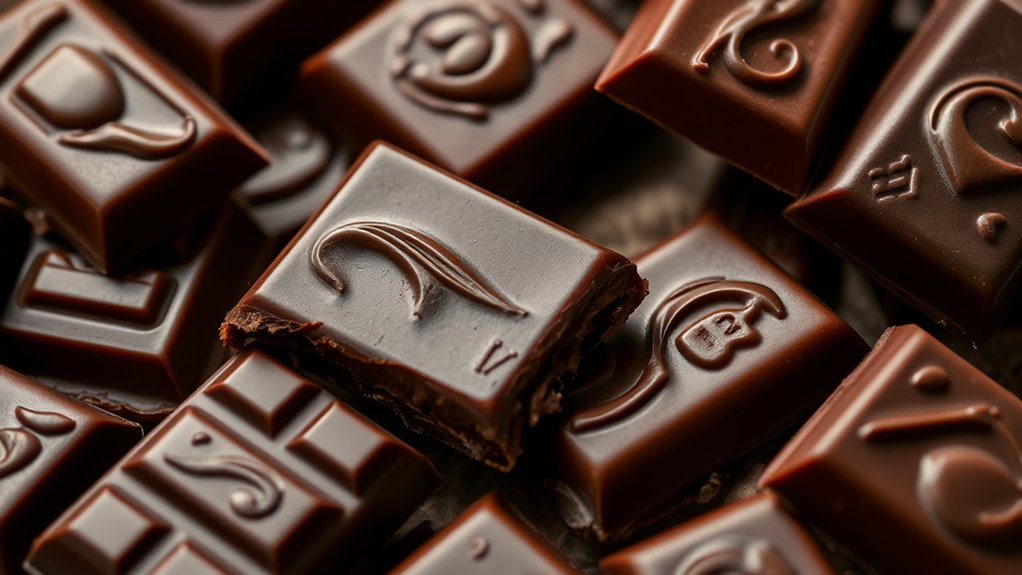
If you’re a true dark chocolate lover, you should try bars with 70-85% cocoa, such as Lindt Excellence, Valrhona, or Ghirardelli Intense. Look for high-quality ingredients and minimal additives for the best flavor.
Single-origin varieties and artisan brands often showcase unique regional nuances that elevate the experience. Creative infusions like sea salt or chili can add interesting complexity.
Keep exploring different bars and pairing ideas—you’re about to uncover many more exceptional tastes that raise your chocolate experience.
Key Takeaways
- Opt for bars with 70-85% cacao content to enjoy a rich, complex flavor that true connoisseurs will appreciate.
- Choose single-origin or ethically sourced chocolates to experience unique regional flavor nuances.
- Look for minimal ingredients, focusing on natural cacao and quality craftsmanship instead of additives.
- Explore creative infusions like sea salt, chili, or dried fruits to add depth and complexity.
- Prioritize high-quality, properly stored bars to keep the flavor, texture, and freshness intact over time.
Why True Chocolate Lovers Prefer Dark Chocolate
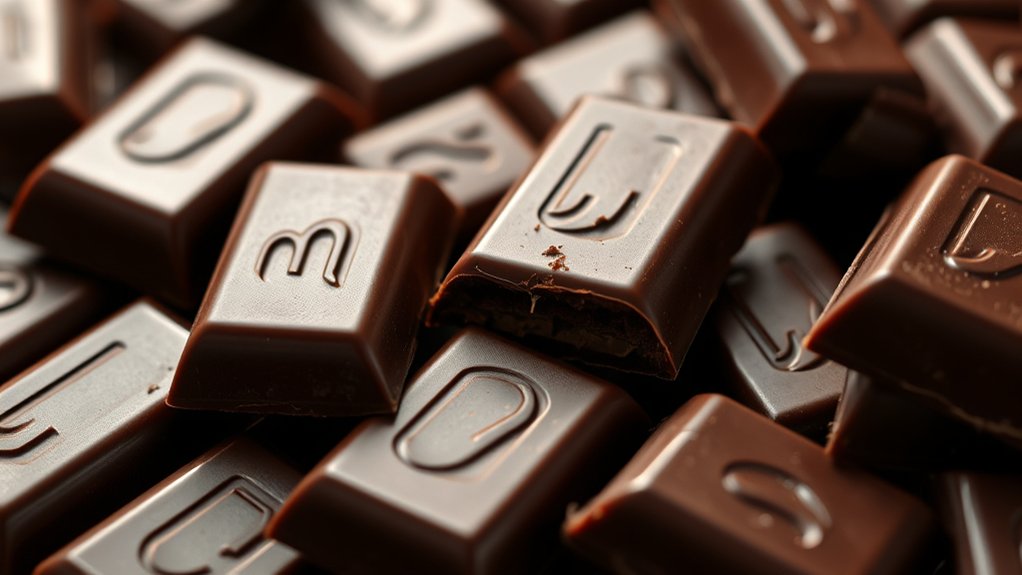
Many true chocolate lovers prefer dark chocolate because of its rich, intense flavor that offers a more authentic cocoa experience. This preference often comes from an appreciation for the subtle nuances in cocoa beans, which are at the heart of the chocolate industry.
Dark chocolate’s bold taste reflects the quality of cocoa farming and careful processing. It highlights the true essence of cocoa, allowing you to taste complex, slightly bitter, and fruity notes.
You might notice that dark chocolates contain higher cocoa content. This lets you savor richer flavors and a more genuine chocolate experience.
The chocolate industry emphasizes sustainable cocoa farming practices. This ensures flavors develop fully and ethically, making your indulgence more meaningful.
By choosing dark chocolate, you’re supporting farms that prioritize quality and sustainability. It’s a way to enjoy chocolate while making a positive impact.
How to Choose the Best Dark Chocolate Bar
Choosing the best dark chocolate bar involves paying attention to several key factors that influence flavor and quality. First, look beyond chocolate myths—many believe dark chocolate is just bitter, but high-quality options have balanced sweetness and complex flavors. Consider the ingredients: pure cocoa, minimal additives, and natural sweeteners often give a richer experience. Health benefits are a bonus, but they depend on quality and cacao content.
Here’s a quick guide:
| Factor | What to look for | Why it matters |
|---|---|---|
| Cacao Content | 70-85% for ideal flavor | Balances bitterness and richness |
| Ingredient List | Few, natural ingredients | Ensures purity and health benefits |
| Flavor Profile | Notes of fruit, nuts, or spice | Adds depth and enjoyment |
Focus on these aspects to find a dark chocolate bar that delights your palate and supports your health goals.
Understanding Cocoa Content and Its Impact
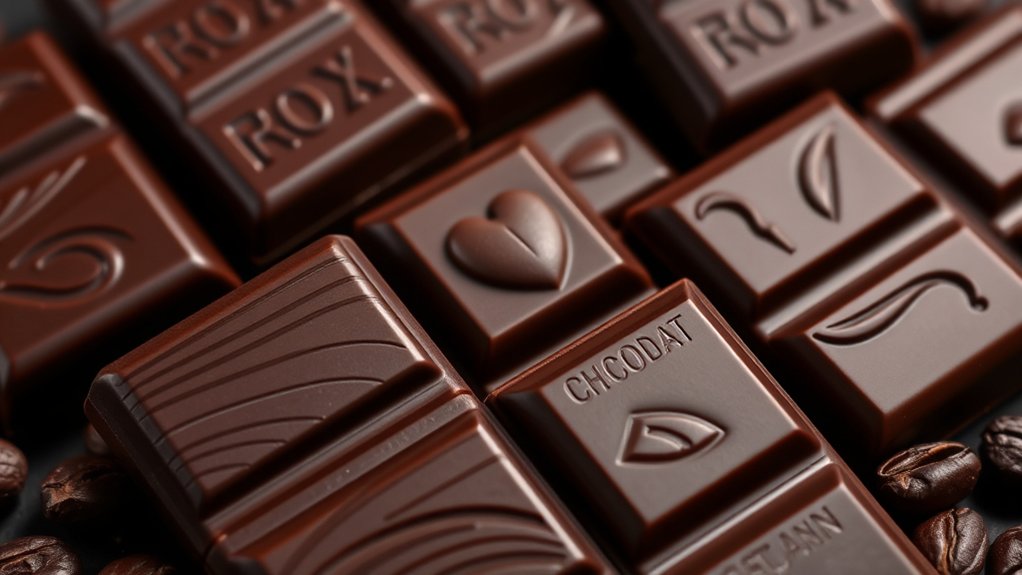
Understanding cocoa content is essential because it directly influences the flavor, texture, and health benefits of your dark chocolate. Higher cocoa content typically means a richer, more intense chocolate flavor, while lower percentages can taste milder and sweeter.
During cocoa fermentation, the beans develop their complex flavors, which are then preserved or altered depending on the final cocoa percentage. When making chocolate, tempering becomes vital to achieve a glossy finish and smooth texture, especially in high-percentage bars.
The cocoa content also impacts nutritional value, with higher percentages offering more antioxidants and less sugar. Keep in mind that as cocoa content increases, the bitterness may become more pronounced, but the depth of flavor deepens.
Understanding these factors helps you choose bars that match your flavor preferences and health goals. Ultimately, the fermentation process and proper tempering are key to revealing the best qualities of each cocoa percentage.
Top Dark Chocolate Bars Every Connoisseur Should Try
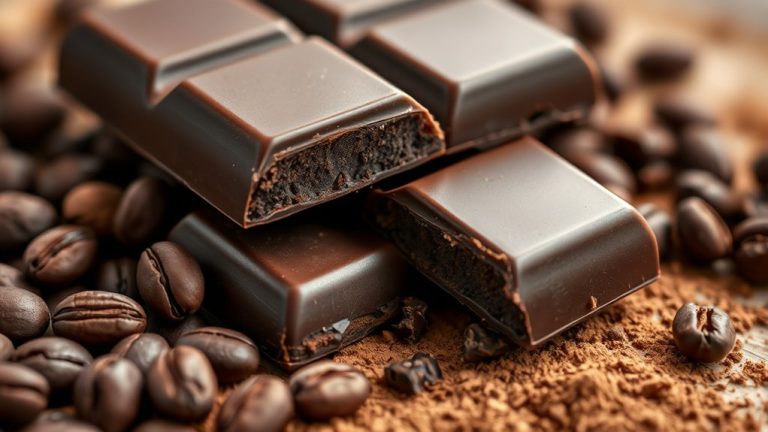
For true connoisseurs, exploring the world of dark chocolate means seeking out bars that exemplify exceptional quality, flavor complexity, and craftsmanship. Top dark chocolate bars often showcase the unique characteristics of the chocolate bean, with subtle nuances from specific regions and origins.
Look for bars that highlight a high cocoa content, allowing the bean’s natural flavors to shine through. The best bars also use premium cacao butter, which boosts smoothness and richness without overpowering the intrinsic taste.
When you try these chocolates, you’ll notice how the fermentation and drying process influence aroma and flavor profiles. Connoisseurs appreciate bars that balance bitterness, fruity notes, and earthy undertones, all crafted with skillful tempering and minimal additives.
These top-tier dark chocolates elevate your tasting experience, emphasizing quality ingredients and artisanal techniques that truly honor the chocolate bean’s potential.
Unique Flavors and Add-Ins That Elevate Dark Chocolate
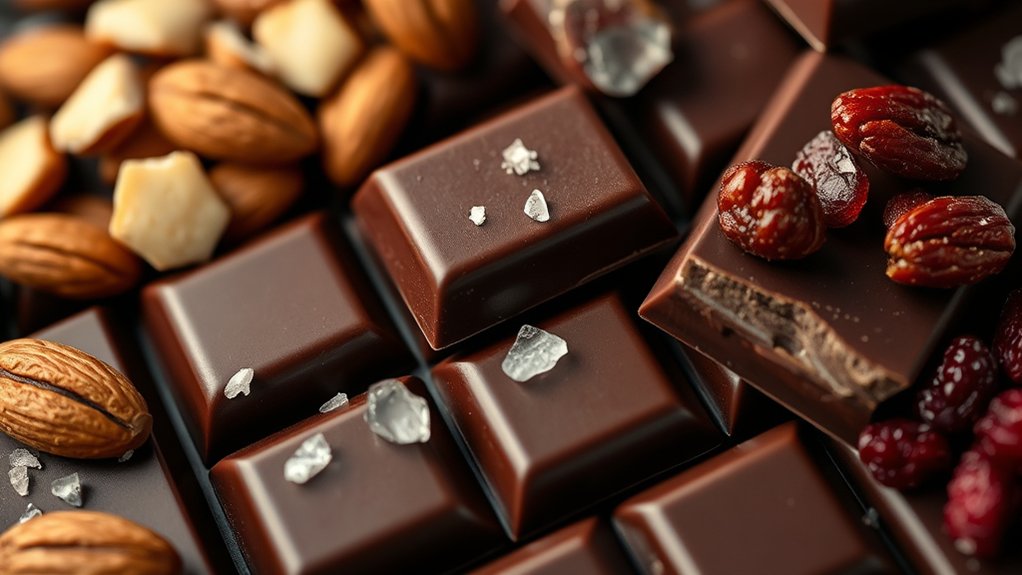
Adding unexpected flavors and carefully selected add-ins can turn a simple dark chocolate bar into a rich, memorable treat. Experimenting with unique ingredients enhances the chocolate’s natural depth and creates exciting flavor combos.
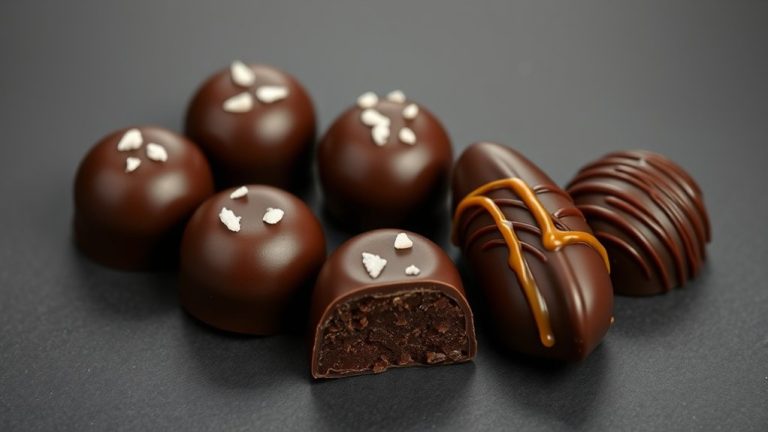
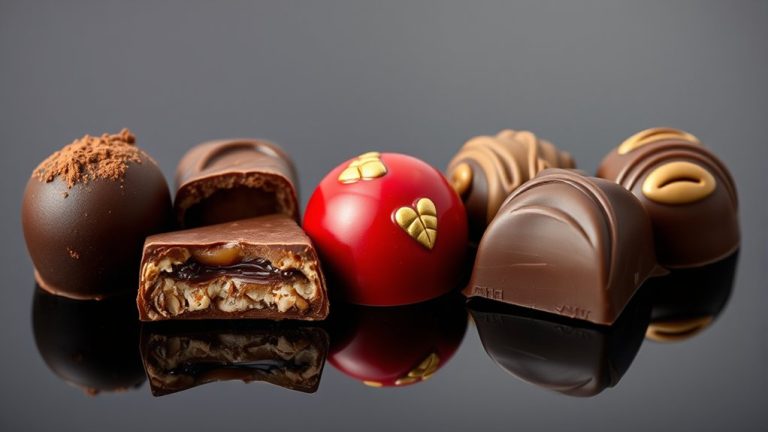
Nuts, dried fruits, and sea salt are classic choices that boost flavor through thoughtful pairing. You might also explore infusions like chili, espresso, or lavender to add complexity and depth.
These add-ins serve to balance bitterness with sweetness or spice, making each bite more interesting. When choosing ingredients, think about how they complement the chocolate’s notes to keep the flavors harmonious.
The right mix can elevate an ordinary bar into a gourmet indulgence that surprises your palate. Whether it’s a hint of citrus or a touch of caramelized salt, these flavors make dark chocolate a versatile canvas for culinary creativity.
How to Spot Artisanal and Small-Batch Dark Chocolate
Spotting artisanal and small-batch dark chocolate means paying close attention to labels and packaging that highlight craftsmanship and quality. Look for indicators like direct relationships with cacao farmers or clear origin details on the label.
Small batch craftsmanship often means the chocolate is made in limited quantities, which usually results in better control over flavor and quality. Keep an eye out for these features:
| Feature | What It Means |
|---|---|
| Single-origin cacao | Focuses on specific regions, giving unique flavors. |
| Minimal ingredients | Fewer additives, so the pure cacao shines through. |
| Handcrafted labels | Shows attention to detail and small-batch work. |
| Artisanal sourcing | Cacao is sourced directly, supporting fair trade practices. |
| Limited editions | Signifies small-batch craftsmanship and exclusivity. |
Best Ways to Pair Dark Chocolate With Wine, Coffee, and Fruits
Pairing dark chocolate with wine, coffee, and fruits amplifies their flavors and creates a delightful tasting experience. When you focus on chocolate pairing, aim for combinations that enhance each component’s unique qualities, achieving taste harmony.
Pair dark chocolate with wine, coffee, and fruits for a harmonious, flavor-enhancing tasting experience.
For example, rich, bitter dark chocolate pairs well with full-bodied red wines like Cabernet Sauvignon or Merlot, balancing bitterness with fruity notes. For coffee lovers, opt for a dark roast to complement the deep cocoa flavors, creating a robust, satisfying contrast.
Fruits like ripe berries, figs, or oranges add brightness and acidity, cutting through the richness of the chocolate while boosting its sweetness. Keep in mind that the goal is to highlight and elevate the flavors rather than overpower them.
Experiment with small bites and sips to discover your perfect match. With thoughtful pairing, you’ll deepen your appreciation of dark chocolate’s complex profile, turning every tasting into a harmonious sensory adventure.
Affordable vs. Premium Dark Chocolate Options
When choosing dark chocolate, your options range from budget-friendly brands to luxurious, high-end varieties. In the chocolate world, price often reflects quality, but brand reputation is also important.
Affordable options are great for everyday indulgence, while premium chocolates offer complex flavors and finer ingredients. Think about these points:
- Price point: Lower-cost chocolates are accessible but might lack depth.
- Brand reputation: Well-known brands usually maintain high standards for quality.
- Ingredients: Premium chocolates often have higher cacao content and fewer additives.
- Experience: Premium options deliver richer, more nuanced flavors that true lovers will appreciate.
In the end, your choice depends on your taste and budget. While affordable chocolates satisfy sweet cravings, premium selections elevate the experience and showcase craftsmanship in the chocolate industry.
How to Store Dark Chocolate for Maximum Freshness
If you want your dark chocolate to stay fresh and delicious, the best thing you can do is keep it at a steady, cool temperature—around 60 to 70 degrees Fahrenheit works perfectly. It’s important to wrap it up tightly or pop it into an airtight container so no moisture or strong odors from other foods can seep in and mess with its flavor.
Basically, good packaging and maintaining the right temperature are the secret to keeping that rich, smooth taste and texture just the way you love it.
Optimal Temperature Maintenance
Maintaining the right temperature is key to keeping your dark chocolate’s rich flavor and smooth texture. Proper control helps your chocolate stay fresh and stops blooming or spoilage.
Aim to store your chocolate between 60-70°F (15-21°C). This range helps preserve its quality and taste over time.
Avoid temperature fluctuations, as they cause condensation and can change the texture of your chocolate. Keep it in a stable environment.
Store your chocolate away from direct sunlight to prevent melting and flavor loss. Sunlight can quickly degrade its quality.
Keeping a consistent environment is important for maintaining aroma and taste. Sudden changes can affect its flavor profile.
Use a dedicated container with a tight seal to protect your chocolate from humidity and odors. This extra step helps keep it fresh longer.
Proper Packaging Techniques
Proper packaging plays a vital role in preserving your dark chocolate’s freshness and flavor. Investing in packaging innovation helps protect your chocolates from moisture, light, and temperature fluctuations that can cause spoilage. Use airtight containers or resealable bags to keep out air and humidity, which can lead to blooming or texture changes.
Whenever possible, opt for sustainable materials like biodegradable wraps or recycled boxes. These eco-friendly options are just as effective at protecting your chocolates. Make sure the packaging is opaque to block out light, which is a key factor in maintaining flavor quality.
Proper sealing and storing your chocolates in a cool, dark place will further improve their longevity. By choosing the right packaging techniques, you’ll maximize freshness, preserve flavor, and enjoy your dark chocolate for longer.
What Makes a Dark Chocolate Bar Truly Exceptional
A really outstanding dark chocolate bar is all about that rich cocoa content. You want it to have a deep, complex flavor that makes each bite special. The texture should be smooth and balanced — not too gritty or waxy — so it feels satisfying in every mouthful.
Plus, what makes it truly stand out are those unique flavor notes, like hints of fruit or spices, that add layers of taste and make the experience memorable. It’s those little details that turn good chocolate into something extraordinary.
Rich Cocoa Content
The richness of a dark chocolate bar mainly depends on its cocoa content, which affects its flavor, aroma, and overall quality. Higher percentages mean more intense melting and deeper flavors.
When cacao is carefully harvested, it ensures premium quality beans, giving you a more robust chocolate experience. Look for bars with these key features:
- Cocoa Percentage: Aim for 70% or higher for an authentic dark chocolate taste.
- Pure Ingredients: Minimal additives let the cacao’s natural richness shine.
- Cacao Harvesting: Ethical, precise harvesting helps preserve flavor integrity.
- Processing Techniques: Fewer steps keep the cacao’s full aroma and depth.
These factors combine to create a bold, aromatic, and truly exceptional dark chocolate for lovers of rich flavors.
Smooth Texture Balance
What truly lifts a dark chocolate bar from good to exceptional is its smooth, velvety texture that melts effortlessly on your tongue. The best bars deliver a perfect balance of creamy sweetness and balanced bitterness, creating a luxurious mouthfeel.
When the texture is well-crafted, it amplifies the flavor experience, making each bite satisfyingly rich without feeling gritty or chalky. A smooth texture allows the chocolate’s natural oils to shine, providing a melt-in-your-mouth sensation that keeps you coming back.
If the texture feels too harsh or grainy, it diminishes the quality and enjoyment. Truly exceptional dark chocolate bars achieve this harmony, where the creaminess complements the subtle bitterness, resulting in a seamless, indulgent experience that raises dark chocolate to a new level.
Unique Flavor Profiles
Exceptional dark chocolate bars enchant with their distinctive and memorable flavor profiles, setting them apart from standard options. The true magic lies in the unique interplay of notes derived from the chocolate bean and the artful flavor infusion.
To craft an exceptional bar, consider the origin of the chocolate bean. Single-origin beans bring specific, rich flavor nuances that make each bar special.
Flavor infusion techniques also matter. Subtle additions like spices, fruits, or herbs can really amplify the complexity and depth of the flavor.
The roasting process influences the depth and intensity of the chocolate’s natural notes, so it’s an important step to get right.
Finally, balancing bitterness and sweetness highlights the bean’s inherent character while adding depth to the overall flavor. These elements come together to create a truly exceptional dark chocolate experience that appeals to your refined palate.
Frequently Asked Questions
Are There Health Benefits Associated With Eating Dark Chocolate Regularly?
Yes, eating dark chocolate regularly offers health benefits. It’s rich in antioxidants that help protect your cells from damage.
Plus, dark chocolate can support heart health by improving blood flow and lowering blood pressure. Choosing high-quality dark chocolate lets you enjoy these benefits while indulging in a tasty treat.
Just remember to enjoy it in moderation to get the positive effects without consuming too much sugar.
Can Dark Chocolate Be Used in Cooking and Baking Recipes?
Yes, you can definitely use dark chocolate in cooking and baking recipes. It’s perfect for creating rich desserts like cakes, brownies, and mousses.
Experiment with sweet pairings and flavor combinations, such as adding berries, nuts, or spices to enhance its depth. Melting dark chocolate also works well for drizzling or making ganache.
Incorporating it into your recipes will elevate your desserts with its intense, bittersweet flavor.
How Does the Origin of Cacao Influence Chocolate Flavor Profiles?
The origin of cacao really shapes the flavor of chocolate through processes like fermentation, which develop the taste.
Beans from different regions, like West Africa or Central America, have their own unique flavors because of soil, climate, and how they’re fermented.
These things influence the aroma, acidity, and overall taste, giving you a distinct experience depending on where the cacao comes from.
Is It Safe to Consume Dark Chocolate if I Have Dietary Restrictions?
Did you know that about 15% of the population has some kind of food allergy?
When it comes to eating dark chocolate with dietary restrictions, you should be careful.
It’s usually safe if you avoid allergens like soy, dairy, or nuts, but always check the labels just to be sure.
If you have specific dietary needs, talking to your healthcare provider is a good idea to make sure dark chocolate is safe for you.
What Are the Environmental Impacts of Cocoa Farming?
Cocoa farming can have big environmental impacts, especially when there are large plantations involved.
Often, farmers clear land for new plantations, which leads to deforestation and threatens local biodiversity.
This deforestation also contributes to climate change by releasing stored carbon into the atmosphere.
Choosing sustainable cocoa farming methods, like shade-grown techniques, can help lessen these effects.
Supporting brands that focus on eco-friendly sourcing lets you enjoy your chocolate while reducing environmental harm.
Conclusion
Now that you understand what makes dark chocolate special and how to choose the perfect bar, it’s time to indulge. Imagine your taste buds starting a journey, with each bite revealing richer flavors and deeper notes. It’s like uncovering a secret with every taste.
Remember, every great connoisseur begins with curiosity. So go ahead and explore those unique flavors, pairings, and premium options. Your perfect dark chocolate experience is just a bite away.