What Happens When You Freeze Chocolate Candy?
Many chocolate lovers have faced the disappointment of discovering their favorite candies have changed in texture or appearance after freezing. You’re not alone—freezing can seem like a good way to preserve chocolates, but it often comes with unexpected drawbacks.
When you freeze chocolate candy, its texture can change—becoming grainy, crumbly, or waxy—and its shine may dull due to surface bloom or surface irregularities. Freezing can also alter its flavor, especially if stored improperly or for too long.
Additionally, freezing can lower its melting point and make it more resistant to melting at room temperature. Proper wrapping and temperature control help maintain quality, but if you want to learn how to keep your chocolates in top shape, there’s more to uncover.
Key Takeaways
- Freezing can cause ice crystals to form inside the chocolate, which changes its texture and might make it grainy or crumbly.
- The chocolate’s appearance may dull, develop surface bloom, or lose that shiny, glossy look because of temperature swings.
- Freezing can also change the flavor, dulling or altering the taste, especially if it’s stored improperly or for a long time.
- Different chocolates react differently; for example, milk chocolate might become crumbly, while dark chocolate stays more stable.
- To keep the texture, look, and flavor intact, proper wrapping and slow thawing are key during freezing and warming.
How Freezing Changes the Texture of Chocolate
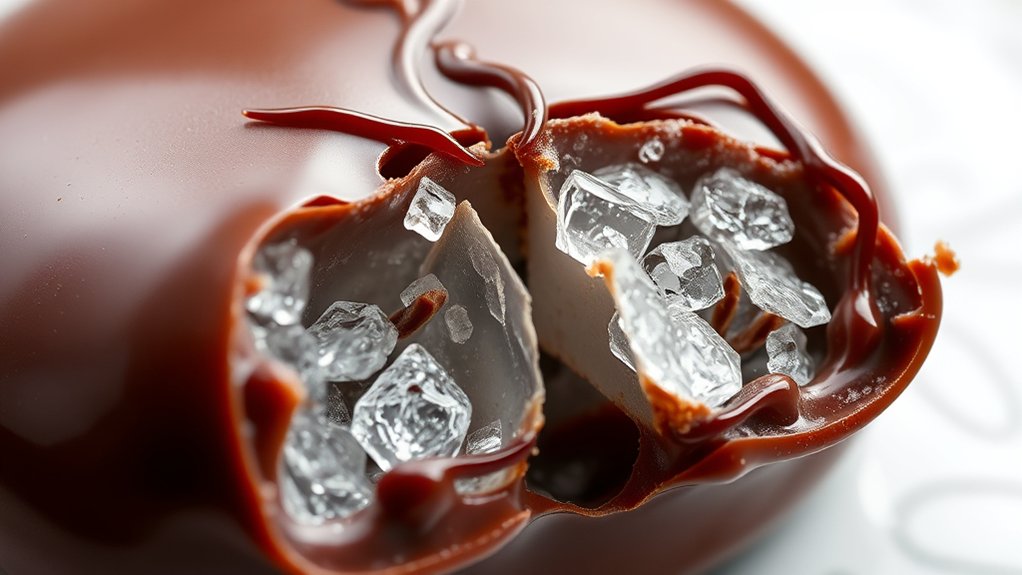
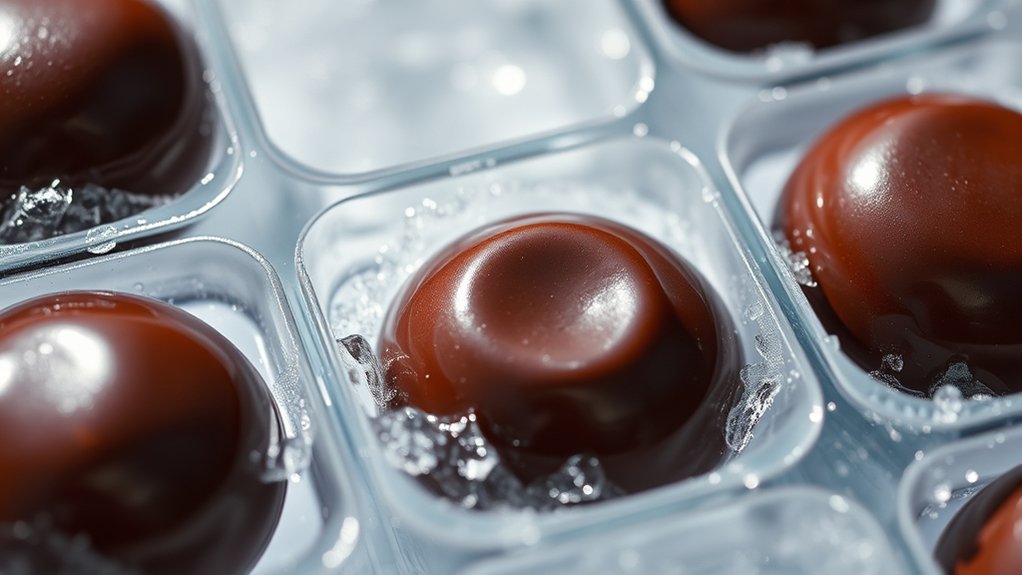
When you freeze chocolate, its texture changes noticeably because ice crystals form inside the candy. Proper storage is key to keeping those crystals from ruining the texture. If you don’t store it right, moisture can cause freezer burn, leaving the surface dry, grainy, and crumbly.
Freezing makes the fats and sugars recrystallize, which can make the chocolate feel waxy or chalky once it thaws. The surface might look dull, and the smooth, glossy finish you enjoy can fade. To help prevent this, wrap the chocolate tightly to keep out air and moisture.
Avoid exposing it to temperature swings, since repeated freezing and thawing only make the texture worse. The flavor might stay pretty much the same at first, but the internal changes can make the mouthfeel less satisfying. If you store it properly, frozen chocolate can hold its texture longer, but it’s usually best to eat it fresh when possible.
Does Freezing Alter Chocolate’s Flavor?
Freezing chocolate can sometimes change its flavor, especially if it’s not stored properly or kept frozen for too long. To keep its taste intact, use airtight containers to stop moisture and odors from getting in. Proper temperature control is important—aim to keep the freezer at around 0°F (-18°C).
Freezing chocolate can alter its flavor; use airtight containers and maintain 0°F for best preservation.
Fluctuations in temperature can cause the chocolate to develop a stale or waxy taste. When you freeze chocolate, it can absorb odors from other foods if not sealed tightly, which can affect its original flavor.
Plus, freezing chocolate for a long time may lead to subtle flavor changes, making it taste dull or different from when it’s fresh. To keep its flavor, try to eat the frozen chocolate within a few months and store it in well-sealed containers.
Consistent temperature and good packaging are key to preventing flavor loss and keeping your chocolate tasting fresh.
How Freezing Affects Chocolate’s Shine and Appearance
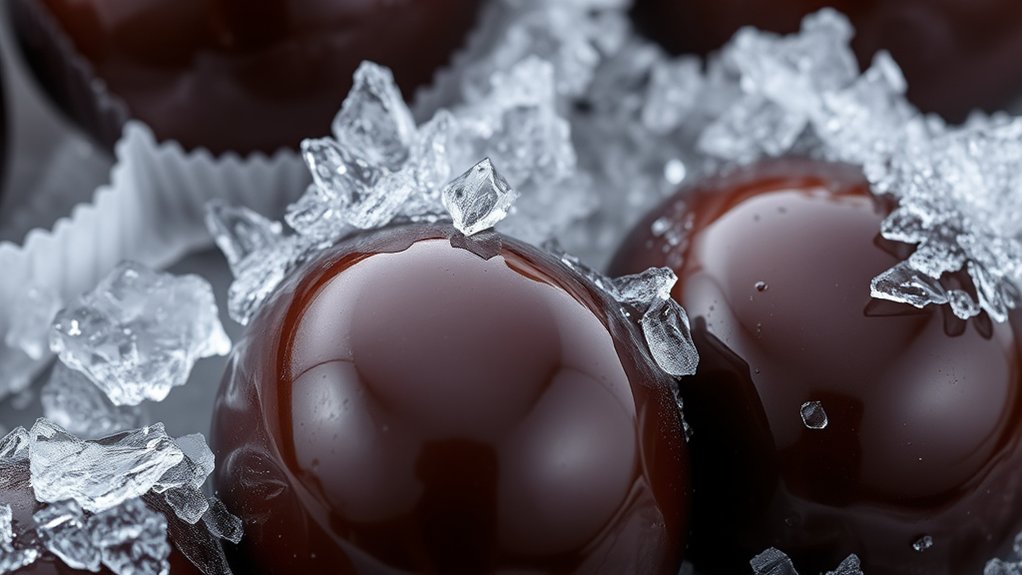
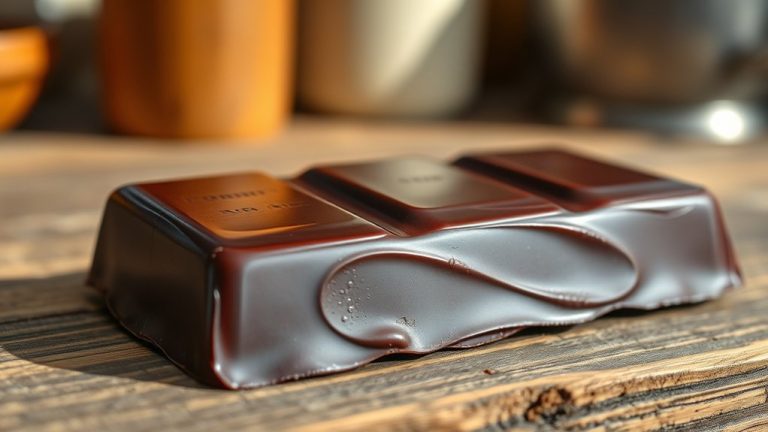
Freezing chocolate can dull its natural shine and affect its overall appearance, making it look less glossy and appealing. When you freeze chocolate, rapid temperature changes disturb the delicate process of chocolate crystallization, which gives chocolate its smooth, shiny surface.
Proper temperature stability during storage helps maintain this glossy finish. Without it, the chocolate’s surface can become dull or develop a white film called bloom. Bloom happens when cocoa butter or sugar rises to the surface because of temperature fluctuations, affecting appearance but not flavor.
Freezing disrupts the crystal structure, causing uneven surface textures and reducing the chocolate’s visual appeal. To help prevent this, avoid sudden temperature changes and store chocolate in a consistent, cool environment before freezing.
This stability helps preserve the natural luster, making sure your chocolate stays shiny and attractive even after freezing.
What Happens to the Melting Point of Chocolate When Frozen
Although freezing doesn’t change the basic makeup of chocolate, it has a big impact on its melting point. When you freeze chocolate, the process of crystallization slows down a lot.
This causes the fats and sugars to reorganize into a more stable crystalline structure, which actually lowers the temperature at which the chocolate melts. So, frozen chocolate is more resistant to melting at room temperature.
This makes it easier to handle and store. To keep this effect, store your chocolate in a proper container that keeps out moisture and odors, which can mess with the crystallization process.
An airtight, sealed container while freezing helps maintain its melting point and quality. The cold environment encourages stable crystal formation, so your frozen chocolate stays firm longer and melts more slowly when you bring it back to room temperature.
Should You Freeze Your Chocolates? Pros and Cons
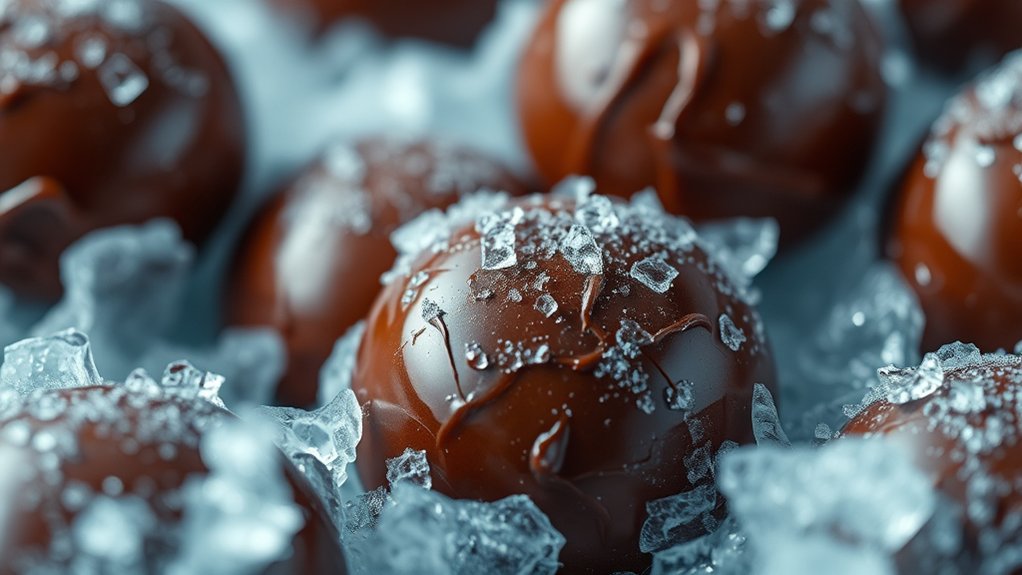
Wondering if freezing your chocolates is a good idea? Freezing can extend shelf life, but it also impacts storage and texture. Using proper freezing techniques helps prevent moisture and flavor loss, but there are trade-offs.
Freezing preserves chocolates from spoilage and can even improve flavors over time. But it might cause sugar bloom or change the texture, making chocolates crumbly or dull.
Here’s a quick overview:
| Pros | Cons |
|---|---|
| Extends shelf life | Possible texture changes |
| Preserves flavor | Risk of sugar bloom |
| Convenient for long-term storage | Potential moisture issues |
| Keeps chocolates fresh | Needs careful packaging |
| Good for bulk buying | Not ideal for immediate eating |
Deciding whether to freeze depends on how you store your chocolates and if you’re okay with possible texture changes. Proper techniques can reduce downsides, but they aren’t foolproof.
How Different Types of Chocolate Respond to Freezing
When you freeze different types of chocolate, you’ll see that milk chocolate can sometimes become grainy or crumbly. It might lose that smooth, velvety texture you love.
Dark chocolate, on the other hand, tends to keep its rich flavor pretty well even after freezing. It’s a bit more resilient in that sense. White chocolate, however, might change in appearance — it could look dull or even discolor slightly.
Knowing how each type reacts can help you figure out the best way to store them so they stay as good as possible.
Milk Chocolate Texture Changes
Have you ever noticed how freezing affects the texture of milk chocolate? When you store milk chocolate in the freezer, it can become firmer and more brittle. The cold causes the fat and sugar molecules to tighten, leading to a denser bite.
Many believe freezing ruins chocolate, but that’s a freezing myth. Proper chocolate storage is key. Milk chocolate tends to develop a slightly grainy texture after freezing, especially if not wrapped tightly.
The moisture can cause subtle changes in mouthfeel, making it less smooth. To keep its quality, wrap milk chocolate well before freezing. While it may not taste exactly like fresh, freezing can be a safe way to extend shelf life without drastically compromising texture—if done correctly.
Dark Chocolate Flavor Preservation
Curious about how freezing impacts the flavor of dark chocolate? When you freeze dark chocolate, proper storage is key to keeping its rich flavor intact.
Freezing can extend its shelf life, but it might also cause subtle flavor changes if not done right. Dark chocolate’s high cocoa content helps it resist flavor loss better than other types, but temperature fluctuations can dull its taste or bring out slight bitterness.
To keep its flavor, wrap the chocolate tightly and store it in an airtight container before freezing. This helps reduce exposure to moisture and odors. While freezing slows spoilage, it’s best to enjoy dark chocolate within its recommended shelf life for the best taste.
Proper storage ensures your dark chocolate stays flavorful, even after freezing.
White Chocolate Appearance Effects
White chocolate reacts differently to freezing compared to other types because of its unique composition, mainly its high milk fat and sugar content. When frozen, it can develop a dull, matte appearance and may form a whitish film called fat bloom, which impacts how it looks.
This bloom doesn’t harm the flavor but can change the aroma, making it seem less vibrant. To avoid damage, proper packaging is key; airtight containers help reduce moisture exposure and temperature changes.
Freezing can cause slight surface changes, but the texture usually stays intact if stored properly. Just remember, improper packaging can lead to moisture condensation when thawing, which can affect both appearance and aroma.
Tips for Freezing and Thawing Chocolate Properly
Freezing chocolate candy takes a bit of care to keep it tasting great and looking good. First, wrap the candies tightly in plastic wrap or put them in an airtight container to avoid freezer burn.
Make sure your freezer stays at 0°F (-18°C) to keep the texture and flavor just right. When you’re ready to thaw, follow these simple steps:
Transfer the chocolate from the freezer to the fridge about 24 hours before you want to serve it. This helps it thaw gradually.
Try not to open the package during thawing, as moisture can affect the surface of the chocolate.
Once it’s thawed, let the chocolate sit at room temperature slowly before unwrapping or serving. This prevents condensation and bloom from forming.
Common Mistakes to Avoid When Freezing Chocolates
While proper freezing and thawing techniques help preserve chocolate, many common mistakes can still hurt its quality. One big mistake is not storing chocolates correctly, which can cause them to absorb moisture or odors.
Another mistake is freezing chocolates without wrapping them tightly. This exposes them to air and can lead to freezer burn and flavor loss. Using improper freezing methods, like sudden temperature changes, can cause bloom or cracks in the chocolate.
Ignoring the importance of gradual thawing can lead to condensation and texture problems. Rapid thawing is a no-go because it also risks moisture damage and changes in the chocolate’s appearance.
Here’s a quick visual guide:
| Mistake | Result |
|---|---|
| Not wrapping tightly | Freezer burn, flavor loss |
| Freezing at wrong temps | Bloom, cracks |
| Sudden temperature shifts | Texture changes |
| Ignoring storage conditions | Odor absorption |
| Rapid thawing | Condensation, moisture damage |
Avoid these mistakes to keep your chocolates delicious and looking great.
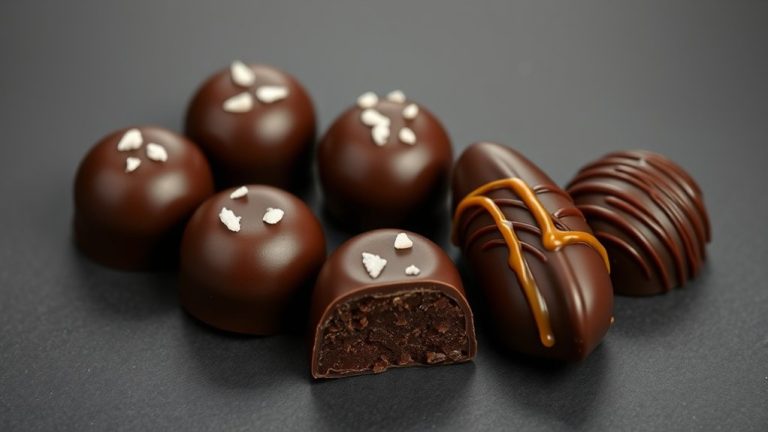
What About Chocolates With Fillings or Add-Ins?
What About Chocolates With Fillings or Add-Ins?
Have you ever wondered how chocolates with fillings or add-ins hold up when frozen? Freezing can affect both the chocolate and its filling, especially with treats that are filled or tend to ooze.
Here’s what you can expect:
- Texture Changes: The filling might turn grainy or lose its smoothness after thawing.
- Separation or Leakage: Add-ins like caramel or fruit preserves can separate or leak, which can impact quality.
- Flavor Loss: Some fillings may soak up freezer odors or develop off-flavors over time, changing the taste.
When freezing chocolates with fillings, it’s best to wrap them tightly to block moisture and odors. Keep in mind that the stability of the filling depends on its ingredients—creamy or fruit-based fillings are more likely to change texture.
Proper storage during freezing helps keep both the chocolate shell and filling in good shape. If you want the best flavor and texture, consider freezing only unfilled chocolates or ones with stable fillings.
Is Freezing Chocolate Worth It? Final Tips and Recommendations
Deciding whether freezing chocolate is worthwhile depends on your priorities for storage and convenience. Freezing extends storage time, especially if you need to keep chocolates for months.
It’s a good option if you want to prevent spoilage or keep it fresh over time. But temperature stability during freezing and thawing is key; fluctuations can cause condensation, leading to issues like bloom or soggy patches.
If you plan to eat the chocolate soon, freezing might not be necessary. Also, think about how you store it—airtight containers or well-wrapped packages help keep out moisture and odors.
For the best results, let the chocolate come to room temperature gradually after freezing to avoid moisture buildup. Overall, freezing can be worth it if you’re prepared to manage temperature changes and are planning for long-term storage.
If convenience and preservation matter most, it’s a practical choice—just follow proper techniques to keep the quality high.
Frequently Asked Questions
Can Freezing Chocolate Cause It to Develop Freezer Burn?
Freezing chocolate can cause freezer burn if you don’t store it properly, but it usually doesn’t change the texture much. Freezer burn happens when moisture escapes, leaving dry, dull spots on the surface.
To avoid this, wrap your chocolate tightly in foil or store it in airtight containers. When stored correctly, your chocolate stays fresh and free from freezer burn.
This way, it keeps its smooth texture and delicious flavor, making sure you enjoy it just like when you first bought it.
How Long Can Chocolate Be Stored in the Freezer Without Quality Loss?
You can store chocolate in the freezer for up to 6-8 months without losing much quality if the temperature stays steady at 0°F (-18°C).
To avoid melting or freezer burn, wrap your chocolate tightly and keep it in an airtight container. Proper storage helps prevent moisture from getting in and keeps the flavor, texture, and appearance intact.
Just keep in mind, freezing for a long time might change the texture a little, but overall, your chocolate will still taste great.
Will Freezing Change the Nutritional Value of Chocolate?
Freezing chocolate won’t really change its nutritional value much, but it can impact its texture and flavor over time. You might notice it feels a bit firmer or grainier once you thaw it.
To keep those qualities intact, wrap the chocolate tightly before freezing. Then, let it thaw slowly at room temperature for the best results.
Proper storage helps preserve both its nutritional benefits and its enjoyable taste and texture.
Is It Safe to Refreeze Chocolate After Thawing?
Refreezing chocolate after thawing isn’t recommended because it can ruin its texture and flavor. When you refreeze it, moisture can form, making the chocolate dull and grainy and changing its taste.
You might think you’re saving time or reducing waste, but the quality really suffers. For the best experience, freeze chocolate once, keep it sealed, and eat it within a reasonable time.
That way, you’ll preserve its flavor and keep the texture just right.
How Does Freezing Impact Chocolate’s Shelf Life?
Freezing extends chocolate’s shelf life by slowing down the growth of bacteria and mold, keeping it fresh longer.
However, it can affect the chocolate’s texture, making it slightly grainy or dull because of moisture exposure.
If you wrap it properly, freezing helps preserve the flavor. But temperature fluctuations can cause condensation, which can impact quality.
To enjoy the best flavor and texture, it’s best to consume frozen chocolate within a few months.
Conclusion
Freezing chocolate can be helpful if done correctly, especially for long-term storage.
Imagine saving special chocolates for a special occasion, only to find their texture and appearance stay intact after proper freezing and thawing. Just remember to wrap them tightly and keep moisture out.
When done right, freezing preserves flavor and keeps chocolates fresh without sacrificing quality. So, if you’re careful when freezing, your chocolates will stay delicious and beautiful until you’re ready to enjoy them.