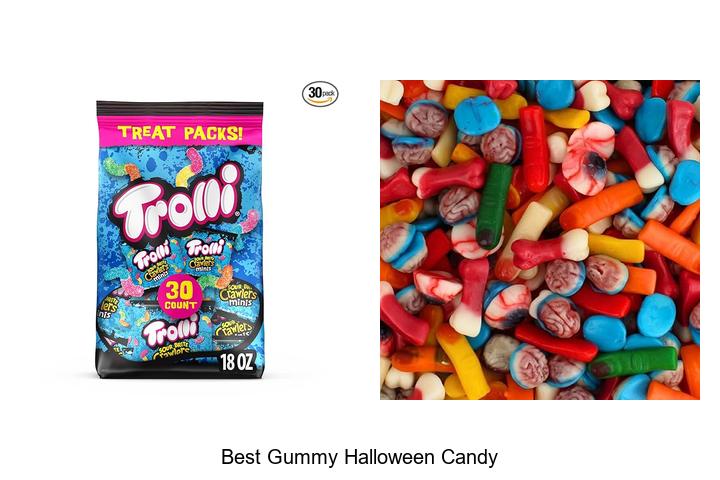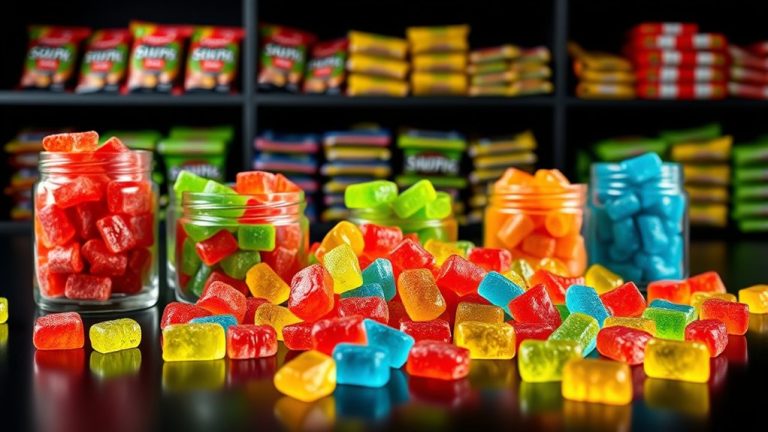
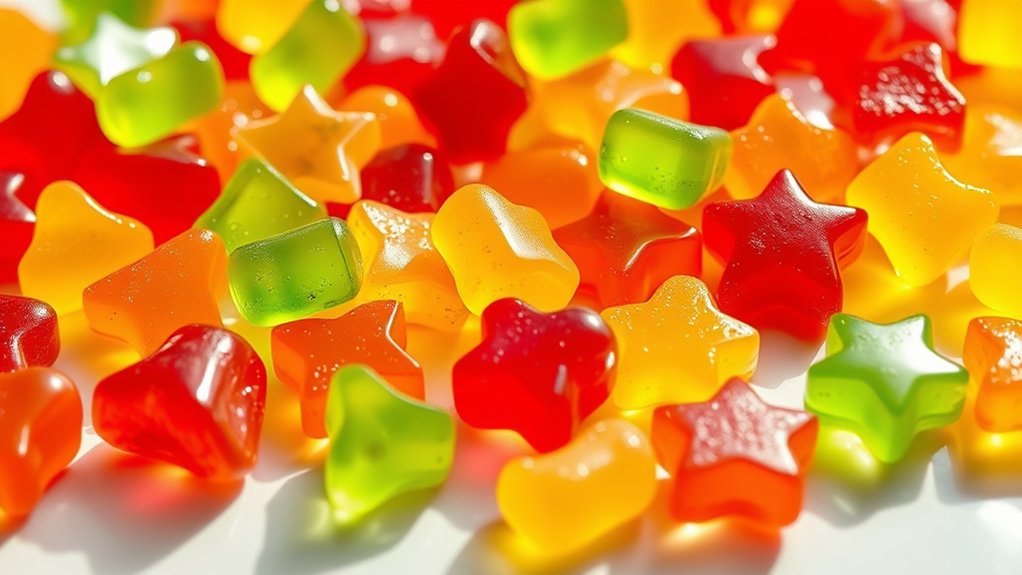
What Is Gummy Candy?
Are you tired of searching for the perfect gummy candy that hits just the right chewy and sweet spot? You’re not alone—many people struggle to find gummies that taste great and have quality ingredients.
Gummy candy is a chewy, colorful treat made from gelatin, sugar, flavorings, and colorings. It’s shaped into fun forms like bears, worms, or other shapes, and coated with wax or sugar for a shiny finish.
These candies are popular worldwide for their chewy texture and bright appearance. While they can be enjoyed as treats, understanding their ingredients, history, and ways to choose quality options can help you appreciate them even more.
Keep exploring to learn all about gummy candies!
Key Takeaways
- Gummy candy is a chewy, brightly colored treat made from gelatin, sugar, flavorings, and colorings, shaped into fun forms.
- It started in Germany in 1922 when Hans Riegel created “Gummibär,” and Haribo helped make it popular.
- The candies are made by heating ingredients, pouring them into molds, cooling, shaping, and coating them for shine and texture.
- They often have artificial colors, flavors, and preservatives, which might be a concern if you eat too much.
- Gummy candies are pretty versatile—they’re used in baking, decorating, gift arrangements, and even in drinks and edible displays.
What Are Gummy Candies? An Overview
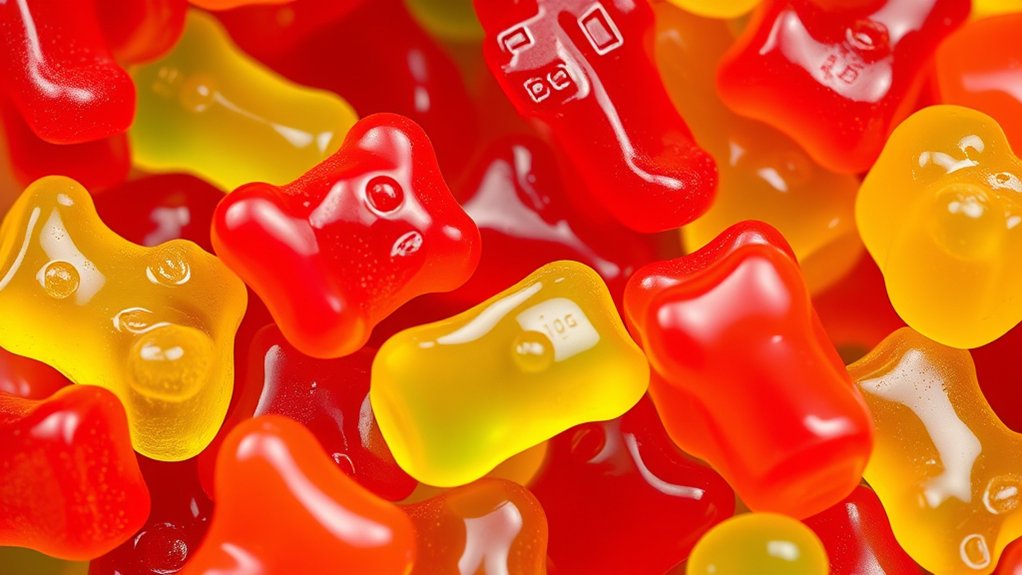
Gummy candies are chewy, brightly colored treats that have become a favorite for many snack lovers. Their history goes back to the early 20th century when German entrepreneur Hans Riegel created the first gummy candy in 1922, calling it “Gummibär,” or gummy bear.
Over time, gummy candies gained popularity worldwide. The process involves mixing gelatin, sugar, and flavorings, then heating the mixture until it reaches the right consistency.
This mixture is poured into molds shaped like bears, worms, or other fun forms. After cooling and setting, the candies are cut and coated with a thin layer of wax or sugar to give them a shiny, smooth surface.
This process ensures each piece is chewy, flavorful, and colorful. Today, gummy candies keep evolving with new shapes, flavors, and textures, but their traditional production methods still form the core of how they’re made.
What Are the Main Ingredients in Gummy Candies?
The main ingredients in gummy candies work together to create their signature chewy texture and vibrant flavors. During manufacturing, key components include gelatin, sugar, corn syrup, and acids like citric acid.
Gelatin gives gummies their chewy, elastic quality that makes them so distinctive. Sugar and corn syrup add sweetness and help give the candies their glossy look. Acids like citric acid give gummies a tangy taste and help keep them fresh.
Gelatin provides chewiness, while sugar, corn syrup, and citric acid add sweetness, tang, and shine to gummies.
Flavorings and colorings are added to make the gummies more appealing visually and to add variety in taste. While traditional gummies rely on gelatin, some use plant-based thickeners like pectin or agar-agar to cater to different dietary needs.
All these main ingredients work together to ensure the final product has the right texture, flavor, and shelf life. Understanding what’s inside helps explain why gummy candies stand out among other sweets.
How Are Gummy Candies Made? From Liquid to Chewy
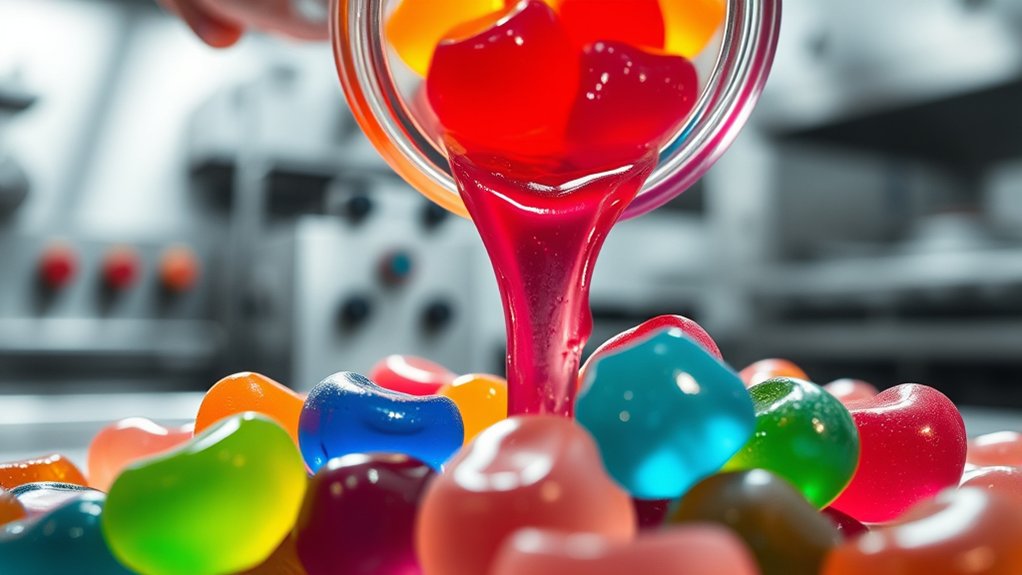
To turn liquid ingredients into the chewy candies you love, manufacturers start by heating a mix of gelatin, sugar, corn syrup, and acids until everything dissolves completely. This step is key because it creates the sticky, viscous base needed for the candy’s texture.
Once the mixture hits the right temperature, it’s poured into molds or sheets to cool and set. During this stage, flavoring is added to give each gummy its unique taste.
Here’s how it continues:
- The cooled, semi-solid mass is cut into small pieces or shaped into molds, forming the gummy shapes.
- These shapes are then coated with a light layer of starch or sugar to keep them from sticking together.
- Lastly, the gummies are packaged once they reach the perfect chewy consistency.
This process blends precision and creativity to produce the flavorful, chewy treats you enjoy.
The History and Origins of Gummy Candies
The colorful, chewy treats we enjoy today have a rich history that dates back over a century. Gummy candies started in Germany in the early 20th century, inspired by traditional fruit jellies and confections.
Hans Riegel, a confectioner, created the first gummy bear in 1922 and founded Haribo, which changed the way gummies are made. As their popularity grew, manufacturers focused on packaging to keep these treats fresh and appealing.
The development of specialized molds and production lines allowed for consistent shapes and sizes, helping to boost global demand. Over time, gummy candies expanded from bears to a variety of shapes, flavors, and colors, all while keeping their chewy texture.
Today, the history of gummy candies shows how innovation in packaging and manufacturing has helped these nostalgic treats reach candy lovers all around the world. Their journey from simple confections to iconic candies combines tradition with modern candy-making techniques.
What Makes Gummy Candies Chewy and Colorful?
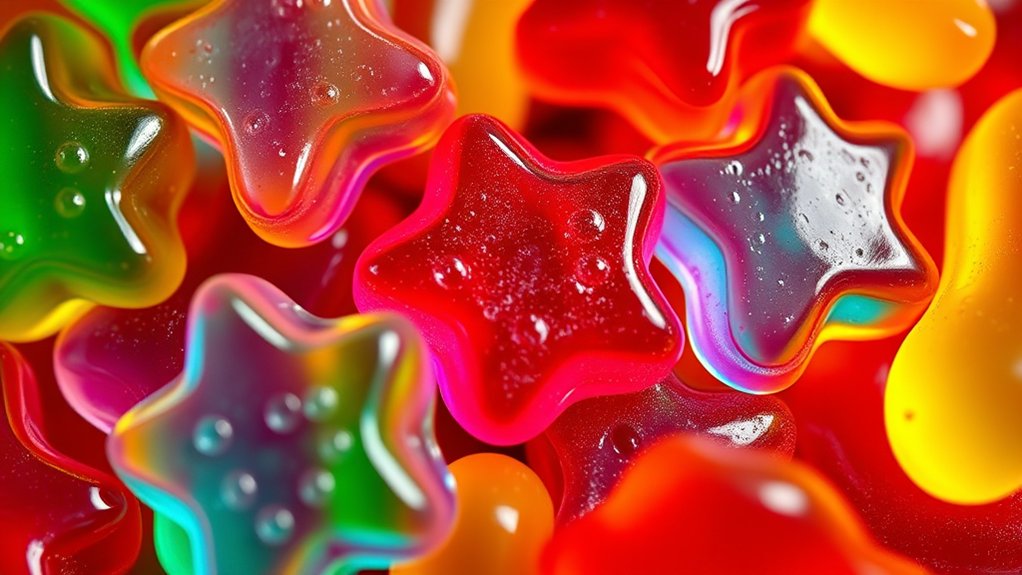
Gummy candies get their chewy texture and vibrant colors from specific ingredients and manufacturing steps. The chewy feel comes from gelatin, which gives gummies elasticity and makes them fun to bite.
The bright, colorful look is thanks to colorful candy dyes that are food-safe and safe to eat. These dyes are added during production to give gummies their eye-catching hues.
During manufacturing, heating, pouring into molds, and cooling help set the textures and colors. This process ensures each gummy is consistent, chewy, and brightly colored.
Together, these ingredients and steps create the delicious textures and vivid colors that make gummies so popular and fun to enjoy.
Popular Shapes, Flavors, and Variations of Gummy Candies
With their wide variety of shapes, flavors, and sizes, gummy candies appeal to all kinds of tastes and preferences. During gummy candy manufacturing, producers create popular shapes like bears, worms, fruits, and hearts to attract different consumers.
Gummy candies come in fun shapes, flavors, and sizes, appealing to every taste and preference.
Flavors range from classic fruit options—strawberry, orange, lemon—to unique blends like sour apple or tropical mixes. These variations help brands stand out and appeal to diverse audiences.
Gummy candy marketing strategies often highlight these distinctive shapes and flavors to entice buyers, emphasizing fun, nostalgia, or novelty. Some brands even introduce limited editions or seasonal shapes to boost interest and sales.
The versatility in design and flavor options allows manufacturers to target specific demographics and keep their product lines fresh. Whether you prefer chewy bears or sour worms, this variety keeps gummy candies exciting and appealing across all age groups.
Are Gummy Candies Healthy? Nutritional Insights
Gummy candies are mostly just sugary treats, so if you eat a lot of them, it can really affect your health. They don’t offer much in terms of nutrition, and while some brands try to add vitamins or minerals, it’s usually not enough to make them a healthy option. Plus, a lot of gummies contain artificial additives, which can be concerning when it comes to long-term health effects. So, it’s best to enjoy them occasionally and in moderation.
Sugar Content and Impact
Although gummy candies may seem harmless, their high sugar content raises questions about their healthiness. Eating too many can lead to sugar addiction, making it hard to stop craving more.
Plus, their sticky texture can stick to your teeth, which isn’t great for your dental health. Here are three main impacts:
- Increased blood sugar levels, leading to energy crashes and more cravings.
- Higher risk of cavities because sugar feeds bacteria that produce acid.
- A potential for developing a sugar addiction, causing you to overeat sweets.
Enjoying gummy candies now and then is okay, but eating them too often can hurt your health. Watching your portion sizes helps reduce these risks and keeps your teeth and overall wellness in check.
Nutritional Value Overview
Are gummy candies truly a source of nutritional value? Not really. Gummy candy production focuses on flavor, texture, and visual appeal rather than nutrition. These candies are mostly made from sugar, gelatin, and flavorings, offering minimal vitamins or minerals.
Gummy candy marketing emphasizes their fun and indulgence, but it doesn’t highlight health benefits. While they can provide quick energy due to sugar content, they lack essential nutrients needed for a balanced diet.
If you’re looking for nutrition, gummies aren’t the best choice. Instead, they serve as a treat rather than a source of nutritional value. Understanding this helps you make smarter snack choices, balancing enjoyment with health considerations.
Artificial Additives Concerns
Many gummy candies contain artificial additives that raise health concerns. During production, artificial colors, flavors, and preservatives are added to make them look and taste better.
These additives can cause allergic reactions or hyperactivity in some people. Here are some key points to keep in mind:
- Artificial colors are linked to hyperactivity and behavioral issues in children.
- Preservatives like sodium benzoate may cause allergic reactions or pose health risks over time.
- Synthetic flavors can contain chemicals that some people prefer to avoid for health reasons.
While these additives make gummy candies more appealing, eating too many can lead to health concerns. Being aware of these issues helps you make better choices about consuming gummy candies.
Are Gummy Candies Bad for Your Health? Myths and Facts
Gummy candies often get a bad reputation, but not all health concerns are backed by facts. Some people worry about Gummy candy allergies, but true allergic reactions are rare. Most can enjoy gummies without issues unless they have specific food allergies.
Regarding a Gummy candy diet, moderation is key. While they’re high in sugar and can contribute to weight gain if eaten excessively, enjoying gummies occasionally isn’t harmful for most healthy folks.
The myth that gummies are inherently bad for you usually comes from their sugar content, not dangerous ingredients. If you’re mindful of your overall diet and limit intake, gummies can fit into a balanced approach.
However, if you have health conditions like diabetes or food allergies, it’s wise to check with your healthcare provider.
How to Choose Quality Gummy Candies at the Store
When you’re picking out gummy candies at the store, it’s a good idea to start by taking a quick look at the ingredients list. You want to see real fruit ingredients and avoid those with too many artificial additives. It just makes for a tastier and possibly healthier treat!
Next, take a moment to check out the texture and shape of the gummies. You’re looking for candies that are firm and plump—nothing too soft or overly sticky. Also, make sure they don’t look deformed or have any cracks, which could mean they’re not fresh.
Lastly, don’t forget to look at the packaging. Make sure it’s sealed properly and looks airtight. Proper packaging helps keep the gummies fresh and tasty until you’re ready to enjoy them!
Check Ingredients List
How can you quickly identify high-quality gummy candies? The key is to check the ingredients list carefully. Look for candies with minimal, recognizable ingredients that reflect good gummy candy manufacturing. This often means real fruit juice or natural sweeteners instead of artificial flavors and colors.
To guarantee you’re getting quality, consider these points. First, read the ingredients list—prefer candies with simple, natural components. Next, avoid artificial additives, as they can negatively affect the flavor. Finally, check for high fruit content, which usually indicates better flavor and fewer fillers.
Inspect Texture and Shape
Inspecting the texture and shape of gummy candies can give you important clues about their quality. During texture analysis, look for candies that feel firm yet chewy, without being too sticky or hard. A high-quality gummy should have a consistent texture, indicating proper manufacturing.
Pay attention to shape diversity; candies that come in a variety of well-defined shapes usually reflect better craftsmanship. Avoid gummies that appear misshapen, deformed, or have uneven surfaces, as these can signal lower quality or poor production standards.
The right texture ensures a satisfying bite, while appealing shapes demonstrate attention to detail. By carefully evaluating these aspects at the store, you’ll be better equipped to select gummies that are both enjoyable and made to high standards.
Evaluate Packaging Quality
Evaluating the packaging quality of gummy candies helps guarantee you’re choosing fresh and well-made treats. First, check the packaging design for signs of damage or tampering; intact packaging suggests freshness.
Next, feel the packaging to see if it’s sturdy and secure. Good durability protects the candies from crushing or contamination. Then, look for clear labels that include expiration dates, ingredients, and storage tips—these show quality and proper handling.
Proper packaging keeps the candies fresh longer and helps maintain their texture. By paying attention to these details, you can confidently pick gummy candies that are both tasty and safe to enjoy. Remember, good packaging is key to getting the best quality treats.
Creative Ways to Enjoy Gummy Candies in Recipes and Gifts
Gummy candies can be more than just a sweet snack. They’re versatile ingredients that add fun and flavor to your recipes and gifts. Their history dates back to the early 20th century, inspiring many gummy flavor innovations that keep them exciting.
You can incorporate gummy candies into baked goods like cookies or brownies for a chewy surprise in every bite. Melted gummies make vibrant toppings for cupcakes or ice cream, adding a burst of color and flavor.
For gifts, try assembling a jar filled with gummy candies mixed with nuts or dried fruits for a personalized treat. You might also create gummy-infused cocktails or mocktails, using their fruity essence to enhance drinks.
Additionally, crafting a custom candy bouquet with gummy candies makes a playful, edible gift. With a little creativity, gummy candies can turn ordinary recipes and presents into memorable, sweet experiences.
Frequently Asked Questions
Are There Vegan or Allergy-Friendly Gummy Candy Options Available?
Yes, there are vegan and allergy-friendly gummy candy options out there. You can find vegan versions made without gelatin, using plant-based ingredients like agar or pectin.
For allergy-free choices, look for candies that are free from common allergens like nuts, soy, or gluten. Many brands now cater to these needs, so you can enjoy gummy candies without worry.
Always check the packaging for labels indicating whether the product is vegan, allergy-free, or contains specific allergens.
How Long Do Gummy Candies Typically Last Before Going Bad?
About 6 to 12 months is the typical shelf life for gummy candies if stored properly.
You’ll want to keep them in an airtight container in a cool, dry place to extend their freshness. Proper storage helps prevent them from becoming hard, sticky, or moldy.
Always check for signs of spoilage, like changes in texture, aroma, or color, before enjoying your gummy candies.
Can Gummy Candies Be Made at Home From Scratch?
Yes, you can make gummy candies at home using simple homemade recipes. You’ll need basic ingredients like gelatin, fruit juice, and sweetener, and you can try ingredient substitutions such as honey or agave syrup for sugar.
Mix your ingredients, pour into molds, and let them set in the fridge. Making gummy candies from scratch lets you customize flavors and avoid preservatives.
It’s a fun, tasty project that’s easy to do with just a few simple ingredients.
What Are the Environmental Impacts of Gummy Candy Packaging?
You might be surprised, but the environmental impacts of gummy candy packaging are significant. When you choose products with sustainable packaging made from eco-friendly materials, you help reduce pollution and waste.
Conventional packaging often ends up in landfills and can take years to decompose. By supporting brands that prioritize eco-conscious options, you contribute to a healthier planet.
Making these small choices can lower your carbon footprint and promote sustainability. Every little bit helps in protecting our environment for future generations.
Are There Any Significant Differences Between Branded and Generic Gummy Candies?
You’ll notice that branded gummy candies often have distinct branding differences, like unique packaging and logos, which can make them more appealing and recognizable. Flavor variations also tend to be more diverse and consistent, giving a more premium experience.
On the other hand, generic gummy candies might lack strong branding but can still deliver similar taste and texture at a lower price. That makes them a practical choice for budget-conscious consumers.
Conclusion
You might’ve heard that gummy candies are just empty calories, but that’s not entirely true. While they’re definitely treats to enjoy in moderation, they can bring joy and nostalgia.
Don’t let myths scare you away. Quality gummies can be part of a fun, balanced diet.
Next time you indulge, keep in mind that even small pleasures can brighten your day. Gummy candy is a tasty reminder that sometimes, a little sweetness is exactly what you need.