When Was Chocolate Candy Invented?
If you’re like many people, you probably have a sweet tooth and love indulging in chocolate candy. But have you ever wondered where this irresistible treat actually comes from? You’re not alone—many of us are curious about the history behind our favorite confections.
Chocolate candy evolved over centuries, starting as a bitter beverage used in sacred rituals by ancient cultures like the Maya and Aztecs. When Europeans were introduced to cacao in the 16th century, they added sugar, transforming it into a luxury drink.
Over time, innovations in manufacturing and packaging turned chocolate into the sweet, solid confections we enjoy today. If you want to uncover the fascinating details behind its transformation, keep exploring.
Key Takeaways
- Chocolate candy as we know it started to take shape in the 19th century, thanks to new manufacturing techniques.
- Solid chocolate bars and confections first appeared in the early 1800s because of technological innovations.
- European innovations after cacao was introduced from the Americas helped develop chocolate as a candy.
- The shift from sacred cacao drinks to sweet, solid treats happened during the Industrial Revolution.
- Modern chocolate candy became widely available in the late 1800s and early 1900s with better manufacturing and packaging.
The History of Cacao: From Ancient Civilizations to Modern Times
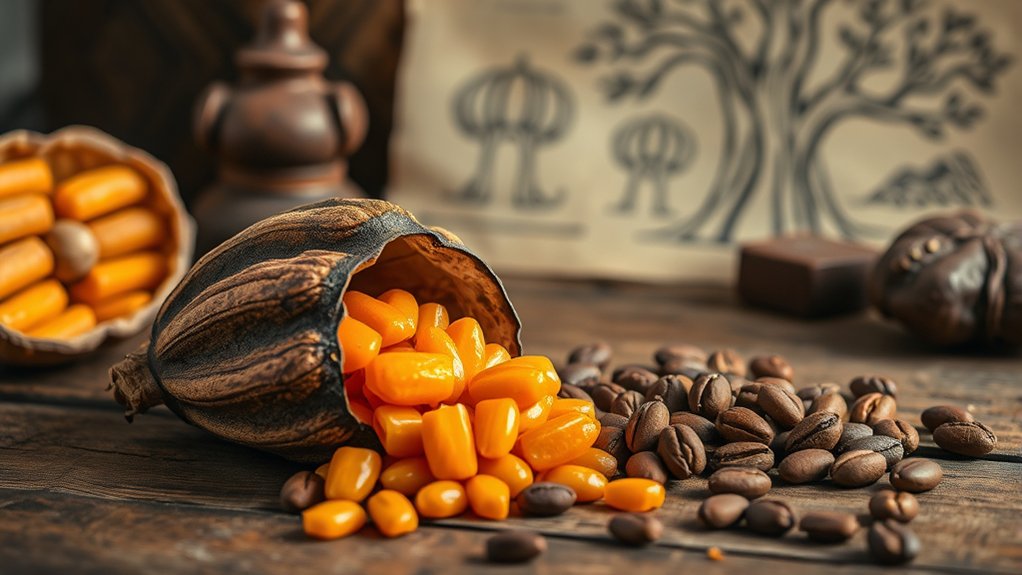
The story of cacao begins thousands of years ago in ancient Mesoamerican civilizations, where it was highly valued and often considered sacred. You’d find cacao at the center of ancient rituals, used to honor gods and mark important ceremonies.
Cacao was sacred, central to rituals honoring gods and marking important ceremonies in ancient Mesoamerican cultures.
It wasn’t just food; it held deep cacao symbolism, representing life, fertility, and divine connection. Leaders and priests drank cacao as part of sacred rites, believing it had spiritual powers.
The Mayans and Aztecs saw cacao as a gift from the gods, often using cacao beans as currency or offering them to deities. Its significance went beyond nutrition, embodying a cultural and spiritual identity.
Cacao’s role in these societies laid the foundation for its enduring importance, influencing traditions and beliefs that persist today. This ancient reverence for cacao shaped how later civilizations viewed this prized ingredient, blending ritual, spirituality, and social status into a rich cultural legacy.
How Early Cultures Used Cacao in Food and Rituals
You can see that ancient cultures didn’t just see cacao as a tasty treat; they genuinely valued it for its spiritual significance too. They used it in important rituals and ceremonies, really integrating it into their spiritual practices.
For example, early civilizations would offer cacao to their gods and include it in sacred rites, showing just how much they revered it. Understanding these early uses helps us see how cacao became more than just food — it turned into a symbol of power and respect.
Cacao in Ancient Rituals
Have you ever wondered how ancient civilizations viewed cacao? In many cultures, cacao played a key role in rituals. It wasn’t just a food; it held deep symbolic meaning, representing power, fertility, and divine connections.
Mesoamerican societies like the Maya and Aztecs used cacao in ceremonies to honor gods and mark important events. Cacao symbolism was so significant that it appeared in artwork and mythology, often linked to life and rebirth.
Consuming cacao during rituals was believed to invoke spiritual insight and communicate with deities. Its sacred status helped elevate it from a simple ingredient to a revered substance, essential to spiritual practices.
These rituals show how cacao’s importance went beyond just sustenance, embedding it into the spiritual fabric of early cultures.
Early Uses of Cacao
Ancient cultures didn’t just see cacao as a sacred symbol; they also welcomed it as a versatile food ingredient. Through trade, cacao spread across regions, becoming a valuable commodity.
Early Mesoamerican societies like the Olmec and Maya used cacao in their daily diets, blending it into drinks and dishes. Its symbolism went beyond food and represented power, fertility, and divine connection.
The Maya consumed cacao in ceremonial settings, highlighting its spiritual importance. Their trade networks helped exchange cacao beans, making it a prized resource.
Over time, cacao shifted from a ritualistic offering to a popular ingredient in cooking. Its early uses set the stage for the rich history of chocolate, blending culture with culinary creativity.
When Did Chocolate Become a Candy?
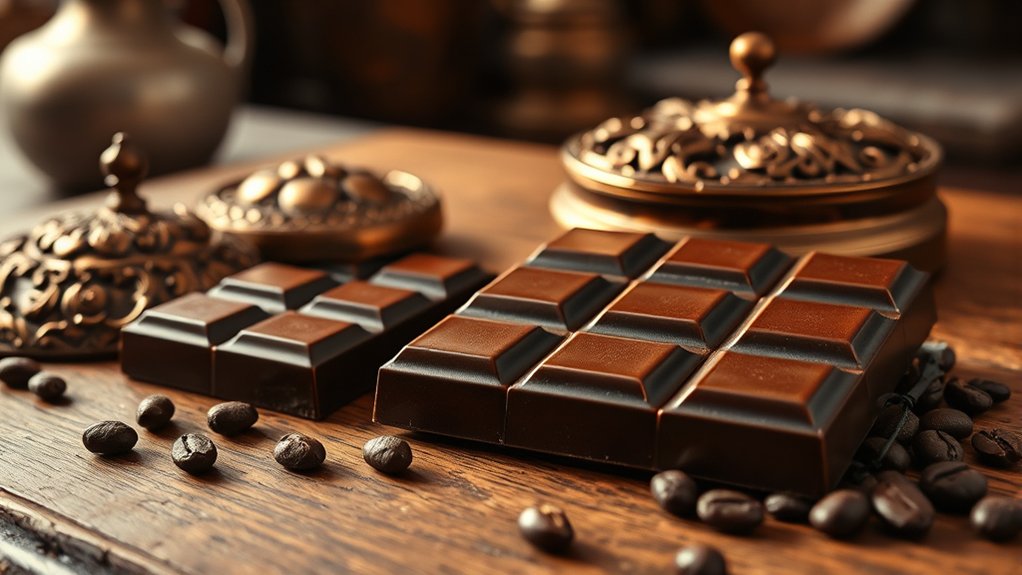
Chocolate became a true candy when people started turning bitter cacao into a sweet, tasty treat. This change happened as chocolatiers experimented with flavorings, adding sugar and other ingredients to make it smoother and more appealing.
Chocolate became candy when bitter cacao was transformed into a sweet, smooth treat with added sugar and flavorings.
Once the cacao was balanced with sweetness, it became more popular and easier to enjoy. Makers then started packaging it in candy wrappers, making it portable and easier to share. The wrappers also kept the chocolate fresh and protected it from damage.
This shift from a bitter drink or raw ingredient to a sweet, portable candy marks the moment chocolate officially became a candy. Wrapping it in colorful, attractive packaging helped make it appealing to a wider audience.
Thanks to that innovation, chocolate moved beyond its original form and evolved into the candy we love today. Your experience of chocolate as a sweet treat all started with this important change in its history.
The Transition From Chocolate Drinks to Solid Confections
The shift from drinking chocolate as a liquid to enjoying it as a solid confections marked a big turning point in its story. This change let chocolate be shaped, flavored, and packaged as candy.
Now, you can enjoy chocolate in many forms—bars, truffles, bites—that are portable and tempting. Imagine this evolution visually with the following table:
| Form | Features | Packaging Style |
|---|---|---|
| Liquid Chocolate | Warm, smooth, rich | Bottles, cups |
| Solid Confection | Firm, moldable, versatile | Wrappers, boxes |
| Modern Candy | Decorative, flavored, durable | Colorful, branded wraps |
This progression made chocolate more accessible and appealing. It also emphasized candy packaging that keeps it fresh and looks attractive.
Plus, it paved the way for creative flavors and innovative presentation. All of this transformed chocolate from a beverage into a beloved, solid treat.
How the Spanish Conquest Introduced Chocolate to Europe
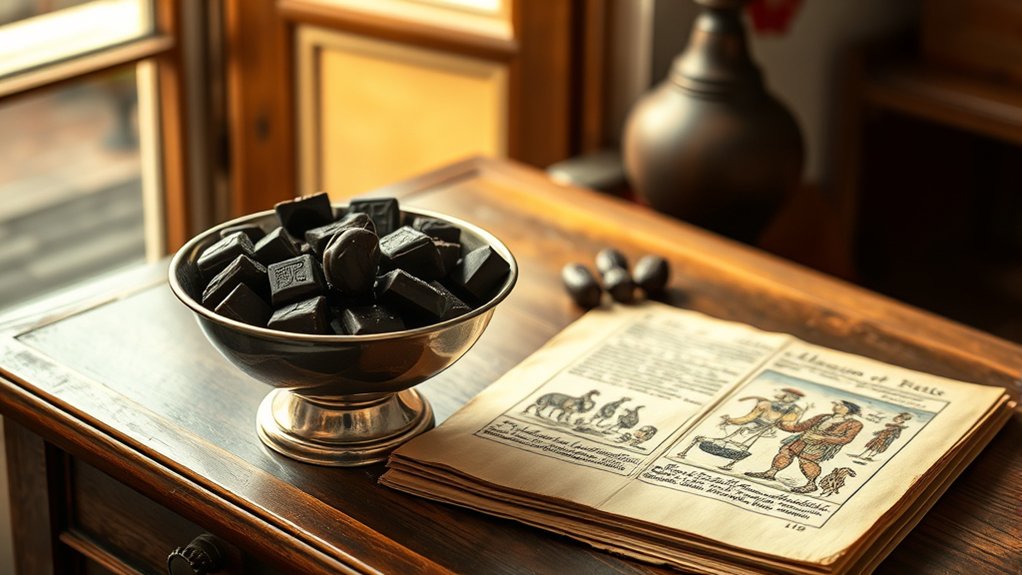
As European explorers encountered the Americas, they brought back more than just new lands and riches—they also introduced a strange, bitter beverage that would soon enchant their palates. The Spanish influence played a vital role in this cultural exchange, as they learned about cacao from the Aztecs and Mayans.
Through active participation in European trade, they introduced cacao beans to Spain and other parts of Europe. Initially, the Europeans saw it as a curiosity, but soon they recognized its potential.
They started mixing cacao with sugar and spices, turning it into a drink fit for royalty and aristocrats. This marked the beginning of Europe’s fascination with chocolate.
The Spanish kept this discovery somewhat secret at first, but eventually, cacao spread across the continent. This fueled demand and led to innovations in chocolate production.
Therefore, the Spanish influence and global trade routes were key in bringing chocolate from the New World to Europe’s courts.
Modern Chocolate Manufacturing: How It’s Made Today
Modern chocolate manufacturing combines advanced technology with traditional techniques to produce the smooth, delicious treats people enjoy today. You’ll see how innovation plays a key role, especially in:
Modern chocolate making blends technology and tradition for irresistible, high-quality treats enjoyed worldwide.
- Chocolate flavorings: Experts carefully blend natural and artificial flavorings to improve the chocolate’s taste, guaranteeing consistency and appealing profiles.
- Processing techniques: Machines refine cacao beans through roasting, grinding, and conching, creating a silky texture and rich flavor.
- Packaging innovations: Modern packaging not only preserves freshness but also incorporates eco-friendly materials and attractive designs to catch your eye.
Throughout the process, quality control is vital, with sensors and automation monitoring every step. You benefit from these advancements through fresher, tastier chocolates that last longer.
The combination of technology and creativity ensures that your favorite candies meet high standards, whether it’s the perfect melt or appealing packaging.
When Did Chocolate Candy Become Widely Available?
As mass production techniques got better, making chocolate candy became much easier and cheaper. Retailers started reaching more places, so these treats could be enjoyed by more and more people. Because of all this, chocolate became super popular and available all over the world.
Rise of Mass Production
The rise of mass production in the late 19th and early 20th centuries made chocolate candy widely available to the public. You can see this shift in how chocolates were produced and distributed, with innovations like faster melting processes and improved candy packaging.
These advancements allowed manufacturers to produce large quantities efficiently. Specifically:
- Automated machinery enabled consistent chocolate melting, reducing costs and increasing output.
- Mass-produced candy packaging kept chocolates fresh longer and made distribution easier.
- Standardized production lines ensured uniform quality, making chocolates more appealing and accessible.
As a result, chocolate candy shifted from a luxury item to an everyday treat, available in stores everywhere. The combination of technological progress and mass production techniques truly changed how people accessed chocolate.
Expansion of Retail Outlets
With the expansion of retail outlets across cities and towns, chocolate candy became much more accessible to the general public. This retail growth greatly increased market penetration, making chocolate treats available beyond just specialty shops and high-end stores.
As more stores opened, especially in urban areas, it became easier for people to buy chocolate regularly. The rise of department stores, pharmacies, and supermarkets played a key role in spreading chocolate candy widely.
This increased availability fueled consumer demand and helped turn chocolate into a common treat. Reaching broader audiences through expanded retail networks made chocolate even more popular. It shifted from being a luxury item to a household staple.
Ultimately, the expansion of retail outlets was a major step in making chocolate candy a widely enjoyed, everyday treat.
Key Innovations That Shaped Today’s Chocolate Candy Industry
Innovations in manufacturing and processing have fundamentally transformed the chocolate candy industry, allowing producers to create a wide variety of textures, flavors, and forms that appeal to consumers worldwide. You’ll notice how chocolate flavorings have become more diverse, offering richer and more complex tastes.
Packaging innovations also play a crucial role, helping to keep chocolates fresh and convenient while attracting buyers. These improvements make chocolate candies more enticing, accessible, and enjoyable.
Key innovations include advanced tempering techniques that enhance the texture and shine of chocolates, making them smoother and more visually appealing. The development of new flavorings, like exotic spices and fruit infusions, has expanded flavor profiles.
Modern packaging, such as resealable wraps and eco-friendly materials, boosts shelf life and appeals to environmentally conscious consumers. These advances have shaped the industry into what it is today.
The Evolution of Popular Chocolate Candy Types Over the Years
You’ve probably noticed how chocolate candy has evolved a lot over the years, right? From those timeless classics we all grew up with to the more modern, inventive treats you see today, it’s been quite a journey. Candy makers are always trying new things, mixing traditional flavors with fresh ideas and cutting-edge techniques.
It’s pretty interesting to see how our taste preferences and advances in technology influence what we love to snack on now. The evolution of chocolate candy really shows how we’re constantly experimenting and changing what we enjoy—making it a fun story of tradition meeting innovation.
Classic Chocolate Types
Over the years, several classic chocolate types have become staples in the world of candy, each developing unique characteristics that appeal to different tastes. These varieties highlight the rich flavor that comes from carefully processed cacao.
You’ll find that different types bring out distinct textures and levels of sweetness. For example:
- Milk Chocolate: Smooth, creamy, and sweet—perfect for those who like a milder chocolate flavor.
- Dark Chocolate: Rich and slightly bitter, with a high cacao content. It appeals to purists who want authentic cacao flavors.
- White Chocolate: It doesn’t contain cacao solids, giving it a sweet, buttery taste. It’s a different take on classic chocolate.
These types reflect how chocolate has evolved, rooted in traditional cacao cultivation practices.
Modern Candy Innovations
As chocolate candy has evolved, manufacturers have introduced a variety of modern innovations that continually reshape your favorite treats. Today’s chocolate flavors go beyond traditional recipes, blending unique ingredients and techniques.
Advances in cacao cultivation have improved bean quality and sustainability, leading to richer, more complex flavors. Modern candy innovations include creative fillings, such as caramel, nuts, and fruit, boosting texture and taste.
You’ll find artisanal chocolates that emphasize ethical sourcing and natural ingredients, elevating the classic experience. Technology also plays a role, with precise tempering methods creating glossy finishes and smooth textures.
These innovations reflect ongoing efforts to amplify your enjoyment while respecting the origins of cacao cultivation, ensuring that your favorite chocolate candies remain exciting and relevant in today’s confectionery landscape.
How Trends and Culture Have Influenced Chocolate Candy Preferences
Cultural shifts and changing trends have always influenced how we see and prefer chocolate candy. You might notice how cultural symbols shape your choices, like linking certain chocolates to celebrations or traditions. Artistic expression also plays a part, inspiring new flavors and packaging that catch modern tastes.
As trends evolve, so do our preferences, often reflecting societal values and aesthetics. For example, the rise of artisanal chocolates highlights craftsmanship and storytelling. Health trends boost demand for organic, fair-trade, or low-sugar options.
Pop culture and advertising also influence flavor trends and packaging design, making chocolates more exciting and engaging. All these factors show how culture and art keep redefining what you enjoy in chocolate candy, blending tradition with innovation.
Your preferences aren’t just about taste—they’re shaped by the cultural symbolism and artistic touches in each piece.
Frequently Asked Questions
Who Invented the First Chocolate Candy Recipe?
You might be surprised to learn that the first chocolate candy recipe was developed by the Aztecs, who used chocolate flavoring in their confections.
However, modern candy manufacturing really took off in the 19th century, with inventors like John Cadbury and others refining techniques.
They combined cocoa with sugar and other ingredients to create the chocolates we enjoy today. This laid the foundation for the wide variety of chocolate candies now in stores.
What Was the First Commercially Successful Chocolate Candy?
Ironically, the first commercially successful chocolate candy was the Hershey’s Milk Chocolate bar, a product of clever chocolate manufacturing and innovative candy packaging.
You might think it’s just a treat, but its rise marked a turning point in mass production, making chocolate accessible to everyone.
Hershey’s mastered the art of packaging and distribution, turning simple chocolate into a beloved icon.
It shows how a little ingenuity can turn a sweet idea into a global phenomenon.
How Did World Wars Impact Chocolate Candy Production?
World wars had a big impact on chocolate candy production, causing shortages and changes in packaging. During wartime, companies focused on wartime rations, which meant less chocolate for civilians.
Packaging also changed to be more practical and minimal, making it easier to transport and store. These restrictions limited how much candy was available, but they also sparked innovation.
This led to new types of chocolate and smarter packaging that suited wartime needs. These changes helped shape the candy industry’s future after the wars.
When Did Chocolate Candy Become Popular in America?
You might think chocolate candy’s popularity in America took off overnight, but it steadily grew in the early 20th century.
As chocolate manufacturing advanced and companies like Hershey’s emerged, their innovative candy marketing made these treats irresistible.
By the 1920s, chocolate candy had become a beloved staple in American households, thanks to clever advertising and mass production.
Chocolates turned into symbols of celebration and comfort across the nation during this time.
Are There Any Cultural Differences in Chocolate Candy Preferences?
You’ll notice that cultural taste preferences really influence chocolate candy choices around the world.
In some places, like Switzerland, rich, creamy chocolates are the go-to, reflecting local traditions that focus on quality and craftsmanship.
Meanwhile, in countries like Japan, you might see unique flavors and textures designed to suit local tastes.
These cultural differences shape what sorts of chocolate candies are popular, making each country’s chocolate scene uniquely delightful and diverse.
Conclusion
So, next time you bite into that chocolate bar, remember—you’re savoring a centuries-old masterpiece that started as ancient rituals and evolved into a sweet rebellion against blandness. Thanks to daring explorers and inventive chocolatiers, you’re now indulging in a tiny, delicious upheaval.
It’s a tasty reminder that even in history’s darkest moments, someone was busy inventing candy because why face the world without a little sweet, sweet distraction? Chocolate candy, after all, has a rich history that dates back thousands of years, making every bite a celebration of human ingenuity.