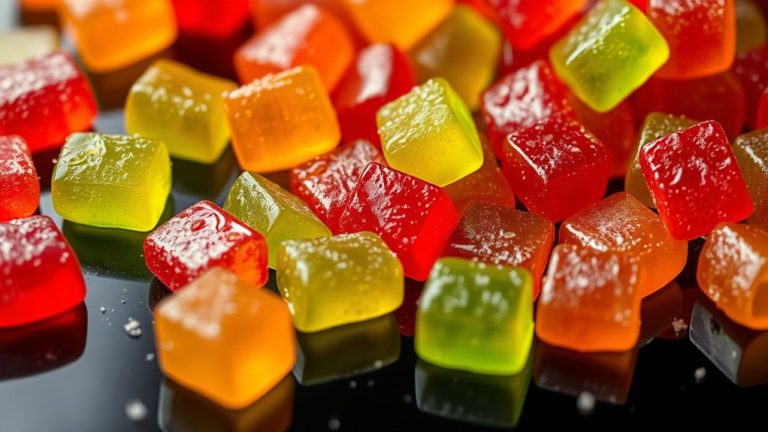

What Ingredients Are in Gummy Candy Made?
If you’ve ever wondered what makes gummy candy so irresistibly chewy and colorful, you’re not alone. Many people struggle with understanding what goes into these sweet treats and what makes each piece so delightful.
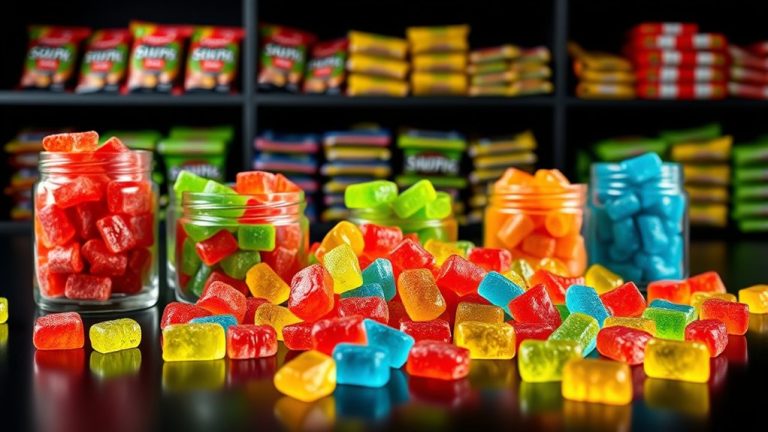
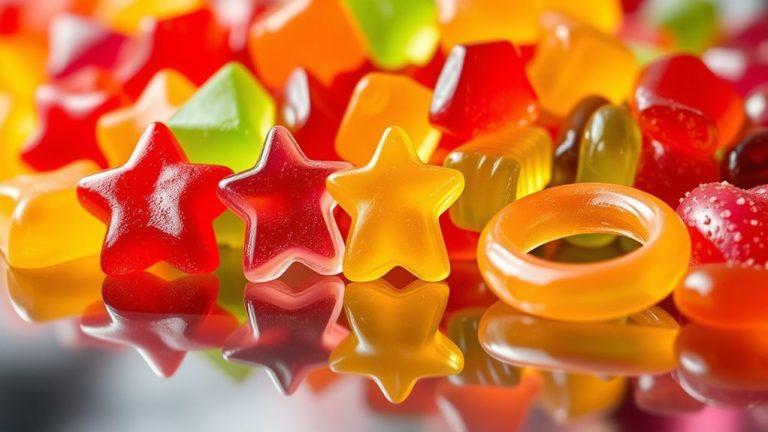
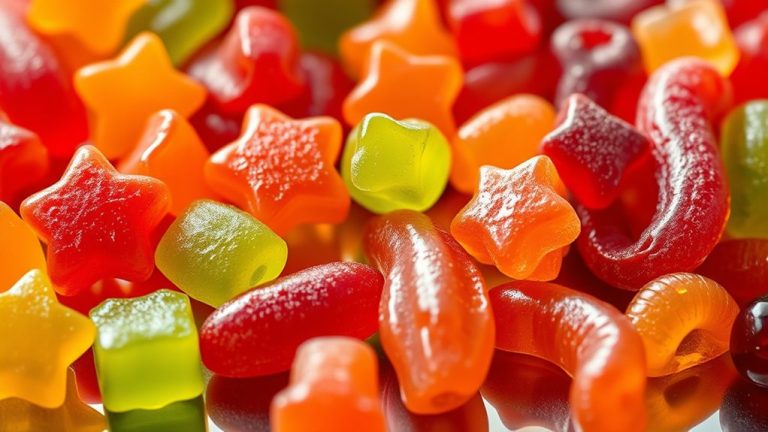
Gummy candy is made from a mix of sugars like sugar and corn syrup for sweetness and moisture, along with gelling agents such as gelatin or plant-based alternatives like pectin or agar-agar to create that chewy texture.
It also includes flavorings, both natural and artificial, and colorful dyes to make them vibrant. Preservatives help extend shelf life, while stabilizers and emulsifiers ensure a smooth, durable consistency.
If you want to investigate how these ingredients come together, keep searching to learn more.
Key Takeaways
- Gummy candies mainly contain sugars, sweeteners, and gelling agents like gelatin or plant-based options such as agar-agar.
- Flavorings, which can be natural or artificial, along with food colorings, give gummies their taste and bright appearance.
- Corn syrup and glucose help improve the texture, keep moisture in, and give gummies a nice shine.
- Preservatives like citric acid are added to extend shelf life and stop microbial growth.
- Other ingredients like emulsifiers and stabilizers help improve texture, keep everything stable, and boost overall quality.
What Are the Main Ingredients in Gummy Candy?

Gummy candy is made from a few key ingredients that give it its chewy texture and sweet flavor. The main ingredients include sugar, corn syrup, gelatin, and flavorings.
Sugar and corn syrup provide the sweetness and help create that smooth, chewy consistency. Gelatin is essential for giving gummies their iconic bounce and firmness, acting as the primary gelling agent.
Sugar, corn syrup, and gelatin work together to give gummies their sweet, chewy, and firm texture.
Flavorings, both natural and artificial, give each gummy its distinctive taste. When it comes to packaging, manufacturers often design colorful, eye-catching wrappers to attract customers.
Effective marketing and branding focus on emphasizing the fun, playful nature of gummies, appealing to both kids and adults. Packaging choices and branding efforts help products stand out on store shelves and build loyalty.
Knowing what goes into gummies helps you appreciate how these ingredients work together to create a delicious, appealing treat.
How Does Gelatin Make Gummies Chewy?
When you take a bite of a gummy, it’s the gelatin that gives it that satisfying chewiness. Basically, as the gelatin cools and sets, it forms this network of tiny, flexible strands. These strands trap air and liquids inside, which is what makes the gummy feel so chewy and fun to bite into. That’s the secret behind its signature texture!
Gelatin’s Structural Role
Gelatin is the key ingredient that gives gummy candies their signature chewy texture because it forms a flexible, gel-like network when cooled. This network traps water, creating the bounce and stretch you enjoy.
Without it, gummies would be much softer or crumbly. If you’re looking for gelatin alternatives, plant-based options like agar-agar or pectin can mimic this structure, though they may require adjustments in recipes.
Vegan gummy recipes often rely on these substitutes to achieve similar chewiness, but the texture might differ slightly from traditional gelatin-based gummies. Understanding gelatin’s structural role helps you appreciate how it maintains the firmness and elasticity that make gummies fun to chew.
Whether using gelatin or its alternatives, the goal is to create that perfect chewy bite.
Chewiness Formation Process
The key to the chewy texture of gummies lies in how gelatin interacts with water and other ingredients during the setting process. When gelatin dissolves in warm water, it forms a network of long, tangled protein chains.
As the mixture cools, these chains bond, trapping water and creating a gel-like consistency. This network determines the chewiness, giving gummies their firm yet flexible bite.
Properly controlling this process guarantees a consistent texture, which is essential for gummy candy packaging that appeals to consumers. Marketers emphasize chewiness as a key feature, highlighting the satisfying feel of their products.
Why Do Sugar and Glucose Matter in Gummy Candies?
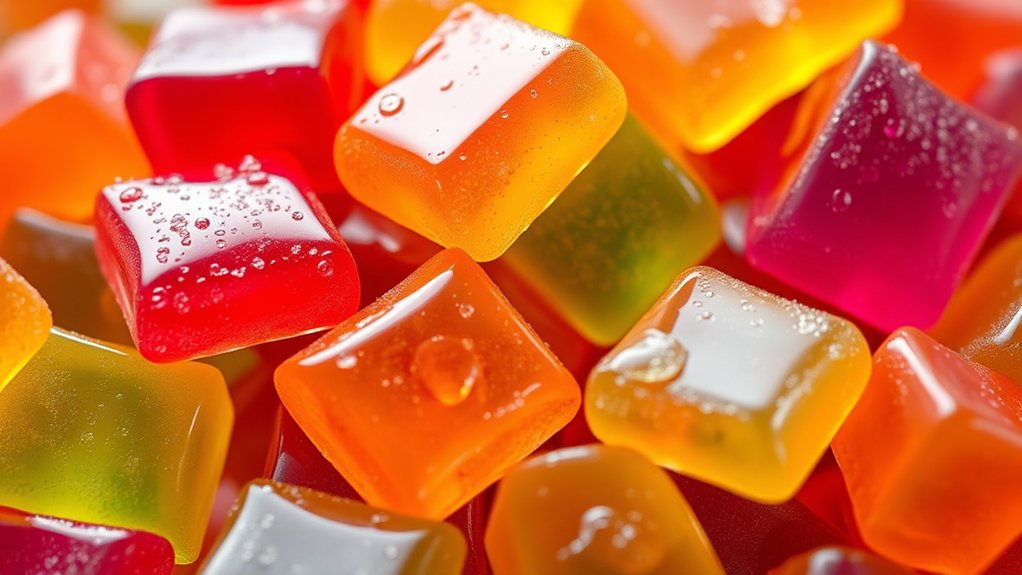
Sugar and glucose play a crucial role in giving gummy candies their chewy texture and sweetness. Understanding sugar chemistry helps explain how these sugars contribute to the overall structure.
Glucose production, often from starch, creates a simple sugar that dissolves easily and interacts with other ingredients. When heated, sugar undergoes caramelization, adding flavor and color.
Glucose helps control the texture by acting as a humectant, locking in moisture. These sugars also influence the melting point and stability of the gummy candies.
Without enough glucose or sugar, gummies might be too hard or too sticky. Their presence guarantees the right balance of softness and chewiness.
Furthermore, glucose’s rapid absorption in your mouth amplifies sweetness without overwhelming your taste buds.
In short, sugar chemistry and glucose production are essential for creating the perfect gummy candy experience, providing both the desired texture and delicious sweetness.
What Natural and Artificial Flavors Are Used in Gummies?
You’ll notice that gummies often use both natural and artificial flavors to make them taste so good. Natural flavors usually come from real fruit extracts like strawberry, lemon, and orange, giving them that fresh, authentic feel. On the other hand, artificial flavors are created in labs to mimic those fruits or even come up with completely new, unique tastes.
Knowing what kinds of flavors go into gummies can really help you understand how manufacturers craft those irresistible flavors we all love.
Common Natural Flavors
Natural flavors in gummy candies often come from extracts of fruits, herbs, or spices, giving each piece a burst of authentic taste. These flavors are chosen carefully to improve the overall experience and can vary from strawberry and lemon to orange or cherry.
When selecting gummy candy packaging, manufacturers consider how natural flavors might affect shelf life preservation. Some extracts can degrade faster than artificial ones, so proper packaging is key to keeping them fresh.
Using natural flavors can sometimes shorten shelf life, which makes good packaging even more important for maintaining quality. These flavors appeal to consumers who want a more authentic and wholesome treat.
Popular Artificial Flavors
Artificial flavors are widely used in gummy candies to achieve consistent, bold, and vibrant tastes that appeal to a broad audience. These flavors help manufacturers stand out on store shelves and make the packaging more visually appealing.
Popular artificial flavors include cherry, lemon, orange, and strawberry. They mimic natural tastes but are often more intense and eye-catching.
| Artificial Flavor | Common Usage | Marketing Strategy |
|---|---|---|
| Cherry | Classic red gummies | Appeals to nostalgia |
| Lemon | Citrusy and tangy | Highlights freshness |
| Orange | Bright and sweet | Attracts attention |
| Strawberry | Fruity and sweet | Targets flavor lovers |
Using artificial flavors makes gummies more consistent and appealing, which helps boost sales and build customer loyalty.
How Does Food Coloring Make Gummies Bright and Fun?
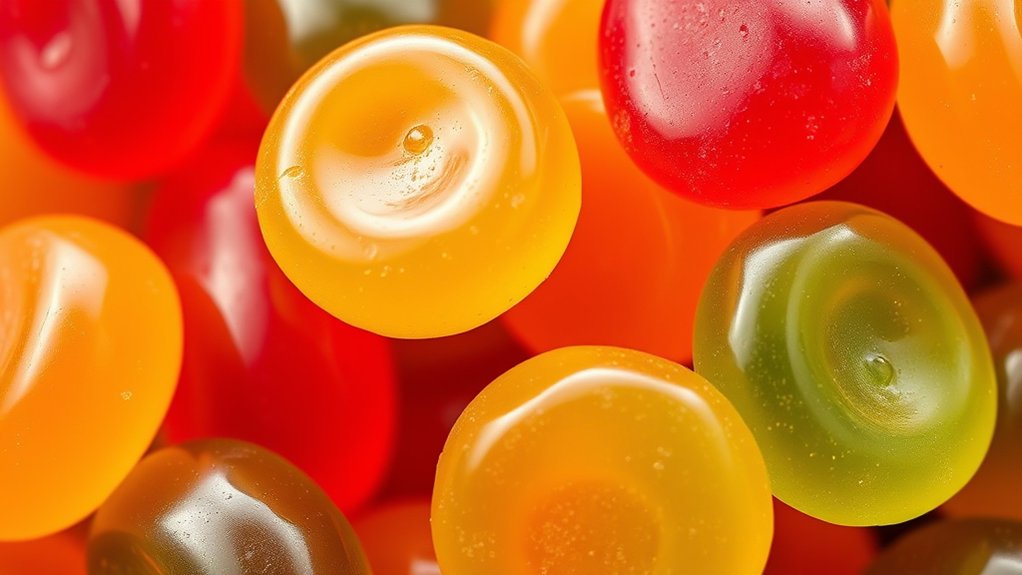
Have you ever wondered why gummy candies look so vibrant and appealing? Food coloring plays a big role in making gummies bright and fun. These colors are carefully added to boost their visual appeal, making each piece eye-catching.
The vibrant hues grab your attention and stimulate your senses, encouraging you to pick them up. Food colorings also help keep the flavors stable, so the candies stay lively-looking over time. Without color enhancement, gummies might look dull or faded, making them less attractive.
The right dyes are chosen to be safe and stable, so they don’t fade or bleed into other ingredients. This helps the candies stay fresh and colorful even after storage. Overall, food coloring isn’t just for fun — it’s essential for making gummies look appealing and keeping their bright look throughout their shelf life.
Why Are Corn Syrup and Thickeners Important in Gummy Recipes?
Corn syrup plays a big role in giving gummies that nice chewy texture we all enjoy. It helps stop the sugar from crystallizing, which keeps the gummies smooth and soft.
Thickeners, on the other hand, help improve the overall consistency. They make sure your gummies are firm enough to hold their shape but still bendable and fun to chew.
When you combine corn syrup and thickeners, you’re pretty much guaranteed to get gummies with the perfect texture and mouthfeel everyone loves.
Role of Corn Syrup
Because of its unique chemical properties, corn syrup plays a crucial role in gummy candy recipes by helping to achieve the desired texture and consistency. It prevents the candies from becoming sticky or too firm, ensuring a smooth chew.
When making gummies, you can imagine the sticky, glossy surface that keeps the candy appealing in packaging. It also creates a soft, pliable interior that melts just right in your mouth.
Corn syrup’s ability to bind ingredients and retain moisture is essential for consistent quality. Without it, gummies could turn hard or crumbly, which would affect both the product’s appeal and sales.
It’s a key ingredient in creating irresistible, well-marketed gummy candies that stand out on shelves.
Function of Thickeners
Why are thickeners essential in gummy recipes? Thickeners like gelatin or pectin help give gummies the right structure and stability. They prevent the candies from becoming too sticky or crumbly.
They work together with corn syrup to create a smooth, elastic texture that people love. Thickeners also help gummies keep their shape, making them easier to package and transport.
When designing gummy packaging, manufacturers think about how thickeners will keep the products intact and appealing. From a marketing point of view, the right texture, thanks to effective thickeners, boosts customer satisfaction.
This encourages people to buy again. Without proper thickeners, gummies might not last on shelves or stay good in quality, which can hurt the product’s success and brand reputation.
Texture and Consistency
Thickeners like gelatin or pectin set the foundation for the gummy’s structure, but getting the perfect texture also depends a lot on the right amount of corn syrup. Corn syrup gives the gummies elasticity, stopping them from being too sticky or hard. It also boosts flavor and makes them shiny, which helps attract buyers through good packaging.
Plus, the right balance of corn syrup and thickeners helps extend shelf life, keeping gummies fresh longer. Think about a chewy, springy bite that keeps its shape, or a smooth, shiny surface that resists melting. Consistent texture across batches ensures quality every time.
All these ingredients influence how the gummy feels in your mouth and how well it maintains its shape and freshness over time. Getting the formulation right is key to happy customers and longer shelf life.
Do Gummy Candies Contain Preservatives?
Many gummy candies contain preservatives to help them last longer and stay fresh. These preservatives prevent mold, bacteria, and spoilage, making sure your gummies stay tasty and safe to eat.
The shelf life of gummy candies varies depending on ingredients and packaging, but preservatives are key to keeping them good over time. The packaging also plays a role by protecting against moisture and air, which can cause candies to degrade quickly.
Common preservatives like citric acid and sorbic acid help inhibit microbial growth. If you’re worried about additives, check the ingredient labels—many brands now offer preservative-free options.
Just keep in mind, removing preservatives might shorten the shelf life, so you’ll need to enjoy them sooner. Overall, preservatives are essential for keeping gummies fresh, safe, and enjoyable for longer periods.
What Are Emulsifiers and Stabilizers in Gummies?
While preservatives help extend the shelf life of gummy candies, other ingredients are key to keeping their texture and stability just right. Emulsifiers and stabilizers are essential parts of this process.
Emulsifiers work by blending water and fat, preventing separation, and creating a smooth, uniform product. Think of a gummy that stays chewy and consistent without getting grainy or separated.
Emulsifiers keep water and fat blended, ensuring gummies stay smooth, chewy, and free from separation.
Stabilizers help maintain the gel’s structure, preventing it from melting or becoming too firm. Imagine a gummy holding its shape, resisting sticking or breaking apart.
To picture their roles:
- Emulsifiers keep ingredients smoothly combined.
- Stabilizers preserve the gel’s firmness and elasticity.
- Both work together to make sure the candy looks appealing and feels consistent in your mouth.
Together, emulsifiers and stabilizers keep gummies delicious, attractive, and stable over time, so every bite gives you the same great texture.
Are Vegan Gummy Candies Made Differently?
Vegan gummy candies are made differently because they skip ingredients derived from animals, like gelatin. Instead, they use plant-based alternatives such as agar-agar, pectin, or carrageenan, which give the same chewy texture without animal products.
These substitutes are plant-based, making the candies suitable for vegans and people with dietary restrictions. When making vegan gummies, manufacturers also focus on sourcing ingredients ethically, ensuring they’re sustainably harvested and cruelty-free.
This approach aligns with the values of consumers looking for environmentally friendly and ethically produced products. The process involves replacing traditional animal-based ingredients with plant-based options that mimic the texture and flavor of regular gummies.
As a result, vegan gummy candies offer an inclusive option for people who avoid animal products without sacrificing taste or quality. The shift to vegan ingredients highlights the growing demand for compassionate and sustainable sweets.
What Other Ingredients Are Used in Organic or Specialty Gummies?
Organic and specialty gummies often include ingredients beyond just fruit extracts and sweeteners to meet specific dietary, health, or sensory needs. These extra ingredients can improve texture, flavor, or nutritional value, making them more appealing to niche markets.
When you check out gummy candy packaging, you might see additions like herbal extracts for wellness benefits or unique flavors.
Superfoods like spirulina or acai are also common to boost antioxidants and add health perks.
Functional ingredients such as collagen or probiotics are included to appeal to health-conscious buyers.
These ingredients help brands craft targeted marketing messages, emphasizing health benefits and natural qualities.
More consumers are seeking out organic or specialty gummies with these components, influencing how products are positioned and promoted.
Frequently Asked Questions
Are There Allergens Commonly Found in Gummy Candy Ingredients?
Yes, gummy candies often contain allergens like gelatin, soy, or wheat that can cause reactions.
Be aware of allergen cross contact during manufacturing, as traces might be present even if they’re not listed on the label.
Hidden additives like artificial colors or preservatives can also trigger sensitivities.
Always read labels carefully, especially if you have food allergies, to avoid unexpected allergic reactions from gummy candy.
How Do Artificial Sweeteners Compare to Sugar in Gummies?
Artificial sweeteners in gummies offer a low-calorie alternative to sugar and help boost flavor without adding bulk. They often improve texture by keeping the chewiness while reducing sugar content.
However, they might not provide the same rich sweetness as sugar, which can lead to a slightly different taste. You might notice a difference in flavor intensity or aftertaste.
Can Gummy Candies Be Made Without Any Artificial Ingredients?
You can absolutely make gummy candies without artificial ingredients. It’s a tall order, but natural flavoring and organic sweeteners like honey or maple syrup can replace synthetic options.
What Role Do Pectin and Agar Play in Vegan Gummies?
Pectin and agar serve as natural thickeners in vegan gummies, replacing traditional gelatin. Pectin, derived from fruits, gives the gummies a chewy texture and helps them set.
Agar, made from seaweed, provides a firm, jelly-like consistency. Both act as vegan alternatives, using natural agents to create a satisfying, plant-based treat.
Their roles ensure the gummies hold their shape without artificial ingredients, making them suitable for a vegan diet.
How Long Do Homemade Gummy Candies Typically Last?
Your homemade gummy candies usually last about one to two weeks if stored properly. Imagine a small, airtight container tucked away in your pantry or fridge, keeping moisture out and freshness in.
To extend their shelf life, store them in a cool, dry place away from direct sunlight. Proper storage tips guarantee your gummies stay chewy and delicious longer, so you can enjoy them without worry.
Conclusion
Just like a master chef combines ingredients to create a delightful dish, understanding what goes into gummy candies helps you see beyond their colorful exterior.
Each ingredient plays a role, from chewy gelatin to vibrant colors, shaping your experience. Knowing what’s inside empowers you to choose wisely, much like an artist selecting colors for a masterpiece.
Ultimately, every gummy is a tiny story of careful craft. This reminds you that even the sweetest treats are built with thoughtful ingredients, especially in gummy candies.