5 Key Differences: Which Is Better Candy or Chocolate?
Are you often torn between choosing candy or chocolate? You’re not alone—many people struggle with picking the perfect treat for their mood or occasion. With so many options out there, it can be overwhelming to decide which one truly hits the spot.
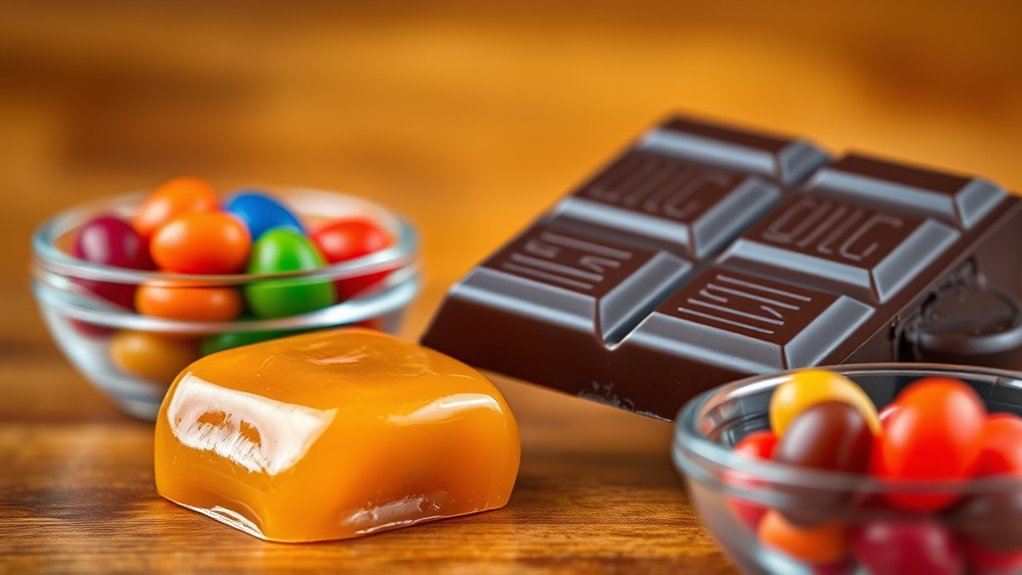
Candy and chocolate each have unique qualities that make them special. Candy offers bold flavors and crunchy textures, perfect for quick indulgence.
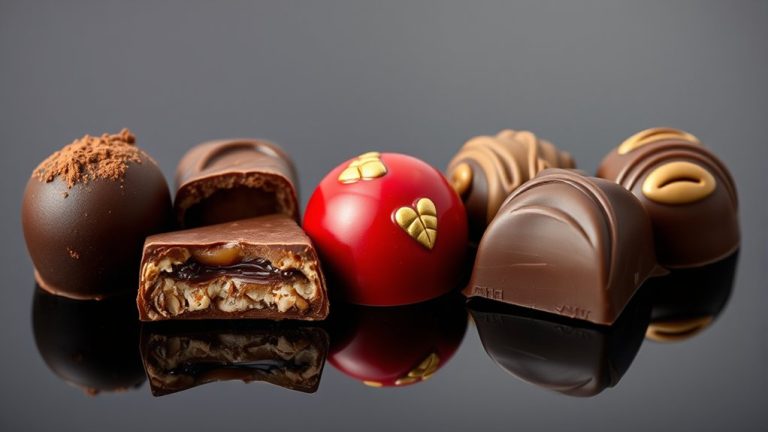
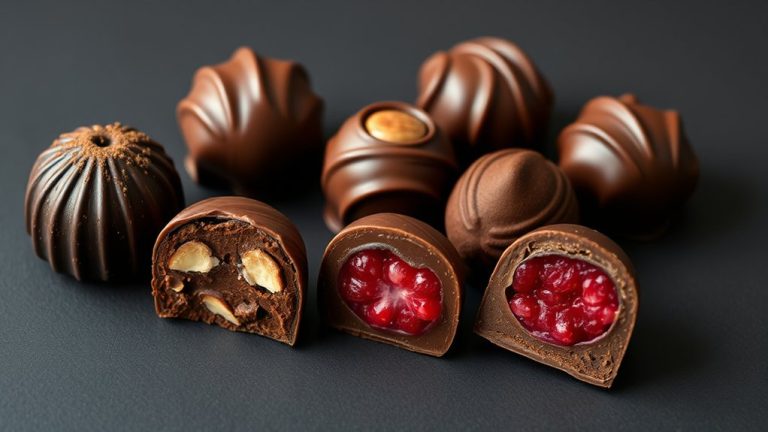
Chocolate delivers smooth, melt-in-your-mouth moments, ideal for special occasions.
Nutritionally, dark chocolate provides antioxidants, but both are high in sugar and fats. Your choice depends on taste, health, and the occasion.
To uncover which suits you best and why, keep exploring these differences further.
Key Takeaways
- Candy offers bold, diverse flavors and crunchy textures, while chocolate provides smooth, melt-in-your-mouth richness.
- Candy is generally more affordable and accessible, whereas premium chocolates often come with higher prices and fancy packaging.
- Candy gives quick energy with lots of sugar but doesn’t have much nutritional value. Dark chocolate, on the other hand, offers antioxidants and minerals.
- Candy is great for casual occasions and fun events, while chocolate is usually preferred for special, romantic, or celebratory moments.
- Both treats should be enjoyed in moderation because of their high sugar and fat content, no matter the type.
What Are Candy and Chocolate Made Of? (Composition and Ingredients)
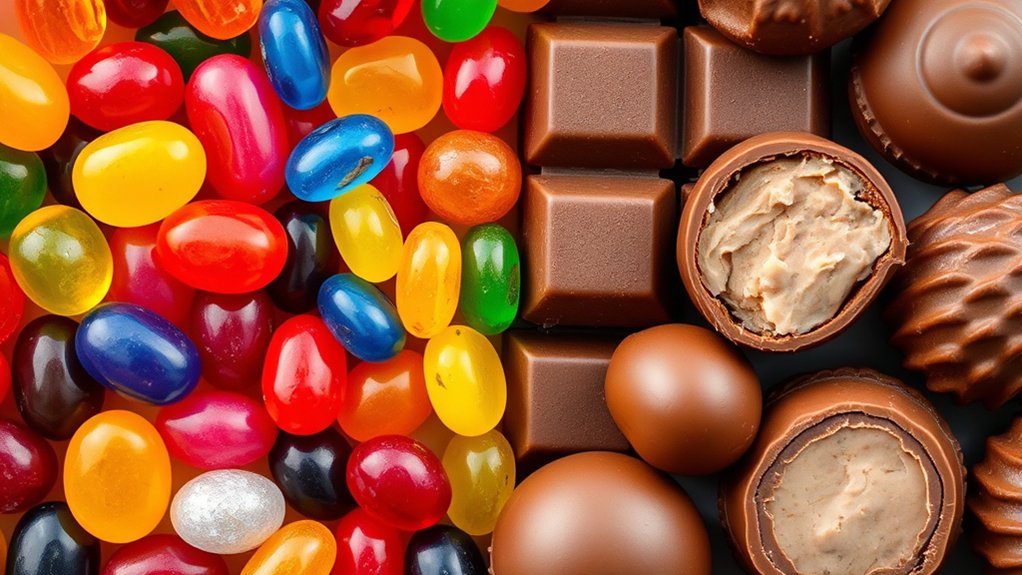
Candy and chocolate differ a lot in their ingredients, which affects their texture and flavor. Candy usually has sugar, corn syrup, flavorings, and colorings. Different ingredient combos create a wide variety of flavors and textures.
Hard candies, gummies, and caramels each have their own unique ingredients that give them their distinct qualities. Chocolate, on the other hand, is mainly made from cocoa solids, cocoa butter, and sugar. The type of cocoa beans and their ratios influence its flavor, from bitter and rich to smooth and sweet.
Adding ingredients like milk or vanilla can change its taste and texture. Your experience with candy’s flavors depends on these variations, making it sweet, fruity, sour, or chewy. Chocolate’s complex flavor is often described as creamy or velvety.
Knowing what’s in these treats helps you understand why they taste and feel different. It’s all about those ingredients coming together to create the perfect treat.
How Do Candy and Chocolate Taste and Feel? (Taste and Texture Differences)
While both candy and chocolate are sweet treats, they offer very different taste experiences and textures. Candy usually has bold, intense flavors like fruity, sour, or minty notes that can be sharp or tangy.
Candy delivers bold, tangy flavors with a variety of crunchy and chewy textures for a lively sweet experience.
Its textures range from hard and crunchy to chewy and gummy, giving you a variety of mouthfeel sensations. Chocolate, on the other hand, offers a smoother, more nuanced flavor profile with hints of cocoa, vanilla, or caramel.
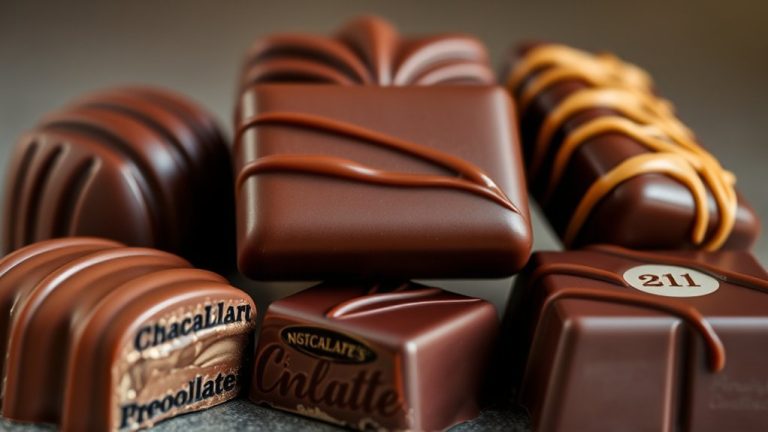
Chocolate tends to be creamy and melts easily on your tongue, creating a rich, velvety feel. The contrast in textures is noticeable—candy can be crisp or sticky, while chocolate feels silky and luxurious.
These differences in taste and feel shape how you experience each treat. Candy is more about bursts of flavor and crunch, while chocolate is about a melt-in-your-mouth indulgence.
Are Candy and Chocolate Healthy? (Nutrition and Dietary Factors)
Although both candy and chocolate are popular sweet treats, they vary quite a bit in their nutritional value and health effects. If you often crave sweets, knowing what’s inside helps you make smarter choices.
Candy usually gives you quick energy from added sugars but doesn’t really offer much else. Eating too much can lead to weight gain and other health problems.
Chocolate, especially dark chocolate, has antioxidants and minerals like magnesium and iron, so it’s a slightly healthier pick. Still, both are high in sugar and fats, which can hurt your health if you overdo it.
For a balanced diet, moderation is everything. Candy might satisfy a sweet craving fast, but chocolate can provide some nutritional benefits—though not enough to justify eating too much.
Always check labels and watch your portion sizes. That way, you can enjoy these treats without risking your health.
When Should You Choose Candy or Chocolate? (Best Uses and Occasions)
Choosing between candy and chocolate depends on the occasion and what you’re looking for. Candy often shines at casual gatherings or when you want a quick burst of sweetness. Chocolate suits more special moments.
Think about the flavors you prefer—fruity candies for fun, vibrant events, or rich chocolates for romantic evenings. Cultural traditions also influence your choice; certain festivals or holidays highlight specific treats.
Here are some occasions to help you decide:
- Celebrating holidays with traditional chocolates or candies
- Gifting during birthdays or anniversaries
- Snacking during movie nights or relaxing weekends
- Sharing at parties or gatherings for variety
- Using as a reward or treat after a task well done
Knowing when and why to choose candy or chocolate helps you pick the right treat, whether it’s candy’s playful appeal or chocolate’s indulgent charm.
How Do Price, Packaging, and Accessibility Affect Your Choice?
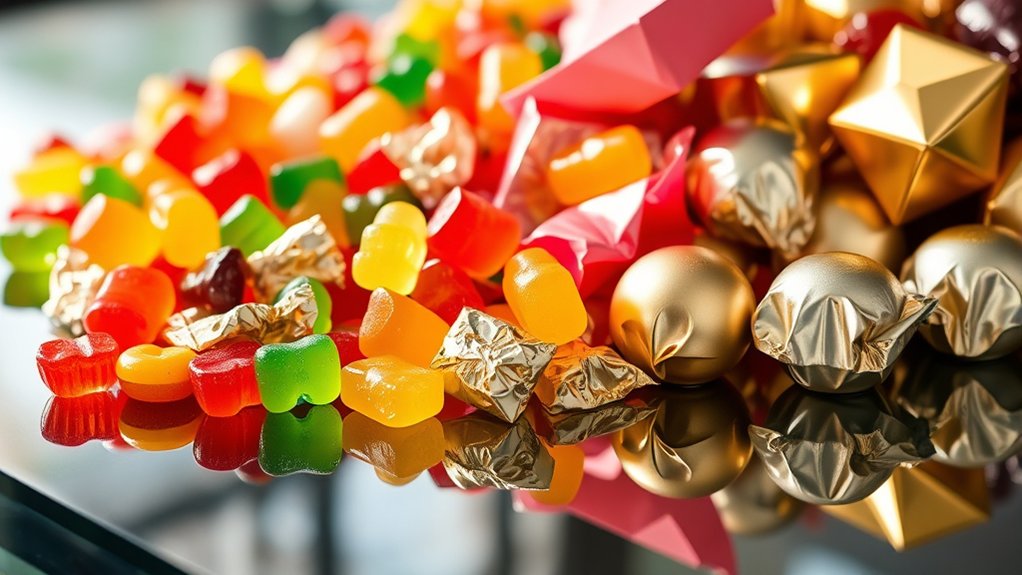
Your decision between candy and chocolate is often influenced by practical factors like price, packaging, and accessibility.
Practical factors like price, packaging, and accessibility often influence your choice between candy and chocolate.
If you prefer a specific flavor, such as fruity or caramel, you might choose candy because it often offers more variety at lower prices.
Packaging also plays a role; a colorful, resealable bag can make candy more appealing and convenient for on-the-go snacking.
Accessibility is key—if your favorite brand or flavor is readily available at your local store, you’re more likely to pick it.
Brand influence can sway your choice, especially if you trust a particular company’s quality or have positive associations with it.
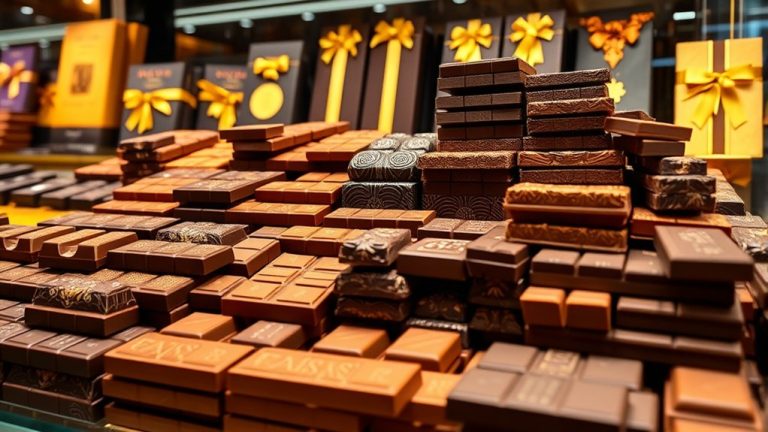
Sometimes, chocolate might be more expensive, but its premium packaging or specialty branding can justify the cost.
Ultimately, these practical considerations shape your preferences, making your choice more about convenience and familiarity than just flavor alone.
Frequently Asked Questions
Which Has a Longer Shelf Life, Candy or Chocolate?
Candy generally has a longer shelf life than chocolate because of its shelf stability and preservation techniques. Chocolate’s higher fat content makes it prone to blooming and spoilage over time, especially if not stored properly.
Candy, especially hard candies and gummies, resists moisture and temperature changes better. To maximize shelf life, keep both in a cool, dry place, but chocolate benefits from airtight containers to prevent spoilage.
How Do Different Types of Candy and Chocolate Vary Globally?
Like a tapestry woven with vibrant threads, global candy and chocolate varieties reflect rich cultural preferences and ingredient variations. In Switzerland, smooth, high-quality chocolate is a cherished tradition, while spicy, colorful candies thrive in Mexico’s markets.
Asian confections often feature distinctive ingredients like rice or sesame, contrasting Western favorites. These differences tell stories of history, climate, and taste, making each region’s treats exceptionally engaging and diverse.
Are There Allergen Concerns Specific to Candy or Chocolate?
You should be cautious of allergen concerns with both candy and chocolate. Allergen labeling is essential because ingredients like nuts, dairy, or soy can cause reactions.
Cross-contamination risks are common, especially in factories that process multiple products.
Always read labels carefully and ask about ingredients if you’re unsure. Being vigilant helps you avoid potential allergens and enjoy treats safely.
Can Candy or Chocolate Be Suitable for Specific Dietary Restrictions?
Candy and chocolate can suit specific dietary restrictions depending on ingredient variations and dietary needs. For example, allergy-friendly options may omit common allergens, making them safer for sensitive individuals.
Sugar-free varieties are great for diabetics or those watching their sugar intake. Always check labels for dietary compatibility, like vegan, gluten-free, or low-sugar options.
How Do Manufacturing Processes Impact the Quality of Candy and Chocolate?
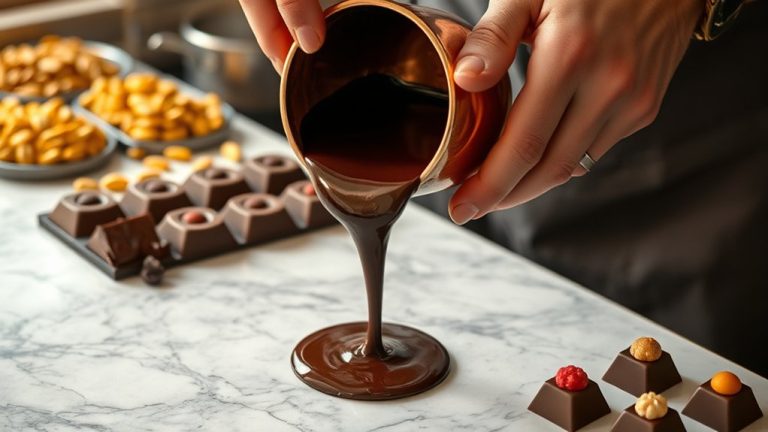
Think of manufacturing like a chef’s careful craft—every step shapes the final flavor. High-quality ingredients and precise processing techniques, like tempering chocolate or controlling temperature, directly influence your candy or chocolate’s texture and taste.
If these processes are rushed or ingredients are subpar, the end product can taste flat or waxy. So, your enjoyment depends on the meticulous art behind the scenes, making sure each bite delights your senses.
Conclusion
In the epic battle between candy and chocolate, your choice could tip the scales of happiness and indulgence forever. Imagine a world where every bite could uncover secret powers of joy or health — it’s almost too much to handle!
Whether you crave the irresistible smoothness of chocolate or the vibrant burst of candy, remember, your decision influences not just your taste buds but your entire day. So choose wisely — your sweet adventure awaits!
When it comes to the key differences between candy and chocolate, each has its unique appeal. Knowing which is better for you can make all the difference in your sweet journey.
In the end, whether candy or chocolate is better depends on your personal preferences and health goals. But one thing’s for sure — your choice impacts your happiness and daily enjoyment.