How to Differentiate Chocolate and Candy: Are They the Same Thing?
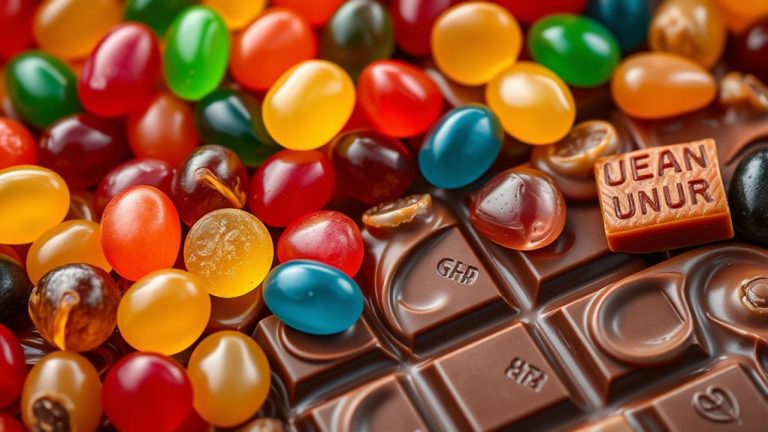
Are you often confused about how to tell apart chocolate and candy? You’re not alone—many people struggle with this, especially when selecting treats for different occasions. Knowing the difference can help you pick the perfect sweet every time.
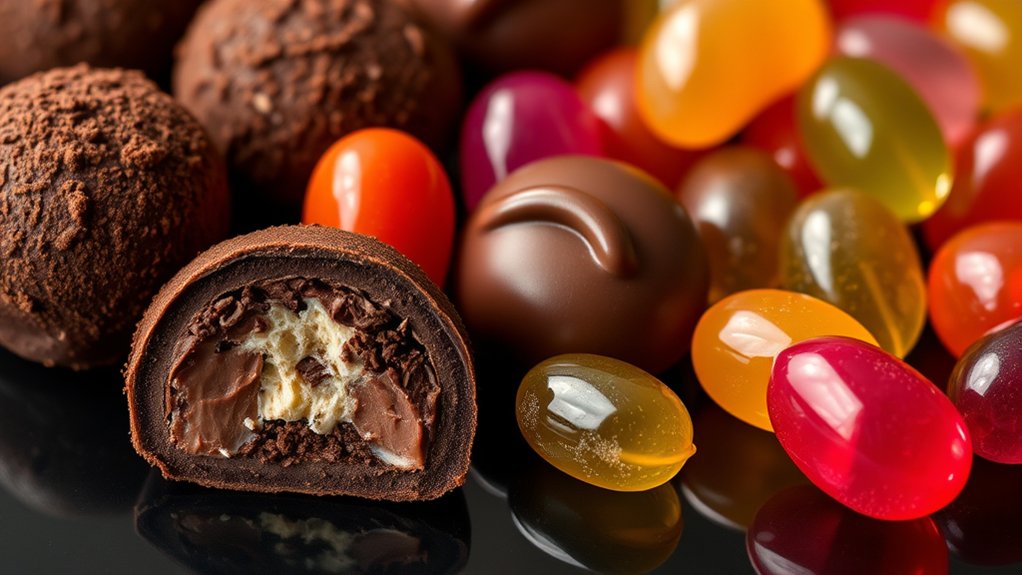
To tell chocolate from candy, look at the ingredients and textures. Chocolate is mainly made from cocoa beans, cocoa solids, and cocoa butter, giving it a rich, layered flavor and a smooth, melt-in-your-mouth feel.
Candy is mostly sugar, corn syrup, and flavorings, resulting in a sweet, often chewy or crunchy texture. Understanding these differences can help you choose the right treat for any occasion—there’s much more to explore if you keep going.
Key Takeaways
- Main ingredients differ: Chocolate is made from cocoa beans, while candy mainly uses sugar and flavorings.
- Texture and melting point: Chocolate is smooth and melts at body temperature. Candy can be chewy, crunchy, or have other textures.
- Production techniques: Making chocolate involves conching and tempering. Candy is made by boiling sugar to specific stages.
- Flavor complexity: Chocolate has layered, rich flavors. Candy usually offers straightforward sweetness and bright colors.
- Packaging and presentation: Chocolate tends to look elegant and refined. Candy is colorful, playful, and designed to catch the eye.
What Are the Main Ingredients That Differentiate Chocolate From Candy?
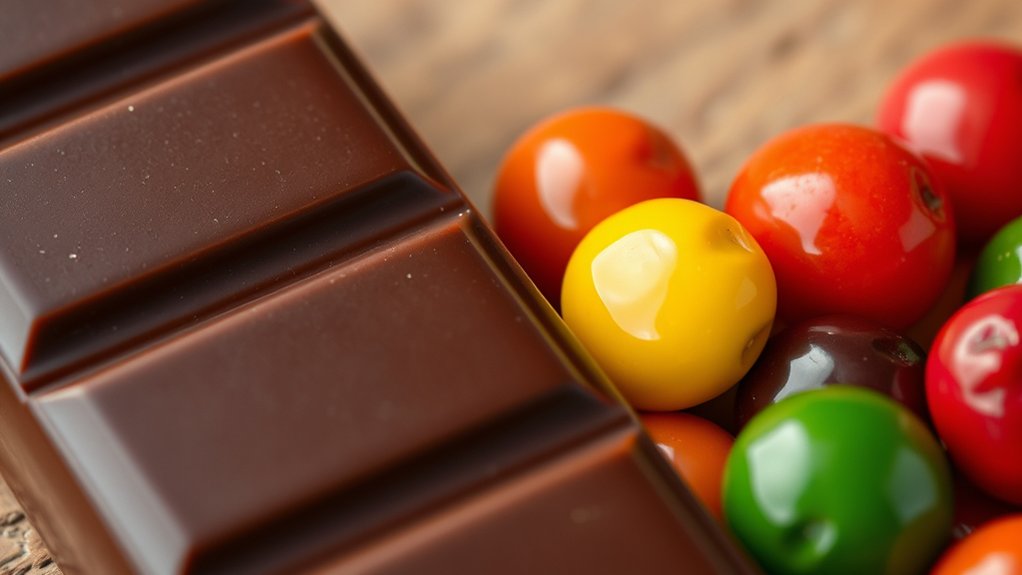
While both chocolate and candy are sweet treats, their main ingredients set them apart. Chocolate is mainly made from cocoa beans, which give it its unique flavor and smooth texture.
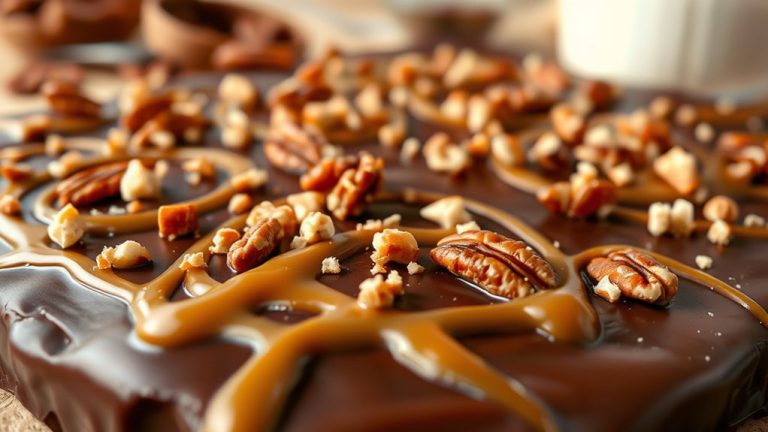
Chocolate’s rich flavor and smooth texture come from its main ingredient, cocoa beans.
Cocoa solids, cocoa butter, and sometimes milk are combined to create different types of chocolate. Each type has its own flavor profile and cultural significance.
Candy, on the other hand, is usually made from sugar, corn syrup, and flavorings. This results in a wide variety of textures and tastes.
The high sugar content in candy makes it sweeter and often more colorful. These ingredients influence not just the taste but also how each is enjoyed culturally.
Chocolate often has deep traditional roots, symbolizing celebration and luxury. Candy is often associated with childhood and festive occasions.
Understanding these main ingredients helps you distinguish between the rich, complex profile of chocolate and the sugary simplicity of candy.
How Are Chocolate and Candy Made Differently?
You’ll see that chocolate and candy are made using different methods and ingredients. For chocolate, they start by roasting cocoa beans, then grinding them down, and finally conching — which is like stirring and smoothing out the mixture to get that rich, velvety texture we love.
On the other hand, candy is all about boiling sugar to just the right temperature. That process helps create the hard, chewy, or gummy textures that make candies so fun to eat. These different techniques give each their unique textures and flavors, making them totally different treats.
Chocolate Processing Techniques
Have you ever wondered how chocolate and candy are made so differently? The process begins with chocolate cultivation, where cacao beans are harvested, fermented, and dried. These beans are then roasted and ground into a liquid called cocoa mass, which forms the base of chocolate.
This mixture undergoes conching, refining, and tempering to develop a smooth texture and shine. In contrast, candy production often skips these steps, focusing instead on melting sugar, corn syrup, or other ingredients, then cooling and shaping them.
While chocolate processing emphasizes preserving flavor and creating a glossy finish through tempering, candy packaging involves wrapping and sealing. This ensures freshness and makes candies convenient to enjoy. These techniques highlight how different the crafting processes for chocolate and candy really are.
Candy Ingredient Variations
Chocolate and candy each use different ingredients that give them their unique textures and flavors. Chocolate mainly relies on cocoa solids, cocoa butter, and sometimes milk, making it smooth and rich.
Candy often features sugar, corn syrup, and flavorings, resulting in a variety of textures from chewy to hard. These ingredient differences lead to diverse flavor combos, like fruity or spicy, in the final products.
Packaging designs also reflect their ingredients—chocolate packaging usually highlights elegance and richness, while candy packaging tends to be bright and fun. These variations affect not just taste but also how each treats your senses and looks visually, helping you tell chocolate and candy apart at a glance.
What Texture Differences Set Chocolate Apart From Other Candies?
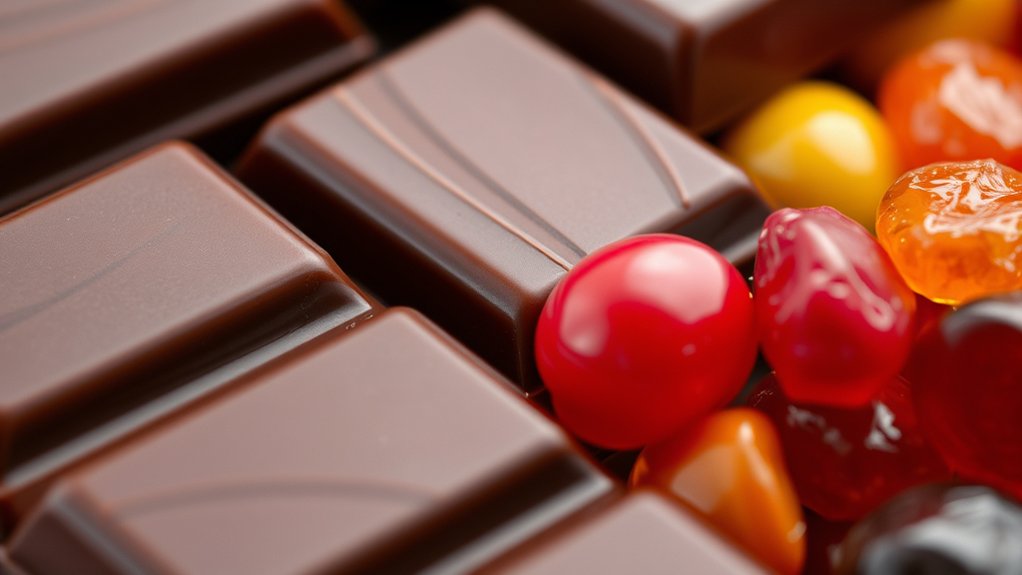
Chocolate is famous for its creamy, smooth texture that just melts right in your mouth. Unlike many other candies that might be more rigid or chewy, chocolate has a unique way of feeling when you bite into it. You’ll often notice a satisfying crunch or snap when breaking a piece, which really sets it apart.
And then there’s the magic of how it melts—chocolate quickly turns from solid to liquid on your tongue, making the whole experience extra pleasurable. That combination of texture and melting quality is what really makes chocolate stand out from other candies.
Creaminess and Smoothness
One of the key differences that set chocolate apart from other candies is its distinct creaminess and smooth texture. When you taste chocolate, you notice its creamy texture that melts effortlessly in your mouth, giving a luxurious experience.
The smooth finish is achieved through high-quality ingredients and a careful tempering process. To understand this better:
- The creamy texture comes from cocoa butter’s natural properties, offering a rich mouthfeel.
- The smooth finish results from proper conching, which creates a uniform, silky surface.
- Unlike many candies, chocolate’s texture helps release its flavor better, making each bite more satisfying.
This combination of creaminess and smoothness creates a sensory experience that’s unique to chocolate, setting it apart from other candies with rougher or less refined textures.
Crunch and Snap
Have you ever noticed how a good piece of chocolate surprises you with its sharp, satisfying crack when you bite into it? That crunch and snap are key indicators of its distinctive texture contrast, setting it apart from other candies.
This unique sensory experience comes from how chocolate’s fat content and crystalline structure create a firm yet breakable surface. When you bite down, that crisp snap signals freshness and quality, giving you a moment of tactile pleasure.
Unlike chewy or soft candies, chocolate’s crisp break makes it feel fresh and well-crafted. That satisfying crack isn’t just a sound—it’s a tactile cue that reveals the texture differences that make chocolate special.
This contrast in texture heightens the overall sensory experience, making chocolate exceptionally enjoyable.
Melting Characteristics
While many candies keep their shape at room temperature, chocolate is different because it melts quickly when you put it in your mouth. This melting happens because of its temperature sensitivity and specific melting points, usually around 86-90°F.
Unlike hard candies, chocolate’s smooth texture comes from its fat content, which melts easily.
Keep in mind, chocolate’s melting point is lower, so it melts faster at body temperature.
Even small changes in heat can cause chocolate to soften or melt because of its temperature sensitivity.
This quick melting creates a unique sensory experience, making chocolate feel special compared to other candies that stay solid longer.
Understanding these traits helps explain why chocolate feels so luxurious and different.
How Can You Tell Genuine Chocolate From Imitation Candy?
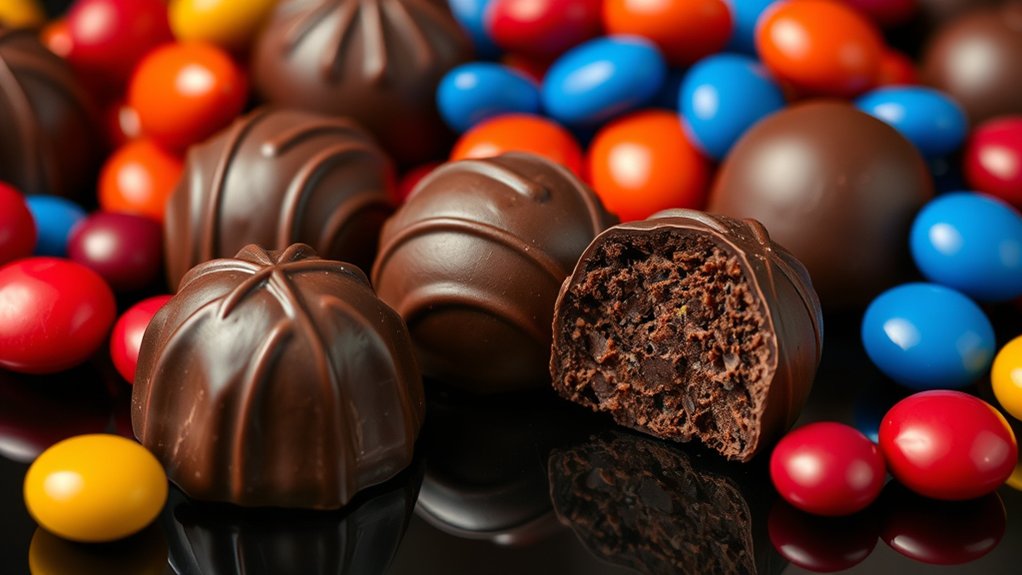
Ever wonder how to tell genuine chocolate from imitation candy? One easy way is to pay attention to flavor pairing. Real chocolate has a rich, complex flavor that goes well with nuts, fruits, and subtle spices.
Genuine chocolate boasts a rich, complex flavor that pairs beautifully with nuts, fruits, and subtle spices.
Imitation candy often lacks this depth and may taste overly sweet or artificial. Also, check the aroma—genuine chocolate has a warm, cocoa scent, while fake versions might smell synthetic or bland.
Storage tips can also help you spot authenticity. Authentic chocolate should be stored in a cool, dry place away from strong odors because it’s sensitive to temperature and humidity.
Imitation candies are usually more resistant to temperature changes but may feel waxy or plastic-like when melted. Look at the appearance and texture—real chocolate is smooth, glossy, and melts evenly in your mouth.
These clues can help you confidently distinguish real chocolate from imitations.
How Do Flavor Profiles Differ Between Chocolate And Candy?
The flavor profiles of chocolate and candy are quite different, reflecting their unique ingredients and how they’re made. Chocolate has complex flavors, with rich, roasted, and slightly bitter notes from cocoa beans. Candy tends to taste sweeter and simpler, often dominated by sugar and artificial flavors.
Understanding these differences helps you recognize what ingredients influence the taste. Chocolate’s depth comes from its cocoa content, balancing bitterness and sweetness. Candy’s flavor is usually more straightforward, emphasizing sugar, fruit, or artificial flavors.
Chocolate contains cocoa solids, cocoa butter, and sometimes milk, which add richness. Candy mainly relies on sugar, corn syrup, and flavorings, resulting in a more uniform taste. The way they are processed also plays a big role.
Chocolate is carefully conched and tempered, developing layered flavors through this process. Candy involves boiling sugar to specific stages, creating a more straightforward sweetness. These methods shape each treat’s unique taste experience.
What Are the Nutritional Differences And Health Perceptions?
Chocolate generally contains more fats and calories than most candies, which can impact your nutritional intake depending on portion size. Its nutritional content includes healthy fats, antioxidants, and minerals like magnesium and iron, offering some health benefits when eaten in moderation.
However, the higher fat and sugar levels mean it can quickly lead to excess calorie intake if you’re not careful. Candies often have less fat but can be high in simple sugars, providing quick energy but fewer nutrients.
From a health perspective, dark chocolate is often viewed more favorably due to its antioxidants and potential heart benefits. Many candies are seen as treats with limited health perks.
Your perception of their healthfulness depends on factors like ingredient quality, portion size, and how often you indulge. Overall, moderation is key when enjoying either, and understanding their nutritional differences helps you make better choices.
When Should You Use Chocolate Versus Candy In Recipes?
Choosing between chocolate and candy in recipes depends on the flavor, texture, and purpose of your dish. Use chocolate when you want a rich, smooth base that enhances flavors with ingredients like nuts, fruits, or spices. It’s perfect for desserts like mousses, ganaches, or baked goods where texture is key.
Candy, on the other hand, adds a sweet, often chewy or crunchy element. It’s great for toppings or accents that provide contrast and a fun, playful vibe. Think of colorful candies for visual appeal and nostalgia.
Consider cultural significance too. Some candies are essential to traditional celebrations, while chocolate’s universal appeal makes it versatile for many occasions.
When aiming for depth and elegance, choose chocolate for its complex flavor. For playful, colorful treats, candy adds visual interest and fun. Understanding cultural context helps you pick ingredients that resonate with your audience, making your dish more authentic and emotionally engaging.
How Do Packaging And Presentation Show The Differences?
Packaging and presentation show the fundamental differences between chocolate and candy by highlighting their visual and tactile qualities. Over time, packaging has evolved to favor elegant, minimalist designs for chocolate that emphasize its rich, refined nature.
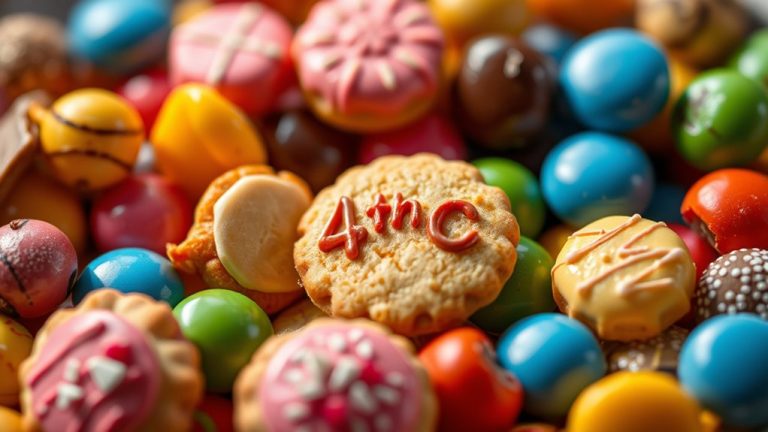
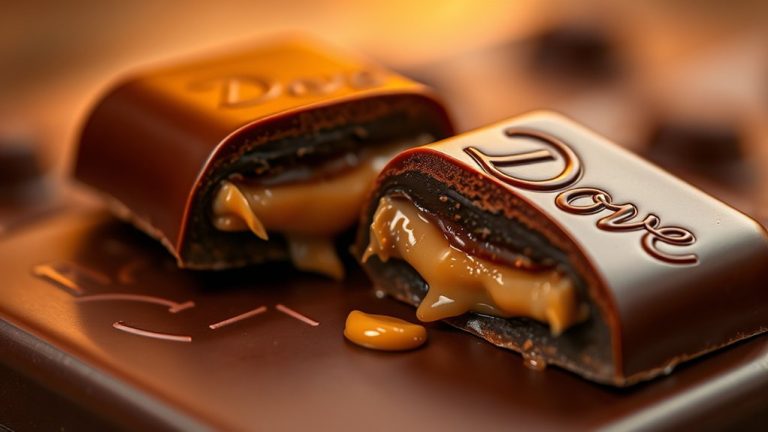
Packaging and presentation highlight the elegant, refined nature of chocolate versus the playful, colorful appeal of candy.
Luxury chocolates often come in sleek boxes with subtle branding, symbolizing sophistication and indulgence. Candy packaging is usually more colorful, playful, and bold, with bright wrappers and eye-catching graphics to attract children and casual buyers.
Presentation also plays a role in conveying their messages. Chocolate’s packaging often hints at its premium status, using textures like foil or embossed boxes. Candy packaging tends to focus on fun and excitement, with lively images and vibrant colors.
These visual cues help you quickly tell whether it’s a refined chocolate or a cheerful, casual candy. Packaging and presentation are key clues to understand their different roles and appeal.
What Myths About Chocolate And Candy Are Common?
A lot of folks think that chocolate is always better than candy, but that’s not really the case for every type. I mean, some people believe candy is just sugar and doesn’t have any real flavor, but that’s not entirely true either. There are plenty of candies with unique tastes and qualities.
And then there’s the myth that all chocolate is pure and healthy. Honestly, that’s a bit of an oversimplification. Not all chocolate is created equal, and some can be just as indulgent or even less healthy than other sweets. So, it’s good to keep these myths in mind and not take everything at face value!
Chocolate Is Always Better
A common myth is that chocolate is always the superior treat, but that’s not necessarily true. While many believe chocolate’s purity makes it the best choice, some candies can be just as enjoyable.
Candy varieties offer a wider range of flavors, textures, and ingredients, appealing to different tastes. Not all chocolates are low in sugar or additives; some candies can be better for certain dietary needs.
Taste preferences are subjective. For some, the sweetness of candy surpasses the rich complexity of chocolate.
Candy Is Just Sugar
While chocolate often gets praised for its complexity and richness, some people assume that all candies are simply sugary treats with little variation. In reality, candies can feature diverse flavor combinations, from fruity to spicy, showing that they’re more than just sugar.
Cultural variations also influence candy types, with different regions creating unique confections that reflect local ingredients and traditions. For example, some candies incorporate nuts, spices, or even alcohol, proving that sugar alone doesn’t define them.
It’s a myth that candy is just a simple sugar rush; many are carefully crafted with complex flavors and textures. Recognizing these differences helps you appreciate the artistry behind various confections and dispels the misconception that candy is merely sugar.
Myth of Pure Chocolate
Despite popular belief, pure chocolate isn’t just a simple, unadulterated treat; it’s often misunderstood as being free of additives or flavor complexity. Many assume that chocolate purity means it’s 100% cacao with nothing else added, but that’s a myth.
In reality, even dark chocolates have varying levels of ingredients that affect flavor and texture. The confusion about candy classification adds to the misconception—some think all chocolates are the same, or that pure chocolate is always healthier.
To clarify:
- Chocolate purity refers to cacao content, not the absence of all additives.
- Candy classification varies based on ingredients, not just appearance.
- Many “pure” chocolates still contain flavoring or emulsifiers, challenging the myth of absolute purity.
How Can Understanding These Differences Help You Choose Better Sweets?
Understanding the key differences between chocolate and candy helps you make smarter choices when picking sweets. Knowing these differences lets you match treats to specific occasions or preferences, making your experience more enjoyable.
For example, if you know certain chocolates go well with nuts or fruit, you can create tastier pairings. This can lead to more satisfying combinations that you truly enjoy.
Understanding seasonal themes can also guide you toward the right candies or chocolates for holidays or celebrations. It makes your selections feel more timely and appropriate for the occasion.
This awareness can help you avoid disappointment by choosing treats that match your taste or dietary needs. Whether you’re shopping for a gift, planning a party, or just craving something sweet, knowing the differences makes your decisions more intentional.
Ultimately, this knowledge empowers you to pick sweets that taste great and suit the mood, occasion, and your personal preferences. It makes your sweet experience more satisfying and meaningful.
Frequently Asked Questions
Are There Specific Cultural Differences in How Chocolate and Candy Are Perceived?
Cultural perceptions shape how you view chocolate and candy, often influenced by traditional connotations. In some cultures, chocolate symbolizes luxury and romance, while candy might be linked to childhood innocence or festive celebrations.
For example, in Western countries, chocolate is seen as a sophisticated treat. In other cultures, candy is more associated with special occasions.
These cultural differences influence your preferences and perceptions of what each sweet represents.
How Do Storage Requirements Differ Between Chocolate and Various Candies?
Think of chocolate as a delicate flower needing gentle care, while candies are more like hardy plants. You should store chocolate in a cool, dry place with a stable temperature, avoiding humidity that can cause blooming or melting.
Candies, especially hard or gummy types, require humidity control but are generally more tolerant of slight temperature fluctuations. Proper storage keeps both fresh, but chocolate’s sensitivity demands extra attention.
What Are the Common Allergen Concerns Associated With Chocolate Versus Candy?
You should watch for allergen labeling on both chocolate and candy, as common concerns include nuts, soy, dairy, and gluten.
Chocolate often contains milk and soy lecithin, which can increase allergy risks. Candies may include nuts or artificial ingredients that also pose concerns.
Be aware of cross-contamination risks during manufacturing, which can introduce allergens into otherwise safe products.
Always check labels carefully to avoid allergic reactions when choosing between chocolate and candy.
How Do Seasonal or Holiday Packaging Influence Perceptions of Chocolate and Candy?
Imagine vibrant holiday packaging wrapping chocolates and candies like festive presents, instantly evoking warmth and celebration. Seasonal packaging influences your perception by making treats seem more special.
The bright colors and themed designs boost brand associations, connecting products with joyful moments. You’re drawn in by the packaging’s look, which heightens anticipation and creates a sense of tradition.
It turns simple candies into symbols of holiday cheer and memorable gifts, making the whole experience feel festive and exciting.
Can Dietary Preferences or Restrictions Affect Whether Someone Chooses Chocolate or Candy?
Your dietary restrictions and flavor preferences directly influence whether you choose chocolate or candy. If you’re lactose intolerant or avoid nuts, you might go for dairy-free or nut-free options.
Likewise, if you prefer rich, creamy flavors, chocolate becomes your go-to. On the other hand, if you enjoy fruity or sour tastes, candies like gummies or taffy might appeal more.
Your dietary needs and flavor preferences guide your choices, making sure you enjoy treats that fit your lifestyle.
Conclusion
Understanding the differences between chocolate and candy helps you make smarter sweet choices. Did you know that the global chocolate market was valued at over $130 billion in 2021? Recognizing what sets them apart—ingredients, texture, flavor—can help you pick the perfect treat for any occasion.
Chocolate and candy aren’t the same thing. Chocolate is made from cocoa beans and often contains milk, sugar, and cocoa solids. Candy, on the other hand, can include a wide range of sweets like gummies, lollipops, and hard candies, which don’t always contain cocoa.
The textures and flavors of chocolate and candy are also quite different. Chocolate tends to be rich and smooth, while candy can be chewy, hard, or gummy with a variety of flavors.
Knowing these differences can help you enjoy your treats more confidently. Whether you prefer the velvety richness of chocolate or the fun variety of candies, understanding what makes each one special helps you choose wisely.
So next time you’re indulging, you’ll know exactly what makes each one unique. Enjoy your sweets with confidence, knowing you’re choosing the best for your taste buds!