What Is Chocolate Flavored Candy Coating Made Of?
Ever wonder what makes that chocolate-flavored candy coating so irresistibly smooth and tasty? If you’re like many people, you might find yourself curious about what’s really inside those sweet treats. You’re not alone—understanding the ingredients can be surprisingly interesting.
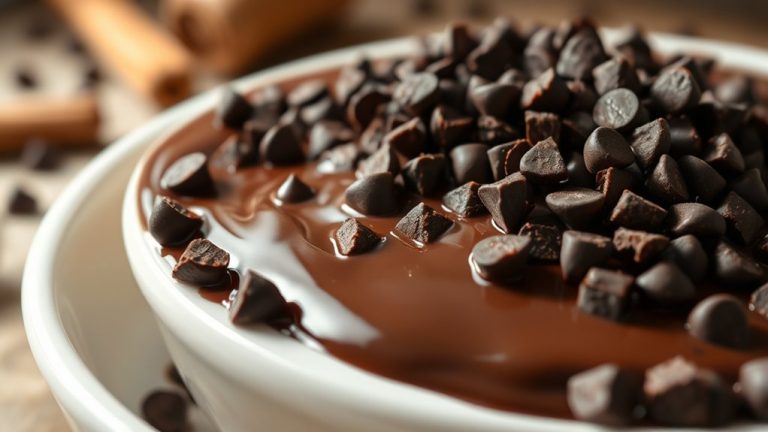
Chocolate-flavored candy coating is made from a blend of sugar, fats like cocoa butter or vegetable oils, and cocoa solids or powder for the chocolate flavor. It also includes emulsifiers such as soy lecithin to keep the ingredients smooth and stable, along with sweeteners like corn syrup or honey for added gloss and texture.
Colorings and flavorings are added to improve its appearance and taste. If you want to uncover how these ingredients come together, there’s more to investigate behind the scenes.
Key Takeaways
- Chocolate flavored candy coating is mainly made from sugar, cocoa solids or powder, and vegetable fats or cocoa butter.
- It includes emulsifiers like soy lecithin to keep the texture smooth and prevent separation.
- Sweeteners such as corn syrup, honey, or glucose syrup are added to give it a shiny look, smoothness, and to stop crystallization.
- Flavorings like vanillin and colorings are used to boost the taste and make it visually appealing.
- Stabilizers and preservatives help keep the product consistent, extend shelf life, and make it easier to handle during manufacturing.
What Is Chocolate-Flavored Candy Coating and How Does It Work?
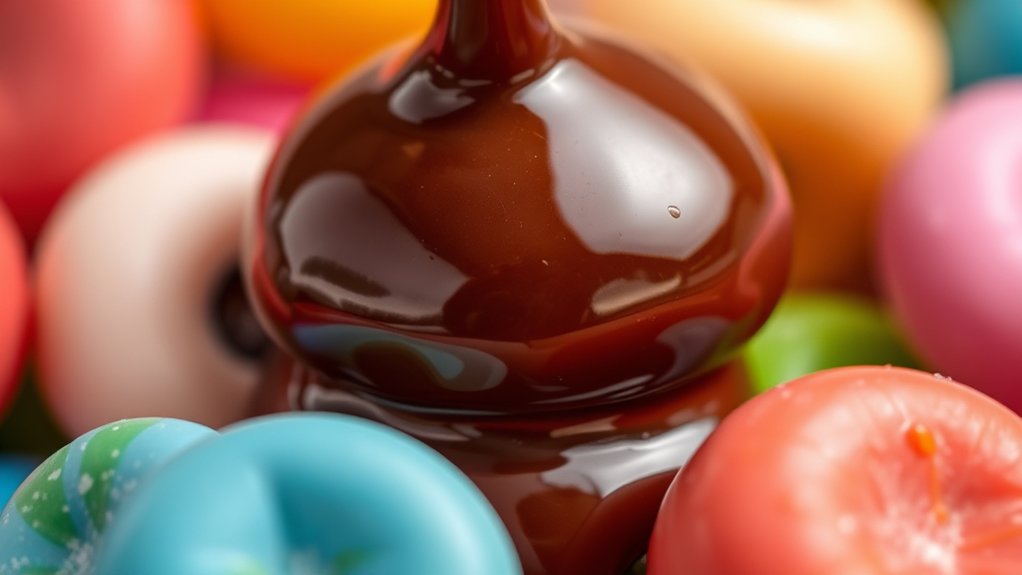
Have you ever wondered what makes chocolate-flavored candy coating so smooth and easy to work with? The answer lies in its history and design. The chocolate coating history dates back to early confectionery innovations, where manufacturers aimed for a product that’s easy to melt and apply.
Chocolate coating’s smoothness comes from its innovative design, making melting and application effortless for bakers and candy makers.
Modern candy coating packaging is engineered for convenience, often featuring resealable bags or easy-pour spouts. This makes it simple to handle and use. The coating melts at relatively low temperatures, so you can dip or pour it over treats smoothly.
Once cooled, it hardens quickly, creating a glossy, crisp shell. Its formulation is designed for consistent texture and shine, ensuring your candies look professional. The combination of a well-thought-out history and user-friendly packaging makes chocolate-flavored candy coating popular for home bakers and professionals alike.
It’s all about making your candy decorating process seamless and efficient.
Key Ingredients in Chocolate-Flavored Candy Coating
The key ingredients in chocolate-flavored candy coating work together to create its smooth texture and appealing shine. The main component is sugar, which provides sweetness and structure.
Cocoa solids or cocoa powder deliver the chocolate flavor, with variations allowing you to choose different profiles, from milk to dark. Vegetable fats or cocoa butter are added to give the coating a glossy finish and help it melt smoothly.
Soy lecithin acts as an emulsifier, ensuring the ingredients blend seamlessly for a uniform texture. Flavorings may also be included to boost the chocolate taste or add subtle flavor variations.
Regarding packaging, these ingredients are formulated to stay stable and easy to work with, whether melted for dipping or coating. Understanding these key ingredients helps you see how they come together to produce a delicious, shiny coating that’s both eye-catching and satisfying.
How Fats and Oils Shape the Texture of Candy Coatings
Fats and oils are key players in shaping the texture of candy coatings. They influence how smooth, shiny, and melt-in-your-mouth they feel.
They form a barrier that boosts the coating’s shine and helps it melt effortlessly on your tongue. These fats also carry aromatic compounds that enhance chocolate’s richness, affecting flavor pairing.
In packaging, the right fats help keep the coating intact, preventing cracking or melting during transport. They create a velvety mouthfeel, making candies more enjoyable and appealing.
Fats also contribute to a shiny surface that catches your eye. Plus, they ensure a smooth, quick melt that releases flavor better.
Finally, proper fats help the coating withstand temperature changes without cracking or blooming, keeping it looking great and tasting fresh.
Sweeteners That Make Candy Coatings Sweet and Smooth
Sweeteners are the key ingredients that give candy coatings their irresistible sweetness and contribute to their smooth texture. They not only improve flavor but also influence how well the coating pairs with chocolates and how it looks in candy packaging.
Common sweeteners include sugar, corn syrup, and confectioner’s syrup. Sugar offers a classic sweetness, while corn syrup provides a smooth, glossy finish and prevents crystallization. Other options like honey or glucose syrup can also be used for different textures and flavors.
Here’s a quick overview:
| Sweetener | Role in Candy Coating | Best Pairing/Usage |
|---|---|---|
| Sugar | Classic sweetness, texture control | Works well with dark chocolates |
| Corn Syrup | Adds gloss and smoothness | Ideal for shiny candy coatings |
| Honey | Natural flavor, smooth texture | Great with nut fillings |
| Glucose Syrup | Prevents crystallization, soft finish | Used in delicate chocolates |
| Artificial Sweeteners | Low-calorie options, sweetness boost | Perfect for diet-friendly candies |
These sweeteners ensure your candy coating is both sweet and smooth, making chocolate pairing irresistible.
Chocolate Flavorings That Mimic the Real Deal
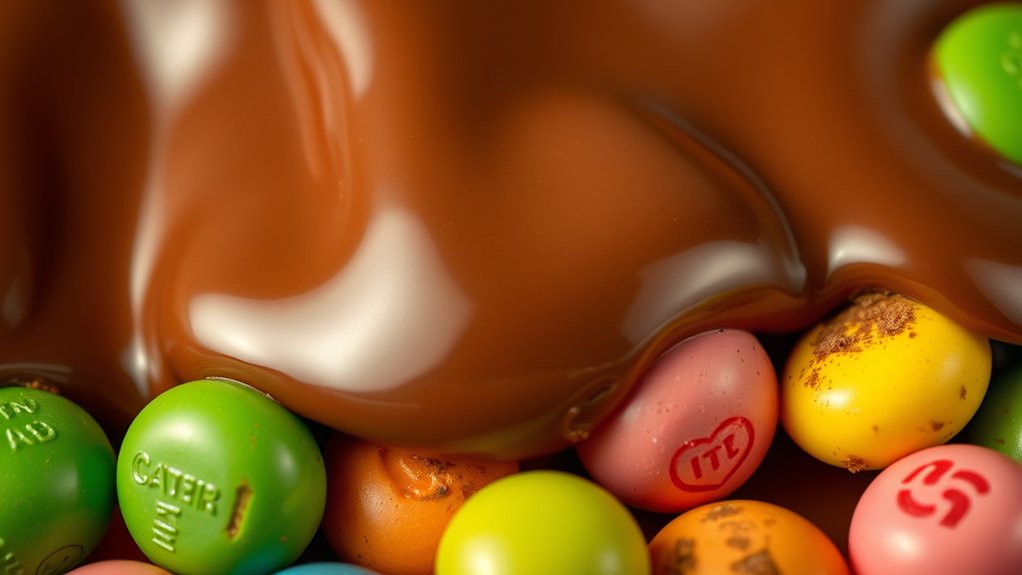
If you want your candy coating to deliver a rich, authentic chocolate flavor without using real chocolate, various flavorings can help you achieve a convincing taste. Understanding flavor chemistry is key because it guides the creation of realistic chocolate notes through specific compounds. Ingredient sourcing also plays a crucial role in ensuring quality and consistency in flavor profiles.
Achieve authentic chocolate flavor in coatings using key flavor compounds and quality ingredient sourcing.
Some common chocolate flavorings include:
- Vanillin-based extracts that mimic cocoa aroma
- Pyrazines which replicate roasted chocolate notes
- Methylxanthines that add depth and bitterness similar to cocoa
- Natural flavor oils sourced from cocoa beans or other plant extracts
How Coloring Enhances the Look of Candy Coatings
Coloring plays an essential role in making candy coatings look appealing and eye-catching. It’s a key factor in turning plain or dull coatings into vibrant, attractive treats.
Bright, well-chosen colors grab your attention and make candies stand out on any display. The visual appeal is often the first thing you notice and can influence your desire to try them.
By using food-grade dyes, manufacturers can create a wide range of shades, from bold reds to soft pinks and blues. Proper coloring also helps with branding, making products recognizable and memorable.
You can enhance your candies by selecting colors that match their flavor or theme. Ultimately, color attracts attention, conveys freshness, and makes candies more tempting.
It’s a simple but powerful way to improve any candy coating’s look and make it truly irresistible.
Common Additives and Stabilizers in Commercial Coatings
You know, preservatives are pretty handy because they help keep candy coatings fresh for a longer time. That way, they stay appealing and look good on store shelves.
And then there are emulsifiers, which are great for improving the texture. They help blend the ingredients smoothly so the coating doesn’t separate or look patchy.
Finally, stabilizers are important because they keep the coating’s consistency just right. This means each piece looks uniform and feels nice when you bite into it.
Preservatives for Freshness
Preservatives and stabilizers are key to keeping commercial chocolate-flavored coatings fresh and high-quality during storage. They help lock in the chocolate aroma and keep the candy’s texture just right over time.
These additives prevent spoilage from microbes and oxidation, which helps extend shelf life. You might see ingredients like sorbates and benzoates that stop mold and bacteria from growing.
Antioxidants like ascorbic acid help prevent rancidity, while emulsifiers keep the coating’s consistency smooth. Humectants are also added to retain moisture and stop the coating from drying out.
Thanks to these preservatives, manufacturers can guarantee your candy stays flavorful and appealing, even after long periods on the shelf. They ensure every bite delivers that same delightful chocolate aroma and perfect texture you love.
Emulsifiers for Texture
Have you ever noticed how commercial candy coatings stay smooth and uniform, no matter how long they’ve been on the shelf? That’s thanks to emulsifiers, which help blend fats and water-based ingredients seamlessly. These additives make sure the coating keeps a consistent texture, preventing separation or graininess.
They also support creative flavor combinations, letting manufacturers add a variety of tastes without losing smoothness. Plus, emulsifiers enable packaging innovations like resealable bags or single-serve wrappers by keeping the coating’s quality over time.
Without these stabilizers, coatings could become brittle or sticky, which would hurt quality and consumer appeal. So, emulsifiers are essential for delivering the perfect mouthfeel while helping food makers explore new flavors and packaging options.
Stabilizers for Consistency
Stabilizers are key for keeping chocolate-flavored coatings consistent and high-quality. They stop separation, help keep the texture smooth, and extend shelf life.
These additives also help the coating handle different storage conditions and handling without issues. Common stabilizers like lecithin, gums, and pectins work together to keep the product uniform.
They also play a role in flavor preservation by maintaining a stable base that keeps subtle tastes intact. Plus, stabilizers help coatings resist melting or cracking during transport and storage.
This stability makes sure your candies look appealing and stay fresh longer. By controlling texture and appearance, stabilizers help manufacturers create high-quality, flavorful coatings that meet what consumers want and stand out on the shelf.
Should You Make Your Own or Buy Ready-Made Candy Coatings?
Deciding whether to make your own candy coating or just buy it ready-made really depends on what’s more important to you—cost or convenience. If you’re looking for more options to customize flavors and ingredients, making your own can be a fun way to get exactly what you want. But keep in mind, it does take some skill and a little extra time.
On the other hand, if you’re short on time or just want something quick and easy, grabbing a pre-made coating might be the way to go. Think about your experience in the kitchen and how much effort you’re willing to put in before deciding which option suits you best.
Cost and Convenience
When weighing the options between making your own candy coating or buying it ready-made, cost and convenience often play key roles. A quick cost comparison shows that store-bought coatings are usually more affordable upfront, saving you time and effort.
Convenience factors include ready-to-use packaging, quick melting, and minimal cleanup, making it perfect for busy schedules. Homemade coatings can be cheaper long-term if you already have the ingredients, but they require more prep and equipment.
Consider these points:
- Ready-made coatings offer instant use and consistent results
- Homemade options need more time and kitchen tools
- Buying in bulk can lower costs over time
- Convenience saves effort, especially for quick projects
Ultimately, your choice depends on your budget, time, and how much control you want over ingredients.
Customization Options Available
Choosing between making your own candy coating or buying ready-made options mainly depends on how much you want to customize your treats. If you love experimenting with different flavors, making your own gives you control over ingredients and taste.
It also lets you create unique packaging options for a personal touch. Ready-made coatings, on the other hand, offer convenience and consistent quality. They save you time and make the process easier.
When it comes to customization, flavor combinations let you create unique, tailored flavors. Packaging options help you personalize presentation or branding. Making your own from scratch means you control ingredients and additives.
Ready-made options are great if you want quick results and reliable quality. Plus, they give you flexibility to adjust flavors or coatings easily.
Skill Level Required
Making your own candy coating takes some basic culinary skills and patience, especially if you want a smooth, professional finish. Knowing how chocolate flavor chemistry works helps you get the right texture and flavor balance, but it also means you should be comfortable with melting and tempering techniques.
If you’re new to candy making, buying ready-made coatings might be the easier route. They often have a longer shelf life and more consistent quality, which can save you a lot of frustration.
Think about your skill level and how much time you want to spend before deciding.
Do you know how to temper chocolate properly? Are you familiar with melting techniques? Can you control temperature fluctuations? Do you understand shelf life considerations?
If you’re unsure about any of these, buying pre-made coatings can help you get reliable results without the hassle.
Tips for Choosing the Best Candy Coating for Baking
Selecting the right candy coating can make a big difference in your baked goods, so it’s important to focus on factors like flavor, texture, and how well it works with your recipe.
For artistic decoration, pick coatings that set firmly and have a smooth finish, so your designs stand out. If you want to boost flavor, look for coatings with natural cocoa or added flavorings that match your baked items.
Think about the coating’s consistency. Thinner coatings are great for drizzling and detailed work, while thicker ones work better for covering entire treats. Temperature is also key; some coatings need to be melted at specific temps to avoid seizing or burning.
Finally, check the ingredient list. Go for options with fewer artificial additives to get better flavor and texture. By keeping these factors in mind, you’ll choose a candy coating that looks great and enhances the taste of your baked creations.
How Ingredient Quality Affects Flavor and Texture
The quality of ingredients in your candy coating directly impacts both its flavor and texture, so it’s important to choose wisely. Using high-quality ingredients gives you a richer, more authentic taste and a smoother mouthfeel.
High-quality ingredients enhance flavor and texture for a richer, more authentic candy coating experience.
Artificial flavoring, if not chosen carefully, can overpower the natural chocolate notes and leave an artificial aftertaste. Proper ingredient sourcing ensures you get fresh, pure components that improve flavor and consistency.
Think about these factors:
- Fresh, high-quality cocoa solids boost depth of flavor
- Pure, natural fats create a silky texture
- Carefully sourced sweeteners help prevent graininess
- Premium ingredients reduce the need for artificial flavoring and additives
Choosing better ingredients means your candy coating will taste better and have a nicer texture. Every bite will be more satisfying. Pay attention to where your ingredients come from to guarantee quality from start to finish.
Frequently Asked Questions
Are There Allergy-Friendly Options for Chocolate-Flavored Candy Coatings?
Yes, there are allergy-friendly options for chocolate-flavored candy coatings. You can find nut allergy-friendly and gluten-free coatings made with plant-based ingredients like cocoa, vegetable oils, and natural flavorings.
Just be sure to check the labels carefully because cross-contamination can happen during manufacturing. Look for products specifically labeled “nut allergy-friendly” or “gluten-free” to make sure they meet your dietary needs and are safe for those with allergies.
How Long Does Homemade Chocolate-Flavored Coating Typically Last?
Back to the future, your homemade chocolate-flavored coating typically lasts about two weeks when stored properly. Keep it in an airtight container in the fridge to extend its shelf life.
For the best results, avoid temperature fluctuations and keep it away from direct sunlight. Following these storage tips guarantees your coating stays fresh and tasty.
It’ll be perfect for coating treats whenever you’re ready to indulge.
Can Vegan or Dairy-Free Versions of Candy Coatings Be Made?
Yes, you can definitely make vegan or dairy-free candy coatings. Using vegan ingredients like coconut oil, cocoa butter, or dairy alternatives such as almond or soy milk works great.
These replacements mimic traditional chocolate flavors and textures without any animal products. Just melt the vegan ingredients together, add sweeteners if needed, and you’ll have a delicious, dairy-free coating perfect for various confections.
What Are the Environmental Impacts of Producing Commercial Candy Coatings?
Think of your candy coating as a tiny planet, where each choice impacts the environment. Producing commercial coatings often involves unsustainable sourcing of ingredients and creates waste.
By supporting brands that focus on sustainable sourcing and waste reduction, you help protect ecosystems and cut down pollution. Your demand for eco-friendly options encourages manufacturers to adopt greener practices.
This makes the candy industry more sustainable and kinder to our planet.
How Do Different Brands Compare in Flavor and Quality?
You’ll find that different brands vary in flavor and quality, often because of flavor consistency and ingredient transparency. Some brands focus on rich, authentic chocolate flavors, while others lean toward a sweeter, milder taste.
Checking ingredient lists is helpful to see if natural ingredients are used or if there are artificial additives. Comparing these aspects helps you pick a candy coating that offers the best flavor and quality.
This way, you can enjoy a satisfying treat every time.
Conclusion
Think of chocolate-flavored candy coating as a carefully crafted symphony, where each ingredient plays its part to create harmony. When you choose high-quality fats, sweeteners, and flavorings, you’re tuning your taste buds to a delightful melody.
Whether you make it yourself or buy ready-made, understanding these components helps you craft treats that sing with flavor and texture. So, cherish the artistry—your chocolate-flavored candy coating will resonate with irresistible charm.