Why Do My Teeth Hurt When Eating Gummy Candy?
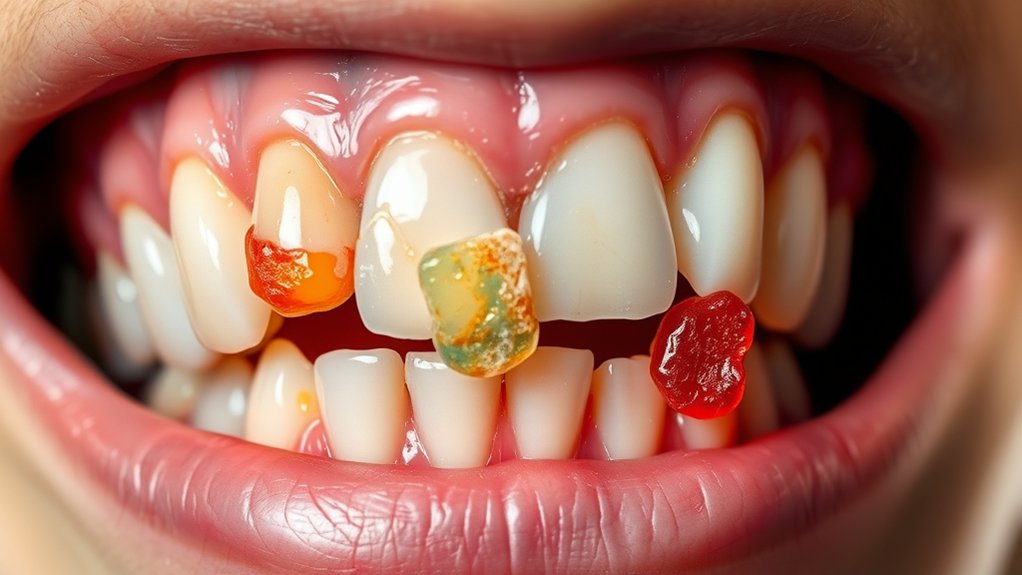
Many people struggle with tooth pain after enjoying their favorite gummy candies. If you’ve ever experienced discomfort while munching on chewy, sugary treats, you’re not alone. Gummy candies can cause tooth sensitivity and soreness, especially if you have underlying dental issues.
Your teeth hurt when eating gummy candies because their sticky texture and high sugar content can cause enamel erosion and expose sensitive dentin or nerve endings.
If you have cracked, damaged teeth, or receding gums, sugary or chewy foods can worsen pain and sensitivity.
Poor oral hygiene and cavities also play a role.
To understand how to protect your teeth and manage discomfort effectively, keep exploring the causes and solutions for gummy candy-related tooth pain.
Key Takeaways
- Gummy candies’ sticky texture keeps them in contact with your teeth longer, which increases exposure to sugar and acids. This can wear down enamel and make your teeth more sensitive.
- The high sugar content feeds bacteria that produce acids, leading to enamel erosion and exposing nerves, which causes pain.
- When enamel wears down and dentin becomes exposed due to frequent sticky candy eating, your teeth become more sensitive to hot, cold, and sweet things.
- If you already have dental issues like cavities, cracks, or gum recession, eating gummy candies can make the pain worse when you chew or consume them.
- Poor oral hygiene and low saliva flow weaken your teeth, making them more prone to sensitivity and discomfort from sticky treats.
Why Do Gummy Candies Cause Tooth Pain?
Gummy candies can cause tooth pain because they are sticky and high in sugar, which makes them cling to your teeth longer. When you chew on gummy candy, the sticky texture coats your teeth, increasing the chance of sugar remaining on the surface.
This prolonged contact encourages bacteria in your mouth to produce acids, which can harm your tooth enamel. Gummy candy safety is often overlooked, but understanding candy ingredient effects is essential.
Many gummy candies contain added sugars and artificial ingredients that can contribute to tooth discomfort and damage. The sweetness acts as fuel for bacteria, leading to acid production that irritates nerves or weakens enamel over time.
If you’re concerned about tooth pain, consider moderating your intake of gummy candies and paying close attention to how your teeth feel afterward. Being aware of candy ingredient effects helps you make smarter choices and protect your dental health.
How Enamel Erosion Leads to Tooth Sensitivity
Have you ever noticed your teeth feeling sensitive after eating certain foods or drinks? That’s often a sign of enamel erosion, which damages the protective outer layer of your teeth.
When enamel wears down, your dentin is exposed, making your teeth more sensitive to hot, cold, or sweet foods like gummy candies. Enamel health is crucial because it protects your teeth from decay and sensitivity.
Worn enamel exposes dentin, increasing sensitivity to hot, cold, and sweet foods like candies.
Over time, acids from sugary foods, drinks, and even frequent vomiting can erode this protective layer. Saliva helps by neutralizing acids and remineralizing enamel.
If saliva production drops, your mouth’s natural defense weakens, speeding up enamel erosion. Once enamel is gone, your teeth lose their shield, and even small stimuli can cause discomfort.
Maintaining good enamel health and supporting saliva production are key to reducing tooth sensitivity and keeping your teeth strong.
What Role Do Cavities Play in Chewy Candy Discomfort?
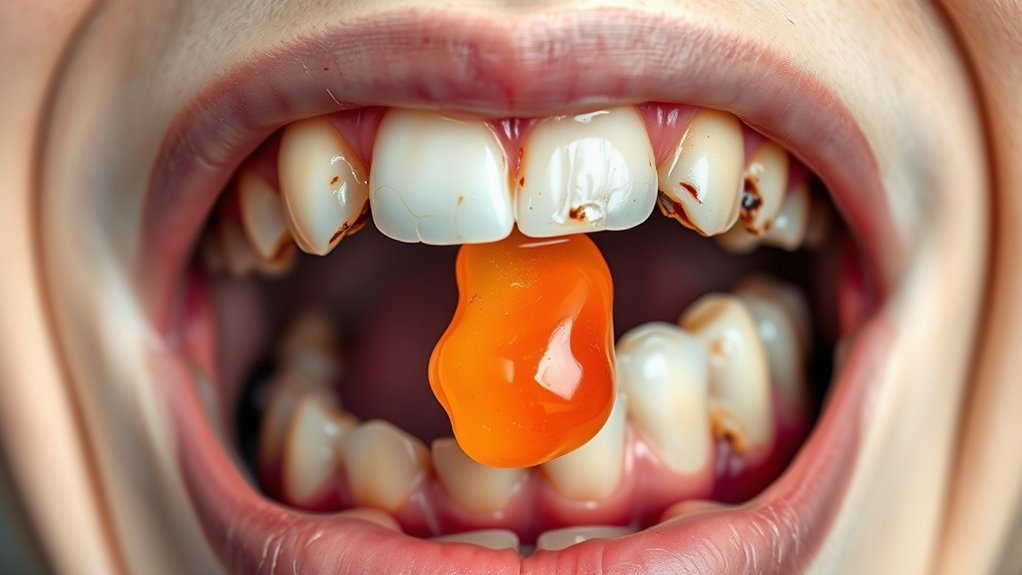
When enamel erosion exposes the inner layers of your teeth, it becomes easier for cavities to form, especially where the protective layer has been compromised. Cavities develop as bacteria feed on sugars from gummy candies, producing acids that further damage your teeth.
These decay spots can cause discomfort when chewing, especially with sticky candies that cling to teeth. As cavities grow, you might notice tooth discoloration around the affected area, making your teeth appear darker or stained.
Reduced salivary flow, often caused by dehydration or medications, worsens the situation by decreasing your mouth’s ability to wash away sugars and acids. This increases the risk of cavities forming.
When cavities are present, chewing gummy candies can trigger sharp pain or sensitivity because the exposed dentin or nerve endings get irritated. Addressing cavities early helps prevent discomfort and further damage.
Maintaining good oral hygiene and limiting sugary, sticky foods is essential. Doing so can help prevent cavities from developing and keep your teeth healthier in the long run.
Why Cracked or Damaged Teeth Hurt When Chewing Gummy Candies?
Cracked or damaged teeth become sensitive and more prone to pain because their compromised structure can’t handle the pressure of biting into sticky, chewy candies. When you chew gummy candies, the added stress on weak spots can cause discomfort or pain.
Poor dental hygiene often weakens enamel and causes decay, making your teeth more vulnerable to damage. Plus, the high sugar content in gummy candies feeds bacteria that produce acids, which further erodes your tooth’s surface and worsens existing cracks.
If you have chipped or fractured teeth, chewing sticky sweets can make the damage worse and trigger pain. The damaged areas expose nerve endings, making sensitive teeth react strongly to pressure.
To protect your teeth, it’s important to maintain good dental hygiene and limit sugary treats. Otherwise, you risk increasing damage and discomfort, especially if your teeth are already cracked or weakened.
How Gum Recession Makes Sweets Hurt Your Teeth
As gum recession exposes more of your tooth roots, it becomes easier for sugary and sticky foods like gummy candies to cause pain. When your gums pull away, the roots lose their protective gum tissue, making them more vulnerable.
This exposure allows acids and bacteria to irritate the nerve endings, which can lead to discomfort when eating sweets. Poor gum health speeds up this process, weakening the tissues that support your teeth.
Gum recession can also reduce saliva flow around the roots, lowering your mouth’s natural ability to neutralize acids and wash away food particles. Without enough saliva, sticky candies cling to exposed roots longer, increasing sensitivity and pain.
Maintaining healthy gums is key to protecting these sensitive areas. Regular dental care and good oral hygiene are essential to prevent further recession. When your gum health declines, even mild sugary treats can become painful.
Do Dental Fillings Affect How You Chew Gummy Candies?
Dental fillings can sometimes change how your teeth handle pressure when you’re chewing gummy candies. It really depends on the type of material used for the filling. For example, some fillings might make your teeth feel more sensitive, or you might notice a difference in how much force you can comfortably apply when biting down.
Because of this, eating sweets like gummy candies could feel a bit uncomfortable or strange if you have new or certain types of fillings. Knowing how your fillings might affect your chewing can help you take better care of your teeth and still enjoy your favorite treats without any pain or discomfort.
Impact of Filling Material
Filling materials can influence how comfortably you chew, especially when it comes to sticky treats like gummy candies. Some materials, like composite resins, might feel rougher or less resilient, making chewing uncomfortable. Others, such as amalgam fillings, are durable but could cause sensitivity.
If you’ve had tooth whitening treatments, your enamel may be more sensitive, which can make biting into sticky candies more uncomfortable. Additionally, if you wear orthodontic brackets, fillings can change how evenly your chewing forces are distributed.
Here’s a quick overview:
| Filling Material | Impact on Chewing Gummy Candies |
|---|---|
| Composite resin | May cause sensitivity or roughness |
| Amalgam | Durable but might increase sensitivity |
| Glass ionomer | Less durable, possibly more sensitive |
Choosing the right filling is important because it affects how your teeth handle sticky, chewy foods, and it can influence your overall comfort and chewing experience.
Changes in Chewing Force
Changes in chewing force can happen after getting dental fillings, which may affect how comfortably you chew sticky foods like gummy candies. When you have a filling, your bite might feel different, making some foods more challenging to chew without discomfort.
This change can be temporary as your jaw adjusts or more permanent if the filling changes your bite. Activities like tooth whitening or skipping dental floss can also impact your overall oral health, leading to sensitivity that worsens when chewing sticky treats.
You might find yourself applying less force or avoiding certain areas, which can cause uneven wear or discomfort. Being aware of your chewing force and keeping good oral hygiene can help prevent pain and ensure your fillings and teeth work smoothly together.
Common Dental Conditions That Make Chewy Sweets Painful
Chewy candies can be especially painful if you have certain dental conditions that make your teeth more sensitive or vulnerable. For example, if you have enamel erosion, the high sugar content in candies can worsen pain because it exposes your teeth to acids that wear down protective layers.
Packaging design might also play a role. Poorly sealed packages can leave sticky residue, which promotes plaque buildup and increases sensitivity. If you have cavities or exposed roots, biting into chewy sweets can cause sharp pain due to exposed nerves.
Cracked or chipped teeth are more prone to discomfort when chewing on sticky, dense candies. In all these cases, your dental health affects how painful gummy candies can be. Recognizing these conditions helps you understand why some sweets are more problematic.
It also highlights the importance of consulting your dentist for personalized advice. Taking care of your dental health can make enjoying treats a lot more comfortable.
Tips to Prevent Tooth Pain When Enjoying Gummy Candies
To enjoy gummy candies without causing tooth pain, start by choosing treats that are less sticky and softer. This reduces the pressure on sensitive areas and lowers the risk of damage.
Maintaining good dental hygiene is really important—brush twice a day and floss regularly to remove sugar residue that can weaken your enamel. This helps keep your teeth strong and healthy.
Be mindful of your sugar intake because consuming too much feeds bacteria that cause decay and increase sensitivity. Cutting back can protect your teeth from unnecessary damage.
Rinsing your mouth with water after eating gummies is a simple way to wash away sugars and acids. It helps reduce the risk of decay and keeps your mouth cleaner.
Finally, try to limit sticky candies to minimize prolonged contact and pressure on your teeth. Less stickiness means less chance of enamel erosion and discomfort.
When Should You See a Dentist About Tooth Pain From Chewy Sweets?
If you find that your tooth pain from eating chewy sweets doesn’t go away, or if it starts to get worse, it’s probably a good idea to see a dentist. Sometimes, the pain can be a sign that there’s something more going on that needs professional attention.
Also, keep an eye out for increased sensitivity or any visible damage like cracks or chips in your teeth. These things shouldn’t be ignored because catching them early can help prevent bigger dental problems down the road. So, if you’re noticing any of these signs, don’t hesitate to schedule an appointment with your dentist.
Persistent Pain Indicators
Persistent tooth pain after eating gummy candies is a clear sign that something might be wrong and needs quick attention. If your discomfort sticks around for more than a short while, it’s a good idea to see a dentist.
Ongoing pain can point to underlying problems like enamel damage or cavities. Pay attention to whether the pain gets worse when you eat certain foods or during your dental routine, like brushing or flossing.
If chewing chewy sweets affects your tooth whitening or causes persistent sensitivity, don’t wait to get professional advice. Getting diagnosed early can prevent more serious issues down the line.
A dentist can recommend treatments to help restore your oral health. Remember, ignoring persistent pain could lead to bigger problems later on.
Increasing Sensitivity Signs
As you notice your teeth becoming more sensitive when eating chewy candies, it’s important to pay attention to how your discomfort changes. Increasing sensitivity might be a sign of underlying issues, especially if you feel sharp pain or discomfort with different types of candy.
If your teeth hurt during sugar cravings or after indulging in sweets, it’s time to see a dentist. Keep track of your sensitivity level to determine the best next steps.
| Sensitivity Level | Candy Types Affected | Recommended Action |
|---|---|---|
| Mild discomfort | Soft, chewy candies | Monitor and cut back on intake |
| Moderate pain | Harder, sticky candies | Book a dental check-up |
| Sharp or persistent pain | All candy varieties | See a dentist right away |
| Sensitivity lasting days | Any candy consumption | Talk to your dentist about it |
| Sudden, intense pain | Anytime, even without sweets | Seek emergency dental care immediately |
Signs of Tooth Damage
You should see a dentist promptly when you notice signs of tooth damage from eating chewy sweets, especially if the pain worsens or doesn’t go away after a short period. Signs include persistent sensitivity, chipped or cracked teeth, or visible cracks and fractures.
You might also notice increased sensitivity to hot, cold, or sweet foods, which could mean enamel erosion. Poor oral hygiene can make these issues worse and make cavity prevention harder.
If you experience swelling, bleeding gums, or a bad taste, these are warning signs of underlying damage or infection. Addressing these symptoms early can prevent further deterioration and more extensive treatments later.
Don’t ignore ongoing pain or damage. Timely dental care helps preserve your oral health and prevents long-term problems.
Long-Term Strategies to Reduce Tooth Sensitivity and Discomfort
Implementing long-term strategies can significantly reduce tooth sensitivity and discomfort, making everyday activities like eating gummy candies more comfortable. Start by examining your dietary habits; try to limit acidic foods and sugary treats that wear down enamel and trigger sensitivity.
Incorporate calcium-rich foods to help strengthen your teeth. Maintaining good oral hygiene is key—brush twice daily with fluoride toothpaste and floss regularly to remove plaque and prevent decay that can worsen sensitivity.
Consider using desensitizing toothpaste made to block nerve pathways and reduce discomfort over time. Avoid aggressive brushing, which can erode enamel and expose sensitive dentin.
Regular dental check-ups are important—they help catch and address issues early. If your sensitivity persists, your dentist might suggest treatments like fluoride varnishes or sealants.
Frequently Asked Questions
Can Certain Medications Increase Tooth Sensitivity to Gummy Candies?
Certain medications can increase your tooth sensitivity to gummy candies through interactions that weaken your enamel.
Some medications cause dry mouth, which reduces saliva’s protective effects and can lead to dental erosion.
When your enamel is compromised, eating sticky, sugary foods like gummies can cause discomfort or pain.
Always talk to your healthcare provider if you notice increased sensitivity. They can help you manage medication effects and protect your teeth.
How Does Age Affect Sensitivity to Chewy Sweets?
As you age, your teeth can become more sensitive to chewy sweets because of increased dental erosion and enamel wear.
For example, a 60-year-old might feel discomfort when eating gummy candies since their enamel has thinned over time, exposing dentin.
This makes teeth more vulnerable to the acids and sugars in candies, which can cause pain.
Keeping good oral hygiene and visiting your dentist regularly can help reduce sensitivity caused by age-related enamel loss.
Are There Specific Types of Gummy Candies More Likely to Cause Pain?
Certain gummy candies are more likely to cause pain because of their flavor intensity and texture. Sour or strongly flavored gummies tend to be more painful since the acidity can irritate sensitive teeth.
Plus, chewy textures need more force to bite, which can put extra pressure on vulnerable areas. If your teeth are sensitive, try choosing milder flavors and softer gummies. Limiting your intake can also help prevent discomfort.
Does Bruxism Contribute to Increased Tooth Pain From Gummies?
Yes, bruxism can increase your tooth pain from gummies. When you grind your teeth, it causes enamel erosion, making your teeth more sensitive to sugary, sticky treats like gummies.
The worn enamel exposes dentin, which heightens discomfort when eating. If you notice pain during or after grinding, talking to a dentist about bruxism can help protect your teeth and reduce candy-related pain.
Can Poor Oral Hygiene Worsen Discomfort When Eating Chewy Candies?
Yes, poor oral hygiene can make discomfort worse when eating chewy candies. If you don’t brush and floss regularly, plaque builds up on your teeth and gums.
High sugar intake from gummy candies feeds the bacteria in plaque, which can lead to cavities and increased sensitivity.
All of this makes your teeth more prone to pain when chewing, especially if you already have issues like enamel erosion or gum recession.
Conclusion
If your teeth hurt when you munch on gummy candies, don’t brush it off. Your smile is worth more than a moment of sweet indulgence.
Addressing underlying issues like enamel erosion or cavities can save you from bigger dental trouble down the line.
Remember, a stitch in time saves nine, so see your dentist if pain persists.
Taking care of your teeth now, especially if gummy candies cause discomfort, keeps your future smiles bright and pain-free.